| |
|
 |
||||||||||
|
||||||||||
| |
||||||||||
|
||||||||||
|
||||||||||
|
|
|||||||||
|
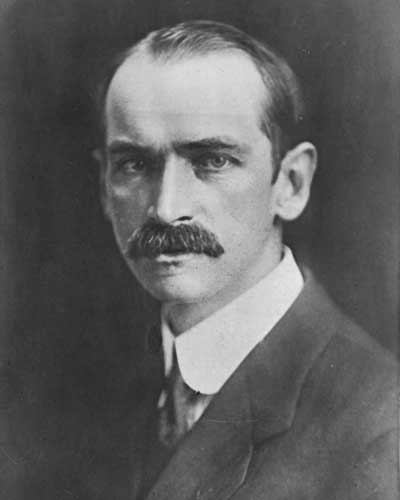
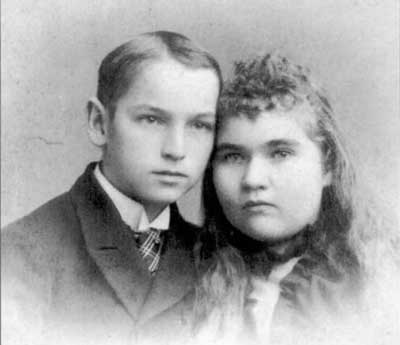
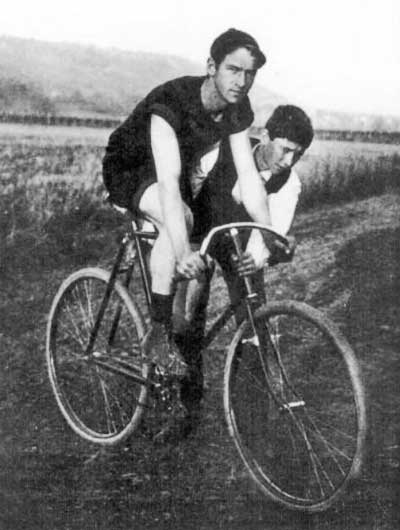
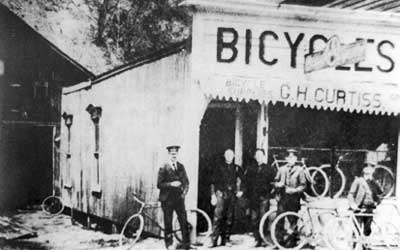
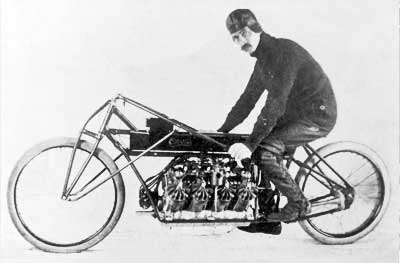
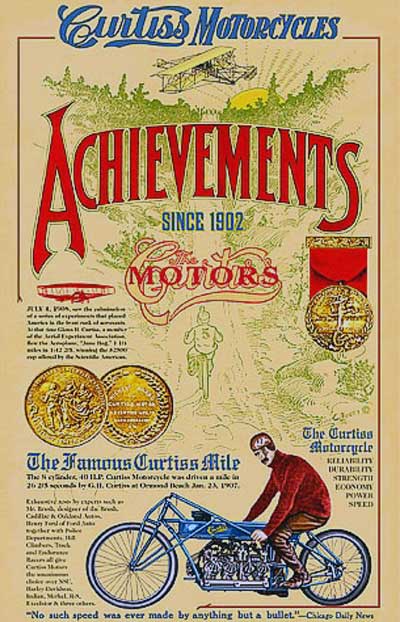
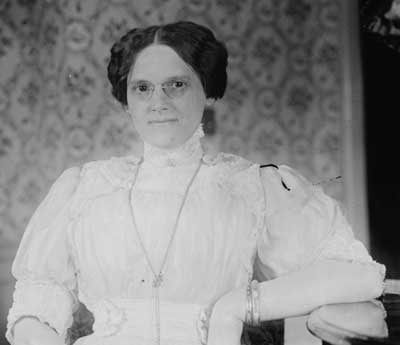
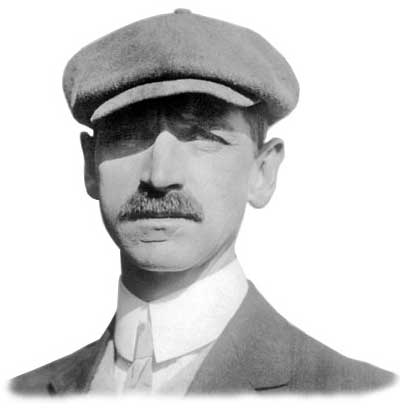
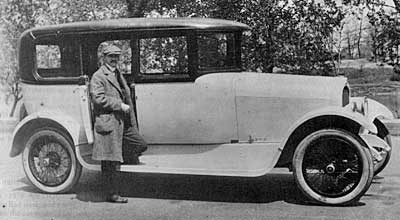
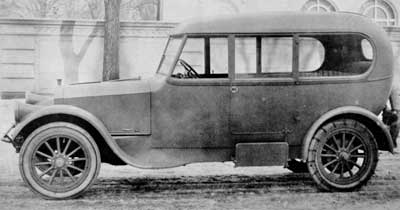
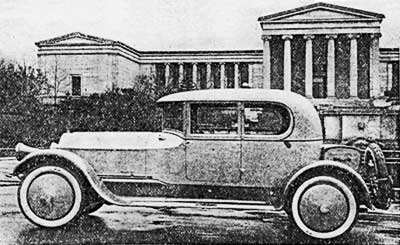
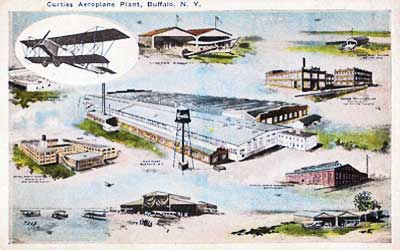
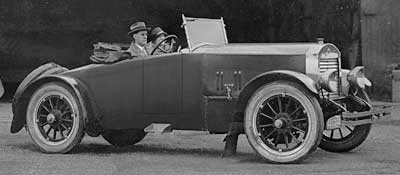
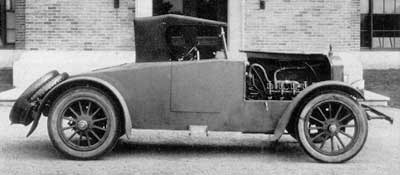
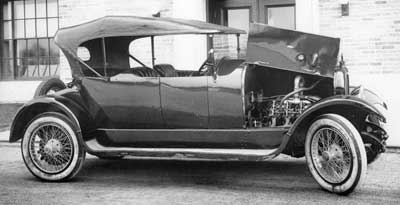
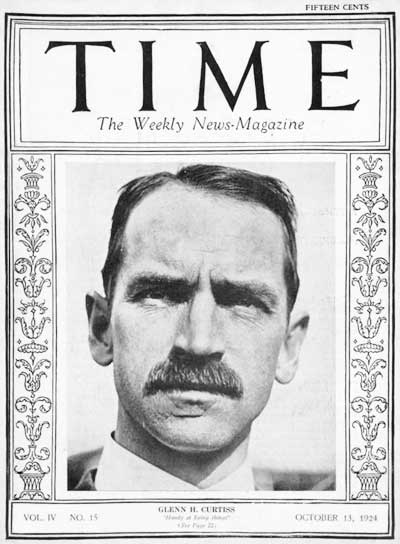
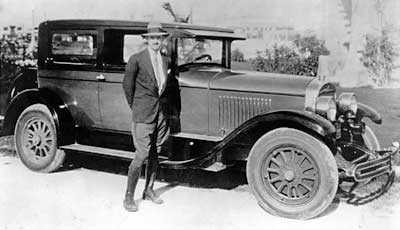
Glenn H. Curtiss (b.1878-d.1930) is best remembered today for his numerous accomplishments in the field of aviation, however he was a multifaceted inventor and engineer who had a hand in numerous transportation-related businesses. His prior success in the fields of self-powered 2-wheeled vehicles (bicycle & motorcycle) had a major influence on his aeronautical success, and after his early retirement he joined Carl G. Fisher in the development of South Florida real estate and manufacturing. Although he was never directly involved in auto manufacturing, he held multiple automobile dealerships (Ford, Frayer-Miller and Orient Buckboard) in his hometown of Hammondsport during the early 20th Century. He experimented with a propeller-driven wind car in 1905 and in 1917 introduced the nation’s first flying automobile, the Curtiss Autoplane. He fitted several cars with his 90 h. p. Curtiss OX-5 V-8 engines and owned numerous custom-built automobiles for which he either designed or commissioned unusual streamlined features and coachwork. Curtiss was also a proponent of motor travel, and developed one of the nation’s first travel trailers which was followed by his famous luxury fifth-wheel Aerocar trailers constructed along aeroframe principles. His final project was a modular fwd automobile constructed using a pneumatic suspension he had developed for use as a fifth-wheel trailer hitch. Glenn Hammond Curtiss was born on May 21, 1878 in Hammondsport, Steuben County, New York to Frank Richmond Curtiss (b.1854 - in Stouffville, ON, Canada - d. Jan. 30, 1883) and Lua A. Andrews (b.1857-d.1935). Named after Lazarus Hammond, who first surveyed the community in 1829, Hammondsport was a small village located at the southern tip of Keuka Lake, one of the numerous small lakes that make up western New York’s Finger Lakes region. Frank R. Curtiss was the village’s harnessmaker and his shop/home was located at the head of Shether St., Hammondsport’s main drag. Frank and Lua’s union was blessed by the birth of two children, Glenn Hammond (b.1878) and Rutha Luella (b. February 15, 1881-d. Mar. 2, 1960) Curtiss. Tragedy stuck the household in 1882 when Frank passed away leaving Lua to raise young Glenn and his infant sister on their own. Rutha came down with meningitis in 1887, and although she eventually recovered, she was left without her hearing. In September of 1889 Lua and Rutha Curtiss moved to Rochester, New York, so Rutha could attend the Western New York Institute for Deaf-Mutes, now known as the Rochester School for the Deaf*. Glen remained in Hammondsport to finish his education, joining his family in Rochester after graduation from the 8th grade. (*Rutha attended the facility from September 1889 to June 1903, and returned as an instructor after graduation from college.) Once in Rochester Glenn took a position with the Eastman Dry Plate and Film Co., the predecessor of Eastman Kodak, as a film stock stenciler and later on a camera assembler. As soon as he could afford a bicycle, he left his factory position to become a bicycle messenger with the Rochester office of Western Union. His mother Lua ran a storefront school after graduating from the State Teacher’s College in Geneseo, Livingston County, New York and on April 1, 1895 married Rock Stream, N.Y. native J. Charles Adams. Adams was an old acquaintance of Lua’s and owned a substantial vineyard on the west side of Seneca Lake. The couple remained in Rochester for a short time, but the impending birth of G. Carl Adams, the half-brother of Glenn H. Curtiss, who was born in 1897, prompted the relocation of the family to Rock Stream where Glen was given a job at his stepfather’s vineyard/orchard. Rock Stream was located just 18 miles east of his hometown of Hammondsport and his love of bicycling led him to join a Hammondsport Wheelman’s club. On March 7, 1898 Curtiss married Lena Neff, born at Prattsburg, Steuben County, New York on September 14, 1879, a daughter of Guy L. Neff, a prominent Steuben County lumberman. He listed photographer as his occupation on the marriage certificate, as he had recently taken a job with Saylor’s Studio in Hammondsport, the newlyweds having moved in with Curtiss’ paternal grandmother, Ruth Curtiss. He also worked as a part-time bicycle repairman for the local pharmacist, James H. Smellie, who was Hammondsport’s sole bicycle retailer. In 1900 Smellie offered Curtiss an opportunity to take over his bicycle repair business and Glenn opened up a combination bicycle repair and harness goods shop on Pulteney St., Hammondsport using leftover inventory from his father’s old harness works. Curtiss soon embarked upon the manufacture of his own assembled bicycles, using parts sourced from his suppliers, under the ‘Hercules’ trade name. Business and profits improved to the point where a satellite was established in nearby Bath, New York (and in 1902 - Corning, New York) and the business was renamed as Curtiss’ Bicycle Stores. Soon after James H. Smellie transferred his new bicycle business and inventory to Curtiss, making him the region’s main distributor of Cleveland, Columbia, National, Racycle and Stearns bicycles. In May of 1901 Curtiss visited the Pan-American Exposition in Buffalo where he became infatuated with the E.R. Thomas Auto-Bi motorcycle, and following his return home he set about building his own motorcycle using a mail-order E.R. Thomas raw block casting and a home-made carburetor. During early 1902 he established a second satellite sales facility in Corning, New York, and announced that he would now be specializing in the sales and service of motorcycles. Dissatisfied with the engines currently on the market, Curtiss embarked upon the design and manufacture of his own power-plant. He found a handful of willing investors and by the end of the year he had founded the G.H. Curtiss Manufacturing Company and began to manufacture his own line of motorcycles and motorcycle engines under the Hercules brand name. His marriage to Lena was blessed with the birth of a son, Carlton, in March of 1901, but the infant suffered a congenital heart defect and survived only eleven months. Lena vowed to have no more children and engrossed herself in caring for Glenn’s blind and elderly grandmother. When Ruth Curtiss passed away in late 1903 Lena joined the workforce at G.H. Curtiss Mfg. Co., taking charge of the firm’s office and bookkeeping for the remainder of the decade. She eventually softened her position on the matter of children and in 1912 gave birth to a second, healthy child, Glenn H. Curtiss Jr. In January 1903 Curtiss attended his first New York Automobile Show, after which he became an annual exhibitor, displaying the latest Curtiss motorcycles or engine. Curtiss became a well-known automobilist, and he served as Hammondsport’s Orient Buckboard, Frayer-Miller, and Ford Motor Co. distributor. The Hercules was campaigned at various races throughout the Northeast and on May 30, 1903 he piloted a Hercules V-twin equipped motorcycle to victory in a ten-mile race, setting a one-mile speed record in the process. The well-publicized victory alerted a small California firm to the fact that Curtiss was using their registered trademark as his own, so Curtiss took the advice of his closest associates re-christening his motorcycles and their engines with his own surname. The feat was followed by trips to Ormond Beach, Florida where he made successive attempts at breaking the World Land Speed record. The resulting publicity brought in orders for his motorcycle and he started offering the standalone powerplant to third parties, and in a few short years his V-Twin was the most popular engine in the country. A Curtis-powered balloon made an appearance at the 1904 World’s Fair in St. Louis and Curtiss became friend with its pilot, Thomas Scott Baldwin, who subsequently relocated his balloon and dirigible factory to Hammondsport. A 1906 offer to supply the Wright Brothers with Curtiss engines was rebuffed by the fiercely independent brothers, but at the time held no great significance for Curtiss. He continued with the development of his V-twin engines and by 1906 had built his first V-8 engine, which consisted of 4 Curtiss V-Twins mounted back-to-back. The monstrous V-8 was fitted to a purpose-built Curtiss motorcycle frame and in January of 1907 its namesake piloted the world’s first V-8 equipped motorcycle to a speed of 136 m.p.h. at Ormond Beach, Florida, becoming the ‘Fastest Man On Earth’. He held the title until 1911 when Bob Burman beat his time in a 4-wheeled Benz, remarkably Curtiss’ two-wheel record stood until 1930. In June of 1907 Curtiss flew over Hammondsport in a Curtiss-equipped Baldwin dirigible, and in October he joined the Aerial Experiment Association, a group founded by Alexander Graham Bell, and financed by Bells’ wife Mabel who – like Rutha Curtiss, Glenn’s sister - was deaf. Curtiss continued to try and get the Wright Brothers interested in his power plants, but they continued to be uninterested. In 1908 the AEA began assembling some experimental craft in Hammondsport and on March 12, one of its members, ‘Casey’ Baldwin piloted the ‘Red Wing’ for 319 feet over the frozen surface of Keuka Lake. In May Curtiss piloted the ‘White Wing’ on a 1000 foot flight which historically was the first American aircraft to be equipped with a ailerons for navigation. On July 4, Curtiss flew the ‘June Bug’ for a distance of 5,090 feet, earning him the Scientific American Magazine trophy, which required an unassisted take-off and straight flight of at least one kilometer. A float-equipped ‘June Bug’, re-christened the Loon, failed a November, 1908 water-launched flight test, but the AEA moved on to the next project, the ‘Silver Dart’ which during February of 1909 became the first airplane to fly in Canada. Despite their many accomplishments, the AEA disbanded that March, bequeathing its designs and patents to Curtiss. Curtiss subsequently constructed his own aircraft, the ’Gold Bug’, which was sold to the New York Aero Club for $5,000 and renamed the Golden Flyer. The sale infuriated the Wright Brothers, who erroneously believed that they held the patent on all moveable wing surfaces. Although Curtiss’ ailerons were an entirely new development, The Wrights sued in August of 1909, launching one of the nastiest vehicle-based lawsuits in US history, second only to the Henry Ford vs. ALAM suit. At that time Curtiss was at an airshow in Reims, France, where he piloted the ‘Reims Racer’ to a record speed of 47 m.p.h., earning himself the Gordon Bennett Cup, a trophy sponsored by the publisher of the New York Herald, James Gordon Bennett. Curtiss spent the winter improving his engines, and on May, 29th, 1910, piloted the V-8 equipped ‘Hudson Flyer’ on a 151-mile flight from Albany to Governor’s Island in 2 hours, 51 minutes, at an average of 52 m.p.h., earning himself a $10,000 prize and permanent possession of the Scientific American trophy. Curtiss continued to work on a plane that was capable of taking off from water, but in the meantime was satisfied to create one that was capable of taking off from a ship. In November, 1910 Eugene Ely successfully took off from a specially designed platform on the U.S. S. Birmingham and then flew his Curtiss to shore at Hampton Roads, Virginia. Ely made the all-important reverse trip in January, 1911, taking off from San Bruno, California’s Tanforan racetrack and landing his Curtiss on a specially-built platform on the U.S.S. Pennsylvania in San Francisco harbor. The two events marked the first time an aircraft had made a ship-borne take-off and a ship-borne landing. In December, 1910 Curtiss had established the first U.S. Naval Aviation School at North Island, at the north end of the Coronado peninsula on San Diego Bay. Early in 1911 Curtiss followed up Ely’s success with his own first successful takeoff from water in the Curtiss A-1 hydroplane which was closely followed by the first successful hydroplane flight to a ship. That May the U.S. Navy ordered two Curtiss A-1 hydroplanes, making Curtiss the first supplier of Naval aircraft to the US Government. In 1912, Lena and gave birth to a second child, Glenn Curtiss, Jr. and Glenn gave up competitive flying. Up to this time, all of Curtiss’ aircraft had been pushers - aircraft whose propellers were mounted behind the wings, pushing it through the air. A 1913 visit to the Sopwith Aviation Co. in South West London, England changed his views on the subject. At that time Sopwith was manufacturing tractor airplanes and hydroplanes whose front-mounted propellers pulled the aircraft through the air. The US Army had expressed an interest in tractor aircraft for its training program, so Curtiss commissioned Sopwith’s chief engineer, Benjamin D. Thomas, to design him a tractor-style aircraft that would be suitable for use as Army trainers. Two successive bi-planes, the Curtis JN-1 and JN- 2 were introduced in 1915 to limited success. A lighter and improved bi-plane design, the Curtiss JN-3, debuted in 1915 and by December of 1916 a much improved version, the JN-4 replaced it. The US Army Air Corps. and Royal Flying Corps. liked what they saw and after an extensive testing regimen placed a series of large orders for the JN-4 trainers, which were known as the Curtiss ‘Jenny’. The JN-4 was the most famous US-built plane of World War I and an estimate 95 % of all American pilots were trained on a Jenny. During the buildup to the War the Federal Government pressured the Wright Co./ Wright-Martin Co. - which was no longer controlled by the Wright Bros. as Wilber was dead and Orville had sold his interest in the firm in 1915 - to settle their long-running patent dispute with Curtiss in 1916. The settlement coincided with the formation of the Curtiss Aeroplane and Motor Corp., which took over a portion of the Curtiss’ existing Garden City, Long Island research facility in order to commence production of small numbers of OX-5 engines and JN-4 trainers and Curtiss hydroplanes for the military. The ramp up to war greatly increased the demand for Curtiss’ aircraft and engines, and although some manufacturing took place in Curtiss’ old Hammondsport factory, Curtiss relocated their main manufacturing operations to Buffalo, New York where available manufacturing capacity far outstripped the local demand. The additional space came in handy when Curtiss was awarded a contract to produce 3,000 Spad single seat fighters (and a few Bristol F.2 fighters) in late 1917. Unfortunately suitable American-made power plants were not forthcoming and both contracts were abruptly cancelled in early 1918. Although he maintained his principle residence in Garden City, Long Island, Curtiss kept a house in Hammondsport and leased another one in Buffalo, where he became acquainted with the craftsmen at Brunn & Company, Buffalo’s premiere custom automobile body builder. Between 1916 and 1918 Brunn constructed four custom bodies for Curtiss on Marmon 34, Pierce-Arrow 66 and Cadillac Type 53 ‘special’ chassis. Herman C. Brunn, the son of the firm’s founder, Hermann A. Brunn, recalled his father’s work for Curtiss in the March-April issue of Antique Automobile, in an article entitled ‘Four Custom Bodied Cars Designed for Glenn Hammond Curtiss’ a few paragraphs of which are excerpted below:
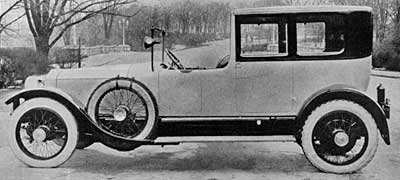
A picture of the Brunn-bodied two-door Pierce-Arrow 66 with whitewalls and disc wheel covers appeared in the January 1919 issue of The American Blacksmith and is believed to have been constructed during 1918, and not during or prior to 1916 as stated by Herman C. Brunn in the previous quotation. Richard B. Wilder, a former Long Island neighbor of Curtiss’ wrote a follow-up letter to Brunn’s piece that was published in Vol. 41, No. 2, (March-April 1977 issue) of Antique Automobile:
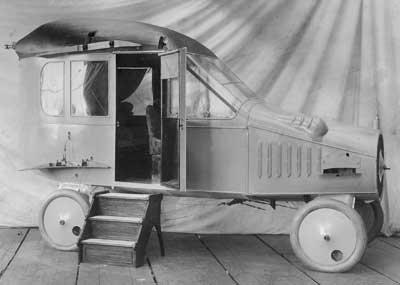
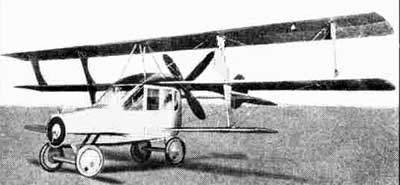
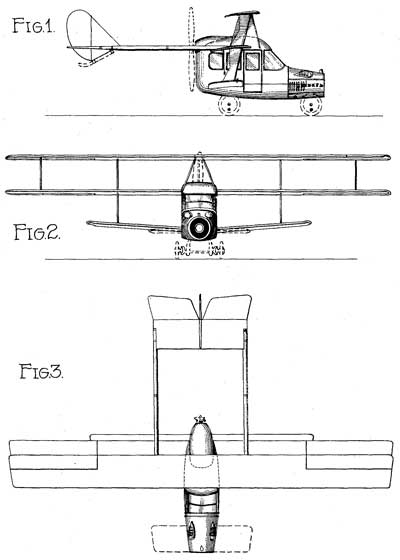
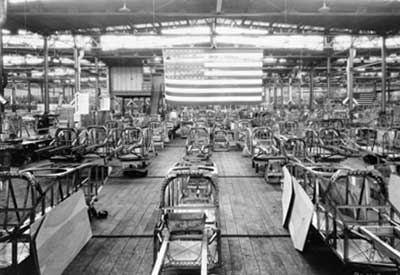
Prior to the start of the War Curtiss’ products were largely assembled by hand, but the massive contracts forced Curtiss to look outside the firm for expertise in mass production. A necessary recapitalization attracted a group of investors associated with John North Willys, who subsequently elected the auto magnate as president of the firm, at which time Curtiss assumed the position of Chairman. It’s unclear if Curtiss was forced out, or left of his own accord, however he appeared to relish his new-found freedom and began spending more time working on pet projects and began to look for additional business opportunities outside of the transportation industry. One of his pet projects was the development of a flying automobile, or more precisely the Curtiss Model 11 Autoplane, which was introduced at the Pan-American Aeronautical Exposition which was held at Grand Central Palace from February 8-15, 1917. Designed for airspeed of 65 m.p.h. and a road speed of 45 m.p.h. the Autoplane featured a leather-trimmed heated cabin with provisions for two passengers behind the single pilot’s seat. Its fully enclosed aluminum body was equipped with celluloid windows and travelled along the road using its four-blade pusher propeller at the rear of the roof. The propeller was connected to the front-mounted 100-h.p. Curtiss OXX V8 via a complex driveshaft, belt and pulley arrangement. Two small permanently mounted canard wings were affixed to the extreme front of the body and when outfitted for the air it included two removable wire-braced booms spaced 9 feet apart to clear the propeller and a set of removable Curtiss Model L tri-plane wings which gave the 27 foot long vehicle a 40 foot 6 inch wingspan, both the wings and tail detached as a single, albeit cumbersome, unit. The Autoplane is reported to have made only a few short straight-ahead hops before development was abandoned due to the ensuing European conflict. In mid-1918 a new slate was elected to the board of the Curtiss Aeroplane & Motors Corp. at the firm’s annual board of directors meeting, the May the May 23, 1918 issue of The Automobile/Automotive Industries reporting:
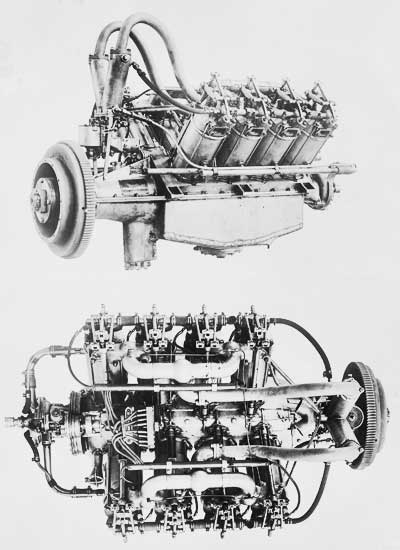
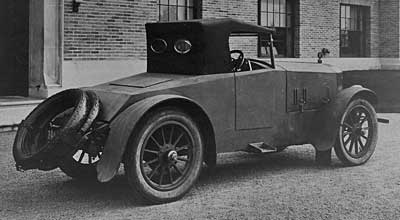
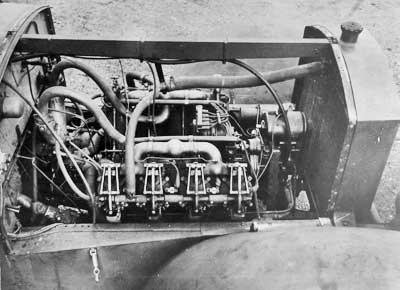
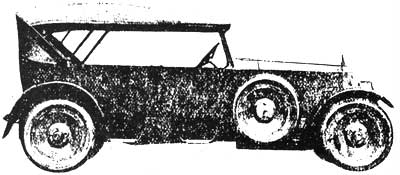
Although many believe that Charles Lindbergh was the first person to cross the Atlantic in an airplane, the truth is that he was the first person to fly across the Atlantic solo. On May 8, 1919, a group of Naval aviators piloting 3 Curtiss flying boats left the continental United States en route to Europe. On May 27th the sole remaining Curtiss arrived in Lisbon, Portugal, marking the first successful crossing of the Atlantic by aircraft. Despite his laundry list of achievements, Curtiss had tired of the business of Aviation and in 1920 sold his controlling interest in the corporation that bore his name and retired, although he served as a part-time consultant to the firm for another decade. Even though production of the Curtiss OX-5 extended well beyond the Armistice, surplus and slightly used OX-5s were easy to come by immediately after the War and although Curtiss himself wasn’t directly involved in the project, Curtiss Aeroplane & Motor Corp.’s vice-president C. Roy Keys installed a 90 h.p. Curtiss OX-5 V8 in a 1910 Winton in order to promote the sale of surplus Curtiss V8s for automobile use. A picture of the car accompanied the following ad which ran in the November 1921 issues of Aviation and Aerial Age Weekly:
An August 1974 letter from former Curtiss Vice-President Ray C. Keys to the Curtiss Museum provides further details on the Winton pictured in the advertisement:
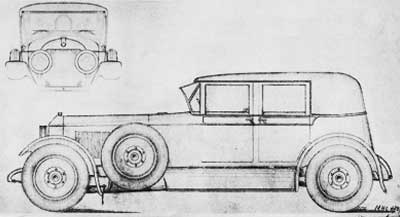
In addition to the decade-old Winton, a picture exists of the OX-5 equipped 1917 Marmon ‘34’ cloverleaf roadster that was mentioned in the November 1921 issue of Aviation and Aerial Age Weekly and engineer Benjamin F. Gregory installed an OX-5 in an early front-wheel-drive racecar. A small New York City automobile manufacturer named the Prado Motor Corp. produced as many as 10 OX-5 powered luxury cars during 1921 and 1922 and the Dallas, Texas-based Wharton Motors Co., constructed at least one OX-5 prototype. For a while, at least, Curtiss thought about building cars himself and asked designer Miles Harold Carpenter, who had been building the Phianna luxury car with OX-5 power in Queens, New York, to organize a new Curtiss Motor Car Company. Carpenter prepared a number of drawings of proposed body designs for the vehicle, and a few prototypes are thought to have been built using OX-5 equipped Phianna chassis, but the recession of 1920-21 left the production Curtiss automobile stillborn. Automotive historian Frank N. Potter explained this phase of the Curtiss story in ‘Darling of the Titans,’ published by The Upper Hudson Valley Automobilist in June 1962:
In a subsequent letter to the AUHV’s editor, Keith Marvin, Potter theorized on the fate of the handful of Curtiss OX-5 equipped Phiannas:
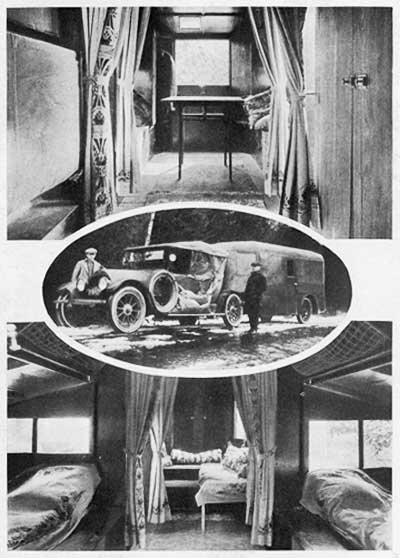
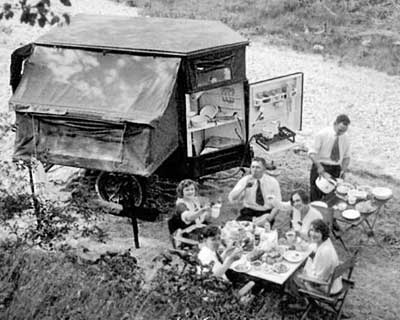
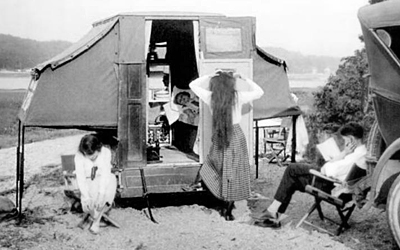
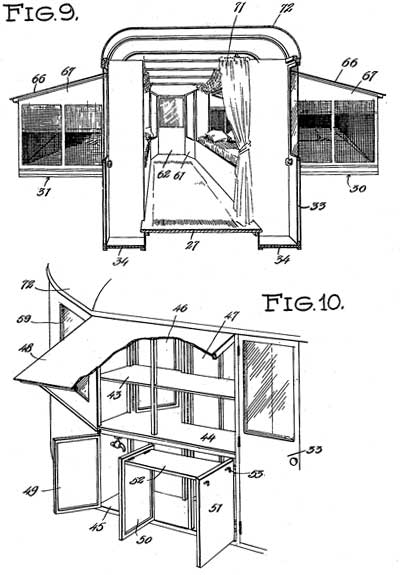
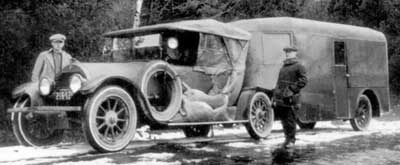
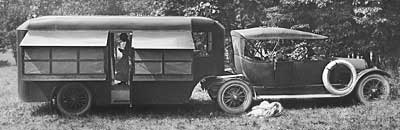
It is unknown if Glenn H. Curtiss had any direct involvement with the manufacture of the Curtiss-equipped Phiannas, although he was certainly aware of the project. Regardless the remaining surplus OX-5s were gradually disposed of, some as low as $50. One of Curtiss’ first retirement projects was the building of a camping trailer for his periodic hunting and fishing trips into New York State’s Adirondack, Berkshire and Catskill mountains. Articles in the February 7, 1920, issue of Scientific American and the April 1920 issue of Popular Mechanics reveal Curtiss’ ‘compact hotel on wheels,’ was towed behind an automobile and offered him significantly more comfort than a tent. The light-weight 20 foot long trailer was constructed using ‘aircraft materials’ and its beaklike prow attached to the tow vehicle using a fifth-wheel hitch enabling it to be safely towed at speeds approaching 60 mph. The interior of the rigid-roofed trailer included a folding table, storage compartments and a toilet. Exterior lockers held such useful items as a camping kitchen, spade, axe and miscellaneous hunting and fishing gear. The trailer could sleep six, four in hinged screened-in beds that hung from the rigid exterior walls and two inside. Curtiss enjoyed his trailer so much that he established a small trailer manufacturing outfit to manufacturer them installing his half-brother, G. Carl Adams (1897- 1963) to head the operation which was headquartered in Garden City, Long Island although the trailers were actually manufactured in his hometown of Hammondsport. George Carl Adams was born on January 24, 1897 to J. Charles Adams (b.1852), and Lua A. (Andrews) Curtiss (b.1857). As previously stated Glenn Curtiss’ biological father had passed away in 1883, and on April 1, 1895 his mother married Rock Stream, N.Y. native J. Charles Adams in Rochester, N.Y. Adams was an old acquaintance of Lua’s and owned a substantial vineyard on the west side of Seneca Lake approximately 7 miles north of Watkins Glen, New York. The couple remained in Rochester for a short time, but the impending birth of G. Carl Adams prompted the relocation of the family to Rock Stream where 19-yo Glenn was given a job at his stepfather’s vineyard/orchard. While George Carl was still an infant, his stepbrother moved back to Hammondsport, which was located only 18 miles to the west, to live with his paternal grandmother. George Carl was raised on his father’s estate but his father’s alcoholism led to a split with his mother and George Carl accompanied her to Buffalo in 1907 to go live with her sister. George Carl attended the Buffalo schools, and made frequent trips to Hammondsport with his mother to visit his increasingly successful half-brother, Glenn. Shortly after Glenn moved to San Diego, California to open his North Island flying school (1911-1913) his mother and stepbrother left Buffalo to come and live with him, a habit that would continue for the rest of his career. In 1912 he built a home for them in nearby Coronado that overlooked the Pacific, but three years later they returned to Buffalo where Glenn was busy establishing a new factory. When Glenn moved into a new home at 76 Lincoln Parkway, Buffalo, he rented a separate home for his mother at 426 Connecticut. St. Ironically George Carl Adams would start and complete his secondary education in the Buffalo public schools. George Carl Adams adored his much older half-brother and upon graduation from high school, went to work for him - eventually becoming his most trusted business partner. After Glen relocated his household to Garden City, Long Island, George Carl made frequent trips between Long Island, Buffalo and Hammondsport tending to pressing business issues, and shortly after his brother ‘retired’ from the airplane business, Glenn installed him as president of a start-up firm formed to manufacture a line of travel trailers based on his recently-constructed travel-trailer. A complete line of trailers was advertised; 5 camping and 10 commercial, all of which were built using a standard rectangular single axle bed and integral triangular prow whose single spike dropped into a receiver located at the rear of the tow vehicle. The top-of-the-line Motor Bungalo Deluxe, which retailed at $1,200, had a rigid top and sides and measured 12 ft. 6 in. long, 5 ft. 8 in. wide and 6 ft. 4 in. tall. Next in line was the significantly shorter Motor Bungalo Junior a four model line of traditional folding canvas-topped camp trailers that were priced from $485 to $655. The commercial trailers all shared the same unique 5-sided trailer bed as the Bungalo Jr., but were equipped with far less equipment. The basic open-bed Model A, priced at $195, could be outfitted with numerous options such as a basic rack; a flared rack; a deluxe cattle rack; a double deck; an express top with rigid roof and ’Tufhyde’ (nitirite-coated fabric) sides; and a standard top with rigid roof and rigid sides. Other commercial units included the $215 dumping trailer and the top-of-the-line $370 trailer with solid delivery body. A Deluxe Motor Bungalow was featured in the June 1921 issue of Popular Science:
A display ad in the June 25, 1921 of the Trenton Evening Times:
An early brochure for Adams's Motor Bungalo, bearing the slogan ‘Gypsie Life Modernized,’ included a drawing of a rigid, enclosed trailer and photographs of Curtiss' personal trailer. The brochure identified Adams as a ‘designer and builder of custom-built bodies,’ stating that the Motor Bungalo’s dimensions were 12 ft. 6 in. long, 5 ft. 8 in. wide and 6 ft. 4 in. tall. The Motor Bungalo, as drawn, looked much like Curtiss's trailer, from its V- shaped front end to its outwardly folding beds. Inside the Motor Bungalo, the brochure promised, one would find felt mattresses, clothes closets, tan curtain partitions, and bed curtains made of Pantasote, a nitrite coated leather substitute. The exterior would be bronze green, the interior dark oak. The sales and export office were located in Manhattan, at Grand Central Palace with early trailers built at the Curtiss Engineering Corp. complex in Garden City, Long Island. Construction was soon transferred to Hammondsport, the September 1, 1921 issue of the Democrat & Chronicle (Rochester, NY) announced that Adams was relocating its machinery to the plant of Keuka Industries:
F. E. Brimmer’s ‘Autocamping’ (pub. 1923) included a thorough review of the Deluxe and Junior versions:
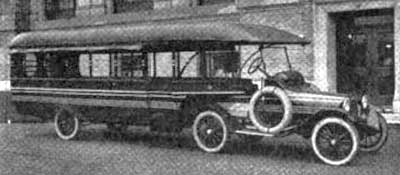
Adams Trailer Corp. offered at least 15 models: the top-of-the-line Motor Bungalo, at $1200; four ‘Camp Trailers’, ranging from $485 to $655; and ten ‘commercial trailers’ starting at $215 (with ‘dumping attachment’) and rising to $370 (with ‘solid delivery body’). 40 dealers, distributors and agencies offered Adams Trailers in Connecticut, Florida, Massachusetts, New Jersey, New York, Ohio, Pennsylvania, Ontario and Quebec. The January 1922 issue of American Exporter announced the debut of a third model, the ‘ Highway Coach’:
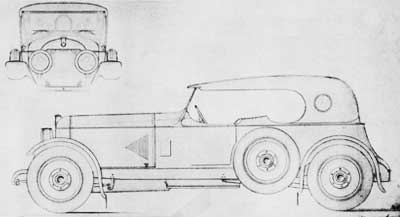
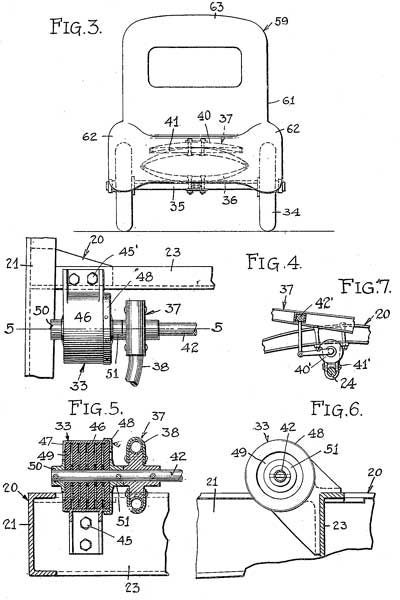
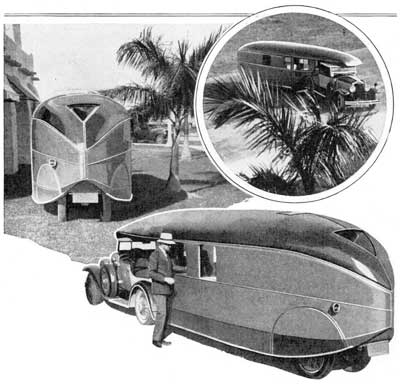
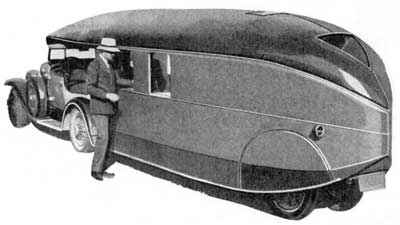
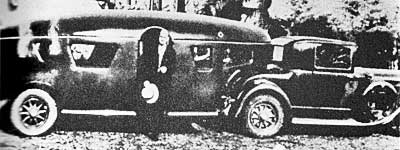
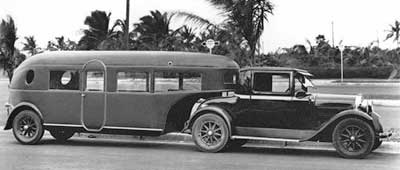
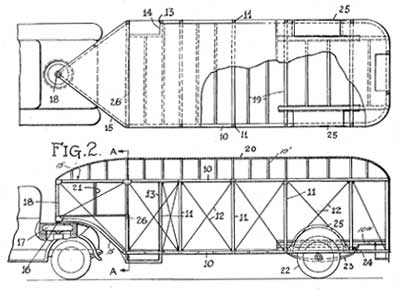
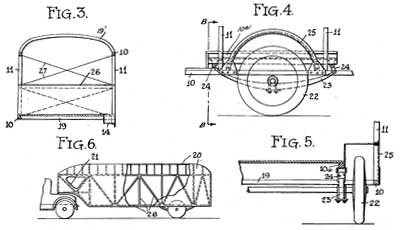
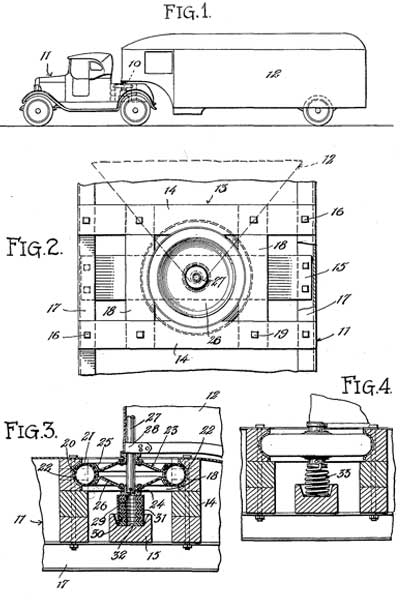
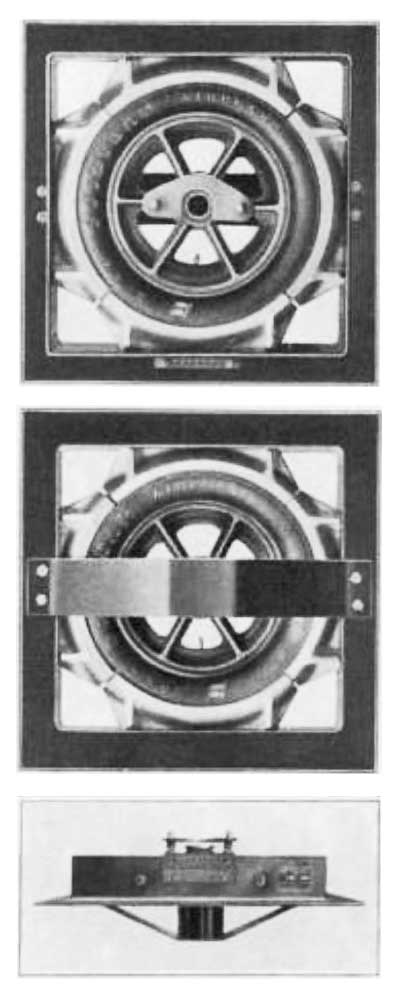
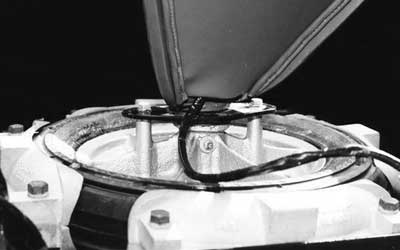
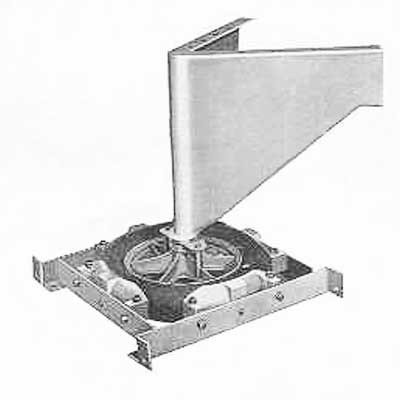
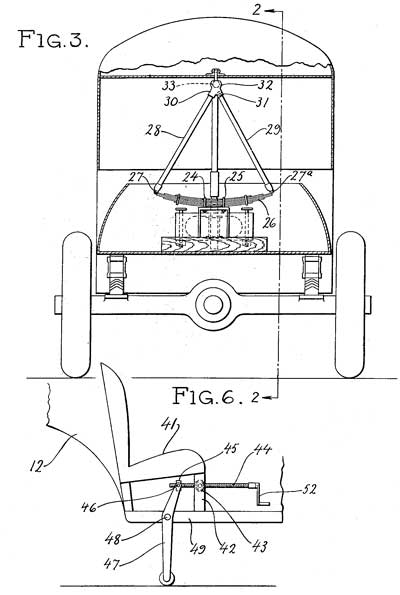
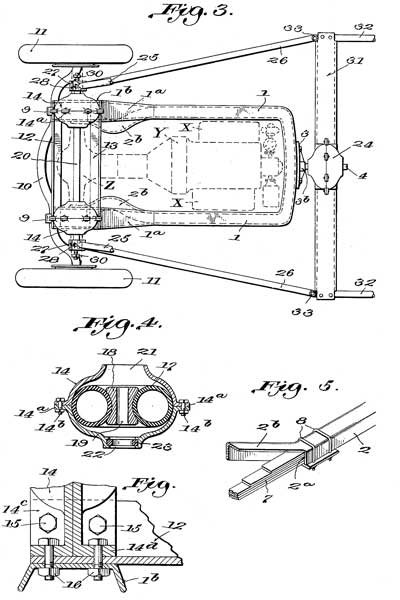
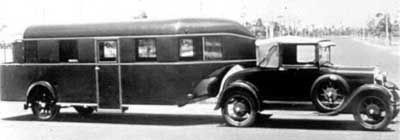
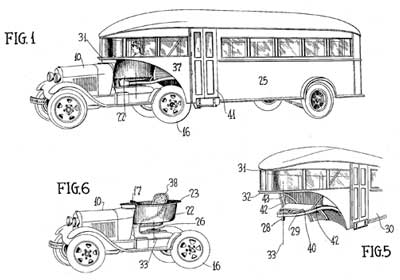
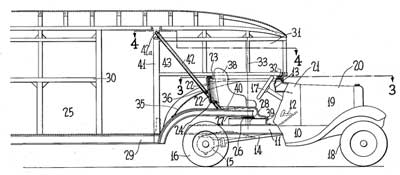
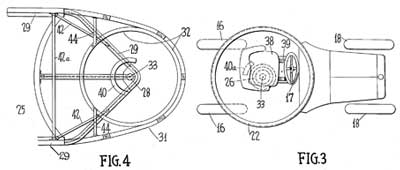
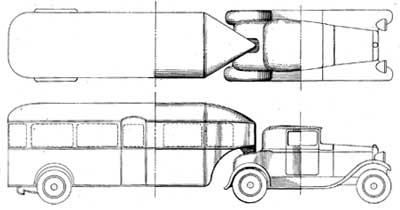
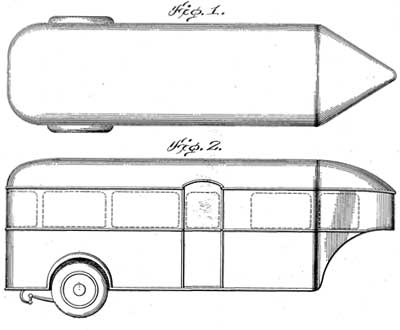
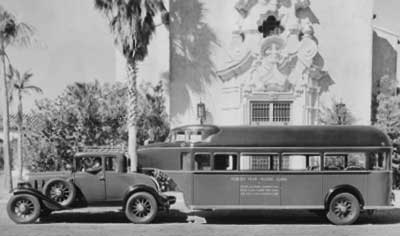
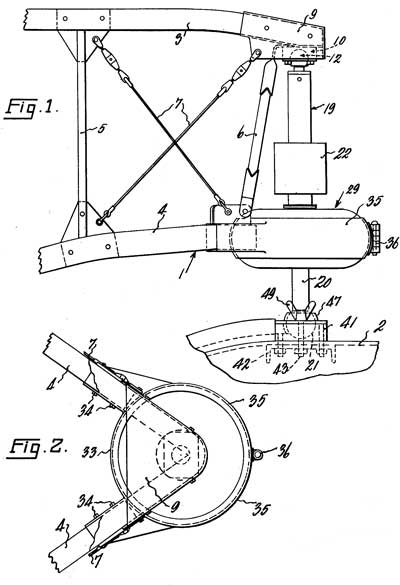
Aside from the single prototype, which appeared in numerous magazine and newspapers, series manufacture of the ‘Highway Coach’ is doubted. Just as Curtiss was awarded a patent on his ‘Camp Car’ (US Pat. No. 1437172 – CAMP TRAILER - Filed Apr 28, 1921 – Issue Nov 28, 1922) production of the Adams Trailer was halted due to the post-war depression. At the end of the year George Carl Adams and his wife Dorothy relocated to southern Florida to assist his half-brother in various real estate ventures. G. Carl Adams was an executive in the Florida Ranch and Dairy Corp., president of the Opa-locka Co., vice-president of Glenn H. Curtiss Properties, Inc. and president of the Everglades Construction Co. the contractor that constructed all the roads and sidewalks in Country Club Estates, Hialeah and Opa-locka. From 1930-1942 he served as mayor of Country Club Estates during which time the community was renamed Miami Springs. Of a reported 100 built, a single, unrestored, Adams Motor Bungalo survives today in a drive shed on the grounds of the Backus Heritage Conservation Area near Port Rowan, Ontario, Canada. Unfortunately the estate is controlled by the Long Point Region Conservation Authority who currently has no plans on restoring nor donating it to the Curtiss Museum, which sadly does not have a Motor Bungalo in its collection. Carl Graham Fisher, b.1874-d.1939, (of Prest-O-Lite automobile headlamp fortune) had befriended Curtiss before the start of the War, encouraging him to get involved in the burgeoning Southern Florida real estate market. Starting in 1917 Curtiss and his immediate family wintered in various Miami locations, and he soon discovered that the favorable Miami climate enabled year-round activity. Mayor Sewall encouraged him to become a permanent resident and in In 1918 Curtiss purchased a large plot of land there using some of it to establish a Marine Corp.’s Naval Air base, and the remainder for future land development. During the next few years he partnered with South Florida land developer James H. Bright (b. 1866-d.1959) in a 120,000 acre plot northwest of Miami that would become the suburbs of Hialeah, Miami Springs, and Opa-Locka. Known collectively as the Curtis-Bright cities, many of the municipalities’ original architecture had a strong Moorish influence – based on Curtiss’ infatuation with the stories of the Arabian Nights*. As Curtiss became interested in developing his real estate and aviation interests in Florida, he invited his family members and long-time colleagues to join him. *According to Opa-Locka historian Frank S. Fitzgerald-Bush (b.1925-d.1998) the Moorish theme was suggested by his mother Irene Q. Bush, the wife of Curtiss’ electrical contractor, Frank S. Bush (b.1894-d.1973), who upon viewing the building site exclaimed, “Oh, Glenn, it’s like a dream from the Arabian Nights”. Although property development now took up most of his time, Curtiss worked on numerous side projects in his home office, a number of which were automobile-related. One had to do with a novel pneumatic trailer coupling constructed using a rubber tire. The project hoped to eliminate various rideability and maneuverability problems experienced while towing trailers, in particular the dangerous tendency to sway sideways and roll over at increased speeds. Attached to the underside of the forwardmost point of the trailer was a massive vertically oriented steel pin that dropped into a similarly sized hole located in the center of a steel rim mounted in a Goodyear airplane tire. The tire was encased in an enclosure mounted in the rear deck of the tow vehicle. The horizontal thrust (motion) of the trailer was absorbed by the tire, the vertical absorbed by a group of rubber discs located inside the enclosure – in much the same fashion that the needle contained in the tone arm of a phonograph rides in the grooves of a vinyl record. The hitch and hitch receptacle were christened the Curtiss Aerocoupler, and it proved instrumental in the success of the Curtiss Aerocar, a luxury coach designed to be towed behind an Aerocoupler-equipped automobile. The coupler was fist utilized in a novel 3-axle automobile whose design followed that of the 1922 Highway Coach mentioned above. The vehicle’s rear-most axle supported the compartment that held the driver and his passengers (or cargo). The power unit (engine, drivetrain, drive wheels were housed in a separate structure which rode upon two front axles (the front-most axle handled the steering, the next transmitted power to the ground), in a manner similar to the Christie and Knox mechanical mules that appeared in the early Twentieth century - the two units being connected via the aforementioned Aerocoupler. As stated previously, Richard B. Wilder, a Long Island neighbor of Curtiss’, recalled seeing a 6-wheeled Chrysler at the Curtiss’ mansion during the late 1920s that bears a passing resemblance to the drawing in the patent application. Unfortunately I could not locate any photos or descriptions of the vehicle. US Pat. No.1880842 – AUTOMOTIVE VEHICLE – Filed Aug. 8, 1925 – Issued Oct. 4, 1932 In 1927 Curtiss began development on a luxury trailer that incorporated the following: independent suspension for the passengers, three axles, streamlined shape, and speed. It also was designed to overcome deficiencies in the motor bungalow's rideability and maneuverability, including the tendency to sway sideways and roll at highway speeds. The trailer (which was essentially an improved version of the vehicle patented in 1925 - US Pat. No.1880842 - which itself was an improvement of the Highway Coach of 1922) had a lightweight aero-derived streamlined body constructed using nitrite-coated fabric (likely Fabrikoid) laid over masonite panels that were affixed to a grid of vertical oak struts and longerons connected by diagonally crossed nickel steel truss wires and turnbuckles that when properly ‘tuned’ provided a significantly rigid structure. A single axle was affixed at the rear of the trailer, the front being constructed with a long curved V-shaped prow that mated to a Curtiss Aerocoupler installed in the rear deck of a coupe or roadster just ahead of its rear axle. Although the wood-framed airplane was already thought to be obsolete, Curtiss felt its wood and wire truss construction was strong enough for terrestrial use (at the time a vehicle’s crash-worthiness was never mentioned publicly and rarely in private). The trailer’s body, just like that of the Curtiss ‘Jenny’ could be easily rebuilt using readily available products, its shape returned to normal by simply twisting a turnbuckle. Curtiss even boasted that the trailer body was ‘unusually safe’ because it would not collapse or break up if overturned. The stunning prototype was completed in the spring of 1928, and Curtiss showed it off to his numerous friends and business associates, filing for a patent on both the trailer and its coupling on June 8, 1928. US Pat. No. 1880844 – ROAD VEHICLE BODY STRUCTURE – Filed Jun 8, 1928 was issued on Oct. 4, 1932 & US Pat. No. 1916967 – FLEXIBLE COUPLING FOR VEHICULAR STRUCTURES – Filed Jun 8, 1928 was issued on July 4, 1933. Although the patent specified a frame constructed of wood and piano wire, it included a drawing depicting an underlying structure built from small-diameter welded steel tubing. Curtiss’ friend, Carl G. Fisher (the same Fisher who developed the Indianapolis Motor Speedway) was especially enthusiastic, urging him to consider manufacturing the vehicle on a large scale. In an April 1928 letter to Roy Chapin, chairman of the Hudson Motor Car Co., Fisher wrote:
Curtiss wanted to manufacture the trailer in Florida, but Fisher and Chapin recommended he license the design to an automobile or body manufacturer in order to take advantage of their existing sales and marketing departments. During the summer representatives of Hudson (including Chapin) and Briggs Mfg. examined Curtiss' trailer. Curtiss, Carl G. Fisher and Hudson consulting engineer and vice-president Howard Coffin went so far as to form a shell corporation, the Aerocar Company of America (later the Aerocar Corp.) in order to promote the vehicle. The firm’s investors included Walter O. Briggs (Briggs Mfg.), Roy Chapin, Howard Coffin (Hudson), Glenn H. Curtiss, Carl G. Fisher, Clement M. Keys (Curtiss Aeroplane & Motor), James Wilson (Murray Corp.) and Chester W. Cuthell (Curtiss’ corporate attorney). The June 22, 1928 issue of the Everglades News announced the formation of the firm:
The Corporation financed the construction of a second prototype and during the late summer of 1928 the two Aerocars made a series of promotional tours of the Eastern US. One trailer - towed by a Hudson coupe – made a 39 hour trip from Miami to Manhattan, averaging 36 m.p.h. while the second traveled from Miami to Detroit at an average speed of 42 m.p.h. Carl G. Fisher wrote enthusiastic letters to Walter P. Chrysler and Alvan Macauley trying to get them interested in the project, and Frank A. Seiberling, president of the Seiberling Rubber Co. (Barberton, Ohio), took a demonstration ride and offered to make an improved coupler at no cost, hoping to get the contract over Goodyear, his arch-enemy. Briggs Mfg., Lang Body Co., Mengel Body Co., and Weymann-American Body Co. all expressed an interest in manufacturing the trailer while Hudson, Stutz and Graham-Paige expressed an interest in producing the specially-equipped tow cars. Carl G. Fisher commissioned one Aerocar with a custom-built Stutz Coupe for his private use, and Hudson displayed an Aerocar/Hudson in its Manhattan factory showroom during September, 1929. Fisher used his Aerocar (outfitted with wicker chairs, a gasoline stove, radio, lavatory, folding table etc.) to transport a group of friends from Indianapolis to the Chicago Auto Show in January 1929. In the end only two firms would manufacture the Aerocar trailer; the Briggs-controlled Aerocar Co. of Detroit, Michigan and the Curtiss Aerocar Co. of Opa-Locka, Florida. Although the vehicles were constructed using blueprints furnished by the Aerocar Co. of America/ Aerocar Corp. each firm was corporately unrelated to the other and there were numerous differences between Aerocars built in Florida and Aerocars built in Detroit. Carl G. Fisher thought that the Detroit Aerocars were ugly and cheaply built, and he recommended that his friends only purchased trailers built in Florida. The Aerocar Co. of Detroit, was formed in mid-March, 1929 and capitalized at $20,000. Its incorporators included Walter O. Briggs, B. F. Everett, Roy H. Curtiss, Thomas B. Moore and George Krapfel, and its first corporate office is listed as 1800 Buhl Bldg., Detroit (18th floor of the early Detroit skyscraper located at 535 Griswold St.). Walter O. Briggs installed his longtime friend and business associate Byron F. (Barney) Everitt (b.1872-d.1940) as president and general manager and leased a small factory at 7425 Melville St., Detroit. As orders increased the Aerocar operation relocated to Everitt’s former Rickenbacker factory at 4815 Cabot Ave., Detroit. In July 1930 Detroit Aerocar announced the introduction of the model A-16 Aerocar camping trailer, a significantly shorter (by 5 feet) trailer which measured 16 feet long by 6 feet 4 inches wide and had 6 feet of headroom. Four passengers could sleep on divans placed along the rear and sides and on cushions that filled the center of the seating arrangement at night. Accessories included an ice box and cooking utensils. By that time John A. Schroeder, another well-known Detroit auto executive, had acquired an interest in the firm and succeeded Everitt as general manager. In 1938, he had written, referring to his acquisition of Detroit Aerocar ten years earlier, “After studying it from all angles, I determined that there was a great future for trailer coaches and that a new industry was making its debut. For several years many of my friends took great delight in kidding me about fooling away my time and money. They were thoroughly convinced that people would not drive on the roads with that thing dangling about back there. It has become a matter of pride with me to prove them wrong”. Schroeder sold his interest in Detroit Aerocar in 1935, becoming head of sales for the trailer division of the Liggett Spring and Axle Company (aka S.H. Liggett Co.). Well-known aircraft engineer Ora Galen Blocher (b.1903-d-2001) served as the firm’s chief engineer from 1934-1938. Although the Florida firm turned out work of a higher quality, and in higher numbers, the Detroit firm garnered more publicity especially with commercial users. The following news item appeared in the September 4, 1937 Deseret News (Utah):
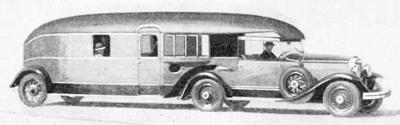
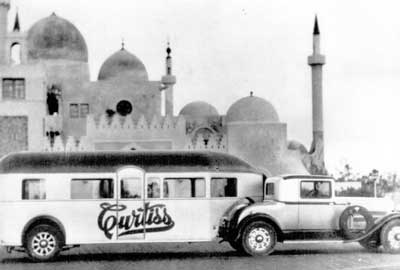
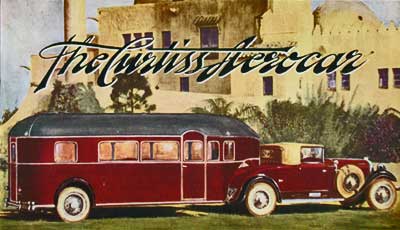
The Florida Aerocar operation commenced operations in 1929 with the establishment of the Curtiss Aerocar Company of Florida. Glenn H. Curtiss was directly involved in the Florida firm which produced ‘Curtiss Aerocars’, which were generally preferred over the Michigan organization’s ‘Aerocars’. The firm was headed by H. Sayre Wheeler, the son of Monroe Wheeler, Glenn H. Curtiss' personal attorney and business associate. Hugh A. Robinson served as its chief engineer and a new factory was constructed in Opa-Locka, Florida, a Curtiss-Bright development located southwest of Miami. Designed according to a romantic Arabian Nights theme, with exotic, pseudo-Moorish architecture, Opa-locka was conceived as an exceptionally attractive community that would provide farmland and industrial employment for its middle-class residents. The streets were given fanciful, thematic names such as Sharazad, MiBaba, Sesame, Sinbad, Caliph and Aladdin. Curtiss took great interest and pleasure in making the community aesthetically pleasing and in executing the details of its development. Hugh A. Robinson piloted an Aerocar on a Florida to Detroit promotional run in late 1928, the November 21, 1928 Daily New Standard, Uniontown, Pennsylvania reporting:
The trip was also mentioned in the February 1929 issue of Popular Mechanics:
A follow-up article in the September 1929 issue of Popular Mechanics claimed the air signature of the trailer increased the speed of the automobile:
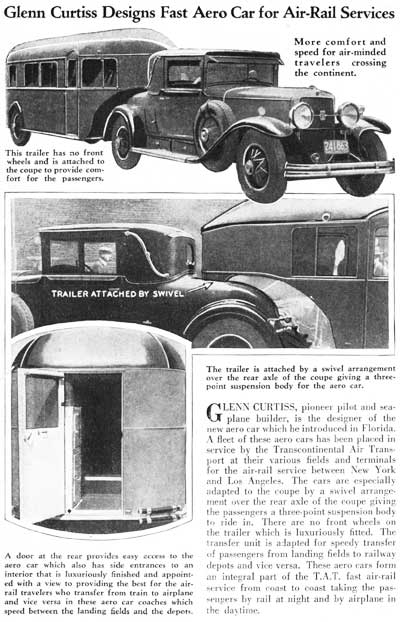
Aerocar’s outfitted for intermodal passenger transport appeared shortly thereafter, the December, 1929 issue of Modern Mechanix reporting:
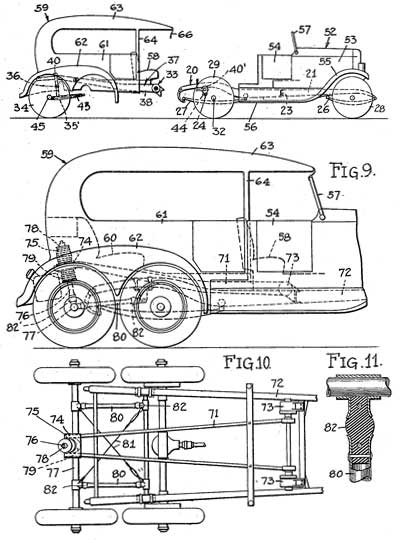
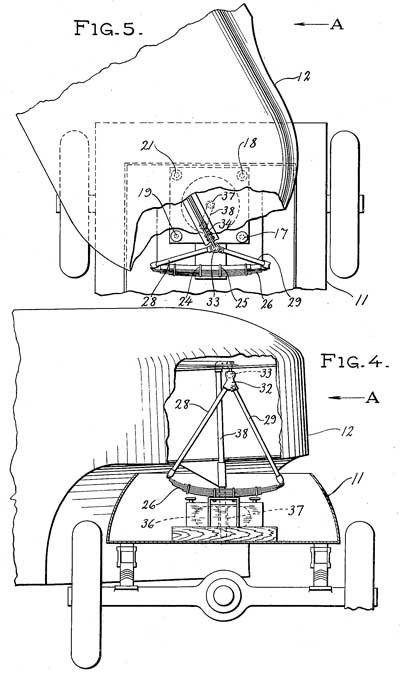
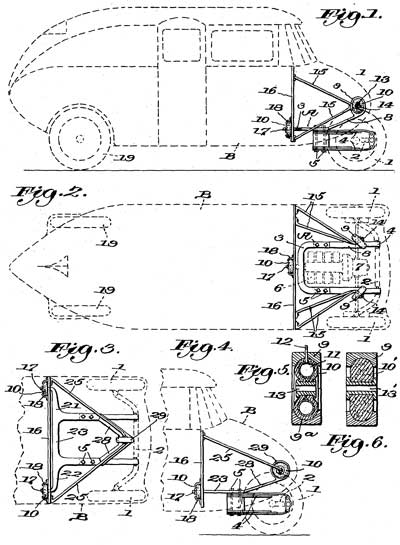
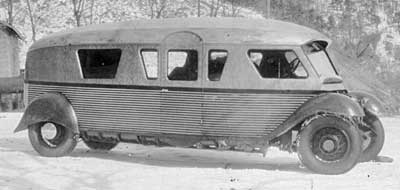
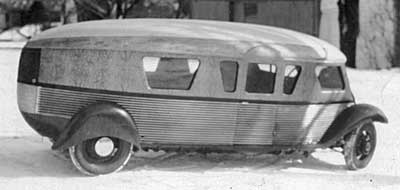
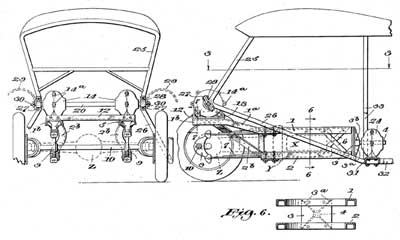
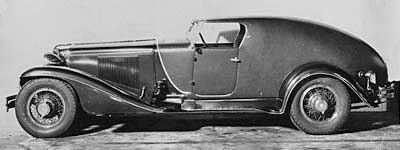
In the early days of Curtiss Aerocar, there was a loose, reciprocal arrangement between the trailer company and Hudson automobiles. Early Curtiss Aerocar sales literature recommended Hudson, Essex or Ford roadsters and coupes as tow cars, and some trailer buyers ordered Hudson tow cars through Curtiss Aerocar. Early Curtiss Aerocar trailers were displayed at the Hill Motor Car Company, a Hudson and Essex distributor located at 155 West Flagler Street in Miami. On July 5, 1929 the decades-long rivalry between Curtiss and Wright was put to bed with the merger of the two companies’ 12 affiliated operations into the $75 million Curtiss-Wright Corp., a firm which remains in business today. It’s unknown how Orville Wright and Curtiss felt about the merger, and even though neither party was financially interested in the deal, it’s hard to imagine that they had set aside their differences of two and a half decades previous. With the production of the Curtiss Aerocar in good hands Glenn H. Curtiss turned his attention to a new project, a lightweight automobile constructed using aviation technology. He called two of his most trusted former mechanics, Henry Kleckler and Damon Merrill, out of semi-retirement, and the trio went to work in a portion of the old Hammondsport aircraft factory. Streamlining was paramount. All excess unsprung weight* and drag was discarded, with power supplied by the smallest and lightest engine available. The front-mounted power compartment mated to the passenger compartment via three cushioned coupling devices arranged in a triangular pattern, a system that promised a ride unaffected by the road surface or vibration of the engine and suspension unit. The rubber cushioned couplers were modeled upon the same principles Curtiss had used in his Aerocoupler fifth wheel.
The aerodynamic and super-light front-wheel-drive vehicle that resulted can be seen in the two views on the right of this page. Curtiss* applied for 2 patents related to the vehicle: US Pat. No. 1948744 – MOTOR VEHICLE – Filed July 9, 1929 – Issued Feb. 27, 1934 and US Pat. No. D1948745 – MOTOR VEHICLE – Filed July 3, 1930 – Issued Feb. 27, 1934.
While traveling from Hammondsport to the Federal Courthouse in Rochester, New York, Curtiss suffered an acute attack of appendicitis and after being taken to the hospital in Bath, New York was transferred to Buffalo General Hospital where he underwent an emergency appendectomy on July 11, 1930. Although the operation proved successful and Curtiss was on track for a full recovery, he was found dead on the floor of his hospital room on the morning of July 23rd, 1930, the victim of a pulmonary embolism. His body was returned to Hammondsport and buried in the family plot at Pleasant Valley Cemetery on July 25, 1930. Among the hundreds of messages of condolence and sympathy received by his widow was a telegram from Colonel Charles A. Lindbergh and Mrs. Anne Morrow Lindbergh which stated: “We deeply appreciate the loss in the death of Mr. Curtiss.” Rear Admiral Richard E. Byrd, who had recently returned from his first Antarctic expedition wrote: “My deepest sympathy, in which all member of my expedition join. Mr. Curtiss was my friend and we all realize the great loss that every aviator has suffered in his death.” The July 24-26, 1930 issues of the New York Times included tributes and condolences from such notables as: Frank B. Rentschler, President of the Aeronautical Chamber of Commerce and United Aircraft & Aviation; C.M. Keyes, president of the Curtiss-Wright Corp.; J.T. Trippe, president, Pan-American Airways; Rear Admiral W.A. Moffett, Chief of Naval Aeronautics; E. Trubee Davison, Assistant Secretary of War for Air; Major Gen. James E. Fechet, Chief of the Army Air Corps.; Lieutenant James H. Doolittle; Doyle E. Carlton, Gov. of Florida; Ernst Brandenburg, director of the aviation dept. of the German Ministry of Transport; and three of Europe’s aviation pioneers, Louis Blériot, Otto Rohrback and Claude Dornier. Following his unofficial ‘retirement’ in 1920 Curtiss had made a point of placing capable individuals in charge of his numerous business holdings and the development of his Florida properties and corporations (including the Curtiss Aerocar Co.) continued uninterrupted for the next decade. Shortly after his passing Lena Curtiss applied for 4 automotive-related patents in Glenn’s name:
Patents in Curtiss’ name (4 filed posthumously by his executor/widow Lena Curtiss):
Two years after Glenn’s passing, Lena Curtiss married H. Sayre Wheeler, the President of the Curtiss Aerocar Co. Although he was 12 years her junior, Wheeler was the son of Steuben County, New York, jurist Judge Monroe Wheeler, and had been a longtime Curtiss executive and friend of the family. The August 4, 1931 Indiana Evening Gazette reported on the nuptials as follows:
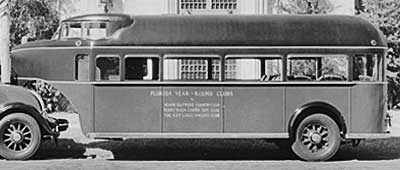
The couple became well known for their entertainments at the Miami Springs mansion of Dar-Err-Aha, including evenings for enlisted men during the war years. Glenn Junior remembered that they would arrive at the doorstep wide-eyed and certain that they could not be in the right place. Lena would drag them inside to enjoy performers (including a very young Desi Arnez) whom she had imported from the hotels in Miami Beach. Although the manufacture of Detroit-built Aerocars ended in 1938, Florida-built trailers continued to be built until the start of the Second World War, although in very small numbers. In 1934 the Curtiss Aerocar company forsook Curtiss' Opa-locka, and moved to larger facilities located at 300 Valencia Avenue in Coral Gables, an adjacent Miami suburb. Shortly after purchasing the Miami-Biltmore Hotel, Col. Henry L. Doherty, the owner of the Florida Year-Round Club and Roney Plaza Hotels made a major investment in the firm at which time he started purchasing Aerocars for use in ferrying his guests from place to place. An article in the July 29, 1934 New York Times, introduced the firm's latest model:
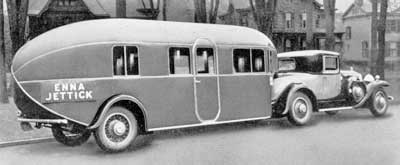
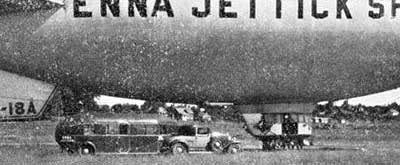
By 1940 decreased sales forced a relocation of the firm from Valencia Ave. to smaller quarter located in the Miami-Biltmore garage. The move coincided with the retirement of H. Sayre Wheeler and the appointment of Harry C. Genung, Curtiss Aerocar's longtime manager, as President. Business users of the Aerocar merchandisers included the Jarman Shoe Co., Nashville, Tenn., mfrs. of the ‘Friendly Five’ line of men's shoes; the Dunn & McCarthy Shoe Corp. of Auburn, NY, mfrs. of the ‘Enna Jettick’ line of women’s shoes (4 Aerocars); Fostoria Glass Co. of Moundsville, West Virginia; the Ranney Refrigerator Co. of Greenville MI., mfrs. of ‘Norge’ refrigerators; Eclipse Lawn Mower Co. of Prophetstown, Illinois; Servel Mfg. Co. of Evansville, Ill., mfrs. of gas and kerosene refrigerators; Singer Sewing Machine Co.; Toledo Scale; E.J. Martin's Sons of Rockville, Conn., mfrs. of Kingfisher Line & Tackle; Madam White Co. of Minneapolis, Minn. (cosmetics – lead vehicle of the ‘Madam White Caravan of Beauty’); Stanley Works of New Britain, Conn., mfr. of Stanley Tools; Victor Radios (mfr. by RCA) and General Electric appliances. The Dunn & McCarthy Shoe Corp. of Auburn and Binghamton, New York, manufacturer of the Enna Jettick line of women’s shoes, utilized a fleet of 4 Aerocars which were outfitted with a full complement of the shoemaker’s designs, the September 9, 1931 Weekly Enterprise, (Acton Mass.) reporting:
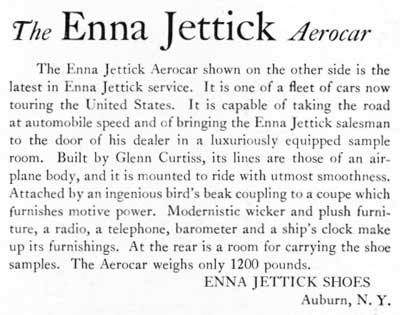
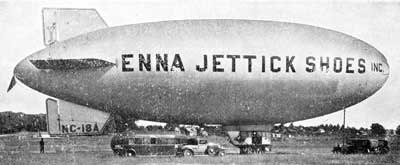
In addition to sales trips, the Enna Jettick Aerocar served as a support vehicle for the firm’s Goodyear Blimp (formerly the NC13A Neponset - rechristened NC18A Enna Jettick in 1931), which was used on 1931-32 cross-country promotional tour. The airship’s ground crew traveled in the Aerocar and an accompanying truck which served as the blimp’s mobile mooring mast. Text from a period Enna Jettick display ad follows:
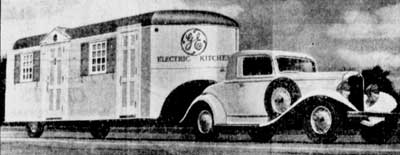
The November 16, 1932 issue of the Schenectady Gazette pictured An Aerocar outfitted with General Electric’s new line of home appliances:
The Activated Alum Corp. of Baltimore, MD., outfitted one Aerocar for use as a mobile laboratory and the Aetna Casualty and Surety Co.’s Aerocar, dubbed the ‘Safety Special’, toured the country with a safe driving demonstration. Oil companies were also enthusiastic user of the Aerocar; Pure Oil used an Aerocars as a mobile display unit and sound truck and Cities Service outfitted their Aerocar as a portable theater. Other users included Standard Oil of Ohio and the Gilmore Oil Co. (Socony-Vacuum). The Plymouth Division of Chrysler Corp. spent a reported $20,000 on an Aerocar that featured a 20’ by 4’ faithful replica of the Plymouth assembly line built inside. The 1937 Plymouth-towed rig toured the country to show the public how its cars were made and included a moving assembly line complete with animated scale workers that appeared to move under their own power. The trailer housed a generator that supplies current for the ingenious system of electric motors that operated the scale factory,’ as well as a public address system and facilities for showing moving pictures. When outfitted as a passenger ferry, the Aerocar was especially popular with known users including Pan American Airways (4 12-seat Aerocars); Norfolk & Western Railway; Transcontinental Air Transport; Warm Springs Institute, Warm Springs, GA; Virginia Hot Springs Co.; and the Florida Year Round Club (12 18-passenger Aerocars). Georgia Warm Springs Foundation transported infantile paralysis patients in wheelchairs in an Aerocar equipped with wide doors and a retractable loading ramp. Col. Henry L. Doherty used a dozen 18-passenger Aerocars to carry members of his Florida All Year Round Club and guests of the Roney Plaza and Miami-Biltmore Hotels between the Miami-Biltmore Country Club and the Cabana Sun Club. At least one of his Aerocars was a double-decker sightseeing rig, whose second-level passengers rode exposed to the elements. An Aerocar outfitted as a bus was introduced to the trade in the ‘Motors and Motor Men’ column of the October 9, 1932 New York Times:
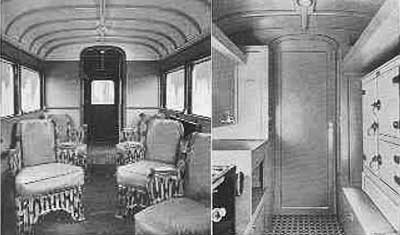
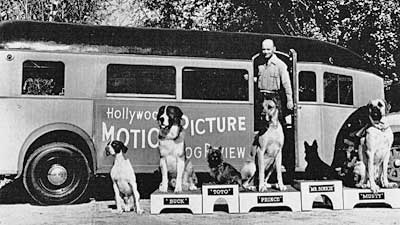
Ambulance users included Miami Undertaker W.L. Philbrick, the U.S. Public Health Service, and the Georgia State Department of Health. Foster Bros. stables of Owens Mills, MD. used a 4-stall horsebox; celebrity animal trainer Carl Spitz' used one as a portable kennel for his Hollywood Motion Picture Dog Review; Grolier Inc. the publisher of the 'Encyclopedia of Knowledge' outfitted an Aerocar as a combination reading room/bookmobile, and the City of Miami was an enthusiastic user of Aerotruck refuse haulers. According to Keith Marvin the Florida factory constructed Aerocar no. 122 during June of 1929. If the first trailer built was given serial no. 001, a total production of 122 trailers by that early date seems plausible however it’s unlikely (though possible) that 122 trailers had been completed as only 2 prototypes existed at the start of the year. Early catalogs listed 9 distinct models: Ambulance, Commercial (open bed aka ‘Aerotruck’), Horsebox (2 versions – 1 with 4 stalls), Observation Coach (2 versions); Passenger Transport (aka bus); and Streamlined Club Car – most of which were constructed on the standard 6’ 2” wide and 19’ 4” long Model 61 chassis. By the mid-30s Florida-built Aerocars were available in six distinct lines: the first three were passenger transporters, offering from 17 to 22 passengers, the remaining were, the standard (aka budget) series 161, the deluxe series 61, and the super-deluxe Model JC-100, which for all intents and purposes was a permanent mobile home with 2 bedrooms, a kitchen and a hot-water shower and marine (aka flushing) toilet-equipped bathroom. Most of the surviving Aerocars are outfitted as personal luxury travel coaches, and an article in the July 29, 1934 issue of the New York Times describes it as:
Private Flordia-built Curtiss Aerocar owners
included such
notables as: Carl G.
Fisher (real estate dev.); Augustus Post (aviator); Hugh McDonald (NYC
investor); William K. Vanderbilt II (sportsman, philanthropist); Henry
L.
Doherty (oilman); Howard E. Coffin (vice-pres. of Hudson); John J.
Mitchell (financier); Joseph E.
Widener (horseman, art collector); W.T. Sampson
Smith (Cooperstown, NY yachtsman and aviator); Dr. Hubert L. Eaton
(owner Forest Lawn); Philip K. Wrigley
(chewing
gum magnate); Gerardo
Machado y Morales (former President of Cuba); and Ruth Bryan Owen (U.S.
Ambassador to Denmark – who used
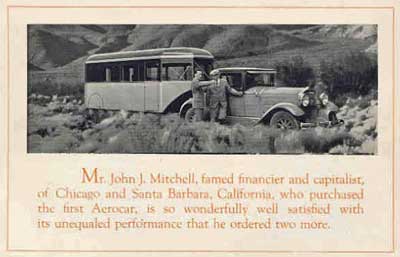
hers to sightsee in Europe). Owners of Detroit-built Aerocars included: Lewis D. Crusoe, (Fisher Body & G.M.); F.L. Roberts, (Ford Benzol of Detroit); William M. Gray (Colonial Traders, Chatham, Ont. Canada); Donald S. Gilmore, (Upjohn Co.); Allen Johnson (Grand Rapids -based theater chain); Dewey D. Battles (Grand Rapids Gravel); J.J. Mitchell (Chicago banker); Paul Butler (Butler Paper, Chicago); and George A. Hughes (Edison Electric Appliance, Chicago). The Florida firm’s "pièce de résistance" was the Curtiss Aerocar Model 161-BPC which featured a "ship's bridge" – a clerestory-windowed raised cockpit over the prow from which the occupants could enjoy a panoramic view of the countryside. Later versions appeared with a Pleasantaire air-conditioning option which was powered by a generator mounted at the rear of the tow vehicle, the October 27, 1937 issue of the New York Times reporting:
Prices for a 1937 Series 161 with no interior (bare walls) started at $1,985; when equipped with a kitchen and sleeping for four, the price rose to $2,840. The exterior finish below the windows could be made of metal and painted to match the purchaser's tow car at extra cost, although it’s unknown how many were constructed with the option. According to Autobody magazine one 1937 Model 161-BPC equipped with an observation deck and Pleasantaire air-conditioning cost its owner a whopping $8,500. According to Keith Marvin, the Florida factory constructed Aerocar no. 122 during June of 1929. The 1937 Curtiss-Aerocar Model 161-E in the Curtiss Museum has a serial number of 251 and other surviving builder's plates bear serial numbers ranging from 209 to 273 which confirms that total production of the Florida-built Aerocars was likely between 250 and 300 units, providing they started with 001 and were consecutively numbered. New Yorker Magazine’s cartoonist Carl Rose contributed an entertaining cartoon entitled ‘A Caravan of California Millionaires, Fleeing Eastward from the State Income Tax, Encamps for the Night in Hostile Wisconsin Territory’ in its March 7, 1936 issue (reprinted in the May 9, 1938 issue of Life Magazine) that depicts a number of Aerocar-equipped Californian tourists drawn into a circle for protection from less-fortunate native Wisconsonites. By the late-30s used Aerocars could be had for a song, the manufacturer even offering deals such as the one found in a 1939 issue of Automobile and Trailer Travel Magazine:
Although the basic design of the Aerocar originated with Glenn H. Curtiss, most of its improvements were the responsibility of Aerocar’s in-house designer Harold H. Robinson, whose 23 Aerocar-related patents follow:
Of the estimated 300 Aerocar trailers thought to have been constructed by the Michigan and Florida factories, twelve are known to remain. Most feature standard wood and wire-frame construction with nitrite-coated Masonite exterior panels, although antique motorcycle and trailer collector Vince Martinico of Auburn, California currently owns an unrestored cupola-equipped, steel-paneled survivor (steel paneling was a factory option). One 1937 Aerocar is on permanent display at the Glenn H. Curtiss Museum in Hammondsport, New York while a second resides in the collection of the Peterson Museum in Los Angeles, California. The Peterson Museum’s Aerocar was originally constructed for Dr. Hubert Eaton, the owner of Los Angeles’ Forrest Lawn Memorial Park and its exhibit featured the following description:
Another Aerocar currently resides at the Louwman Museum/Dutch National Motor Museum in Raamsdonksveer, the Netherlands (Het National Automobiel Museum, Steurweg, 8, Raamsdonksveer, NL). Its Aerocar was built for New York financier Hugh McDonald to take him on his daily journey from Long Island to Wall Street. Providing the motive power was a 1932 Graham Blue Streak coupé with 8-cylinder 4022cc engine developing 90 bhp and giving the car a solo top speed of 85 mph. The 'bridge' at the front of the caravan over the hitch is fitted out with the kind of instrumentation one would find on a flight deck and includes a compass, altimeter, speedometer and barometer. Behind it rests a mobile office and the rear contains a galley and lavatory. Aerocars occasionally show up at collector car auctions and St Louis-based collector car dealer Mark Hyman offered an unrestored Aerocar for sale as recently as 2013. Hyman’s Aerocar was originally purchased by pioneering aviator, balloon racer, auto racer, and Broadway actor, Augustus Post. Next, it was owned by the Los Angeles Biltmore, then Jack Smith, owner of Santa Monica’s Republic Van Lines, and finally Hollywood stuntman Robert Breeze, who went by the moniker ‘Wolf River Bob’. Its streamlined fifth-wheel tow rig was produced by Standard Carriage Works of Los Angeles on a 1-ton 1938 Chevrolet HC-1 cab and chassis, with the ash-framed rear bodywork incorporating a storage compartment. A detailed description of Post’s vehicle from Hyman follows:
Stephen Butcher, a partner in Funky Junk Farms, a film prop rental house located in Altadena & Fillmore, California owns a second unrestored 1934 Aerocar with a COE Dodge tractor. A restored 22' 1936 Detroit-built Aerocar, originally constructed for William Gray, the son of Canadian automobile executive Robert Gray - founder of Gray-Dort - is privately owned by Ken and Lana Hindley of Union, Ontario, Canada. Glenn H. Curtiss’ widow, Lena Pearl Neff Curtiss Wheeler died in 1951 and was buried next to Glenn under a stone marked ‘Lena Curtiss Wheeler.’ G. Carl and Dorothy Adams had no children, and after the death of his sister-in-law Lena, longtime Curtiss family friend, bookkeeper and secretary Florence Illig came to live with the Adamses, and inherited their estate. Glenn and Lena’s surviving son, Glenn H. Curtiss Jr., became a successful South Florida Volkswagen distributor, passing away in 1972. ©2013 Mark Theobald for coachbuilt.com with special thanks to Keith Marvin and the Glenn H. Curtiss Museum, Hammondsport, New York.
|

|
|||||||||
|
||||||||||
|
||||||||||
|
||||||||||
|
||||||||||
|
|
||||||||||
|
||||||||||
|
|
||||||||||
|
|
||||||||||
|
|
||||||||||
|
© 2004-2013 Coachbuilt.com, Inc.|books|disclaimer|index|privacy |
||||||||||