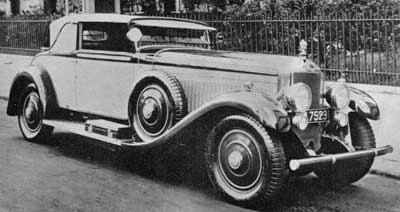
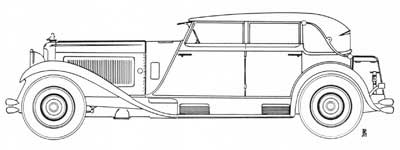
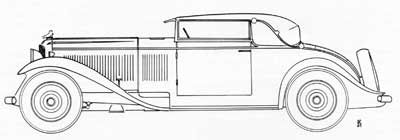
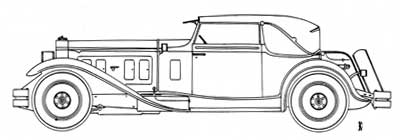
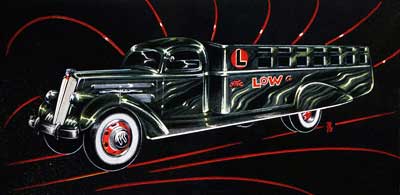
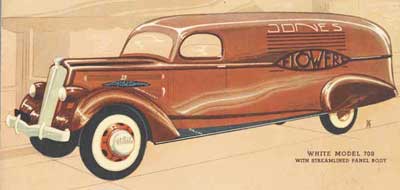
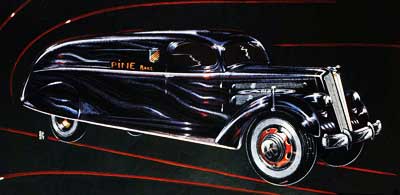
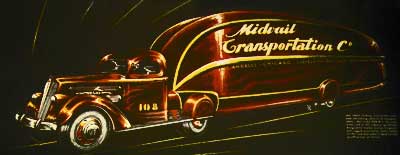
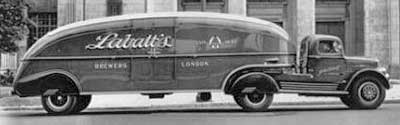
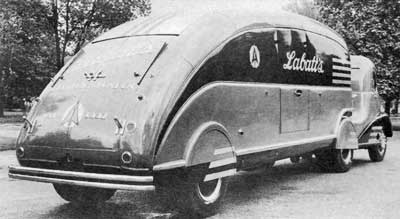
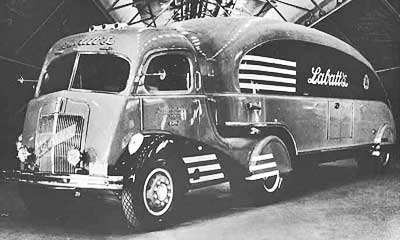
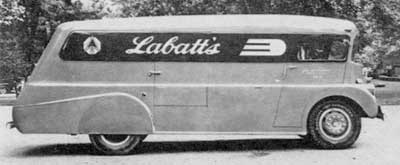
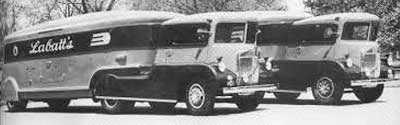
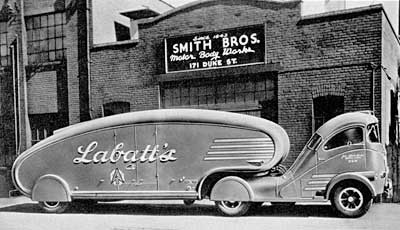
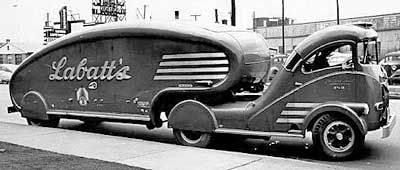
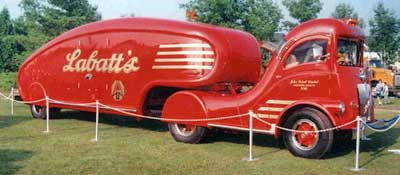
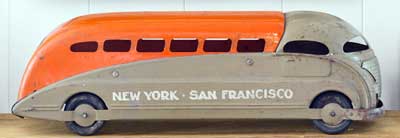
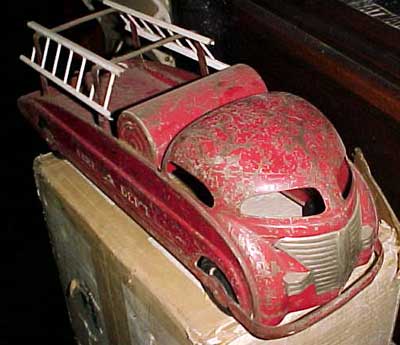
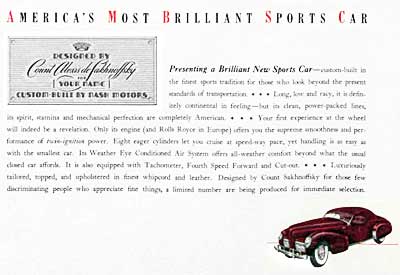
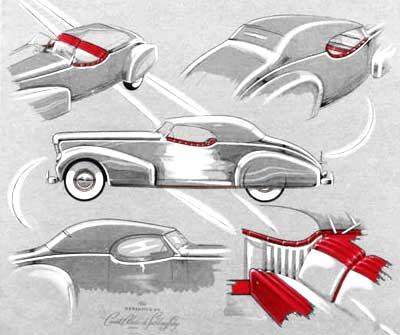
|
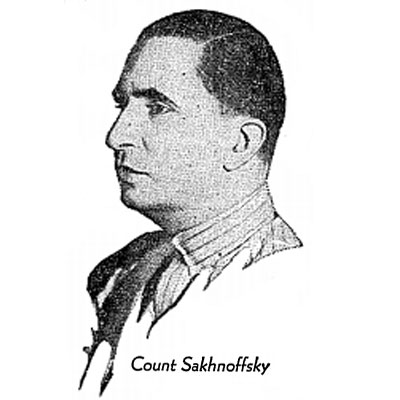
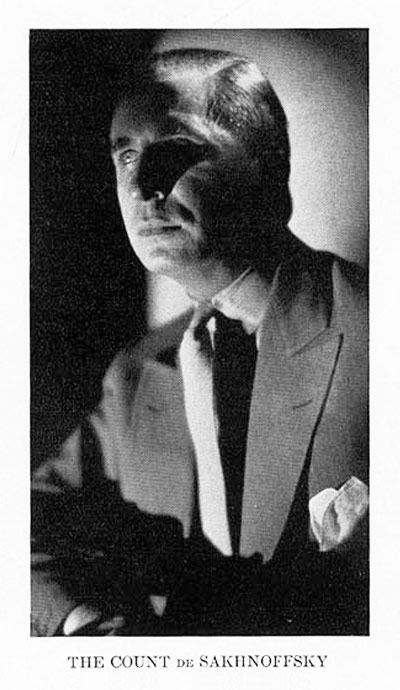
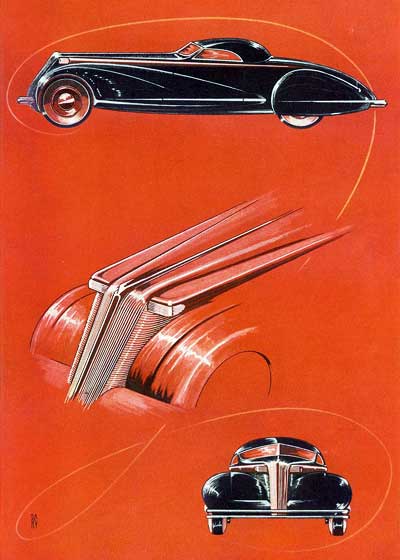
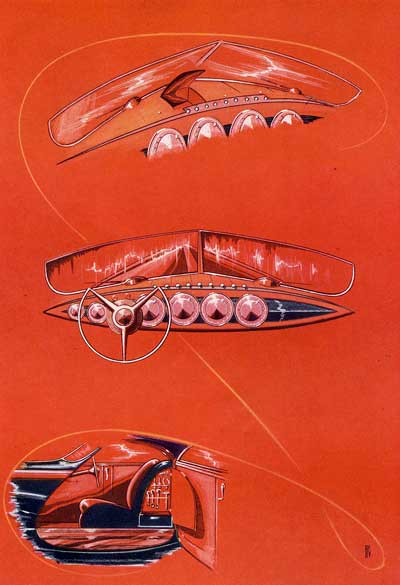
Count Alexis Wladimirovich de Sakhnoffsky's
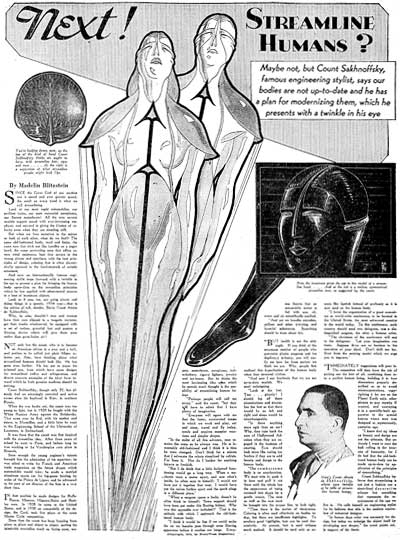
1930s illustrations in Esquire introduced "streamlining"
to the American public. Sakhnoffsky's distinctive style resonated with
cosmopolitan Americans' desire for modernity, efficiency, novelty, and
speed.
While still in his twenties, his streamlined automobile designs won
international awards. Historians of automobile design, with the
prescient exception
of Brooks Stevens, have ignored or belittled his work because of his
limited
technical knowledge; but his charisma, vision, and talent for
illustration
influenced American automotive, household, and fashion design to a
remarkable
degree.
After a short career in fashion illustration and
design, his attention turned to automobiles and during the mid-1920s he
was associated with the
following Belgian coach builders; Lejeune A. Fils Aine (rue des Allies,
80,
Verviers); D'Ieteren Freres (Rue de Mail 50-60, Bruxelles), L'Auto
Carrosserie,
(Ham 104, en Zondernaamstaat, 10, Gent), M. & Ch.Snutsel
Fils, (Rue
Stevin 59, Bruxelles); Carrosserie Van den Plas, (Rue St. Michel,
Cinquantenaires,
Bruxelles), and Vesters & Nierinck (Rue du Foyer Schaerbeekvis).
Custom autobodies, coachbuilt to his design, were
constructed for chassis including Bentley, Buick, Cadillac, FIAT, Gräf
und Stift,
Hispano-Suiza, Imperia, Mercedes-Benz, Métallurgique, Minerva, Packard,
Puch,
Rolls-Royce, Stutz and Voisin. Many of these vehicles won awards in
continental
concours d'elegances between 1926-1931, in Beaulieu, Berlin,
Bournemouth,
Cannes, Le Touquet, Monte Carlo, and Nice. (Unlike today's Concours
d'Elegance
which judge a vehicle solely on its own merits, Concours of the 1920s
and 1930s
awarded points for coordinated displays of coachwork and fashion,
usually
featuring a woman's clothing but at times extending to matching dogs
and
chauffeurs.)
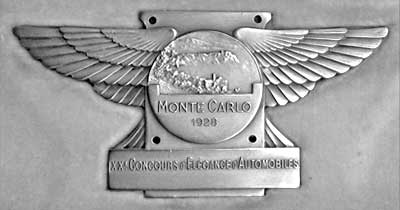
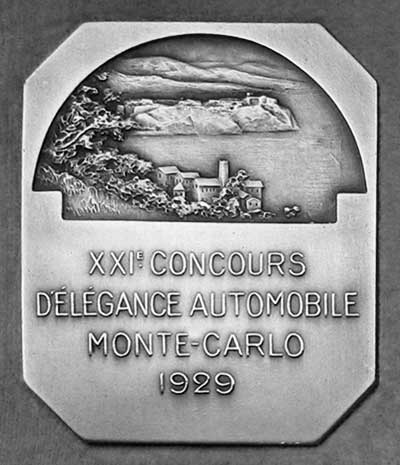
In Monaco, his work won Grand Prix medallions for
5 years straight: 1926 with a Minerva, 1927 with a Minerva, 1928 with a
Rolls-Royce, 1929 with a
Packard, and 1930 with the first Grand Prix awarded to an American
chassis: the
unique 1929 Cord “Hayes Coupe” (which recently sold at auction for $2.4
million,
making it the most expensive Cord in the world).
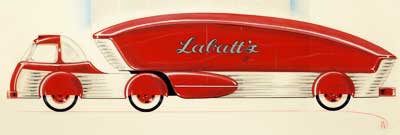
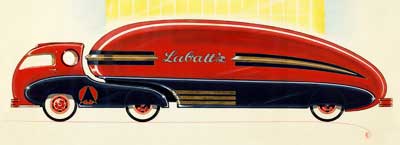
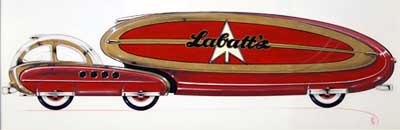
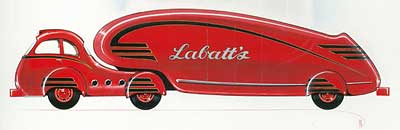
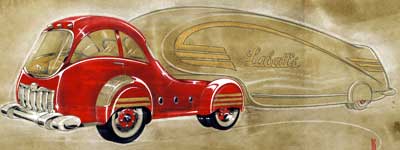
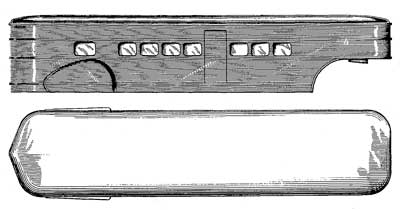
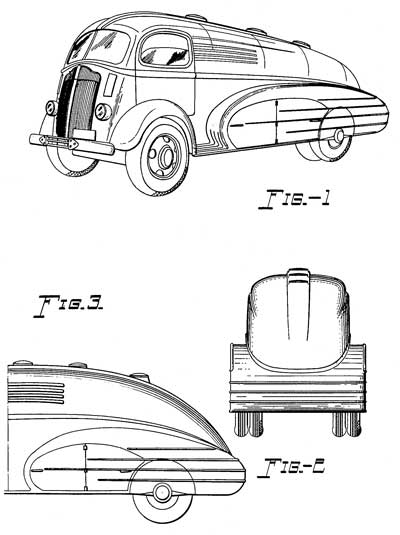
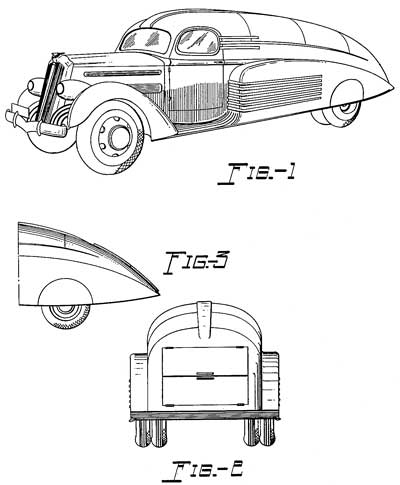
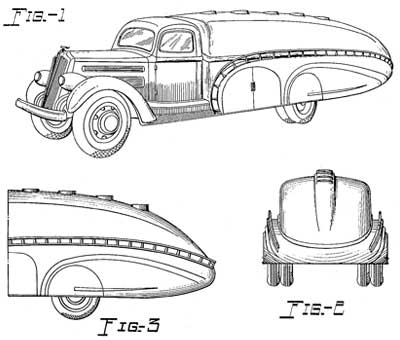
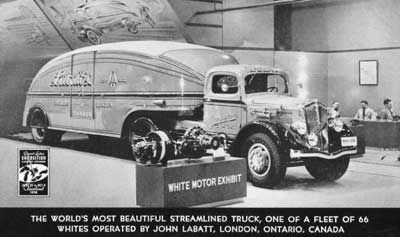
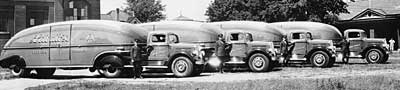
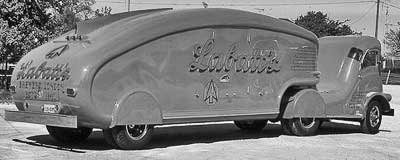
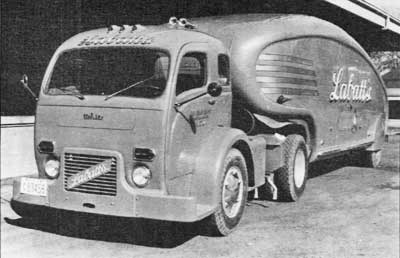
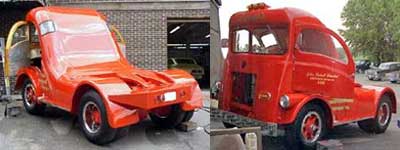
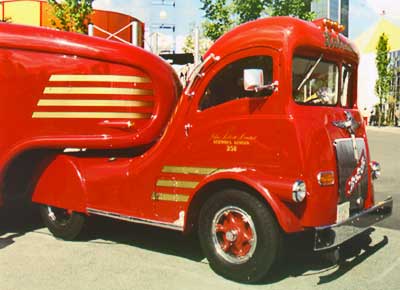
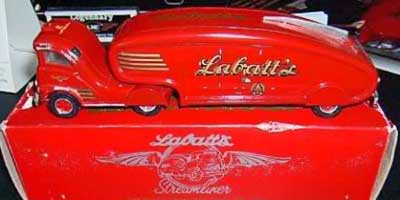
He designed the streamlined Labatt's delivery
truck the fondly remembered traffic-stopping vehicles that transported
the London, Ontario brewer's
popular beverages across Canada from the mid-1930s into the mid-1950s.
His talent for graphics and line drawings
extended his influence among the general public, and his illustrations
appeared in
the following periodicals: Autobody, Conquete de l'Air, Esquire,
L'Equipement Automobile, Motor Trend, Psyche, Skyways and The Classic
Car.
Fluent in four languages (English, French, German
and Russian) de
Sakhnoffsky became Autobody Magazine's 'Continental Correspondent' in
the mid-1920s. By 1928 his articles and award-winning designs had
attracted the attention
of General Motors, Packard and Hayes Mfg. Co. and he accepted a
position
as art director with the latter in its Grand Rapids design studio.
During his
tenure at Hayes, de Sakhnoffsky influenced the design of many
automobile
bodies, as Hayes' clients included American Austin, Auburn, DeVaux
(later
Continental), Franklin, Marmon, Peerless, Reo, Roosevelt and Studebaker.
When his contract expired, he became a freelance
consultant, having realized that consultation and free-lance projects
generated the most income and
best suited his lifestyle. Not surprisingly de Sakhnoffsky's eccentric
sense
of style extended to his wardrobe which according to Esquire consisted
of
"riding breeches and boots with open-collared white shirts."
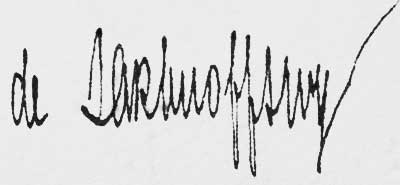
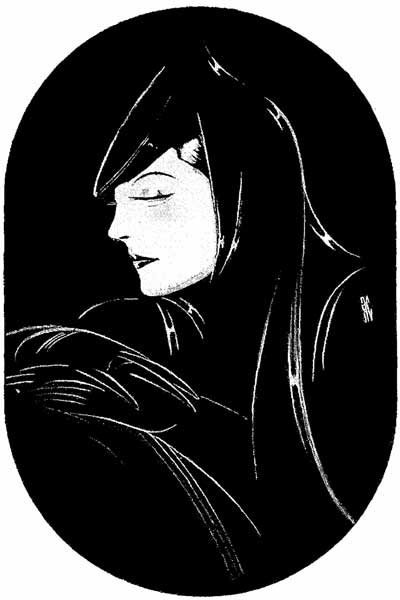
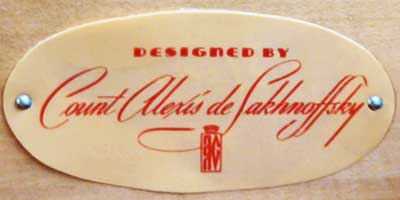
His trademark monogram, seen to the right, needs
a little explanation. In English, his initials are A.D.S.- A for
Alexis, D for de, and S for Sakhnoffsky. In Russian, which uses the
Cyrillic alphabet, his initials are A.д.C. - A for Alexis , д for de,
and C for Saknoffsky (Алесис де Сакчноффскы).
De Sakhnoffsky maintained offices in Atlanta,
Chicago, Grand
Rapids, Milwaukee, New Canaan (Conn.), New York City; and Philadelphia
and was awarded 38 US patents during his lifetime. His numerous
non-automotive
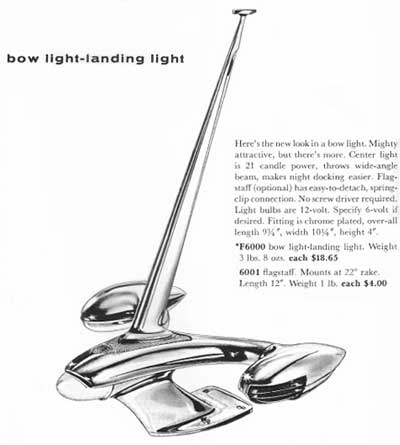
clients included Attwood Mfg. (boat hardware), the Brown Derby
(tableware),
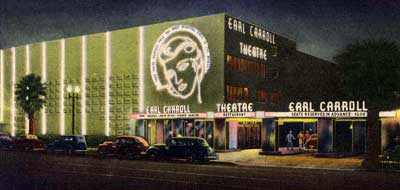
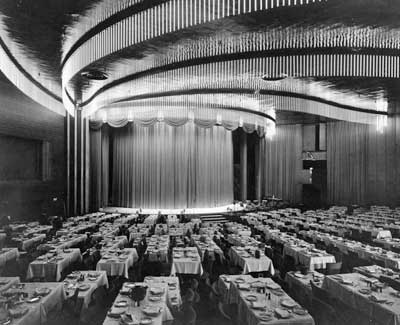
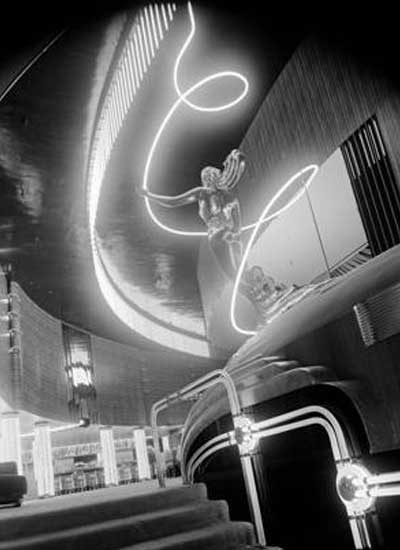
Chrysler Corp.(World's Fair exhibit), Earl Carroll Theatre, LA
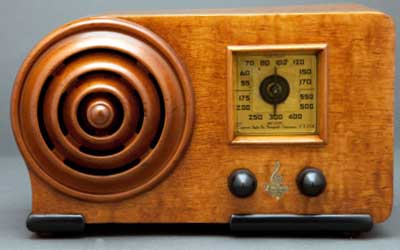
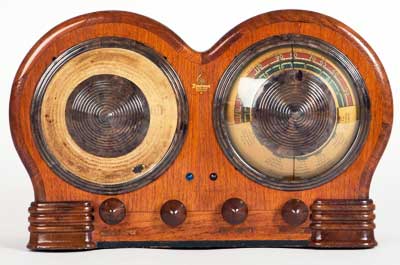
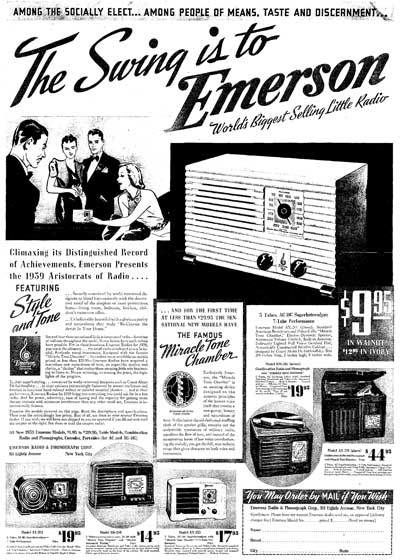
(interiors) Emerson (radios),
Feather-Craft (boats), Fleetwheels (travel trailers), Frost-Craft
(boats),
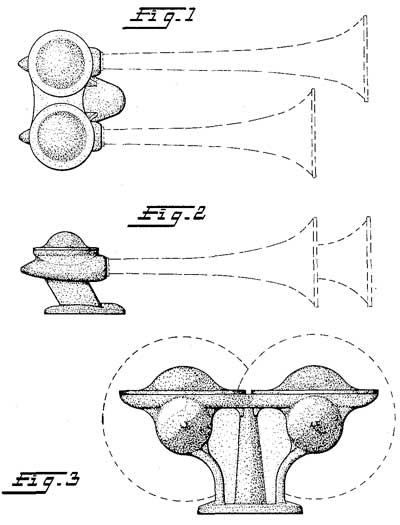
Gruen (watches), Hadley Mfg. (boat horn), Heywood-Wakefield
(furniture),
Kelvinator (refrigerators), Mullins (boats), Murray (bicycles), Muzak
(radios), Natan & Co. (dresses), Pedwin (shoes), Pioneer
(suspenders), Revlon
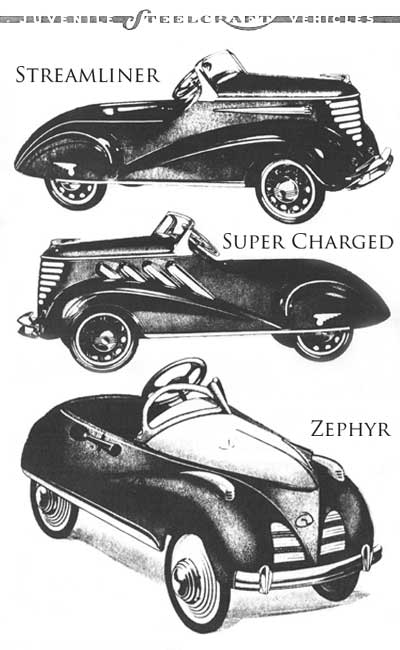
(advertisements), Hal Roach (movie sets), Sabca (airplanes), Steelcraft
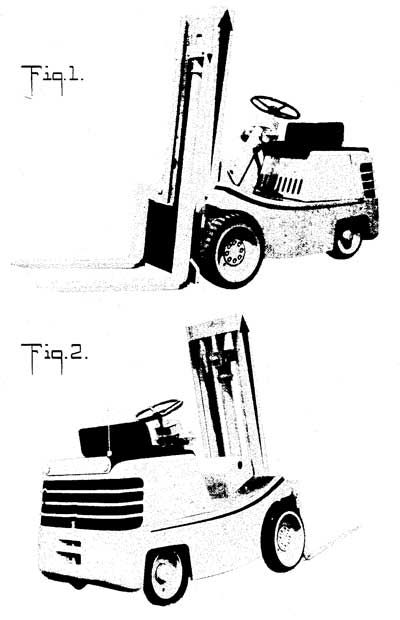
(toys & pedal cars), Vollrath (cookware), and Yale & Towne
(forklifts).
Post-Hayes his automotive clients included
Bantam, Budd Mfg. (trailers), Crosley, Ford, Indiana (trucks),
Kaiser-Frazer, LaFayette,
LaSalle, Mack, Murray Corp. (auto bodies), Nash, Packard, Tucker, White
(trucks)
and Willys-Overland.
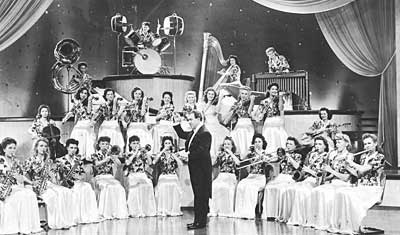
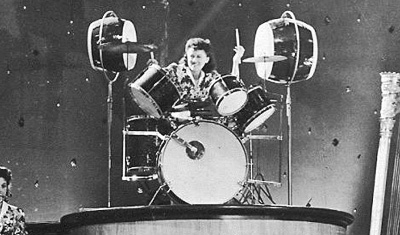
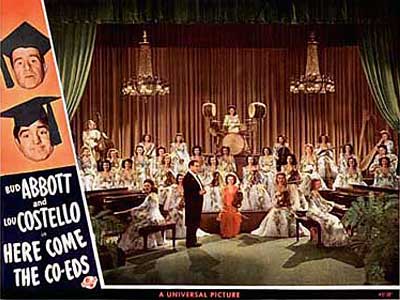
In the late 1930s, he took on a number of
interesting side jobs, including set design on a famous Hal Roach
comedy ‘Topper”, and musical instruments
for Phil Spitalny's popular "all-girl" orchestra.
De Sakhnoffsky became a US citizen in 1939. In
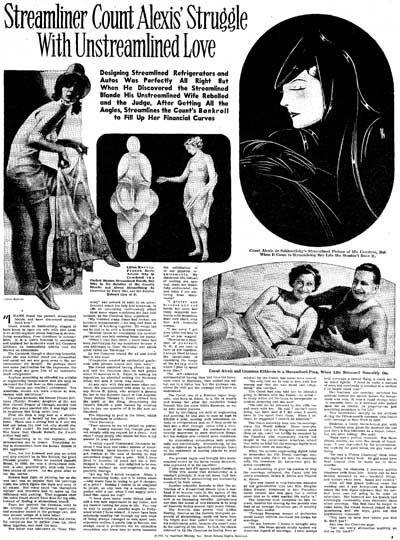
1941, his divorce (due to his wife's objection to his girlfriends)
became the subject of gossip
columnists from coast to coast. From 1943-1945, he served in the U.S.
Army Air
Corps, stationed in Moscow where his multilingual fluency proved useful.
Although his Army pension and work for Esquire
provided a steady,
albeit small income after the War, he discovered that opportunities for
freelance
automobile designers were non-existent and took a position with his
protégé,
Brooks Stevens. He augmented his income with illustrations for
advertising agencies and
an occasional design project for small manufacturers and wealthy
individuals.
After parting ways with Stevens he moved to Atlanta with his third
wife,
passing away there on April 29, 1964, at the age of 62.
The Count told his life story in a
three-part article published in the journal of the Classic Car Club of
America in the
late 1950s, and most of the personal anecdotes that follow are taken
from
the series.
Alexis Wladimirovich de Sakhnoffsky was born
on November 12,
1901 in Kiev, the largest city in the Russian state of the Ukraine, to
Count
Wladimir and Countess (Terestchenko) de Sakhnoffsky.
His father, Count Wladimir de Sakhnoffsky,
was a quiet,
scientifically inclined nobleman, who just happened to be the private
financial
counselor to Czar Nicholas II.
His mother was the granddaughter of the
Russian sugar
magnate and industrialist Artemon Terestchenko, one of the wealthiest
persons
in Czarist Russia. Her father, Nicola Terestchenko, inherited his
business and
fortune, which was handed down to his children, who aside from de
Sakhnoffsky's
mother included Theodore and Ivan Nikolavitch Terestchenko, the world
renowned
art collectors.
The extent of the immense wealth of Alexis'
mother's family
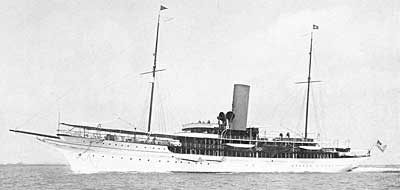
can be seen in the family's yacht, the 318 foot Iolanda, which was
owned by his
grandmother Elizabeth, Nicola's widow. Constructed in 1908 in Leith,
Scotland
by Ramage and Ferguson Shipyards the Iolanda was the second largest
steam yacht
in the world. Purchased in 1911 from its original owner, Commodore
Morton F.
Plant, it sailed the Mediterranean and Baltic Seas carrying the scions
of
Europe as well as members of the Russian Imperial family, and one would
assume
a young Count Alexis.
He grew up in a five-story mansion whose
staff of 18
included a French governess and British nurse from whom he learned
French and
English. Early on Alexis became enamored with the family's
chauffeur-driven
Mercedes and he recalls his great delight when its Russian operator
opened up
the exhaust cutout.
As a thirteen-year-old de Sakhnoffsky, whose
boyhood wish
was to be the Czar's coachman, constructed his first vehicle, a
rudimentary
engineless model constructed using a sled and a set of wheels
appropriated from
a perambulator. He often used the household custodian, Peter, as
ballast on his
daily charges down the hills surrounding his home in Kiev. The vehicle
was soon
confiscated and destroyed, after Alexis nearly struck his father while
tearing
down a steep hill.
Following a series of missteps and the entry
of Russia into
the First World War, which resulted in the deaths of 3,300,000
Russians, Czar Nicholas
II was deposed and replaced by a provisional government in
the first
revolution of March 1917 which itself was overthrown by the Bolsheviks
the
following October. The senior de Sakhnoffsky's patron abdicated on
March 15,
1917 and summarily executed on July 16-17, 1918.
Due to their immense wealth the Terestchenko
family were
easy targets for the Bolsheviks, and de Sakhnoffsky's father committed
suicide
in August of 1918. Saknoffsky recalled :
"The Red-imposed curfew was 6 p.m. Alone in
Father's
study, haunted by his last moments before taking poison, I sat
motionless in
complete silence. The only perceptible sound was an occasional rumble
of
iron-rimmed wagon wheels. Since no traffic was allowed after hours,
this meant
that another group of wretched arrested people, maybe relatives or
friends,
were on the way to interrogation or torture."
The Russian Revolution took place over a
number of years,
and during its early days a group of former Imperial Army Generals
organized a
volunteer army to fight the Bolsheviks. Headquartered in the Ukraine
the rolls
of the White Army - as they were called - included a Private de
Sakhnoffsky.
Luckily for de Sakhnoffsky, an Aunt in
Marseilles, France arranged
for his immediate family (Alex, his mother and sisters) to be smuggled
out of
the country in January of 1920, his only possession being 1,000 rubles
and a 5½
carat diamond ring. He was safe, but no longer wealthy, so Alexis' aunt
financed a sojourn to Switzerland where he enrolled in the engineering
program
at the University of Lausanne.
After three years of school he ran out of
money and moved to
Paris where he began sketching gowns, which he hoped to sell to
couturiers.
"But a style designer can't get anywhere in
Paris unless he can also
cut
and fit dresses," explained de Sakhnoffsky. "So I could get only 17
or 20 francs for a sketch, and even then didn't make a sale very
often."
With his fashion career at a standstill, he
decided to take
a course in design at the Ecole des Arts et Métiers in Bruxelles,
Belgium. To
help finance the move he began looking for a job in and around
Bruxelles.
Coincidentally, Thomas Hibbard, a partner in
the
Franco-American automobile design firm of Carrosserie Hibbard et
Darrin,
happened to be in Carrosserie Van den Plas' Bruxelles office in late
1923 when
a young Russian artist (de Sakhnoffsky) came by looking for work.
Surprisingly,
his portfolio did not contain any renderings of automobiles rather it
consisted
of detailed drawings of women's clothing and accessories as his only
work up
until that time had been for department stores.
However de Sakhnoffsky's talents were
obvious and he was
subsequently hired by the Antoine Van den Plas as a junior draughtsman
at 750
francs a month. His multi-linguistic talents were as much an asset to
his
employer as were his artistic ones as he served as translator whenever
one of
the firm's international clients visited the shop. As Van den Plas
directors
also served on the boards of Minerva, Metallurgique and Imperia, the
company
was the coachbuilder of choice for the three Belgian-built chassis.
Before long Alexis was given more
responsibility and began
executing final renderings of selected model bodies for Van den Plas
wealthy clients.
Not satisfied to be a mere interpreter-delineator, de Sakhnoffsky
longed for
his former life of luxury stating:
"My mind associates living below
standards with the dreadful odor of wet wool, hungry eyes and gradual
sinking to the acceptance of status quo."
He explains, "It was tough getting used to
working long
hours with the same faces around you. I loathed the drab surroundings,
creaky
floors and garlic stench of my colleagues' garlic and lard sandwiches.
Even my
white smock seemed to me a brand of disgrace But. worst of all was the
ordeal
of having to share the odiferous, window-less lavatory without any
privacy
whatsoever."
During meetings in the conference room he
often feigned a
headache or some other malady just to be able to use his employer's
executive
lavatory where he could "revel in clean, sanitary comfort".
On December 27, 1924 de Sakhnoffsky was
summoned to his
employer's office, unsure if he was about to be fired or promoted.
Prepared for
the former he wondered:
"What about Madeleine, my new girlfriend, whom
I
promised new outfits to join me on my weekend safaris?"
He needn't have worried as Mon. Antoine
offered him a
promotion, appointing him Van den Plas' Art Director, a position which
included
a key to the firm's executive lavatory.
Although he rarely mentioned her, de
Saknoffsky ended up marrying
the girl mentioned above. Little is known about the first Countess de
Sakhnoffsky (nee Madeleine Parlongue) other than she was born in
Belgium to Edgard
Henri and Lucie Ernestine (Louat) Parlongue in 1910 (one source states
1914).
De Sakhnoffsky met her while he was working for Van de Plas and she
accompanied
him to Grand Rapids when he relocated to the United States, the 1930 US
Census
listing the couple as Madeline and Alexis de Sacnoffsky (sic).
In addition to the preceding reference from
his Classic Car
series, de Sakhnoffsky mentions her in a 1933 interview, explaining
that while
in Belgium he met a girl who during the war had risked her life for her
country
in the intelligence service. She had a hatful of citations for her
bravery –
and also she had a pretty face and that indefinite something the
stylist loved – 'chic'.
Ironically an art director's pay wasn't
sufficient to allow
for the owning of a car, de Sakhnoffsky explaining:
"It was agony to
occasionally drive my own designs, when I ached for a car - just any
car.
"To satisfy my craving, I arranged with the
management of the
custom-car factory I worked for, to allow me to "test" my creations
over week-ends. And since our production ran at about 1½ cars a week,
there was
always at least one finished car available on Saturdays, prior to be
shipped or
driven away by the owner.
"Attired in my best clothes, I drove past
the great
plate glass windows of the Belgian Capitol, watching the reflection of
the
long-wheelbase costly vehicle, with myself at the wheel. All my small
savings
went towards trips to the sea-shore or mountain resorts, where the low
bows of
flunkeys and admiring glances of patrons gave me a heady feeling of
success. Only the most exclusive places,
I felt, were good enough for MY cars."
During those days a good portion of a
continental coach
builders business came from its annual entries in Europe's prestigious
auto
shows and Concours d'Elegance (translation: competition of elegance).
Van den
Plas S.A. creations
A little Van den Plas history is in order as
there were three separate coachbuilders operating under the Van den
Plas name at
the time.
It was in 1871 that a blacksmith left his
workshop on the
industrial north-east side of Bruxelles to his nephew, Guillaume Van
den Plas,
who had served as his apprentice. By 1880 Guillaume had expanded into
the
manufacture of wheels and axles by 1884 entire carriages. In that year
he
relocated to Antwerp where he was joined by his three sons, Antoine,
Henri and
Willy. Following Guillaume's retirement in 1898, Henri Van den Plas
assumed
control of the families Antwerp operations and Antoine and Willy
returned to
Bruxelles where they established their own works at 32 Rue de St.
Michael.
Most of the firm's work was on the
associated Minerva
chassis although they produced bodies for all the major European and
American
luxury chassis at one time or another. The 1934 bankruptcy of Minerva
caused
the bankruptcy of Van den Plas during the following year, its last
known
project being a Torpedo Roadster on a Duesenberg Model J chassis. The
firm was
subsequently reorganized and survived into 1949, specializing in bus
and
commercial bodies.
In 1913 a British Van den Plas was
established in Hendon
by Warwick Wright who produced bodies under license from Van den
Plas,
S.A. After various name changes and reorganizations the firm assets
were
purchased in 1923 by Edwin Fox and his brothers who reorganized it as
Vanden
Plas Ltd. The British firm subsequently moved from Hendon
to Kingsbury where they established a mutually beneficial
arrangement
with Bentley Motors Ltd. for whom they produced over 700 bodies between
1924
and November 1931 when Bentley was purchased by Rolls-Royce. With the
end of
their close association with Bentley, Vanden Plas Ltd. Supplied
coachwork to
various British firms including Alvis, Armstrong Siddeley,
Bentley, Daimler, Lagonda and Rolls-Royce. In 1946
the firm
became a subsidiary of the Austin Motor Co., who used it to manufacture
the
coachwork for its new Austin A-135 Princess. In 1960 Vanden Plas began
offering
its own line of cars, but after a succession of mergers and
acquisitions the
firm ended up being badge affixed to upscale versions of various
British Leland
marques.
A third Van Den Plas was formed by Willy Van
de Plas, the
youngest son of Guillaume, who left Bruxelles and established a
partnership
with a Parisian coachbuilder in 1920 forming Carrosserie Willy Van den
Plas et
Solomon & Cie. Willy bought out his partner in 1926, and the
business was
subsequently conducted at 228 Rue le Courbe, Paris, without the Solomon
suffix.
Willy won the 'Grand Prix du Concours d'Elegance de Paris' in 1930 and
the 'Coupe
de la Body' and 'Grand Prix d'Honneur' in 1931 with an 8-cylinder
Delage
chassis. Carrosserie Willy Van den Plas survived until 1934.
Alexis de Saknoffsky was attached to the
Bruxelles-based Van
den Plas S.A. and did no work for the French or British firms that
shared
the same
name. The following first-hand description of the Van den Plas shops is
excerpted from his 1957 Classic Car article:
"The output of most deluxe coachbuilders was
very
small. At best, Van den Plas produced one to one and one-half bodies a
week,
usually taking three months to finish them. The customers were
prominent
Englishmen, titled and/or wealthy Belgians and members of the rich
international crowd referred to the company by representatives in
London, Paris
and Spain..
"Our London representative was the
Cadillac-Buick
dealer; in Spain our Mr. Rugeroni sold Rolls-Royce, and so on. But our
Brussels
salesman was debonair, impeccably dressed André Monimaerts. His job was
to hang
around races, bars and night clubs and weed out the latest information
on who
is in the chips, or ready for a new custom-built creation. A lot of
this
information was channeled to him via ladies of easy virtue, with whom
he had
quite a way. One of them, a beautiful creature called "Mouche" (Fly),
who divided her well-paid-for time between London and Brussels, was
always good
to provide numerous tips which resulted in a few (auto) bodies for
André.
"Upon arrival, the customer was brought into
the
sanctum of Monsieur Antoine's wood-paneled office. If the customer was
English
or American, I was immediately summoned to act as interpreter. Sooner
or later,
however, I was always in the picture when styling was discussed.
"Some members of old, noble families had
exact replicas
of their favorite models reproduced every few years on newer chassis.
Their
family color schemes were always the same down to the last filet
(stripe).
Occasionally, some of the younger members drifted towards flashy
Bugattis, SSK
Mercedes, etc. but most of the aristocracy was not too wealthy and what
with
occasionally indulging in special cars for their lady-friends, they had
to
watch their own car budget. And watching who paid for whose car with
whose
credit was a delicate job for Monsieur Antoine and his credit man.
"Hanging in the ante-room were about thirty
of my
original drawings of our models. These were replaced from time to time
when I
had a spare moment. Generally, the customer was able to find something
there
which was in line with his wishes.
"Since the reputation of quality was
unquestioned,
after the customer selected his model and agreed on a general estimated
cost,
Monsieur Antoine summoned his production accounting- coordinating
executive,
who took in long-hand, copious notes of the details. These covered a
wide
variety of queer wishes, from vanities carved out of solid ivory, to
sunburst
roof treatments in pink leather or interiors matching the skin of the
owner
(for a well-known mulatto songstress).
"My job was to either create an original or
to execute
the final renderings of the selected model in the chosen colors and
sometimes
perspective sketches of interiors and fancy woodwork. The client
supplied us
with full information on his crest or monogram to be hand-painted on
the rear
doors and engraved on silver cocktail shakers, flagons and cups.
"A staff meeting followed during which
department
chiefs (body drafting, lumber chief, sheet metal chief, upholstery head
and
finally chief painter) reduced the coordinator's notes to departmental
detailed
instructions. All were dressed in long white smocks, with only the
general
production manager, a two-hundred-fifty-pound Frenchman called Mr.
Gifflaux,
allowed to keep on his stiff black hat.
"From then on, thoroughly conscious of the
customer's
wishes, I worked with the body lofters who added all the necessary
modifications
to the master body drafts of our basic models."
Although Van den Plas S.A. is known to have
built on
Bentley, Benz, Buick, Cadillac, Excelsior, Fiat, Gräf und Stift,
Hispano-Suiza,
Imperia, Isotta-Fraschini, Mercedes, Métallurgique, Packard, Panhard,
Rolls-Royce, Puch, Stutz and Voisin, the bulk of their work was on
Minerva
chassis, and de Sakhnoffsky recalled five memorable examples.
The first was a 1927 convertible trimmed in
pigskin that was
built for a wealthy British Polo captain.
The second, a 1929 convertible constructed
for an Indian
maharaja that was finished in navy and upholstered in black lizard with
all
interior metal parts either 14-karat gold or gold plated. The third was
a
closed-coupled sedan on a 20-hp Rolls-Royce chassis built to order for
Adrian
Conan Doyle, the son of Sherlock Holmes' creator, Arthur Conan Doyle.
The fourth and fifth, I'll let him describe
directly:
"One of our esteemed clients, Prince de
Ligne, member
of one of the oldest Belgian families and brother of the Belgian
Ambassador to
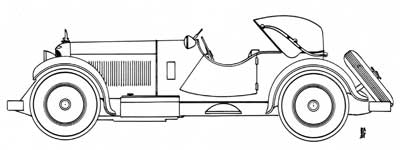
the United States, was also an ardent big-game hunter. I designed a
special car
for him, following his detailed specifications. It was built on the
large
Minerva,-and was really a phaeton with a rakishly slanted V-windshield
and
extra low sides. There were no running boards proper. The fenders were
of the
domed, individual cycle-type; there was a flat valance covering the
frame on
the sides and two large steps allowed entry into the body without
doors. Two
large un racks were attached to the outside. The hood and body were
entirely
finished in engine-turned aluminum with red leather trim inside. The
practicality of using a long wheelbase, deluxe chassis for the Belgian
Congo
roads is, of course, highly questionable, but I love to think of the
field day
the wild game must have had admiring the gleaming finish in the African
sun.
"One day I was interviewing a striking
brunette with
something bohemian about her. Her clothes 'reeked' the expensive
couturiers, she had a casual aplomb of people of wealth and a heavy
Slavic
accent. She told me that her husband, a known painter, wanted two cars:
a sedan
on the large Rolls and a convertible on the Isotta-Fraschini. Both cars
were to
be finished in ivory paint, with large sterling silver monograms
applied on the
doors. The interiors were to be upholstered in fraises ecrasées
(crushed
strawberry) leather and the vanities along the partition and next to
rear arm
rests were to be carved out of solid elephant tusks. When I expressed
doubt
that the largest tusks would be large enough for full body width
vanities, she
advised me that she and her husband would provide the ivory gathered
during one
of their recent safaris.
"In the center of the roof in the rear
compartment
there was to be an ivory rosette with the pink leather gathered around
it in a
sunburst effect.
"As blasé as I was by the unusual and often
ridiculous
requests of our wealthy patrons, my curiosity was aroused as to her
identity.
"Her husband complained that being a nature
lover, he
was stymied by the lack of vertical vision in the average sedan.
Wishing to see
mountains and sky, he wanted a transparent section of the roof just
over the
windshield. The car was built as specified. Its owner was the late José
Sert
(Sert Room of the Waldorf and Murals at Rockefeller Center in New
York). His
wife, Nina, was born M'divani, sister of the three notorious,
"marrying" M'divanis."
Although he doesn't mention it in his
Classic Car series, a
number of de Sakhnoffsky designs were constructed by Van den Plas
S.A.'s Belgian competitors, one notable example
being a Packard convertible Victoria shown at the 1928 Paris Auto Salon
that
was constructed by D’Ieteren Freres. Soon after its appearance Van den
Plas
made it available as did Waterhouse and Murphy in the United States.
Although the exact relationship between de
Saknoffsky, Van
den Plas and the following Belgian coachbuilders is unknown, his
designs
appeared on bodies constructed by the following firms during the late
1920s: Lejeune
A. Fils Aine (rue des Allies, 80, Verviers); D'Ieteren Freres (Rue de
Mail
50-60, Bruxelles), L'Auto Carrosserie, (Ham 104, en Zondernaamstaat,
10,
Gent), M. & Ch.Snutsel Fils, (Rue Stevin 59, Bruxelles);
Carrosserie Van
den Plas, (Rue St. Michel, Cinquantenaires, Bruxelles), and Vesters
&
Nierinck (Rue du Foyer Schaerbeekvis).
Between 1926 and 1929 many de Sakhnoffsky
designed vehicles
won awards at competitions that took place at Beaulieu, Berlin,
Bournemouth,
Cannes, Le Touquet, Monte Carlo, and Nice. In Monaco, his work won
Grand Prix
medallions for 5 years straight: 1926 with a Minerva, 1927 with a
Minerva, 1928
with a Rolls-Royce, 1929 with a Packard, and 1930 with a Cord. De
Sakhnoffsky
recalled "fate was good to me."
Content with his reputation as one of
Europe's top
automobile designers, de Sakhnoffsky set his sights on his next goal,
repeating
his Continental success in America. He relates:
"I started thinking seriously
about going
to America. Though ever-since my adolescence, I dreamed about living in
America
and gaining recognition, I never wanted to arrive as an immigrant and
proceed
from scratch to establish a reputation. If I was to come at all, it had
to be
on my own terms: crossing on a deluxe liner with a substantial contract
in my
pocket.
"That required some preparation. I needed
recognition
outside of Belgium, but could not afford a publicity agent. I decided
to start
building myself up by contributing to automotive trade publications.
Though I
had no training as a writer, I was fortunate to have acquired early in
my life
command of French, English and German. Also my interest in cars helped
me
gather a working knowledge of technical terms. Soon I was writing
monthly
articles on automotive design trends for 'L'Equipment Automobile', -
an influential Paris publication, and 'Autobody', - a popular trade
magazine published in New York.
"Both carried my by-line and address, and
since I was
paid a fixed amount per printed page, I found it profitable to send
large
amounts of photos, which sharply reduced my writing time. Naturally I
filled
the space with easily obtainable photos of all the cars which I
designed for
Van den Plas, S.A. This extra work provided me with additional income
and publicity
outlets in France and America."
By early 1928 de Sakhnoffsky's contributions
to Autobody
began to pay off. The first offer came from General Motors Corp.'s Art
&
Colour division, who offered him a six-month contract at double his
current
salary. He declined, hoping a longer contract would materialize, but
agreed to
meet his prospective boss, Harley Earl, at the Fall Olympia Show in
London.
Several months later he received an offer
from the Hayes Mfg.
Co., a large automobile body manufacturer located in Grand Rapids,
Michigan who
at the time they were building production bodies for Chrysler, Marmon,
Willys
and Reo. Hayes officials had met de Sakhnoffsky who served as their
tour guide
on a visit to Van den Plas' Bruxelles facility.
Familiar with his Autobody by-line and his
numerous awards
Hayes management hoped that a styling studio within the organization
would provide
some additional prestige with clients, and they offered him the
position of Art
Director - Stylist at what he considered to be "an excellent figure".
During the 1920s Packard enjoyed a
substantial popularity on
the Continent and Van den Plas, S.A. bodied quite a few of them,
working
directly with the Parisian (Maurice Barbezat) and London (Leonard
Williams
Ltd.) distributors. Several of de Sakhnoffsky's designs won awards in
France,
and Van den Plas supplied Barbezat with striking bodies for the annual
Paris
Salon. In fact Barbezat was so pleased his work he arranged a meeting
between
de Sakhnoffsky and Packard Chairman Alvan Macauley at the Paris Salon
in the
Fall of 1928.
A de Sakhnoffsky-designed Packard
Convertible Victoria
painted black and trimmed in red leather provided the back drop for
their
meeting, where the young designer enthused:
"The golden youth of Europe
is
waiting for chic bodies, which will match the performance of your
chassis. You
have to compete with Hispano-Suiza, Delage, Bentley and Minerva, or be
frozen
out of the deluxe Continental market".
Macauley walked slowly around the car which
was fully ten
inches lower than the surrounding production models, his head towering
over the
convertible top. Unconvinced that there would be sufficient headroom
inside, he
opened the door and sat at the wheel ad discovered there were inches to
spare
over his hat. Unbeknownst to Macauley, de Saknoffsky had installed the
seat on
a dropped floor pan affixed several inches below the top of the frame
rails, a
custom touch that provided additional headroom in convertible
automobiles
(somewhat similar to channeling as practiced by today's modern hot
rodders).
Although the practice was sometimes used on competition vehicles to
lower the
center of gravity, it was rarely used on passenger cars at such an
early date.
After a short silence Macauley told the
designer:
"Young
man there is no doubt that you design striking cars, strictly
Continental.
However, since our total volume of export to Europe amounts to less
than 5% of
our production, who cares about what the Europeans prefer. Still, I
think there
is a place for you in America, but I will not be the one to import you.
Come
and see me when you reach Michigan".
The convertible Victoria in question was
subsequently
purchased by the Packard Motor Company and shipped to Detroit. Although
a position with Packard would have
been a great opportunity, he had already accepted Hayes offer and
immediately
set sail for New York on board the United States Lines' S.S. Leviathan
reaching
Manhattan on October 22, 1928.
Hayes had already alerted the press to de
Sakhnoffsky's hiring,
the November 1928 issue of Autobody announced his upcoming appearance
at a
December 10, 1928 S.A.E. (Society of Automotive Engineers) conference:
"Speakers for Detroit Body Meeting
"The Body Division of the Detroit Section,
S.A.E., will
meet on Dec. 10 at the Book-Cadillac Hotel, to hear a discussion of
body
development and design as revealed at the Paris and New York Salons.
The speakers as now arranged are : L. Clayton Hill ( Murray
Corporation of America) ; Raymond H. Dietrich (Dietrich, Inc.)
; Alexis de
Sakhnoffsky (Hayes Body Corporation). The subject of this meeting
is one
of great immediate interest and a large attendance is expected by
Chairman
W. N. Davis."
The December 1928 issue of Autobody formally
announced his
hiring:
"Art Director for Hayes
"Alexis de Sakhnoffsky, who came here
recently to
accept an engagement as art director for the Hayes
Body Corporation, of
Grand Rapids, Mich., is a native of Russia. When 18 years of age, he
left
Russia and entered the School of Engineers at Lucerne,
Switzerland, where
he studied two years and then continued his engineering studies for two
years
more at the Electromechanical Institute in Brussels. Having
meanwhile
specialized in designing, he spent another year and a half in
Paris studios,
most of which time was devoted to dress designing.
"He was connected for five years with the
Carrosserie
Van den Plas, S. A., of Brussels, first as line and color creator and
later as
art director in charge of the line-and-color research department. For
five successive
years, bodies which he designed were awarded grads prix at the Concours
d'Elegance de Monte Carlo; a first prize was won by his design at the
recent
Bournemouth Elegance Contest, and one at Le Touquet Rallye. In
addition to
bodies for Van den Plas, he has designed for the following Continental
coachbuilders: Snutsel Aine and Vesters and l'Auto Carrosserie, of
Ghent.
For three years, he designed dresses for Natan & Co. Besides acting
as
correspondent on the Continent for Autobody, he has had charge of
articles on
novelties in custom design for L'Equipement Automobile, of Paris; body
articles
for Brussels fashion magazine, Psyche; contributed a series of articles
on the
adapting of body designing to the airplane in Conquete de l'Air and
acted as a
consulting body engineer to the aircraft factory SABCA, of Brussels. He
has
also had charge of developing special designs and color schemes for the
30-hp.
Minervas of Minerva, Ltd. of England."
De Sakhnoffsky recalled his first few months
in the country:
"By mid-December I was slowly absorbing
America, learning its customs
and
studying local automotive trends. After years of creating one-of-a-kind
bodies
it was a novel experience to design production lines, which sharply
restricted
the scope of possible silhouettes by requiring interchangeability of
doors,
adaptation of last year's fenders etc. At times it seemed as though I
was
prostituting my acquired experience of creating bodies for lines only,
without
considering production limitations. Still that was the fresh approach
which the
US body-builders looked for, and it was up to me to adjust my sights
and inject
original ideas into dies for mass production."
On December 24, 1928 de Sakhnoffsky received
a phone call
from Packard's Alvan Macauley inviting him to Christmas dinner at the
Old Town
Club on East Jefferson Rd., Detroit. At that time the coachwork used in
Packard's custom body program was supplied by third parties who
supplied them
in small lots of from 10 to 100 bodies on an as-needed basis. Each
coachbuilder
employed their own designers and although they claimed the bodies
supplied to
Packard were exclusively to them, Macauley believed the same bodies
were also
offered to his competitors, albeit with minor modifications.
He wanted Packard to have its own exclusive
custom
coachwork, and invited de Sakhnoffsky to form his own design studio at
the
firm, which would then be constructed by a custom coach builder of his
own
choosing. Although the young designer was tempted to take the offer,
which he
considered to be the opportunity of a lifetime, he asked for a few days
to
think it over.
Although de Sakhnoffsky had signed no
written contract with
Hayes he knew they had obtained a special dispensation from the State
Department to import him as a 'skilled specialist', due to an
overfilled
Russian
quota, and understood they expected him to stay with the firm for at
least a
year.
However the offer still tempted him so he
discussed it with
the Chairman of the Board of Hayes, the same man who
had originally
retained his services back in Belgium. De Sakhnoffsky felt:
"... he could not
afford to hurt Macauley's feelings by choosing to remain with a less
prominent
Company, when he was offering me an important creative position in an
executive
capacity."
It was mutually decided that both Hayes and
de Sakhnoffsky
were obligated to serve the best interest of the stockholders, so he
signed a
contract agreeing to stay with Hayes for the next 12 months. Hayes
attorneys provided
him with the following excuse to provide to Macauley. As the original
2-year work
visa was issued to Hayes, and not de Sakhnoffsky, his resignation could
result
in his immediate deportation back to Belgium. Apparently it pacified
Macauley
as he repeated the offer four years later at which time the stylist had
no
reason to decline it.
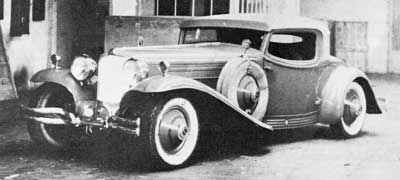
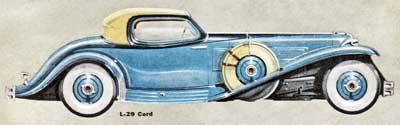
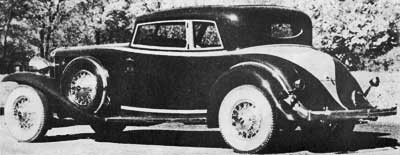
He created a number of memorable body
designs while working
at Hayes, chief among them was the striking Cord L-29 coupe that won
him numerous
awards during the 1930s Concours season*. The car and its owner,
Countess de
Sakhnoffsky, won Grand Prix (1st prize) at the 1930 Monte Carlo
(Monaco) and Paris
Concours d'Elegance as well as the coveted Grand Prix d'Honneur (best
in show) at
Beaulieu.
(*Exactly which shows the car was entered in
remains unknown
- at the time Concours were held in Beaulieu (Uk.); Berlin (De.);
Biarritz
(Fr.); Bologne (Fr.); Cannes (Fr.); Monte Carlo (Monaco); Nice (Fr.);
Paris (Fr.)and
Villa d’Este (It.).
The car was featured in the May 1930 issue
of Autobody:
“Designer's Personal Car Wins Riviera Prizes
“The coupe on Cord chassis, shown in the
accompanying
engravings, was designed by Alexis de Sakhnoffsky for his personal use.
After
sundry vicissitudes en route, it was exhibited by him at the Concours
d'Elégance
at Monte Carlo and Beaulieu, win- fling a grand prix in its category at
the
former resort and the grand prix d'honneur at Beaulieu. The car is
noteworthy
for its departure from conventional design, sweeping lines being used
wherever
practical instead of rectangular effects. It is finished entirely in
Mountain
Mist Blue, with body striping in gold and striping on the wheel disks
in gold
and Cicero Blue. The top is a special Eagle-Ottawa tan leather, with
the modish
fabric grain: the beading is covered with blue leather matching the
body.
Exposed metalwork, including the radiator shutters, is chromium plated.
The
bonnet is unusual in having two long horizontal trap doors on the
sides, set in
an embossed panel which extends onto the cowl.
“The exterior of this car, its curved
moldings and sill, the
long arrowhead panel on the bonnet and cowl, the sweep of the fenders,
the special
door handles and the treatment of the rear, give it originality and
distinction,
without being bizarre. The car has no running boards nor steps, it
being
practical to step directly onto the floor. The wide front fenders are
swept
into the side valances which have embossed ribs and a courtesy light.
“The rear fenders are specially shaped,
being carried down
past the front center of the wheel, this reverse curve emphasizing the
streamline effects of the body; the rear fenders are not terminated in
the
usual manner, but are swept over and adjoin the rear apron, being
separated
only by the customary leather beading. The back panel extends slightly
over the
fuel-tank apron and is decorated by chromium-plated protection strips
and a
central raised panel that comes to a point at the tail: striping
carried down
over the fuel-tank apron gives a longer effect to this feature, abetted
by the
repetition of the chromium-plated beading. The steps to the deck seat
are of
special shape, harmonizing with the swept lines of the car. An aluminum
casting
forms a reveal around the hack window and has a chromium-plated edge to
correspond
to the other metal trim.
“The sweep of the door-window reveals will
be noted in the
lower right-hand view, also the unusual length of the wedge-shaped door
handles
which are set at an angle corresponding to the sweep of the moldings at
that
point and give piquancy to the curved motifs of the car.
Notwithstanding the
low overall height, this coupe has the usual 37-in, clearance above the
seat
cushion.
“The interior of the car is marked by
numerous special
features executed with a restraint that keeps the car conservative,
although
distinctive, in character. The trim fabric is a Wiese gray-blue
broadcloth,
done in the plain-stretched style and piped with gold leather. There is
a
center folding armrest and on the floor an extra thick carpet in a
matching blue.
The special interior fitments, executed by Dura, are in dull bronze; an
unusual
feature is that the door and regulator handles are straight instead of
being
curved. The instrument board is especially designed and finished with
mahogany
grain to match the mahogany door trim; the control buttons are arranged
in two
arcs on either side of the center, this rather modernistic effect being
subdued
by the fact that these knobs are of dull bronze. One of the knobs
controls the
radio-receiving set, the loud speaker of which is set in the center of
the
floor, with a protecting grid. Another bronze knob, when pulled out,
reveals an
ash receiver, consisting of a slotted tube which may he emptied by
turning
completely over or by removal, being fastened with a bayonet joint.
There are
four cowl ventilators, two on the top and one on each side. The
spare-tire
covers are of Burbank, piped with blue leather, matching the body
color, the
openings being zipper controlled.”
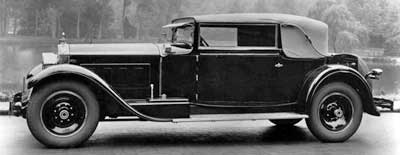
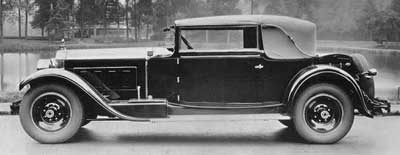
Caption 1:
“A special Cord coupe, designed for the
‘author’ by Alexis
de Sakhnoffsky and exhibited by him at two of the recent Riviera
Elegance
contests, winning a ‘grand prix’ in its category at Monte Carlo and the
‘grand
prix d'honneur’ at Beaulieu. As the car was intended for the designer's
personal
use, he was free to differentiate it from conventional designs and used
sweeping lines wherever possible, in place of rectangular effects. The
interesting rear treatment and sweep of the door-window reveals are
more
clearly shown in the view below. The car was finished entirely in
Mountain Mist
Blue, with gold striping. The top is a special Eagle-Ottawa tan
leather, with
fabric grain; the decorative welt across the back is covered with blue
leather,
matching the body color. This entirely special job was completed by
Hayes in 2
½ months.”
Caption 2:
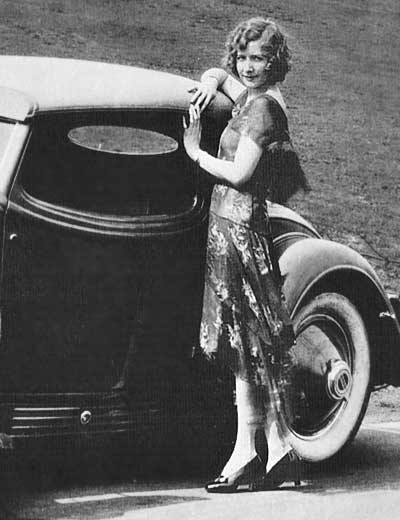
“The designer and his special Cord coupe
which, after sundry
vicissitudes en route, was exhibited with success in the Riviera
Elegance
contests. In this view will be noted the horizontal, hinged bonnet
louvers set
in an embossed panel that extends aft onto the cowl. The extreme
lowness of the
car will be appreciated by the fact that, the designer is able to rest
his arm
on the roof, although normal headroom is retained within. At the right
is shown
a closer view of the interesting treatment of the rear deck. This is
marked by
a central raised panel or molding which is swept to a point at the
tail. Chromium-plated
strips on the tail meet similar strips on the apron over the gasoline
tank,
tying in the design of both units. Deck-seat steps, bumpers and in
fact, all
elements of the rear have been considered in the design. Note the
interesting heading on the top and the unusually narrow oval
window.”
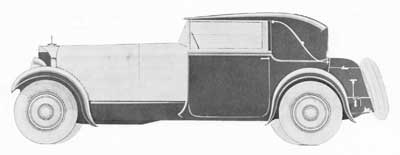
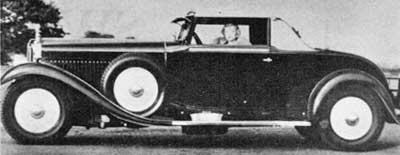
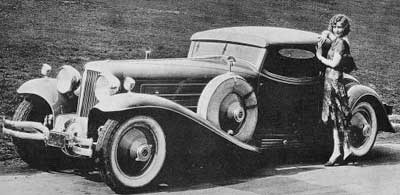
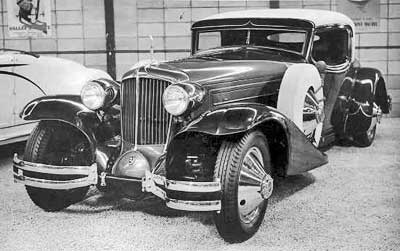
De
Sakhnoffsky's Cord, which appears to the right with
'Ziegfield Girl' Marion
Dodge posing next to it, was described in great detail in the July 5,
1930
issue of the Wisconsin Rapids Daily Tribune:
"AMERICAN AUTO WINS PRIZE AT MONTE CARLO
"Grand Rapids, Mich., July "5—A
mountain-mist blue
body, entirely devoid of straight lines, mounted on a Cord front-drive
chassis, this spring
brought to America
for the first time the Grand Prix of the annual Monte Carlo automobile
style
show, and added fame to its 28-year-old designer, Count Alex de
Sakhnoffsky,
art director of the Hayes Body Corporation.
"Winning Grand Prix awards at Monte Carlo,
however, is
nothing new for de Sakhnoffsky, despite his youth and his comparatively
brief experience
in designing
motor cars. The 1930 award was his fifth, although it marked the first
victory
for an all-American product.
"Last year he took the highest honor with a
Packard
chassis and a European body. An English Rolls-Royce was presented with
the
prize in 1928, and Belgian Minervas were the class of the fields in
1927 and 1926.
"Count de Sakhnoffsky, who traces his family
back to
the fourteenth century, was born in Kieff, 'the mother of Russian
cities.' He left his native haunts in 1920, rather than face
conscription
by the Reds, going to Switzerland where he studied engineering and
drafting for
three years.
"From Dresses to Cars
"From engineering he turned to designing
dresses in
Paris where his mother at present runs a dress salon. His father is
dead. Later
he became art director of Vandenplas of Brussels, leading European
coach builders.
"He remained with the Belgian company five
years when
he sailed for America. He has been in the employ of the Hayes Body
Corporation
nearly two years. All his time now is devoted to the creating of
artistic cars. As art-director of the Hayes concern he
designed the Marmon, new Peerless and Little Austin bodies. The count
also has
designed a 24-passenger cabin plane by Sabca of Brussels.
"Believing that engineers rapidly are
attaining
perfection in the mechanical parts of the car, Count de Sakhnoffsky
asserts the
car buyer is paying more attention to the beautiful lines and color
schemes. He pays little attention to body construction but says his
part is purely artistic.
"The Prize Winner
"The Grand Prix Cord has attracted no little
attention,
not only in America but in France where the designer was forced to keep
the windows
raised and the doors
locked to save the masterpiece from the curious crowds.
"While in Paris the swarm was so great he
was forced
four times to get new door handles. The car, striped with gold, is very
long,
its over-all length being 175 inches. But the sweep of its lines makes
it seem
even longer. The long hood overlaps the cowl seven inches'. Hood
louvres are
horizontal, narrow and long of the trap-door type. Even the door
handles are
set in such a way as to accentuate the sweep of the car's lines.
"There are no running boards, for the car is
quite low
and requires only, one step to the ground. Yet the car has a nine-inch
clearance. But with its 137 1/2-inch wheelbase, its sweeping line,
which seems
to cling to the ground, and the 54-inch total height, Count de
Sakhnoffsky's creation seems even lower than it actually is.
"In spite of the height of but four and a
half feet,
the interior offers 37 inches of headroom. The designer speaks of the
car as the lowest in the world and also as the
widest, the automobile having a 61-inch tread, said to be two inches
wider than any car so far introduced.
"The upholstery and carpet are of rich, soft
materials,
the seat trimmed with old gold braid, matching the antique bronze of
the interior hardware.
A radio is
concealed behind the seat with the loudspeaker in the floor. The radio
controls
are on the dash, as is specially designed ash receiver. The door frames
are solid mahogany.
"The rear window is wide and elliptical, the
glass
lowering to permit conversation with those in the rumble seat. The seat
itself
is opened by the driver from the inside. Spare tires are mounted in
fender
wells and the tire covers are of special design, opening with zippers
so they
may be removed from the tires without soiling. The covers are light
tan,
matching the top.
"The wheels are of the wire spoke type, but
the wire is
covered entirely with a convex plate which blends in color and design
with the rest of the product."
Recently sold for 2.4 million and produced
in miniature
(1:16 scale) by Danbury Mint in the late 1980s, it's popularly known
today as
the Cord L-29 Hayes Coupe. The car was later owned by industrial
designer Brook
Stevens who as a young man traveled to Chicago to meet the Count. A
little over
a decade ago the car won Best in Class, People's Choice, and
Co-Chairman's
Trophy at 1997's Pebble Beach Concours d'Elegance.
Although the 'Hayes Coupe' never saw series
production, an
elegant boat-tail speedster he designed for another one of Errett
Lobban Cord's
automobile holdings did. Based on a simple inverted hull, de
Sakhnoffsky's
Auburn speedster was produced in three series, the 8-115 in 1928, 8-120
in 1929, and the 8-125 in 1930.
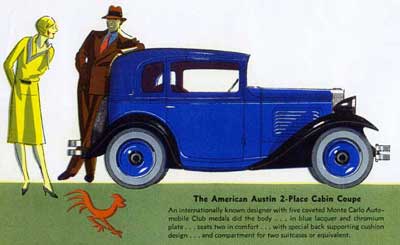
Other Hayes projects that de Sakhnoffsky was
involved
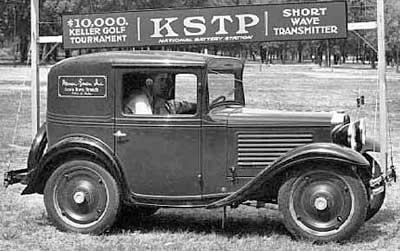
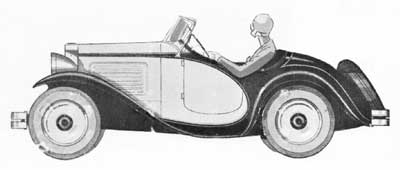
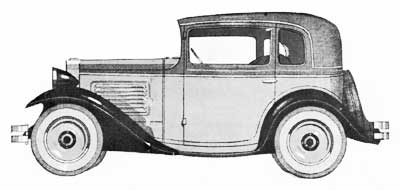
include the 1930-1933 American Austin, the 1931-32 DeVaux, the
1929-1932
Marmon, 1929-1930 Roosevelt and the 1929-1932 Peerless. He is also
thought to
have designed a striking 5-passenger Convertible Victoria on a Marmon
Sixteen
chassis for Hayes President W. H. Hoagland (who also sat on the
Nordyke-Marmon
board). Coach building historian Hugo
Pfau believes more than one Convertible Victoria was constructed,
citing a
photograph showing golf-star Bobby Jones taking delivery of his Marmon
Sixteen
Convertible Victoria from Jack Hendricks, Jr., manager of Marmon's
Manhattan
factory branch.
Although Marmon owned an adjoining body
plant it was leased
(one account says sold for $200,000) to Murray in 1926, with the hopes
that an
experienced body builder could provide them with better-built bodies at
a lower
cost. The arrangement continued into late 1928 when Murray's financial
difficulties prompted Marmon to abandon ship. The factory and related
body
contracts were turned over to Hayes, whose brilliant new art director
(de Sakhnoffsky) may have helped them seal the deal. Apparently Hayes
contract with
Marmon wasn't exclusive as the Grand Rapids-based body manufacturer is
known to
have constructed bodies for Peerless alongside bodies for Marmon and
Roosevelt in the Indianapolis facility.
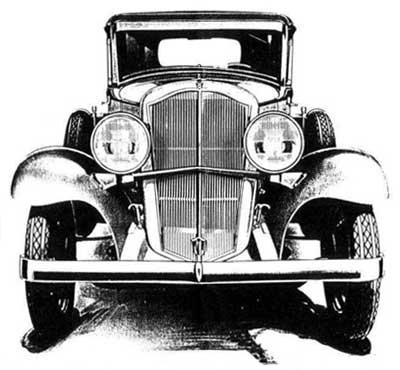
All three automobiles (1930-31
Marmon-Roosevelt Models 69,
79 and Big Eight and Peerless Standard 8, Master 8 and Custom 8) shared
the same
fenders, basic body dies and assembly fixtures, with slight variations
being
imparted by the use of secondary dies and trim. The Marmon featured
larger
moldings and a slightly more artistic treatment than the Peerless which
imbued
with a more uniform belt molding which included an odd panel above the
molding
and below the window.
With the onset of the Depression,
manufacturers began sharing
bodies to help reduce cost. In addition to the shared Marmon-Roosevelt
and
Peerless line, a different Hayes body shell and fender set made its
appearance
on the 1932 Marmon 8-125, 1932-34 Reo Flying Cloud 6S and 1933-34
Franklin
Olympic.
Automobile customers rarely compared the
actual bodies, and
addressed their attention to a vehicle’s front end, which could be
easily
disguised using a different grill or front fenders. General Motors
started
doing it at the same time, and the practice continues today.
The following synopsis of de Sakhnoffsky
presentation at the
December 10, 1928 S.A.E conference appeared in the January 1929 issue
of the SAE
Journal:
"How Europeans View Our Cars
"Friendly and constructive criticism of
American car
design was made by the last speaker, Alexis de Sakhnoffsky, who has
assumed
direction of the newly created art department of the Haynes Body Corp.
Being
primarily an artist, he is concerned with creating new designs and does
not
take the trouble to see whether an idea is readily adaptable for
production.
For this reason, and because it is important to have the body and
chassis
designs blend into a harmonious ensemble, he believes it is desirable
to have
chassis designers and production engineers work in very close
cooperation with
the body designer. An advanced idea which the speaker advocated some
time ago
in Paris is that, in developing a new car design, the working out of
the whole
external and internal outline should be placed in the hands of
"mechanical" artists, without interference by body engineers, so that
every part of the car and its mechanism shall be artistic. Only when
the general
lines have been fixed should the body and mechanical engineers go into
action
to work out the mechanical details so that they fit into the visualized
chassis
and body.
"Large-scale production body designers,
thinks Mr.
Sakhnoffsky, should study the trends in custom-body building and follow
them
more closely in production. Although the present trend is to lengthen
the hood
and cowl as much as possible and to emphasize streamlining, almost all
car
builders in America nickel-plate the cowl bead and so break up the
longitudinal
effect by a bright transverse and vertical line.
"The Roosevelt was a handsome automobile,
viewed from
any vantage point, particularly in the optional side-mount
configuration. It
was the credible work of Count Alexis de Sakhnoffsky, styling
consultant to
Hayes Body and Marmon, who gave it an athletic look. Reportedly he
proposed,
and promoted unsuccessfully, the placement of the cameo portrait on the
radiator core, pendant to a necklace from the shell."
Hayes quickly set about building up their
new star, naming
its new 'Alsac' line of bodies (Al-Sak for Alexis Saknhoffsky) in his
honor.
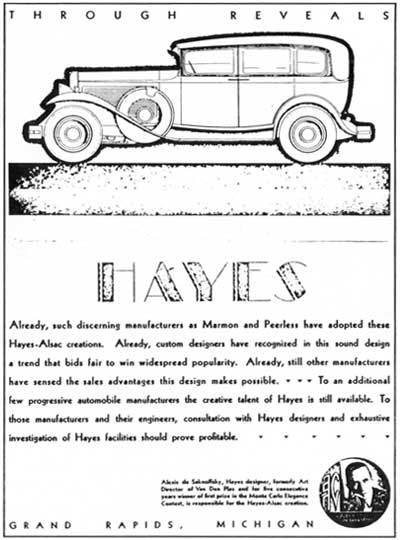
The Hayes-Alsac line was introduced in a series of advertisements that
appeared
in the 1929-early 1930 automobile trades and featured curved bottom
sills and through
reveals (a window reveal which ignored the inter-window - aka B & C
pillars)
as seen on 1930-1932 Marmon and Peerless automobiles.
A Hayes advertisement included in the
January 18, 1930 issue
of Michigan Manufacturer and Financial Record showed a line drawing of
the
Marmon 8-79 noting that:
"Already, such discerning manufacturers as
Marmon and
Peerless have adopted these Hayes-Alsic creations. Already, custom
designers
have recognized in this sound design a trend that bids Fair to win
widespread
popularity. Already, still other manufacturers have sensed the sales
advantages
this design makes possible. To an additional few progressive automobile
manufacturers the creative talent of Hayes is still available. To those
manufacturers and their engineers, consultation with Hayes designers
and
exhaustive investigation of Hayes Facilities should prove profitable."
Although de Sakhnoffsky doesn't mention her
in his Classic
Car articles, it is assumed that Countess Madeline (Parlongue) de
Sakhnoffsky
accompanied him when he first moved to the United States. She was most
certainly here at the time of the 1930 US Census which lists the couple
as
residents of Grand Rapids, Michigan. In a 1933 interview he mentions
her
briefly, explaining that while in Belgium he met a girl who during the
war had
risked her life for her country in the intelligence service. She had a
hatful
of citations for her bravery – and also she had a pretty face and that
indefinite something the stylist loved – "chic".
The April 16, 1931 issue of the Sheboygan
Press included a
picture of the new DeVeaux automobile which was accompanied by the
following caption:
"Outstanding exterior characteristics of the
new DeVaux
are the distinctive V-type radiator and low, roomy body designed by
Count
Alexis de Sakhnoffsky, European artist and master of coachcraft, winner
of last
year's Monte Carlo competition. A wide tread of 58 inches permits
roomier
passenger compartments in the body."
The May 31, 1931 Oakland Tribune included
the following
article which states that the de Sakhnoffsky-designed coachwork would
be an
integral part of the advertising scheme for the DeVaux:
"Body Builders Plan Campaign of Advertising
"GRAND RAPIDS, Mich., May — W.W. Hoagland.
president
and general manager of the Hayes Body Corporation, today announced the
appointment
of James
Houlihan, Inc., as advertising counsel of his organization. He also
informed members of
the executive
staff that James Houlihan, who will personally supervise the account,
would, in
the future, be a member of the executive council as well as serving as
advertising and merchandising counsel.
"No announcement was made, by Hoagland
concerning the
plan of campaign that had been presented and approved. It was said,
however,
that the copy theme was a tie-in with the quality construction of Hayes
bodies
and the appreciation of motorists for artistry of design. It is claimed
that
Count Alexis de Sakhnoffsky, chief designer of the Hayes Body
Corporation, and
the man who is responsible for the body lines of the De Vaux 6-75, will
be
featured in much of the national advertising that is placed by the
company.
"As advertising counsel to De Vaux-Hall
Motors
Corporation, the Houlihan organization has played an important part in
the
creation and introduction of the De Vaux car. The introductory campaign
was
created and placed by Houlihan—the heavy advertising schedule including
leading
national weeklies and more than 3000 newspapers being placed from James
Houlihan's offices."
He was also mentioned in press releases
sent out by
DeVaux-Hall, one of which was published verbatim in the June 7, 1931
Luddington
(MI) News:
"Three Leaders Bring Out De Vaux Auto
"Norman DeVaux, the manufacturer; Col.
Elbert J. Hall,
the engineer; and Count Alexis de Sakhnoffsky, the artist—each a
recognized
leader in his field of endeavor, are the men who are responsible for
the DeVaux
automobile, product of DeVaux-Hall Motors corporation of Grand Rapids.
Powered
by the famous six-port, six-cylinder Hall motor, a creation of the
internationally recognized authority on internal Combustion engines who
won
world-wide renown as co-designer of the Liberty motor, the DeVaux
out-performs other cars in its price class.
"Because of its flexibility and the ease
with which it
is handled by women in traffic and on the highway, the DeVaux has won
the
approval of feminine motorists within a remarkably short time.
"In designing the body, Count de Sakhnoffsky
has achieved
the chic effect that is desired and appreciated by women everywhere.
When
Sakhnoffsky created the body lines for the DeVaux, he asked that his
designs be
executed by Hayes Body corporation, craftsmen of proved ability."
Although DeVaux advertisements stated that
deSakhnoffsky had
designed the cars coachwork, in reality the bodies he originally
designed for
the new car weren’t actually used. Instead, leftover Hayes-built Durant
bodies
were supplied to DeVaux with deSakhnoffsky-designed fenders, hood and
grill to
update them.
The DeVaux was built in a leased
portion of Hayes
huge Grand Rapids plant, and its bodies transported across a
second floor
bridge that ran over the street that separated the two buildings.
DeVaux’s
successor, Continental, continued to utilize various leftover
Hayes-built bodies
into late 1932.
De Sakhnoffsky left Hayes as soon as his two
year contract
was up and started taking on various free-lance assignments, one of his
first
projects being the design of a 15' metal runabout for the Mullins Mfg.
Co. of
Salem Ohio. The firm is best known today as the manufacturer of the
diminutive
'Red Cap' travel trailer, but during the early thirties they were
producing
metal fishing boats under the Sea Eagle trade name. The March 12, 1931
issue of
the Sheboygan Press included a description of their new de
Sakhnoffsky-designed
craft:
"New Model Of Motor Boat Is Displayed Here
"William F Schmitt and Son, 711-13 Center
avenue, have
taken over the agency in the Sheboygan territory of motor boat products
of the
Mullins Manufacturing corporation of Salem, Ohio. The Sea Eagle, which
is
featured in the line to be handled by the local representative, is
being
displayed in a private 'boat show' in the Hensel building, southwest
corner of
N. Seventh street and Center.
"The boat represents a beautiful piece of
workmanship.
Styled by Count Alex de Sakhnoffsky, five times winner of the Monte
Carlo Grand Prix,
the craft has a
hull of steel, a 4.0 horse power Lycoming motor having a speed ability
of over thirty
miles an hour,
and a fluted bottom feature that makes it easy to manipulate It has a
fine quality
of finish, equipment and instruments, and two upholstered seats having
a
capacity of five Three may be seated in the cockpit and two in the
rear."
The Count and Countess were lucky to escape
with their lives
following a late May 1931 boating mishap. The May 28, 1931 Woodland
Daily
Democrat (California), reported on the heroic efforts of their local
son:
"COAST BOY SAVES COUPLE
"SAN FRANCISCO — Richard P. Hurst, son of a
San
Francisco family, is a candidate for a Carnegie medal, following his
rescue of Count and
Countess Alexis de
Sakhnoffsky. Hurst and the Sakhnoffskys were cruising about Lake
Higgins,
Michigan, when their speedboat overturned and sunk a mile from shore.
Hurst
dived to the bottom, disengaged the motor and permitted the craft to
rise to
the surface. Then he discovered the Countess, apparently sinking for
the last
time. He dragged her to the overturned craft, and then helped the Count
to clamber
aboard. Hurst, former student at Hitchcock and Palo Alto military
academies, is
the son of F. H. and Mrs. Hurst, of 1435 Bay street. Six months ago he
eloped
with Miss Helen Houlihan, University of California co-ed."
The August 2, 1931 New York Times Motors and
Motor Men
column mentioned Auburn's hiring of de Sakhnoffsky as an outside
consultant:
“Count Alexis de Sakhnoffsky has been
appointed counsel to
the body design staff of the Auburn Automobile Company, according to
Herbert
Snow, vice-president in charge of engineering. For five years Count
Sakhnoffsky
was art director of the Van Den Plas Company, coach builders of
Brussels, and
during that time won five consecutive Grand Prix awards at Monte Carlo
Elegance
contests. He also won the Grand Prix at Bournemouth, England, for
automobile body
designs, and a special body designed by him for the Cord front drive
car won
the Grand Prix at Paris, Monte Carlo and Beaulieu in 1930.”
According to Griffith Borgeson, the
well-known Cord
historian, no vehicles resulted from the relationship:
"It should be noted in passing that, in
August of '31,
vice president in charge of engineering Herb Snow announced the
addition of
stylist Alexis de Sakhnoffsky as counsel to Auburn's body design
staff.
This no doubt was related to Sakhnoffsky's design of a striking coupe
body for
an L-29 chassis which he did for an independent body builder. We have
been
unable to identify any specific work done by him on Auburn's direct
behalf."
Although no work was produced, de
Sakhnoffsky's short tenure
at Auburn provided him with one big benefit, Auburn successfully
petitioned the
Immigration Department to convert his status to one of a resident
alien, which
allowed him to stay in the country indefinitely. His change in status
allowed
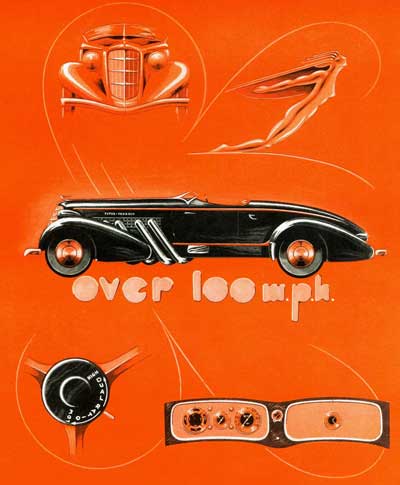
him to pursue work as an independent stylist and during the next decade
his
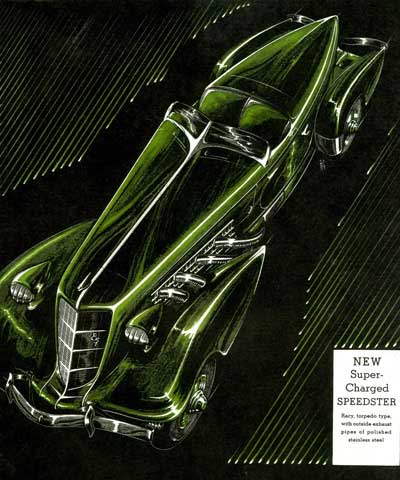
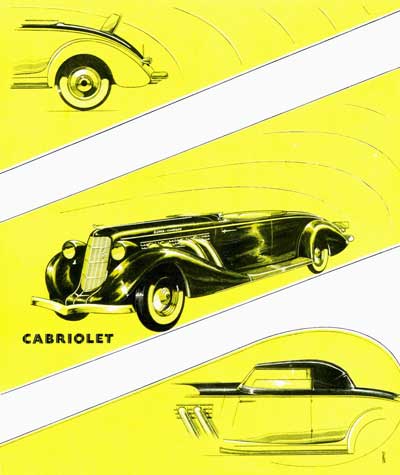
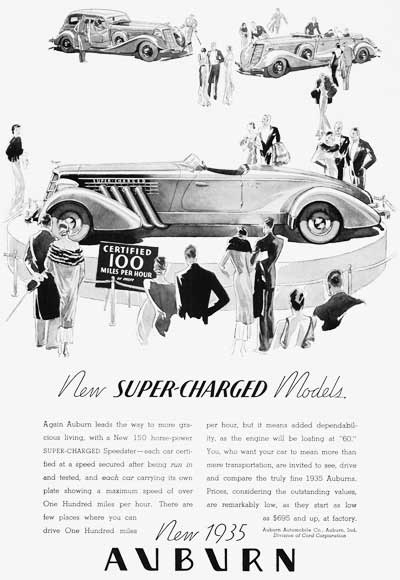
freelance assignments made him a household name. Later in his career
Sakhnoffsky
worked with Auburn for a second time but the project was limited to
illustrations for a 1935 Auburn ad campaign.
At about the same time (mid-1931) William
Crapo Durant attempted
to try and re-coup some of his stock market losses by building a small
European
–style car in an unused Lansing, Michigan factory. He decided upon the
French-built Mathis and invited its manufacturer, Emile Mathis, to
Detroit to
see if a deal could be struck. The multilingual de Sakhnoffsky was
hired to arrange
a series of luncheons between the two men and to inject some humor into
the
discussions to help alleviate the language barrier. The meetings were
memorable
to de Sakhnoffsky, who fondly recalled them in his Classic Car articles:
"Monsieur Mathis was a highly opinionated
individual,
who came to America with the idea of -showing us a thing or two, and
his
feelings were very easily ruffled. He felt that his brain-child, an
atrocious
little vehicle with an over-sized stylized flame for the radiator cap
ornament,
had to be copied without any alteration. At the same time, smooth,
soft-spoken
veteran Durant knew that the car would not be acceptable here, even
though the
famous jeweler Cartier was responsible for the flame mascot. The
situation came
to an impasse, and I was retained as a combination
interpreter-styling-moderator.
"I remember particularly one incident during
a lunch at
the old Olds Hotel. After a long session which resulted in a decision
to build
'several samples of the US version of the Mathis car, he could hardly
control
his irritation, 'You Americans take such a long time to make a
decision,' he cried. 'We do not work that way in France. We are
straight shooters, we make one model and hit the goal. Viola!'
"I translated verbatim. The Americans did not
like the
remark, shook their heads and sharply questioned the French methods.
"Mathis realized that he may have gone a
little too far
and decided to temper his outburst with a little humor. 'All right,' he
told
me. 'Ask them, if they can shoot so straight why do they use rubber
pads around
their spittoons?'"
Needless to say, the meetings did not result
in the building
of an American Mathis. However, Emile Mathis' journey to Detroit laid
the
groundwork for a successful Continental joint venture with the Ford
Motor
Company. The firms joined forced in 1934 to produce the Matford, the
Ford-engined successor to the Mathis, which was constructed in Mathis'
Strasbourg
factory from 1934-1940.
In January 1932, a little over three years
to the day of his
initial meeting with Packard Motor Co.'s Alvan Macauley, de Sakhnoffsky
was
hired by Alvan's son Edward as a styling consultant to Packard's
styling
department. The 3-month contract
stipulated that de Sakhnoffsky would devote 2 days a week to Packard
projects,
at a salary of $800 per month. His role was to introduce newness to
Packard
styling, and to oversee the seamless integration of his own designs
with that
of the departing Ray Dietrich, who had recently moved on to Chrysler.
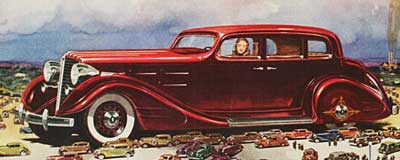
The result was de Sakhnoffsky's famous false
hood, which was
first seen on the 12-cylinder Packard 1108 Sport Phaeton introduced at
the 1933
Century of Progress exhibition in Chicago. Additional de Sakhnoffsky
touches
include the slanted 'A'-pillar and the transfer of the spare tire from
the
fender-well to the rear of the car which won the 1933 best-in-show
award at the
Chicago Fair.
De Sakhnoffsky was not the only person
working on a false or
long hood treatment at the time, and historically the 1932 Chrysler
Imperial was the first American production car to be fitted with the
attractive
feature. That car was the work of Le Baron's Ralph Roberts who, by his
own
admission, had 'borrowed' it from a design he saw at the 1931 Paris
Salon.
During his short stint at Packard de
Sakhnoffsky designed the
very un-Packard like coachwork that graced Packard's secret (R&V)
front-wheel-drive
12-cylinder prototype of 1932.
De Sakhnoffsky worked as a styling
consultant for Studebaker
at about the same time, although what projects he contributed to – if
any – are
currently unknown.
He also worked for Chrysler, helping to
revamp the firm's
exhibits at the 1934 Century of Progress in Chicago. Although early
orders for
the firm's new line of Airflow automobiles which debuted at the 1933
national
auto shows, were strong, within a few months they had trickled to next
to
nothing and Chrysler pulled out all the stops in an effort to revive
interest
in the car.
Much of the interior of the Holabird and
Root-designed
structure were restyled by de Sakhnoffsky and Barney Oldfield
and his
'Hell-Drivers' were hired to drive various Chryslers around an adjacent
quarter-mile
banked oval, the end of each show highlighted by barrel roll though a
sandpit
to demonstrate the durability of the firm's all-steel bodies.
Automotive Industries reported that:
"Each niche of the
Chrysler fair building, designed by Alexis de Sakhnoffsky, was
given up to
major demonstrations of Chrysler car features from an engineering
design view."
De Sakhnoffsky claimed to have been wiped
out in the panic
of 1933, but reports his income had returned to five-figures by the
middle of
1934. A mid-summer 1933 visit to the West Coast was covered in the
August 7,
1933 issue of the Oakland Tribune:
"STYLIST
"Count Alexis de Sakhnoffskv is one member
of the
Russian nobility who finds the revolution did him good. He turns his
ideas of
beauty into cash by designing styles for automobiles, airplanes,
refrigerators,
motorboats and women's gowns.
"RUSS COUNT IS STYLE EXPERT
"Count Alexis de Sakhnoffsky, whose father
was a privy
councilor to the Czar of Russia, and who fled his native land when a
youth to
become an 'engineering stylist' whose ideas of beauty find expressions
in
automobiles, refrigerators, motor boats, airplanes and women's clothes,
thinks
the Russian Revolution did him a lot of good.
"And he thinks the upheaval also was helpful
to other
of his class who fled from Russia the last of the Soviet.
"'It was the cry of Communism that the
nobles were
useless creatures wasting the wealth accumulated by the toilers.'
Observed
Count de Sakhnoffsky during a visit to Oakland today. 'But practically
all the
Russian refugees have carved out niches for themselves in commercial
fields
outside of Russia. They have proved their own worth.'
"MONEY VS. TITLES
"The Count, who makes no use of his title
unless
Americans insist, thinks it a bit amusing that so many wealthy
Americans women
should be willing to trade money for 'noble' husbands. Take, for
instance, the
Princes M'divani; Serge, Alexis, and David, who have been marrying and
divorcing American heiresses, movie stars and divas for some years.
"'In their native Georgia anybody who owns a
thousand
sheep can be a prince,' commented Count de Sakhnoffsky. 'When Georgia
was
annexed to Russia, the people of the little country who were helpful to
the
Czar were made princes and became attached to the court. They were
looked down
upon somewhat, however, because of their ignorant and half-savage
customs.'
"'As regards the three M'divani brothers
America hears
so much about their father became a prince after they were born – and
their
name, translated from the original tongue means secretary.'
"ESCAPED IN 1920
"The Count, who prefers to known as Alex,
escaped from
Russia in 1920, when he was 17, and made his way to Switzerland, where
he
studied engineering. Running out of money he went to Paris and in
desperation began sketching gowns, and attempting to sell sketches to
couturiers.
"'But a style designer can't get anywhere in
Paris
unless he can also cut and fit dresses,' said the Count. 'So I could
get only
17 or 20 francs for a sketch, and even then didn't make a sale very
often. So I turned to automobile designing.'
"Then he went to Belgium and met a girl who
during the
war had risked her life for her country in the intelligence service.
She had a
hatful of citations for her bravery – and also she had a pretty face
and that
indefinite something the stylist loves – 'chic'. So
he married her – and even yet, after
considerable years of matrimony, he designs her dresses and believes
she does them credit.
"AUTO DESIGNS WIN
"Nowadays Count Alexis de Sakhnoffsky
designs bodies
and ornaments for some of America's finest automobiles. His automobile
designs
have five times in seven years won the international competition for
elegance
at Monte Carlo. He designs motorboat interiors, the 'outsides' of
refrigerators, airplane interiors – and, for a side-line, women's
gowns. His
next job, he expects will be the designs of a streamline car for the
new type
of speed train now being planned by various railroads."
In the summer of 1933 de Sakhnoffsky had the
good fortune of
joining the staff of a new upscale 'Quarterly Magazine for Men', called
Esquire. The well-funded Hearst publication appeared on the news-stands
in
October of 1933 and included a number of technical illustrations by de
Sakhnoffsky who was eventually given a permanent position as its
technical
illustrator. The magazine's debut proved so popular, that its January
1934
issue marked its debut as a monthly. To make sure everyone was aware of
that
fact the following press release was published in Hearst's newspapers
during
the first week of 1934:
"MAGAZINE TO BE ISSUED MONTHLY
"With the exception of Douglas Fairbanks,
Jr.,
Esquire's most widely known and violently discussed contributor, and
one or two
others, the array of artists and writers who marked the debut of
Esquire, the
magazine for men, has returned in toto for the second issue, which
marks the debut
of the magazine as a monthly publication.
"Fairbanks was to do an expose on
Hollywood's male
stars, but missed the mail boat from London with his manuscript, while
others
who attended the inception of ESQUIRE but will not be found in the
current
issue, have been replaced by such luminaries as Paul Morand, Andre
Maurois, Emil
Ludwig, Westbrook Pegler, Jack Dempsey and others.
"Esquire, incidentally, has been enlarged to
160 pages,
a third more, than were contained in the first issue, and 40 of these
are in
full color. Ernest Hemingway again is well up in the list, this time
with a Spanish
letter that has to do with bullfights, stranded American writers and
the country
in general. Other writers of "non-fiction" '(for the contents may
best be summarized in departments) are Paul Morand, who prepares the
world for
the coming of the cocktail. Ex-President of France, Alexander Millerand
and
Owen Johnson, who very nearly come to blows on 'Two Sides of France.'
"Frederick Van Ryn, who collaborated with
Grand Duke
Alexander on his much discussed memoirs that created enough interest to
make a
sequel necessary, writes about America and its congressmen. Fred C.
Kelly, Edward
M. Harrows, Louis Joseph Vance, Louis Golding and Pitts Sanborn, among
others,
write of subjects ranging from bridge and exclusive clubs to London,
music and
real estate.
"Fiction is represented by Thomas Burke,
Andre Maurois,
Morley Callaghan. Pierre Mills and others.
"Regular features include Gilbert, Seldes,
who writes of
radio; Burton Bascoe, of books; John V. A. Weaver of the stage; Stuart
Rose on
etiquette, and Count Alexis de Sakhnoffsky on the Illusion of Speed.
"George Ade, Montague Glass, Irwin S. Cobb,
Geoffrey
Kerr, Robert Buckner and Dwight Fiske make up the humor category with
respectively,
a one-act play, a discussion of marriage, a tale of fishing, a portrait
of a
butler, honor among the French, and Fiske of course with his riotous
rendition
of 'Mrs. Pettibone.'
"Under the heading, 'Personalities' come
Emil Ludwig
with a sketch of Charlie Chaplin as the first of a series to include
Hitler, Stalin
and the Prince of Wales. John Dos Passos tells the story of 'Speedy'
Taylor - high
mogul of production. Editor Arnold Gingrich, whose 'Poor Man's Night
Club,' a
treatise on the 'Walkathon' in the first issue, aroused considerable
comment,
repeats with the 'Bedtime Story Teller'.
"Westbrook Pegler, Jack Dempsey and Bobby
Jones head
the sports department list. Joseph Auslander and Audrey Wurdemann
remain the
only two writers of verse. Auslander with 'Night Court,' morbid sequel
to his 'Down
at the Morgue'; Miss Wurdemann with 'The Court of Anger,' second of the
seven
deadly sins. Incidentally, Esquire's poetry department has merged since
the first
issue, Miss Wurdemann, who hails from Seattle, and Mr. Auslander, who
writes
from Manhattan, having been married during the past month.
"Cartoons in color by John Croth, E. Simms
Campbell,
Wm. Staig. Howard Baer and D. McKay make Esquire colorful."
January 1934 also marked the debut of the
1934 Nash, whose
design was a joint project of de Sakhnoffsky and Budd, its production
body supplier. His 'Speedstream Styling' extended from the front grill
to
the spats covering the real wheels, about which MoTor magazine
commented:
"Shields
for the rear wheels, optional at small extra cost, constitute an
innovation
which should become popular."
It didn't, but the car was generally
well-received, as evidenced by the February 6, 1934 issue of the
Wisconsin
State Journal:
"Streamlining Seen Even in Dignified Car
"Nash Designer Adds Style to Staid Cars
"Count Alexis do Sakhnoffsky, Russian
nobleman and internationally
prominent designer of things mechanical from fountain
pens and radios to the new 1934 Nash models, has in the
February issue of Esquire presented to the automobile public eye a
modern and
advanced conception of stream lining and illusion of speed applied to
types which for years past, have been anonymous with cumbersome dignity
and slow speed.
"'A type of vehicle always associated with
slow motion,
a dowager occupant and an old, old driver, is the chauffeur driven town
car',
writes Sakhnoffsky. 'Not the misnamed close coupled sedan called town
car by
sorne sales manager ignoring the traditional names of bodies, but the
good old
square two-passenger car with no roof over the driver's head.'
"Tools In Running Board
"'Almost extinct in the U.S.A. where it is
seldom
encountered even in the largest cities, it is still considered a smart
vehicle
in Europe, and every year quite a few of them are shown at the Paris
Salon. And
it is entirely erroneous to consider it solely a dowager car, because a
lot of
the young continental people use them as part of their line of cars.
Our
problem will be in incorporating the latest streamline features into
this
slightly antiquated model.'
"'The details which 'make' the design
include new
funnel type louvers in the hood, a racing type compartment with a V
windshield
and both are out for the elbow. A new type running board which was
originated
by H.M. Coachbuilders Barker and Co. and having an airfoil surface
completes
the streamline effect. The practical nature of this running board is
that it
brings out a side door hinged at the bottom, giving access to a
spacious tool
compartment.'
"Victoria Goes Modern
"'The courtesy light is sunk into the top
portion of
the rear running board and is illuminated when the door is open.
Finally an
opera light with the owners own color combination is streamlined into
the front
partition. Its individual color will help to locate your car in the
long stream
of automobiles at the Opera entrance.'
"'Another type of body apparently derived
from one more
old timer is fast becoming the most fashionable type of vehicle on the
continent, but as yet is practically unknown here. The Victoria top
which makes
it so distinctive is a modernized version of a collapsible top widely
used in
the horse-drawn carriage days. When folded it is stowed away flush with
the
sides into a compartment back of the rear seats. The advantage to shit
type of
body is that an extension can be quickly fastened to the front of the
top,
joining it to the windshield. By winding up the door windows you obtain
a
regular five-passenger Victoria.'"
In an interview with stylist/historian Dave G.
Holls, industrial
designer (and one-time Nash stylist) Don Mortrude provided insight into
the
problems de Sakhnoffsky presented to Nash's body engineer, Nils Erik
Wahlberg:
"Alex Sakhnoffsky came in and tried to woo
Wahlberg.
Sakhnoffsky was in there making drawings for Nash long before we came
into the
picture. He made all kinds of fancy drawings right there in front of
Wahlberg
and Wahlberg's eyes were bugging. Alex was just giving him the old
Sakhnoffsky
show. And then when Nash tried to build his stuff from just perspective
illustrations—pencil sketches on black paper—why they had one helluva
time
trying to transpose those designs into reality."
Although Wahlberg and company where happy so
see de
Sakhnoffsky leave, the designs he created provided some much-needed
traffic
into Nash's showrooms, as well as an occasional mention in the national
press
as evidenced by the following item that was included in the April 29,
1934 issue
of the Wisconsin State Journal:
"Nash Designer Sees Trend
"Alexis de Sakhnoffsky, Russian royalist and
designer
of the new 1934 Nash, gives, in the May issue of Esquire magazine, an
insight
into just what the trend in automobile streamlining tends to be in the
very near future.
"Appealing directly to the modern Nomad,
Sakhnoffsky
pictures his conception of a highway cruiser formed by linking together
a medium
powered coupe and a palatial trailer. The vehicle combines the luxury
of
Pullman comfort but with total disregard for time-tables, and is large
enough
to accommodate a dozen people comfortably. Book-shelves, leather
trimmed walls,
serving as a protection from occasional bumps, radio, bright chrome
window
mouldings, a long rear light, and a large modern clock, are the useful
and
decorative details.
"An optional convenience is a complete bar
which
occupies the front end of the trailer and boasts of flat, square
bottles fitting
snugly into labeled compartments, a row of square decanters, and double
beer
taps.
Parabolic fenders coupled with rear wheel
shields serve to
unify car and trailer, an effect that is emphasized by the
V-windshields and
matching color treatment."
The Vollrath Co., a Sheboygan,
Wisconsin-based cookware
manufacturer, was another client of de Sakhnoffsky's at the time, his
name
being included in the firm's display advertisements as follows:
"The striking, modem, streamline beauty of
"Kook
King" Ware is the achievement of Count Alexis de Sakhnoffsky, a
designer
of international fame. Flavor Seal Rim on pots, pans and sauce pots
retain the valuable
food vitamins. Hollowsteel lifters on enameled covers, side grips on
pots and
pans, handles on sauce pans are shaped to fit the hand, and gas-welded
—cannot
come loose or burn. No grooves or crevices to catch water or grease.
Many other
distinctive features, and the famous Vollrath Quality guaranteed."
An article in the March 30, 1935 Twin Falls
Daily News mentions his work with Vollrath:
"Pots 'N' Pans Go Streamline Under Count's
Direction
"Count Alexis de Sakhnoffsky, famed
engineering
stylist, who turned away from a successful career in designing
fashionable
gowns to bring his ideas of streamline design to other fields, points
to the
kitchen as a place where women should receive the benefits of modern
design.
"Count Sakhnoffsky, whose illustrations in
Esquire
magazine have gained wide recognition for the streamline design he
fosters, has
applied his ideas of style with notable success to such varied products
as
suspenders, automobiles, airplanes, women's dresses and foundation
garments. It
is his favorite contention that pots and pans should have the same
sweeping
beauty of design and illusion of speed that a woman appreciates in her
automobile. To this end he already has designed an electric iron which
looks
forever as if it were about to take off on a speed night about the
room. He
also has drawn up plans for teakettles and other kitchen ware which are
as
handsome and practical as they are radical. Count Sakhnoffsky points
out that the same elements of beauty and harmony
of line which a
woman instinctively seeks in her gowns, are just as important in her
refrigerator and can contribute as much to her sub-conscious comfort."
Hearst had de Sakhnoffsky contribute items
for its newspaper
chain, an example - which was syndicated by Hearst in July of 1934 -
follows:
"Next: Streamlined Humans
"By Madelin Blitzstein, Everyweek Magazine
(a fictitious
Hearst periodical)
"Since the Great God of our modern era is
speed and ever
greater speed, the result on every hand is what we call streamlining.
Look at
our most rapid automobiles, our swiftest trains, our most mercurial
aeroplanes,
our fleetest motorboats. All the very newest models suggest speed with
ever-increasing emphasis, and succeed in giving the illusion of
velocity even
when they are standing still. But when we face ourselves in the mirror
or look
at each other, what do we find?
"The same old-fashioned body, head and
limbs, the same
ears that stick out like handles on a sugar bowl, the same protruding;
nose
that offers severe wind resistance, hair, that occurs in the wrong
places and
interferes with the best principles of design, coloring that is often
diametrically opposed to the fundamentals of artistic ornament.
"And now an internationally famous
engineering stylist
steps forward with a twinkle in his eye to present a plan for bringing
the
human body up-to-date on the streamline principles which he has applied
with
phenomenal success to a host of inanimate objects. Look as if you, too,
are
going places and doing things in a speedy, 1934 way - that is the
advice of
tall, slender, Slavic Count Alexis de Sakhnoffsky.
"Why, he asks, shouldn't men and women have
their cars
clipped to a torpedo raciness, get their trunks wind-curved, be
equipped with a
set of toe-less, graceful feet and possess a filtering device which
will give
them pure rather than germ-laden air?
"Not only has the count, who is to become an
American
citizen in a year and a half, and prefers to be called just plain
Mister or, better
yet, Alex, been thinking about what streamlined humans should look
like. He has
gone even further. He has put to paper his talented pen, from which
have come
designs for streamlined radios and refrigerators, and drawn concrete
examples
of the ideal form toward which he feels genuine moderns should be
striving.
"Count Sakhnoffsky, though only 32, has
already had an
amazingly crowded and active career since his boyhood in Kiev, in
southern Russia.
When the war broke out, the count was too young to fight, but in 1920
he fought
with the White Russian Army against the Bolsheviks.
"That same year he fled, with his mother and
sisters,
to Marseilles, and a little later he went to the Engineering School of
the
University of Lausanne, in Switzerland. It was there that the count was
first
inspired with the streamline idea. After three years of school he went
to
Paris, and before long he was working at the Vanden Plas auto plant in
Brussels.
"Soon enough the young engineer's talent
brought him
the admiration of his superiors; he was asked to write for French and
American trade
magazines on the future shapes which automobiles would take; he made a
mottled aluminum
sports car for big-game hunting by order of the Prince de Ligne; and he
advanced
to the post of art director of the firm in a very short time.
"In that position he made designs for
Rolls-Royce, Minerva, Hispano-Suiza and Bentley cars. In 1928 he came
to the United
States,
and in 1930 an automobile of his design, the Cord, took first place at
the same Monte Carlo competition.
"Since then the count has been hopping from
place to
place and object to object, putting his inimitable streamline touch on
frying
pans, tea pots, motorboats, aeroplanes, haberdashery, cigar lighters,
jewelry and ice-boxes. But he thinks the most
fascinating idea upon
which he spends much thought is the possibility of streamlining human
beings.
"'Perhaps people, will call me crazy,' said
the count, 'but
they will have to admit that I have plenty of imagination.'
"'Everyone will agree with me that the
faster,
accelerated tempo in which we work and play, eat and sleep, travel and
fly
today, needs and requires snappier reactions and simpler shapes.'
"'In the midst of all this advance, man
remains the same
as he always was. He is lamentably old-fashioned and I think it is time
he were
changed. Don't think for a minute that I advocate the robots visualized
by
cubists. Far from it. Nor do I hanker for anything bizarre or freakish.'
"'But I do think that a little foolproof
functioning
would go a long way. When a mechanic tears a motor apart, and sees
what's inside,
he often says to himself: 'I would not
have
put it together that way. I would have put the valves further apart and
the
spark plugs in a different place.'
"'When a surgeon opens a body, doesn't he
often think to
himself: "Some support should have been put under this floating kidney.
Why was
this appendix ever included?" That is the attitude with which I
approach the
old-fashioned, human body.'
"'I think it would be fine if we could make
the air we
breathe pass through some filtering apparatus before it reaches our
lungs.
Everyone knows that an automobile motor is fed with gas, oil, water and
air
scientifically purified.'
"'And yet we breathe microbes, pollens and
other
irritating and harmful substances. Something should be done about this.'
"'But health is not the only angle. If you
think of the
enormous number of people who patronize plastic surgeons and the
depilatory
industry, you will easily see how far from perfect we think we are.
Why, people
first realized this imperfection of the human body when they invented
clothes.'
"'And now I say fearlessly that we are not
'up-to-date
models. We need redesigning.'
"'Look at the feet. Toes . . . ghastly! I
should lop
off those abominations and streamline the feet so that there would be
no left and right and shoes would be
interchangeable.'
"'Is there anything more ugly than an ear?
Why, they
tape back the ears of Hollywood Adonises when they are engaged in the
business
of emoting. Ears should look more like racing car fenders if they are
to add beauty
and design to the human body.'
"'Our cumbersome body is an anachronism. We
must trim
it; push it in here and pull it out there until the whole has the
appearance of
being caressed into shape by a gentle breeze. The nose as well as the
ears must
be brought into the proper line, to look right.'
"'Then there is the matter of decoration.
Coloring is
often used effectively on bodies today, but. There are insufficient
highlights.
To produce good highlights, hair can be used decoratively. At present,
hair is
used without much method. It should be used only as ac cents like
lipstick
instead of profusely as it is now used on the human body.'
"'I favor the organization of a great
committee or
world-wide conference, to be located in the United States, the most
advanced-country in the world today. To this conference, each country
should
send two delegates, one a distinguished surgeon, the other a famous
artist.'
"'The chairman of the conference will say to
the
delegates: Let your imagination run loose. Suppose there are no
barriers to the
execution of your ideal. Don't drift too far. Start from the existing
model
which we urge you to improve.'
"'IMMEDIATELY suggestions will pour in. The
committee
will then have the job of picking out the best of all, combining them
into a
perfect human being, building it in tour dimensions properly described
so as to
avoid misinterpretations, copyrighting it for use on the Planet Earth
only,
other planets to pay royalty if wanted, and conveying it in a
specially-built apparatus to
the special heaven where man was designed so mysteriously, centuries
ago.'
"'I know that my ideas on beauty and design
are not the
ultimate. But seriously I want to start the ball rolling in the
interests of
humanity, for I do feel that the old-fashioned human body can be made
up-to-date by application of the principles of streamlining.'
"Count Sakhnoffsky believes that
streamlining is not
just a fashion nor a short-lived decorative scheme but something that,
represents the
requirements of
the age we live in. He calls himself an engineering stylist for he
believes
that title is the modern equivalent of industrial designer.
"'In former days color was necessary for
design, but
today we redesign the object itself by developing new shapes,' the
count
points out, in support of his thesis."
It is estimated that de Sakhnoffsky divorced
his first wife
Madeleine, sometime during late 1934, the October 5, 1934 New York
Times
reporting on a trip to the Continent by the Count and Countess:
“Ocean Travelers
"The North German Lloyd liner Europa will
sail tonight for
Channel ports and Bremen. Among her passengers will be: … Mr. &
Mrs. Alexis de Sakhnoffsky …"
As to which 'Countess' he was sailing with –
Number 1 or
number 2 - is a matter of conjecture, his marriage to number 2, the
former
Phoebe Ethleene Frasier, is reported to have taken place in New York
during
1935 after a "fifteen-month romance". Perhaps he was returning number
1 (Madeleine) to Europe after which he would pick up number 2 when he
arrived
back in New York. The November 25, 1934 issue of the Wisconsin State
Journal
claims he was still in Europe studying:
"Count Alexis de Sakhnoffsky, who is
'technical fashion
editor' of Esquire and is now touring Europe to study new developments
in
stream line, offers some novel suggestions in predicting the
streamlined car
you may expect for Christmas – 1935.
"'A narrow radiator effect,' Sakhnoffsky
writes, 'is
achieved by running the decorative chrome strips in two different
directions,
the vertical strips making the radiator look much narrower than it
actually is.'
"'The fenders are of a parabolic shape,
streamlined
into the side of the body. Strips of Chromium are used to give added
protection, as well as to enhance the decorative value, of this
expensive sheet
metal effect.'"
De Sakhnoffsky's visit to the 1935 New York
Automobile show
was mentioned in the January 8, 1935 New York Times:
"PRODUCTION GAIN SEEN FOR AUTOS; Show
Official Says Revived
Public Interest Indicates Better Year Than 1934.
"The first full day at the automobile show
yesterday brought
capacity crowds to Grand Central Palace to view the 200 or more models
of new
cars displayed on three floors of the building. Before the doors opened
at
10:30 A.M., more than 400 persons waited in two long lines at the
Lexington
Avenue entrance…
"It was Artist’s Day yesterday and a number
of painters,
illustrators and others in the profession visited the exposition. Among
those
listed by the show committee were Wallace Morgan, president of the
Society of
Illustrators, a member of the new Municipal Art Committee created by
Mayor
LaGuardia; Dean Cornwell, Bradshaw Crandell, C.D. Williams, Russell
Patterson,
Helen Dryden, Walter Dorwin Teague, Lynn Bogue Hunt, Peter Helck,
McClelland
Barclay, Ray Greenleaf, Count Alexis de Sakhnoffsky, Denys Wortman,
Clayton
Knight, Frank Godwin, Lejaren a Hiller, Ethel Plummer, Arthur William
Brown,
John La Gatta, Willard Fairchild and Ernest Lynn Stone."
Between 1929 and 1934 De Sakhnoffsky gave
his address as
Grand Rapids, which was followed by a 5-year residence in Philadelphia,
the
1940 US Census providing a 106 N. State St., Chicago address.
Ethleene's stated
age is 31-yo, Alexis' 40-yo and his occupation auto designer.
In 1934 de Sakhnoffsky was hired as a
styling consultant by
the Gruen Watch Co. of Cincinnati, Ohio. They were about to introduce
their
Curvex watch and wanted the Count's input on the design of it dial and
case. He
had nothing to do with the revolutionary movement which was designed by
Bienne,
Switzerland's Emile Frey and dates to a patent he originally
applied for in 1929. On April 26, 1932 he was awarded U.S. patent No.
1855952 which he assigned to Gruen. The Curvex claimed to be
'the world's first truly curved wrist watch' and was sold using the
catchphrase 'your
curved wrist deserves the world's only truly curved watch'.
Numerous men's and women's Curvex were
produced during the coming decade and de Saknoffsky's
original 1934 design served as the basis for the models introduced
during the thirties which included the two most popular styles, the
long,
thin calibre 311 of 1935 and the 330 of 1937. Period ad copy
mentioned the Count as follows:
"Styled by Count Alexis de Sakhnoffsky, that
genius of industrial design, built to exacting standards of Gruen and
tested to
split second life and death accuracy by Commander Frank Hawks - what
more can
money buy.
"Only the world-famous genius of Count
Alexis de Sakhnoffsky combined with Gruen time-honored craftsmanship
could
produce a watch such as Curvex - uniting brilliant beauty and
pocket-watch accuracy!"
E.L. Cord's advertising agency hired de
Sakhnoffsky to illustrate
the new 1935 Auburn line in a series of ads that appeared in the
country's
top-selling magazines during the year. Midway through 1935 he was hired
as a
styling consultant by the Kelvinator Corp., at that time the nation's
largest
manufacturer of refrigerators, the July 21, 1935 Paris News (TX)
reporting:
"SAKHNOFFSKY HEAD STYLIST
"Famed Artist of Esquire Designs Kelvinators
"The same elements of beauty and harmony of
line -
which, women seek in gowns are the same which more and more are ruling
the
design of kitchen appliances according to Fred Caddel of the Arthur
Caddel
company, local Kelvinator dealer, who Saturday related the interesting
fact
that Count Alexis de Sakhnoffsky, famed engineering stylist, is
consulting
stylist of Kelvinator Corporation.
"County Sakhnoffsky, whose automobile
illustrations in
Esquire magazine have gained wide recognition of his streamline
principles of
design, has applied his ideas of style with notable success to such
varied
products as automobiles, airplanes, electric irons, women's dresses,
foundation
garments, suspenders and tea-kettles.
"It is his favorite contention that pots and
pans –
'should have the same sweeping beauty of design that a woman
appreciates in her gowns and
her automobile. A
woman should not have to experience a slowing down feeling when she
walks into
her kitchen, and. should have things around her that look as trim and
speedy as
the rest of her world'.
"'The appointment of Count Sakhnoffsky as
engineering
stylist for Kelvinator Corporation is another example of the sincere
effort
which Kelvinator always is making to keep its products ahead of the
field in
both appearance and performance,' Mr. Caddel said. He pointed out that
the P35
Kelvinator models now on display at the local company's showroom
represent the
latest achievements in both cabinet design and technical performance.
Sales
records in Kelvinator showrooms all over the country further indicate
that
these new models in all probability will enable Kelvinator to
establish, a new high
sales record for 1935."
Earlier in the year he accepted a similar
position with the
White Motor Company of Cleveland, Ohio – the September 8, 1935 issue of
the New York Times reporting:
"New White Trucks
"The White Motor Company last week announced
a new series of
trucks headed by the White 704, designed by Count Alexis
de Sakhnoffsky,
industrial stylist, and said to be the first completely streamlined
truck in
the world. R.F. Black, president of the company, said that 500 orders
for the
new model were placed before it went into production and that he
expected
subsequent orders to double the production of the Cleveland plant in
the
remaining months of the year. Preparations are being made, he added, to
produce
from 15,000 to 20,000 units of the new model next year.
“The White 704 is powered by the
six-cylinder, White-built
Pep Head 270-inch engine with screwed-in valve seats; it has four-wheel
booster
hydraulic brakes and the chassis is built of heat treated steel. It is
equipped
with what is said to be the first automatic air-conditioned cab ever
placed on
a truck. It is in the 1½-2 ton field and the chassis is priced at
$1,240,
f.o.b. factory. Its chassis may be obtained with a standard body.
“Other new models in the line range from the
small model 703
to the 709 A in the 3-4 ton field."
Designed in collaboration with White's
Vicktor Schreckengost
the new White line went on sale that fall, an October 10, 1935 display
advertisement mentions his involvement:
"THE NEW COMPLETELY STREAMLINED Model 70S
Deluxe Panel
truck, powered by the famous White-built, six-cylinder Pep Head engine
with
screwed in Stellite valve seats, four-wheel booster-operated hydraulic
brakes,
and automatically air-conditioned cab. This track was styled
exclusively for
the White Motor Company by Count Alexis de Sakhnoffsky, Internationally
famed
Industrial stylist."
The November 3, 1935 issue of the New York
Times announced
White's return to the New York Automobile Show after a 20-year hiatus:
"WHITE'S NEW STREAMLINED TRUCK AMONG THE
EXHIBITS AT THE SHOW
"FOR the first time in twenty years, White
trucks are being
exhibited at the New York Automobile Show. The purpose is to display
the
company's streamlined trucks introduced a short time ago. They were
designed by
Count Alexis de Sakhnoffsky, motor vehicle stylist and winner of the
Grand Prix
in Paris for six consecutive years.
"In addition to appearance and automatic air
conditioning of
the cab, emphasis has been placed on new safety features in the
construction of
the truck.
"These include oversize four-wheel hydraulic
brakes,
equipped with a new type of power booster; rugged, heat-treated frames
and a
White-designed and built engine said to have unusual responsiveness.
"Road tests, covering 100,000 miles in the
mountains of
Pennsylvania, were made before the new models were announced. Motion
pictures
of these tests are a featured of the exhibit at the show.
"More than 700 orders for the trucks were
placed prior to
the first announcement, it is reported by Robert F. Black, White
president. H
added that production has been doubled at the factory in Cleveland.
Three
shifts a day are being employed with payrolls at their highest point
since
1929. Since the new models were first introduced, orders have been
received
from all forty-eight States and twenty-seven countries, it is said."
De Sakhnoffsky also styled White's companion
Indiana-badged truck line starting with the 1937 model year.
De Sakhnoffsky's advertising work for Auburn
during the year
caused a slight kerfuffle when the existence of E.L. Cord's new
front-wheel-drive Auburn was leaked by Louis M. Schneider, a McClure
Newspaper
syndicated columnist in his 'Financial Whirligig' column of November
13, 1935:
"The new Auburn Automobile offering is a
creation of
Count Alexis de Sakhnoffsky. He's the man who designed the streamlined
White
Motor truck. And - he's the man who styled the buckles on the Pioneer
Suspenders. Versatile, what?"
Although the vehicle in question, which
debuted a month
later as the Cord 810, looked as if it had been designed by Sakhnoffsky
– it
was actually the work of Gordon M. Beuhrig, E.L. Cord's brilliant young
designer, although the firm never gave Buehrig credit for his work.
Schneider
issued a retraction in the following week's column (dated Nov. 20,
1935):
"Correction
"Last week your correspondent stated that
'the new
Auburn auto mobile offering is a creation of Count Alexis
de Sakhnoffsky'. That isn't so. The model was created and
designed by
Gordon Miller Beuhig* of Auburn Ind. Patents for the design are owned
by Cord
Corporation."
(*should be Gordon Miller Buehrig)
The matter was finally put to rest by
Automotive Daily News'
Chris Sinsabaugh, who wrote in his November 30, 1935 column:
"Since Roy Faulkner sprung his sensational
Cord
front-drive at the New York Show it has been gossiped around that the
body
designing was an outside job: that is the work had been done by a
consultant
brought in for the occasion. Now I have it on the authority of Faulkner
that
the credit belongs to Gordon Buehrig, who has been in charge of
designing work
at Auburn for two years and who was with Duesenberg several years prior
to
this. The design is covered by design patents in Buehrig's name, which
have been
assigned to the Cord Corp."
On the same day (November 30, 1935),
Sakhnoffsky sent the
following wire to Buehrig:
"G. M. Buehrig, Director Design Department,
Auburn Automobile Company
"Re letter: can assure you have never
claimed any
participation design nineteen thirty six Cord car – stop - Believe your
design
was the only refreshing note at the New York Show - stop - You are free
to use
this statement in any way you desire.
"Alexis de Sakhnoffsky"
On a similar note, de Sakhnoffsky is
sometimes given credit
for the design of the Burlington Route Zephyr streamliners. He was
hired to
draw renderings of the Zephyr for advertising purposes but had nothing
to do
with its design or engineering which was handled by a five-man team;
Budd
engineers Earl J. Ragsdale and Walter B. Dean, aeronautical engineer
Albert
Gardner Dean (Walter's brother), architect John Harbeson and industrial
designer Paul Philippe Cret.
The confusion derives from several factors,
a statement by
the Count stating he was working on the design of a passenger train,
the second
a number of streamlined trains he drew for Esquire, and the third a set
of
playing cards issued by Burlington Route that feature a de
Sakhnoffsky-penned rendering of a Zephyr
in motion.
Although two year earlier, the count had
expounded upon
streamlined human beings, a February 26, 1936 Hearst Newspapers
'tidbit' shows
a slight reversal of his earlier stance:
"There can be no such thing as streamlined
wearing
apparel. There are certain well defined lines beyond which we cannot
go. — Count Alexis de
Sakhnoffsky, authority
on streamlined design."
Both White, de Sakhnoffsky, and the Bender
Body Co. were
kept busy during late 1935 and early 1936 readying the Cleveland truck
manufacturer's exhibit at the upcoming Great Lakes Exposition. White
and Bender
were also pegged to supply the Exposition with people movers, which
were
constructed using a streamlined White tractor mated to a de
Sakhnoffsky-designed,
Bender-built, trailer bus.
Prior to the Great Lakes Exposition, de
Sakhnoffsky had been
involved in another well-known White Bender collaboration, a series of
thirty-seven
canvas-topped 15- to 19-passenger buses constructed for the Glacier
Park Transport
Co., the sole 'recognized transport concessioner' at Montana's Glacier
National
Park. The Count, F.W. Black (White's president) and Herman Bender were
all
credited with the design of the coaches, which were delivered between
1935 and
1937 and cost the Transport Co. a reported $5,000 each.
An August 1936 White press release included
the following
description of the Bender-built White Dream Coach, which was just one
of many
de Sakhnoffsky-styled Whites displayed at the Exposition which was held
along
the southern shore of Lake Erie in Cleveland, Ohio from June 27 to
October
4, 1936 and May 29 to September 6, 1937:
"Dream Coach Produced
"Rocket ships and stratospheres, popular
symbols of
transportation of the future, are not likely to be commonplace to the
next generation. But a
vehicle equally
stimulating to the imagination has already been built to provide a
glimpse into the
future of highway
travel and to test the public's reaction to a revolutionary type of bus.
"Known as the 'Dream Coach of 1950,' this
amazing
vehicle will carry bus riders of the future over their super-highways
with
greater safety, speed and comfort than any form of highway
transportation so far
developed.
"Several large national manufacturers
cooperated in
producing the Dream Coach for exhibition at the Great Lakes Exposition
this summer. It was
styled by the
internationally noted authority on streamlining. Count Alexis de
Sakhnoffsky,
famous for his work on articulated trains, air transports, streamlined
trucks,
and other advanced forms of modern transportation.
"Among the Dream Coach's many unique
features is a
complete air conditioning plant, making it the world's first air
conditioned coach,
completely independent
of outside weather conditions. The sheer novelty of this advance cannot
be
appreciated without actually experiencing a ride, in the Dream Coach.
Strong
winds, dust and rain are sealed outside the completely insulated body
with its
closed, double-glazed windows. Road noises, too, are completely
eliminated. The
passenger sees and feels himself being transported, but that is all.
The
accompanying noise of travel to which his cars have been so long
accustomed,
are completely lacking. A ride is a unique and unforgettable experience.
"True air conditioning involves the
automatic control
of temperature, humidity, circulation, and purity of the air. Lacking
any one
of these, air conditioning Is not complete. The problem of applying
complete
air conditioning even to buildings is of comparatively recent solution.
Its
difficulty is not to be compared with developing n lightweight, mobile
unit
suitable for a moving bus.
"Transportation authorities are
enthusiasting about its
possibilities for making the highway coach of tomorrow as comfortable
in all
kinds of weather as a modern air conditioned living room. With the
perfection
of super-highways, they see the last obstacle to perfectly comfortable
highway
transportation removed.
"In commenting on the styling of the Dream
Coach its
originator, Count Sakhnoffsky, points out that all restrictions imposed
by
practical considerations have been taken into account. Although unique
in appearance,
the Dream Coach's design is thoroughly practical. Its scientifically
streamlined exterior offers a minimum of wind resistance in motion.
This is
important to fuel economy and smooth riding because in a vehicle as
large as a
bus this factor is many times greater than in a passenger car.
"A special type of reclining airplane seats
was
developed especially for the Dream Coach. The seat spacing is unusually
large
and both the seat backs and cushions arc of a new type of sponge
rubber."
Souvenir postcards issued during the second
year (1937) of
the Great Lakes Exposition depict de Sakhnoffsky's Dream Coach and the
recently
constructed Labatt's streamlined tractor-trailer:
"Souvenir. Great Lakes Exposition.
Cleveland. The
World's Greatest exhibit of streamlined trucks and busses, styled by
Count
Alexis de Sakhnoffsky, is presented by the White Motor Company, in the
Automotive Building at the Great Lakes Exposition. Included in
the
exhibit are: the first White Steam Car, loaned by the Smithsonian
Institute,
Washington, D.C.; The Dream Coach of 1950-the world's first
air-conditioned
coach; the White12-cylinder "pancake" engine; and many other
interesting and instructive mechanical exhibits."
"These pretty Yoemenettes, bedecked in ear
muffs, are
shown shivering as they christen the coolest spot in town, inside the
air-cooled white "Dream Coach of 1950," which is part of the
outstanding exhibit of the Great Lakes Exposition now running at
Cleveland. The
"Dream Coach," styled by Count Alexis de Sakhnoffsky, is the feature
attraction in the White Motor Company exhibit in the Exposition's
Automotive
Building. The air-cooling system, first ever placed in a motor coach,
was
developed by Kelvinator engineers."
The story of the Labatts streamliner,
undoubtedly de
Sakhnoffsky's best-known design, is an interesting one. Although most
Canadian
Provinces repealed Prohibition during the mid-twenties, Canadian
brewers,
vintners and distillers were prohibited from advertising their
beverages in the
Province of Ontario into the 1950s. During the 30s and 40s brightly
colored
aerodynamic delivery trucks were built for numerous Canadian alcoholic
beverage
manufacturers to provide them with some much-needed publicity.
The most outrageous of the bunch featured
White chassis,
Fruehauf trailers and Smith Bros. (of Toronto) coachwork, all designed
by de
Sakhnoffsky. In 1935 White received an order from the London, Ontario
brewer
John Labatt Ltd. to create an eye-catching show-piece for the 1936 CNE
(Canadian National Exhibition - opened on August 28, 1936). White's
London
office presented the project to the firm's Cleveland-based designs
studio who
recommended Sakhnoffsky for the design portion of the project.
According to Labatt's, de Sakhnoffsky
produced four
streamlined tractor-trailers designs, whose introduction was to be
stretched
over the upcoming decade, each one more futuristic and streamlined than
the
previous.
The first, of which 4 examples were built,
debuted in 1936.
It featured a basically stock White Motor Co. of Canada Ltd. single
axle
tractor cab & chassis mated to a Fruehauf of Canada Ltd.
single-axle
drop-frame trailer chassis which bore aerodynamic Smith Bros. coachwork
built
using an ash and maple framework sheathed with hand-formed
sheet-aluminum
panels.
Toronto's Smith Bros. customized the tractor/cab,
adding custom
running boards that flowed into the rear fenders, whose distinctive
spats
matched the ones on the rear of the trailer. According to Labatts, the
distinctive firm's red paint and striking gold graphics were applied in
Labatt's own paint shop.
In a 1978 article Toronto-based Canadian
transport historian
Rolland Lewis Jerry (b.1924-d.2002) states that the Phildalephia-based
de
Saknoffsky "came to Canada in the mid-30s" but provides no further
details.
In mid-1937 the second series, a more
advanced design -
which included a streamlined White model 812 cab mated to a matching
Fruehauf
drop-deck trailer - debuted. Twelve examples were constructed in Smith
Bros.
shop, all of which wore Labatt's red & gold color scheme, which was
once
again applied in Labatt's London, Ontario paint shop.
One of the first examples of the second
series was readied
in time for White to display it at the 1937 Great Lakes Exhibition
after which
it returned to Toronto where it was the star of the brewer's exhibit at
the
1937 Canadian National Exhibition. It was later sent to the 1939 New
York
World's Fair where it was awarded 'Best Design'.
The June 20, 1937 Motors and Motor Men
column of the New
York Times reported on the increased efficiency of the de
Sakhnoffsky-designed
beer transporters:
"Tests made recently by transportation
engineers for John
Labatt, Ltd., brewers of London, Canada, proved that revolutionary
style in
truck design and for increased efficiency and low cost operation per
unit. The
Canadian Company placed an order with the White Motor Company for
additional
all-streamlined cab-over-engine tractor-trailer units, one of which is
now on
display at the Great Lakes Exposition in Cleveland. They are to be
radically
styled by Count Alexis de Sakhnoffsky. Two trucks, one streamlined and
the
other conventional but of the same model and carrying identical loads
made a
125-mile run between Toronto and London. Heading into a
fifteen-mile-an-hour
west wind, the streamlined truck reached its destination using 9 per
cent less
gasoline, making the trip approximately ten miles per hour faster than
its
conventional mate."
The tractor and trailer combined were 37
feet long, 10 feet
high, and eight feet wide. The body was made from aluminum sheets
pinned over a
frame made from hundreds of pieces of hard wood. The empty trucks
weighed as
much as 10 tons and had a trailer capacity of about 825 cubic feet.
They could
carry eight and a half tons of beer and were still capable of about 50
miles
per hour.
The seldom-seen third version, two of which
were constructed
in 1939-1940 before the War halted such frivolous projects, featured
even more
sweeping curves added to the roof of the tractor and long tail fin
added to the
trailer which featured dark blue side panels not found on the postwar
streamliners. Once again White furnished the cab, Fruehauf the trailer
and
Smith Brothers the coachwork.A surviving picture reveals a similarly
styled
straight van was also produced using the same paint scheme.
When hostilities ceased, the fourth version
debuted, of
which 10 examples were constructed during 1947 at a cost of $16,000
each. They
were constructed using de Sakhnoffsky's 4th design, whose cab was
radically
different from the pre-War units. Photographs exist of stock White cabs
towing
post-war streamline trailers and LaBatt itself doesn't state
exactly how
many of the post-war cabs were streamliners, so the exact number of
streamline
trailers and streamline cabs is currently open to debate.
The forward raked cab featured a curved
windshield and side
windows for great visibility when travelling forward or backing up, its
roof
gently arced from the top of the cab both downwards and rearwards
leaving more
distance between the cab and the trailer. Built on a White WA122 COE
(cab-over-engine) single-axle chassis, the cabs of the postwar
streamliners
tilted from the rear to allow easy access to the motor for maintenance
and
repair. The drop-frame trailers' streamlined coachwork was slightly
lower than
before in order to match the all-new cabs.
The 1947 streamliners once again featured
White cabs,
Fruehauf trailers and Smith Bros. coachwork – all paint and gold-leaf
lettering
once again applied in Labatt's own garage paint shop – the trailers of
the two 1939
versions bearing Labatt's blue and red paint scheme with gold leaf trim
and
lettering.
A 1948 issue of Canadian Transportation
featured a small
article describing the streamliners constructed in 1947:
"Another 'Streamliner' for John LaBatt, Ltd.
"The London, Ont. Brewing and bottling firm,
long noted
for operation of handsome, streamlined motor truck equipment on Ontario
highways has added a fourth model to its fleet, designed like its
predecessors,
by Count Alexis de Sakhnoffsky.
"What is spoken of as the most modern
transport on the
road in Canada, a fourth design of freight automotive equipment has
been added
to the fleet of John LaBatt, Ltd., London, Ont. The most recent
addition is a
tractor-trailer (or, more properly, semitrailer) combination, and the
design
is, like that of the three forerunners, the work of Count Alexis de
Sakhnoffsky, designer with international reputation.
"LaBatt streamliners, which have always been
the
subject of much public and industrial comment both for their utility
and their
beauty, were introduced by the London breweries firm in 1936. All four
designs
which are now in use were drawn by Count de Sakhnoffsky at the same
time, to
allow for a steady progression in streamlining. These great sleek
highway
trucks are designed basically for hauling. They are practical
equipment, but
the lines which fit them for their work on the road also give them
their
beauty.
"The new streamliner has a White tractor,
built by the
White Motor Co. of Canada, Ltd., Montreal. The drop-frame trailer was
constructed by Fruehauf Trailer Co. of Canada, Ltd., Weston, Ont. The
body of
the streamliner, cab and trailer, was supplied by Smith Bros. Motor
Body Works,
Toronto. It is an all-metal body of aluminum, over a wood framework.
The
aluminum reduces weight. All Labatt transportation equipment is painted
in the
company paint shop. The new streamliners are all red, with lettering
and
ornamentation in gold leaf. This latest model is minus the dark blue
side
panels which characterize the previous design.
"The new streamliner differs quite radically
from the
earlier model, particularly in the tractor. The front of the cab is
more
vertical and flatter in the latest model, but the most noticeable
change is in
the rear of the cab, which is curved in one smooth line from the top
front,
leaving greater distance between the cab and the trailer.
"The older cab had an almost flat top and an
almost
vertical back. The new cab has a curved windshield for better view, and
curved
side windows at the back for greater visibility in backing and turning.
All
cabs of the new streamliners tilt from the rear, to allow easy access
to the
motors.
"The trailer of the new streamliner is set
lower than
the trailer of the previous model, and is rounded on both upper and
lower surfaces
at both front and rear, rather than being rounded to a flat bottom
surface.
This makes the front and rear more similar, the front less snubbed and
the rear
less sloped. The trailer features a stainless steel 'dorsal fin',
principally
for ornamentation.
"All the new streamliners are equipped with
an
anti-jacknife device on the fifth wheel. The Labatt firm was the first
in
Canada to employ the anti-jacknife device, and many of the older models
have
been fitted with this equipment.
"Combination stop and directional arrow
lights are
located on both sides, front and rear of the new streamliner. The
tractor-trailer is 36 ft. 10 in. long over all. The combination has
wheelbase
of 28 ft. 5 in., the wheelbase of the tractor alone being 121 in.
Height over all
is 9 ft. 8 in., and width over all, 8 ft. 5 in. The trailer length is
28 ft.,
and trailer capacity is approximately 825 cu. ft.
"The tractor-trailer is 36 ft. 10 in. long
over all.
The combination has wheelbase of 28 ft. 5 in., the wheelbase of the
tractor
alone being 121 in. Height over all, 8 ft. 5 in. The trailer length is
28 ft.,
and the trailer capacity is approximately 825 cu. ft. The trailer is
the White
model W.A. 122, and is powered with the 'Super Power' model 140A
engine, which
develops 125 h.p. and has piston displacement of 362 cu. in. The
transmission,
model 501B, provides five forward speeds. Westinghouse air brakes are
employed,
and the equipment includes air-operated windshield wipers and horn."
The June 11, 1949 issue of the London Free
Press provided a
look at Labatt Streamliner history:
"Variety of Changes Shown in Style of
Transportation
"Labatt's modern streamlined fleet of
transport
vehicles – the finest fleet on the continent – had a humble beginning
36 years
ago when a Ford truck was bought to supplement the horse-drawn vehicles
in use
by the Company. In 1917 a second Ford truck was bought and from then on
the
fleet began to take shape with the addition of various trucks, square
single
vans, tractor-trailer units, double hook-ups, diesels, tandems.
"In 1936 the first of four streamliners
designed by
internationally famous Count Alexis de Sakhnoffsky made its appearance.
Four of
these sleek giants were built. In 1938 the second series, a more
advanced
design, appeared and 12 streamliners were built along this pattern. The
1939
streamliner with forward-sloping lines appeared but only two were built
before
the war began. Last year ten new streamliners were built at a cost of
$16,500
each – unpainted. All paint and gold-leaf lettering is applied in
LaBatt's own
garage paint shop.
"It is interesting to note that all four
streamline
designs were drawn at the same time 12 years ago by Count Sakhnoffsky.
In spite
of the intervening years the streamliners are the most modern design of
transport
to be seen anywhere on the highways. Another interesting fact is that
Labatt
streamlined trucks had fenders sweeping back to the rear wheels and
full
windows in the back of the cab before these modern designs were ever
used on
passenger cars!"
The vehicles moved beer across Ontario until
l955, when
Labatt's sold off its Streamliner fleet and brought an end to an era.
A pair of streamliners survive, the first a
complete 1937
version which is currently undergoing restoration, the second a totally
restored
1947 version built using an original trailer and a re-created cab.
The 1937's owner, Campbell, California's
Jeffrey W. Glenzer,
reports:
"The one I am restoring is an original
tractor and
trailer built in 1937 one of twelve built and pretty much the only
complete
tractor and trailer still around…. I did start working on it
in
January 2010, I took a class with LAZZE metal shaping and did make some
new
fenders for the tractor and some aluminum panels for the trailer. I am
gearing
up to really get on it this summer, so I guess I’ll shoot for the 2013
(ATHS)
show in Washington."
While Glenzer is utilizing his own funds to
restore his
1937, Labatt's footed for the restoration of the 1947 unit which was
finished
in time for a planned debut at the 1986 Vancouver Expo. To commemorate
the
event Canada Post released a 10 and 90 cent commemorative stamp in 1986
that
featured a side view of a 1947 streamliner.
The following caption accompanied a wire
photo of a new
White Model 706 tanker that was carried in many of the nation's papers
on November
26, 1936:
"STREAMLINED trucks to bring new beauty to
the highways. Compare the appearance of this new White tank truck,
styled
by Count Sakhnoffsky (right), with the ugly ducklings of the highways a
few
years ago. COUNT ALEXIS DE SAKHNOFFSKY; 'world-famed authority on
streamlining, who
styled the truck at the left, recently returned on the Hindenburg from
Europe."
The Count must have spent a lot of time in
Cleveland during
1936, as he also served as a styling consultant to the Murray-Ohio Mfg.
Co.,
for whom he designed a series of bicycles, tricycles, pedal cars and
toy trucks, as
evidenced by the following text that appeared in a display ad for a
mid-west
department store chain dated November 26, 1936:
"Gamble's present the very newest
streamlined bicycle,
designed and styled by Count Alexis De Sakhnoffsky, today's leading
engineer of
modern streamlining. Count Sakhnoffsky has won prize for prize in Monte
Carlo for his Deluxe, special
automobile body
designs. His work includes some of the most outstanding, modem designs,
'everything from men's clothing to motor cars. Gamble's offer his very
newest
creation in streamlined bicycles. So new, so different, and so modern
that they
will undoubtedly grasp the middle west by storm!"
The Count's bicycles were marketed under the
Mercury brand,
a display ad dating from September 29, 1937 is transcribed below:
"Murray Bicycles - Manufactured by
Murray-Ohio
Manufacturing Co. Styled by Count Alexis de Sakhnoffsky All
"Mercury" Bicycles have a 19 inch frame—1 inch tubing with automatic
electrically flash welded joints—"V" type drop forged
crown—"V" type fenders —one-piece drop forged crank—all steel hook
type rims —2 125x20 balloon tires with inner tubes—standard bicycle
pedals—Troxel saddle— New Departure coaster brakes."
Another 1937 advertisement for Steelcraft,
the trade-name
assigned to Murray's pressed-steel toys and juvenile vehicles (aka
pedal cars), proclaimed that:
"the artistic wizardry of Count Alexis de
Sakhnoffsky,
the
world's premier engineering stylist, is most evident in the Steelcraft
Juvenile
Automobile Line in 1937. Count de Sakhnoffsky was the winner of the
Grand Prix
at Monte Carlo for six consecutive years in the Elegance Contest for
his
automobile designs."
Known de Sakhnoffsky-designed pedal cars
included the
streamlined Super Charge Deluxe, the Chrysler Imperial Airflow, a
slightly
smaller Plymouth and a bright-red Pontiac Chief Auto Deluxe fire truck,
complete with a hood-mounted bell and pull cord.
De Sakhnoffsky's work for White attracted
the attention of
the Budd Manufacturing Co., which was conveniently located in de
Sakhnoffsky's
hometown of Philadelphia, and during late 1936 and early 1937 he
designed a
series of fluted aluminum trailers for the firm. Although they weren't
constructed right away, Budd resurrected his designs at the start of
the Second
World War when they were commissioned to build a series of
tractor-trailer
buses which were used to transport War Workers to and from work.
The American Film Institute Catalog of
Motion Pictures
Produced in the United States, 1931-1941, gives 'Alex de Sakhnoffsky'
an art
department credit (special sets) on Hal Roach's 1937 feature film
'Topper'
directed by Norman Z. McLeod, which starred Constance Bennett, Cary
Grant,
Roland Young and Billie Burke. His involvement with the project was
mentioned
in Louella Parsons' March 19, 1937 syndicated column:
"High Priced Favorites to Parade for Topper/
Show of
Ultra Contraptions
"Gary Grant Cast Addition; Fancy Settings of
DeLuxe Autos, Trains.
"Louella O. Parsons, Motion Picture Editor,
Universal
Service (Copyright, 1937, by Universal Service)
"Los Angeles, Cal.—(US)—Wowie! What a parade
of box
office names Hal Roach is gathering for "Topper" his most pretentious
feature to date. Gary Grant, at the moment the most sought-after
leading man in movies, has been signed to
emote opposite
Constance Bennett. Roland Young, expert farceur, Billie Burke, Hedda
Hopper and
Alan Mowbray, all high-priced favorites, complete the cast for Thorne
Smith's
comedy.
"And wait a minute—that's not the half of
it. Hal is
building a huge new sound stage and is bringing Alex de Sakhnoffsky,
designer
of trick airplanes, etc., for Esquire, here for special sets.
"A deluxe tourist train that is expected to
give the
railroad builders ideas and super-streamlined automobiles on the same
order are
being built by Mons. De Sakh—(Oh, just sneeze it!) Norman McLeod, the
director,
is so intrigued with it all I wouldn't be surprised to see him dashing
about in
one of those ultra, ultra motors."
In April 1937 the Count appeared on the
nightly W.O.R.
Variety Show, which was broadcast throughout the Metropolitan New York
listening region, which included most of New Jersey, Western
Connecticut and
northeast Pennsylvania. His appearance was noted in the April 27, 1937
New York
Times 'Today On The Radio' program guide:
"8:00 p.m. WOR – Variety Show: Streamlining
– Count Alexis
de Sakhnoffsky; Key Men Quartet; Brussiloff Orchestra."
In a somewhat related item de Sakhnoffsky
was hired by band
leader Phil Spitalny to makeover some of his instruments. His
All-Girl-Orchestra was immortalized in the Billy Wilder classic 'Some
Like
it Hot'.
Don O'Malley's syndicated 'New York Inside
Out' column of June
22, 1937 reported on the unusual commission:
"TUNED UP - Everything is streamlined these
days, and
now Phil Spitalny has decided to carry out the modern motif in a field
that has
hardly been touched. Spitalny, who leads the all-girl orchestra, will
give his
musicians something really fancy to play with. Working with Count
Alexis
de Sakhnoffsky, the Industrial designer, Spitalny has worked out
new
fashions for musical instruments, three of which are completed. They've
got a
new piano that looks like a super super 16-cylinder special. The music
rack and
pedals are built-in, with the compact economy of the flowing line. The
top of
the piano doesn't lift up, but instead is sealed against dust. The
music comes
out from a series of vents which look like exhaust pipes.
"Their violin is less radical. But I
disperse with the
little curlicues which were typical of the early Italian violin makers
art.
Their prize, so far, is the drums. This is designed like a round Swiss
cheese a
la modern. Hope the drummer's enthusiasm doesn't make him punch holes
in the
new innovation."
De Sakhnoffsky designed advertisements for
Revlon during the
late 1930s, the July 20, 1937 New York Times Advertising
News & Notes reporting:
"Doubles Magazine Budget
"The magazine advertising appropriation of
Revlon Nail
Polish is now double that of 1936. Copy is now running regularly in
Woman’s
Home Companion, Vogue, Harper’s Bazaar, Esquire and Photoplay. Count
Sakhnoffsky is doing the illustrations. H.B. Le Quatte, Inc. is the
agency."
The November 6, 1937 issue of Automotive
Industries reported
the Count was now working with the Murray Corp of America:
"COUNT ALEXIS DE SAKHNOFFSKY, designer of
automobiles and other industrial products, has been engaged as
consulting
stylist by the Murray Corp. of America, C. W. Avery, president of the
corporation, announced.
Count Sakhnoffsky's activities on behalf of the Murray Corporation will
include
research in the development of new lines for the motor car of the near
future,
as well as application of his decorative knowledge to the design of
striking
instrument boards and interiors."
His work for Murray may have been related to
the 1939 announcement
that de Sakhnoffsky had styled the coachwork for Powell Crosley's new
self-named automobile, whose bodies were supplied by Murray.
While we're on the subject of diminutive
automobiles, de
Sakhnoffsky designed the coachwork for the 1938-41 Bantam which was a
reinterpretation of the American Austin, a design he had worked on
almost a
decade earlier.
In 1936 Roy Evans purchased the assets of
the bankrupt (in
1934) American Austin Co. and reorganized it as the American Bantam Car
Co. Evans
contacted de Sakhnoffsky, who had designed the bodies of the American
Austin,
to see if he was interested in designed the coachwork for its
successor. An
early Bantam press release noted that
Sakhnoffsky only charged $300 for the work as the American Bantam Co.
was
living hand to mouth and that the design work only took 3 days.
During the mid-to-late thirties de
Sakhnoffsky lived in
Philadelphia and maintained some sort of office in Manhattan. He was
periodically mentioned in the various metropolitan newspapers, once of
which
was the Advertising News column of the November 10, 1937 New York Times:
"Kay Kamen Ltd., will represent Count Alexis
de Sakhnoffsky
in all commercial activities."
Two months later, January 23, 1938, his name
appeared in the
same paper's Society Page:
“PHILADELPHIA DANCE IS ATTENDED BY MANY;
George Draper
Lewises Among Hosts at Supper Party of Knights of Rhythm Club.
"Among the 355 guests of the Knights of
Rhythm Supper Club
in the Hotel Warwick ballroom tonight were Mr. and Mrs. George Draper
Lewis of
Chestnut Hill, with their daughter, Miss Betty Lewis, and her fiance,
William
R. Nichols of New York, and Mr. and Mrs. Luther Kellogg, also of New
York. Count
and Countess De Sakhnoffsky were guests of George Lamaze."
One month later, February 20, 1938, an art
exhibit taking
place at Manhattan's Decorator Club, included some of his work, the New
York
Times Reviewer’s Notebook reporting:
"'Art Takes to the Air' is the theme of the
exhibition
at the Decorators Club, where paintings by William Heaslip (a little on
the
illustrative side), dry-points by Jesse Harrison Mason, drawings of
Plane
Interiors by Count Alexis de Sakhnoffsky, water-colors by Clayton
Knight
(including one made at a height of nearly five miles over the Andes)
and a
number of other works ranging from sketches for murals to the 'Wright'
portfolio by Frank Lemmon, are on view (until Feb. 26)."
In late 1937 he was retained by the Emerson
Radio &
Phonograph Corp. to lend his streamlining expertise to their somewhat
dated
model range. The Advertising News column of the March 12, 1938 New York
Times
reported:
"Emerson Ads Feature New Model
"Emerson Radio and Phonograph Corporation is
introducing a
new radio model designed by Count Alexis de Sakhnoffsky, industrial
designer,
who recently joined the Emerson staff. The new model is being featured
in the
company’s cooperative newspaper advertising with dealers in key markets
throughout the country and will be promoted in Emerson’s national
advertising,
beginning in the Fall. Grady & Wagner, Inc. have the account."
The most desirable of his Emerson creations
was the boldly-styled BD-197 which has become popularly known as the
'Mae West'
to old radio collectors. Other de Sakhnoffsky designed models included
the AX-211, AX-212 and AU-213
and the attractive bent-wood cabinets were supplied to Emerson by the
Elias Ingraham Co. of Bristol, Connecticut, a firm that was better
known as a clock
manufacturer.
The Count was kept busy during 1937, his
most interesting
project being the design of a pair of jungle caravans for Attilio Gatti
an Italian
author, explorer and film-maker who travelled extensively through
Africa in the
first half of the 20th century.
The 1938 Fleetwheels trailers were towed
behind a long
wheelbase International tractor whose coachwork was designed by de
Sakhnoffsky.
(FYI some sources erroneously list the
constructor as Elkhart,
Indiana's Shult
Trailer Co. The firm did construct three trailers for Gatti, however,
it was
involved in 1947's Gatti-Hallicrafter African expedition, which toured
the
interior of British East-Africa, not his 1938 Tour of the Belgian
Congo.)
The 28-foot stainless steel trailers were
constructed in Fleetwheels-Coates'
Bristol, Pennsylvania, factory, which also built the stylish bodies of
the
matching International 5th wheel tractors. A March 13, 1938
news
story written by Lillian G. Genn, a syndicated writer and editor who
worked for
Colliers and Argosy, provided details of the trip and its vehicles:
"Through Africa in a Trailer - by Lillian G.
Genn
"THE most amazing, luxurious caravan the
world has ever
seen sets out soon under Commander Attllio Gatti to open a tourist
route in
Africa. Only fifty years ago the great explorer, Stanley, was the first
to
penetrate the depths of Africa with what was deemed great heroism and
valor.
Today Commander Gatti will follow Stanley's trail with every comfort
that
civilization can offer. Stanley would have thought that
only the magic of Aladdin's lamp could have
produced
anything like this caravan.
"TO GIVE you an idea, the caravan is
composed of three
trailers, each twenty-five feet long and constructed of stainless
steel. They
are ultra-insulated against heat, humidity, insects and even the pollen
of tropical flowers, which is
often the cause of
deadly fevers.
"One trailer contains the sleeping quarters
of Gatti
and his wife, with couches that can be turned into beds at night, a
dressing
table, bath and shower. Mrs. Gatti's cabin is decorated in dusty pink.
Over the
bed is a rolling door which opens into a receptacle. In the rear of the
car,
especially insulated for the preservation of dry foods, camera
negatives and
perishables. The bed has a night light in the form of an African idol.
The wardrobe is lined with chromium and is
automatically
lighted, and so constructed that no insects or dust can sneak in. The
small
dressing table is indirectly lighted. The walls are mirrored and there
are
shelves for books as well as plenty of drawer space. The rug on the
floor is a
beautiful shade of blue.
The bathroom is in black and coral, with a
thermometer to
show the temperature of the bathwater and a radio set. Gatti's room is
done in
light green and henna.
"The second trailer is a combination dining
room and
observation car decorated in French gray, brown and citron yellow.
There are
comfortable armchairs, a small bar and a radio, and receptacles for
guns and
cameras. In one corner is a library desk with a two-way radio. This
allows for
easy broadcasting between trailers within a radius of sixty miles. At
the right
of the desk is an instrument vault and at the left a metal relief map
of the Belgian Congo.
"The ultra-modern kitchen is so compactly
designed that
Mrs. Gatti, by sitting on the stool in the center of the room, can
easily reach
the refrigerator, the sink, the stove, the oven, the door to the
insulated
receptacle, the table, lockers and drawers. It is in soft tones of gray
and yellow.
"In the third car are the living quarters of
the two
camera men and a complete dark room and photographic laboratory. Each
is pulled
by a power car which forms one unit with the trailer and which has the
electric-generating plant. There is also a truck with camp material and
a station wagon, all in the same color scheme and lines.
"The trailers are air-conditioned and have
indirect
lighting. There are special electric fans which, when plugged into one
of the
outlets, make the voltage so high that any prowlers will be thrown away
without
being killed. The screens of the doors are electrified in such a way
that as
soon as an insect touches them it will be electrocuted.
"A novel feature is the periscope which has
been
installed in the dining car so that when Gatti and his guests are
sitting down
they can see the whole road in front of them for miles ahead. There is
also a
small concertina which is hidden when not in use. But it can be put
between the
doors of the two trailers, thus making it a self-contained apartment.
"These are the highlights of this luxurious
caravan,
executed with so much beauty and grace of line that is like a Park
Avenue home
on wheels….
"ON THE last expedition Gatti and his wife
began to
feel somewhat fed up with tent life. They got tired of packing and
unpacking,
of having things broken and never being able to have fresh, food. And
they
spent all their energies fighting the insects.
"'If we could only have a-trailer,'
exclaimed Mrs.
Gatti, 'things would be much easier!' 'Yes,' agreed Gatti. 'The insects
wouldn't
be able-to climb the-rubber.' 'We could-have fresh food, too,' said
Mrs. Gatti.
'And we wouldn't have to pitch camp every day,' put in the commander.
"So an idea was born. As they both began to
think about
it, it occurred to them that if trailers were available and a good
road, people
who could afford the trip but would not put up with all the
discomforts, would
come to Africa to see its beauties.
"Commander Gatti told the idea to Belgian
Government
officials (and they were immediately interested in it. He was
commissioned to
make these trailers and put them on the road to see what modifications
would be
needed, to study all the itineraries in the Belgian Congo so that
something
extremely, attractive could be included in the trip.
"Gatti and his wife arrived in America
nearly a year ago
to begin work on the trailers. They tried several designers but could
not get
anyone who could execute them as they visualized them. It was difficult
for them
to explain the idea. Again and again the
work was begun, and discarded. It looked as though they would not be
able to
get the type of trailer they wanted.
"Then Commander Gatti met Count Alexis de
Sakhnoffsky,
one of the foremost designers and stylists of America, who had designed
the
Burlington train. Gatti's idea excited his imagination, and he quickly
went to
work on the trailers.
"So at last Gatti's caravan came into being
and is
ready to be shipped to Africa. Gatti expects to spend a year making the
survey.
When everything is ready a dozen trailers will be built. A big firm
will
prepare a standard kit for men and women, so that one has only to write
to receive
a colonial, trunk containing everything he needs for the trip – from
shorts to helmet,
all packed and initialed."
An article in the April 12, 1938 New York
Times confirms the
trailers were built by Fleetwheels-Coates:
"'JUNGLE' TRAILERS EQUIPPED WITH BAR;
Air-Conditioned
Vehicles for Use in Congo Are Shown Here
"Two 'jungle yachts', equipped with all the
comforts and
conveniences of a modern apartment, were shown in a preview yesterday
at the
showrooms of the International Harvester Company at Eleventh Avenue and
Forty-second Street.
“Designed for an expedition into the Belgian
Congo, the two-
25-foot trailers are air-conditioned, have two bedrooms, a tiled bath,
a
combination living-room and library, and even a bar. One unit contains
the two
bedrooms with the bath in between and the other the living-room and
kitchenette
with refrigeration. Both are powered by tractors.
"The 'jungle yachts' were built by the
Fleetwheels-Coates
Corporation of Bristol, Pa., from designs by Count Alexis
de Sakhnoffsky.
They will be used as base camps for the tenth expedition to Africa of
Commander and Mrs. Attilio Gatti.
"Commander and Mrs. Gatti will start on the
expedition April
30 to capture animals in Africa for zoological collections and to make
a survey
for the proposed opening of the Belgian Congo to tourist travel."
The Advertising News column of the October
21, 1938 New York
Times announced the Count had hired an agent:
"Count Alexis de Sakhnoffsky, designer of
motor cars, radios
and other products, will enter merchandise design in men’s and women’s
footwear
and women’s accessories. He has appointed Samuel G. Krivit Company,
Inc., as
his representative."
Aircraft and watercraft were frequent
subjects of his
illustrations for Esquire and in early 1938 he served as a design
consultant to
the Yacht Sales & Service Co., of Oakland, California,
the April
24, 1938 issue of the Oakland Tribune reporting:
"Boatbuilding Firm Establishes Plant Here to
Serve Customers
"The various forms of boating around and
about San
Francisco Bay, Oakland's Outer Harbor has become the scene of a new
industry,
the Yacht Sales and Service Company. This company is featuring the
building of
stock and custom yachts, both power and sail, the power boats under the
trade
name 'Frost-Craft', and it also offers to coast yachtsmen a complete
service in the design and construction of individual yachts and are
also the
builders of 'Sunset' class racing boats as the partnership of Morris P.
Frost
and William T. Cross in the yacht brokerage and insurance business in
1936. The
company was incorporated under the present name in 1937, with Frost as
president, Cross as vice-president, and Geoffrey H. James,
secretary-treasurer.
"OPERATIONS BEGUN
"Boat yard operations were started at the
"Outer
Harbor location in August, 1937, with the erection of marine ways, a
machine shop, a pattern shop
and mill, two
boat shops and a mold loft. The service facilities at the Berkeley
Yacht Harbor
were acquired in October, with shops and a completely stocked
chandlery, for servicing the boats of the
harbor.
"A long-distance, boat hauling service was
inaugurated
in January, with special equipment for the overland transporting of
boats
between all points in the United States. The three boats exhibited by
the
company at the recent Los Angeles boat show were transported with this
equipment.
"The well-known stylist, Count Alexis de
Sakhnoffsky,
is responsible for the graceful lines of the exterior and the
streamlining of
the interior of 'Frost-Craft' custom models. His careful choice of the
most
adaptable materials serve to heighten the effects of beauty and motion,
so that
artistic streamlining has become a reality.
"James B. Dewitt, marine architect, is also
a member of
our staff, who has effected a notable compromise between racing lines
and
cruising accommodations, with a minimum sacrifice of the desirable
characteristics of each. This is well emphasized in his creation of
'Sunset
One-Design,' our featured racing cruiser."
While on the West Coast Sakhnoffsky was
also
commissioned to design a promotion brochure for a club aimed at the
rich and
famous in Hollywood, the Inner Circle. While the club never
materialized due to the
oncoming war, the brochure revealed a streamlined paradise of its own.
He did, however, have a hand in the design
of a Hollywood
nightspot that did get off the ground, the Earl Carroll Theatre, which
was
located at 6230 Sunset Blvd., Los Angeles. Built in 1938 and located at
6230
Sunset Blvd (just east of Vine), the theatre was designed by architect
Gordon
B. Kauffman and its exterior graced by a 20-foot high neon silhouette
of Earl
Carroll's girlfriend Beryl Wallace.
De Sakhnoffsky assisted Kauffman with the
design of the
interiors where Carroll's girl-centric stage shows, a modern adaptation
of a
Florence Ziegfeld revue, took place. The 1,000-seat theatre boasted of
an
80-foot wide stage equipped with a 60-foot wide revolving turntable, a
revolving staircase, and three huge swings. from which various lovelies
would rigged
with three swings that could be lowered from the ceiling.
During the 30s Heywood-Wakefield Co. invited
the nation's
top modernist designers (de Sakhnoffsky, Leo Jiranek, Gilbert
Rohde and
Frank Lloyd Wright) to create new lines of furniture using the latest
machinery,
reinforcing a Bauhaus principle that attractive, well-made furniture
could be
made on a production line.
In 1938 de Sakhnoffsky was invited to
design a special
line of Heywood-Wakefield furniture for display at the 1939 World's
Fair' House
of Tomorrow, a project which was covered in great detail by George
Herrick in
the September 1939 issue of The Woodworker:
"New Furniture of Classic Simplicity Is All
Streamlined
By George Herrick.
"When four furniture manufacturers in
co-operation – Heywood-Wakefield,
Simmons Co., Red Lion Furniture Co. and Red Lion Table Co. - retained
an
industrial designer to create something new, they got what may prove to
be a
new trend in furniture, as described in this article.
"As an industrial designer, Count Alexis de
Sakhnoffsky, who has done distinguished work in everything from men's
apparel
and jewelry to motor cars, refrigerators and radio cabinets, has
brought a
fresh point of view to furniture design. He is a proponent of what we
call
'streamline'. Fine flow of
line and proportion and close attention to the function of
the object
constitute his basic decoration without addition of non-essential
ornament. It
is the same basic principle that has entered so widely into the modern
motor
car and been approved by the buying public. But while the
Sakhnoffsky-designed
furniture has the simplicity and streamlining of the automobile body,
it is by
no stretch of the imagination an attempt to turn a bed into a
commercial truck or a chest of drawers into a 12-cylinder streamlined
juggernaut. The lines of each piece 'flow' instead of being tortured
and twisted around acute corners interrupted at intervals by ornamental
accretions that serve no purpose and mean nothing. Part of this
streamlining
was possible in practice because of the equipment of one of the
manufacturers,
Heywood-Wakefield. Chests of drawers in solid maple, for example, have
bowed
fronts on the drawers, with a 46-in. span. The plant of the
Heywood-Wakefield
company is one of the few in the country that can handle bends of this
magnitude with success. The other wood is natural walnut veneer, the
darker
pieces shown in accompanying illustrations; the maple is wheat tone in
finish. In
the desire to secure an unusual finish, several methods were
tried.
Finally it was found that on the natural walnut best results were
secured from
merely filling and then waxing to bring out the grain. No stain was
used and
the result is a slight grayish cast that the designer finds highly
desirable.
"A lengthy thesis might be written on Count
de Sakhnoffsky's treatment of lines in any product, or place. He
usually tries to carry the line seen by the eye, to as nearly
a logical conclusion as possible, with a pleasant and soothing effect
on
the mind as a result. The accompanying illustrations indicate the
smoothness
resulting from this treatment that results in an almost complete
absence of
acute angles and corners. Even a right-angle turn is rounded so that
the line
flows instead of being suddenly arrested and starting off again at a
tangent.
Treatment of drawers is an example of swinging lines away into
infinity,
especially in the case of the vanity table. Even the legs are
streamlined, with
the edge of the piece extending and then turning at a slightly curved
right-angle to form the foot or foundation. With all this, a quick
glance at a
room furnished with streamlined furniture gives an impression
of classic
simplicity rather than ultramodern. With all this attention to line and
texture
of furniture, Sakhnoffsky did not overlook function, a factor always
given a
prominent place in the considerations of the industrial designer.
Regardless of
the product, the designer today not only tries to make it more
attractive in
appearance, but more useful in its application.
"Count de Sakhnoffsky believes that
furniture and home
decoration should conform to the requirements and eccentricities of the
occupant.
The individual should not be forced to adjust his living and personal
peculiarities to the furniture. Furthermore, furniture should be as
efficient
in its service to the owner as possible. All this is by way of
explaining
several departures in the furniture and the decoration done by
Sakhnoffsky at
the preliminary showing of the new designs in Bloomingdale's department
store,
New York. His cylindrical bookcase is a good example. Here is plenty of
precedent in the revolving cases that once graced libraries of the 18th
and
19th-century homes, but the modern version has been installed in the
wall
between two rooms. With a semi-circle projecting in the living-room on
one side
and the bed-room on the other side of the wall, occupants of either
room may be
served with the entire contents by revolving the shelves. An empty
section at
table level provides a console with frosted glass top illuminated from
beneath.
"Here, the influence of an automobile body
might be
detected by the exercise of imagination, but in this case the design is
of a
piece of furniture that moves. The skirting at the base conceals the
wheels, so
that when it is rolled over the floor it appears to glide: at the same
time the
skirt projection provides a bumper. The small circular table in the
cocktail
lounge is a unit of fully curved lines. Functionally it has been
improved by
having the top set to revolve. In decorative treatment of this room the
photograph indicates how curved lines have been carried out even to the
window.
A rectangular opening would have contributed a jarring note to an
otherwise
pleasing ensemble.
"The master bed-room in this 'Home of
Tomorrow,' as it was termed by Bloomingdale, has the latest development
in
functional headboards for the beds. The headboard has been troubling
designers
of the modern school considerably. Its only function remaining was to
stop the
pillows from falling off, and as a result, various attempts have been
made to
combine in it other functions, such as storage space and shelves. The
Sakhnoffsky
version carries this trend forward.
(Captions follow)
"Lower Left — The cocktail lounge at the end
of the
dining-room Is both snug and functional; the small cocktail table has a
revolving top; the perambulator or ' tea wagon' is fully streamlined,
of
natural walnut veneer. Above – This walnut desk is patterned on Count
Alexis de
Sakhnoffsky's own desk, which he designed for his office in New York.
Upper
Right — Here, Count de Sakhnoffsky carried the ambition of every
designer
of furniture forward another step by combining more functions In the
headboard."
The August 1939 issue of Popular Science
also included
illustrations of the aforementioned Bloomingdales installation:
"A legless dining-room table suspended from
the ceiling
by a internally lighted glass tube, a streamline desk with a radio,
barometer,
thermometer, and clock built into a desk-top dashboard, a circular wall
bookcase that revolves to allow volumes to be reached from either
bedroom or
the living room – these are some of the outstanding features of a
models
apartment designed by Count Alexis de Sakhnoffsky, well-known
industrial
designer. Set up for display in a New York City department store, the
ultramodern apartment utilizes various new plastic materials, glass
walls
lighted from behind by fluorescent lamps, and a circular fireplace set
in the
wall between the dining and living rooms so that it may be seen from
either."
The 1940 US Census lists the Sakhnoffskys
(Ethleene &
Alexis) at 106 N. State St., Chicago. She was 31, born in Missouri, he
gives
his age as 40, occupation auto designer.
During the previous year de Sakhnoffsky had
approached Nash with
an idea to create a Nash-based sport roadster along the same lines as
the
Packard-Darrin. Rather than start with an all-new body de Sakhnoffsky
proposed
modifying a standard Nash Ambassador Eight Convertible (whose design is
attributed to Don Mortrude).
A prototype was constructed and shown to
George Mason who
agreed to manufacture a limited number of the coupes, which would be
made
available in a limited number of Metropolitan Nash distributors. It
featured sports-car-style
cut-down doors and a lowered split-screen windshield to which an
equally
cut-down convertible top was attached. As the cut-down doors were too
short to
contain a window regulator, side curtains were substituted and the
exposed top
edge of the door covered in padded leather. The suspension was lowered,
the
running boards and exterior chrome discarded, and the rear tires
sheathed with
spats.
The prototype Nash Special 4081 cabriolet
was shown to Nash
president George Mason who agreed to manufacture a limited number of
the roadsters,
which would be made available through most Metropolitan Nash
distributors. Bodies
were constructed at Seaman, shipped to Kenosha, and trimmed in blue,
red or tan
leather at the United Body Co. in Chicago. The admittedly attractive
vehicles
were considered too impractical and expensive by the buying public with
a
purported 11 of the reportedly $5,000 vehicles delivered during the
1940 model year.
According to Nash historians what little
remained of the
car's brightwork could be ordered in Duragold (a copper-based faux-gold
finish), and at least one of the gold-finished cars was delivered to
Prof.
Andrew Primo of New Orleans, Louisiana. Dubbed the 'Golden Chariot' it
was used
to help sell war bonds during the Second World War - a period wire
service
photo shows an attached banner reading 'Kill a Nazi! Kill a Fascist!
One Dime -
One Bullet will kill a Jap!'
Although the de Sakhnoffsky roadster proved
to be a sales
disaster it provided Nash with some much needed publicity, the May 19,
1940 issue of the Oakland Tribune included the following announcement
of its
San Francisco debut:
(Caption:)"Limited edition, signed by the
author, this
new Nash sports car was signed by Count Alexis de Sakhnoffsky to meet
the demands of an
exclusive market
for a custom-built version of the lithe Nashes that have won so much
popularity
this year. The car is now on display at Pacific Nash Motor Company, Van
Ness at
Sutter, San Francisco
"Specially Built Nash On Display in S.F.
"A new custom-built Nash sports roadster,
which Count
Alexis de Sakhnoffsky, Internationally known motor car stylist, was
especially
commissioned to design, is being given its formal introduction to the
motoring
public this week by Nash Motors in several leading markets. The first
model
will be placed on display Monday at Pacific Nash Motor Company, Van
Ness and
Butter, San Francisco, and a general invitation has been issued to the
Bay area
public to view the new car by E. B. Zane, general manager.
"Glorifying by ultra-modern treatment the
smooth,
dynamic lines that have won the regular members of the 1940 Nash family
a large
share of their current popularity, the new "Limited Edition" Nash is
believed to be the lowest of all American cars, standing less than 63
inches at
the highest point. Lithe Nash streamlining has been accentuated, making
the car
look even longer than its rangy 207 inches.
"Conceived by Count Sakhnoffsky to meet an
exclusive
market, the six-passenger convertible is being offered as a very
limited Nash, edition and
represents the
last word in swank automotive styling throughout. Doors are cut away,
curved rakishly
at the top, padded with a roll of top-grain leather that is colored in
keeping
with the color scheme of the car as a whole. Upholstery is of tan Wiese
whipcord, faced along the front edge of the seat and at the shoulder of
the
seat with colored leather. Auxiliary seat is entirely in matching
leather.
"Built on the standard Ambassador Eight
chassis, the
car is somewhat lighter and faster than the regular model. Equipped
with Nash's
cruising gear, or fourth speed forward, and automatic overtake, the car
will travel
between 95 and 100 m.p.h. Because engine speed is reduced by 30 per
cent when
the Nash fourth speed forward cuts in, tachometer, favorite instrument
of
European sportsmen, has been made a part of the standard equipment of
the car."
On February 19, 1941 a syndicated column
mentioned that the
Count had partnered with Bob Cobb in the design of the serving trays
and place
settings that were to be used in the swanky new Brown Derby restaurant,
which
was just opening on Los Feliz Boulevard, Los Angeles.
The April 12, 1941 issue of the Brownsville
Herald mentioned the Count stopped in town to change planes:
"COUNT FLIES HERE
"Returning to Los Angeles from a business
trip to
Mexico. Count Alexis de Sakhnoffsky, of the American Electric Fusion
corporation, arrived in Brownsville by Pan American plane Friday
afternoon, and
left for San Antonio."
His involvement with the American Electric
Fusion Corp., a Chicago-based manufacturer of resistance welding
equipment is currently
unknown as was the reason for his trip to Mexico.
By this point in time, the nation's gossip
columnists
thought the Count sufficiently notorious to begin mentioning his
marital
problems. On February 18, 1941 one of the wire services transmitted a
picture
of the Countess with the following caption:
"Countess Ethleene Sakhnoffsky, above, is
seeking
separate maintenance of $1,000 a month from Count Alexis de
Sakhnoffsky,
magazine illustrator. In her suit being heard in Los Angeles, she
charges
cruelty."
Bad news travels fast, and the Count was
briefly mentioned
by Walter Winchell in his March 5, 1941 'On Broadway' column:
". . .The Mexican division Count Alexis de
Sakhnoffsky
is arranging. She is a Powers pretty. . . "
One month later, April 9, 1941, the
Associated Press
provided more details:
"Russian Declared Partial
To Blonde
"LOS ANGELES. April 9 (AP)— The
American-born wife of
Count Alexis do Sakhnoffsky, airplane, automobile and boat designer,
charges
that he left her three months ago for another woman, a 'buxom and
voluptuous blonde'. The countess, suing for separate maintenance, asked
$1,000
a month for support from the Russian-horn count, now a naturalized
American.
The count filed an answer resisting his wife's demands, but agreed to
pay her
$600 a month pending settlement of the suit."
Two months later an unnamed reporter for the
American Weekly
news syndicate wrote the following story of the Count's struggle with
un-streamlined love, which appeared alongside wire photos of the Count
and
Countess in happier times (this version appeared in the June 1, 1941
edition of
the San Antonio Light):
"Streamliner Count Alexis Struggle with
Unstreamlined
Love (distributed by American Weekly, Inc.)
"Designing Streamlined Refrigerators and
Autos Was
Perfectly All Right But When He Discovered the Streamlined Blonde His
Unstreamlined Wife Rebelled and the Judge, After Getting All the
Angles,
Streamlines the Count's Bankroll to Fill Up Her Financial Curves
"I have found the perfect, streamlined,
blonde and have
discovered streamlined love." Count Alexis de Sakhnoffsky, alleged to
have
burst In upon his wife with this news, is an artist-engineer whose
business is
streamlining everything, from furniture to automobiles. It is a wife's
business
to encourage and applaud her husband's work but Countess Ethleene de
Sakhnoffsky
admits that she showed no enthusiasm.
"The Countess, though a charming brunette,
knew she was
neither blond nor streamlined and could not see any good news in the
announcement for herself. So perhaps there was some justification for
the impression
the Count says she gave him of on unstreamlined refrigerator.
"Anyhow something so offended his artistic or
engineering temperament that she says he slammed the front door on this
comment; 'Of course you wouldn't understand. You American women are
more
rookies at love, choked with inhibitions.'
"Countess Ethleene, the former Phoebe
Ethleene (Teddy)
Frasier,' daughter of Mr. and Mrs. Darrell Frasier of Chicago, decided
that after
five years married life, it was high time to re-survey this thing
called love.
"First she took a long look at a streamlined
portrait
of herself by her gifted husband. There was a strong' hint in it and
she had
not taken the hint but why should she, even if she could? He had
streamlined
her.
"We know that Claude Robert, the French
author, had
said: 'Streamlining is to the engineer, what strawberries are to cream.
Everything today is streamlined from the human chassis to the
eggbeater.'
"True, but her husband was also an artist and
why
couldn't he do like Rubens, the great Flemish painter. When he married
Isabella
Brant in 1600, she was a streamlined creature, a slim, graceful girl,
with only
immature traces of curves. As she grew older so did the curves. Rubens
kept right on painting her as she was and-was so popular that his
paintings
made his wife's
figure the style and envy of all others. Not many could 'eat themselves
stylish'
and therefore had to make up the deficiency with padding. That suggests
what the
noble Count should have done for his wife, instead of finding a
streamlined
blonde.
"From her portrait the Countess went to the
kitchen of
their Hollywood apartment, and somehow looked in the garbage can, she
saw
several scraps of a torn letter. A mixture of women's intuition and
curiosity
compelled her to gather them up, piece them together, and read the note.
"The letter was addressed to 'Dear Harmony'
and seemed to refer to an advertisement which the lady had answered. It
had an
interesting confirmatory effect upon some vague suspicions she had held
because,
as the Countess later explained: 'My husband many times had broken our
luncheon
engagements — we long had been in the habit of lunching together. He
would tell
me he had to be with a business associate.'
"'Several times he overstayed the cocktail
parties and
was late arriving home for dinner. When I read that letter, I knew
there had been
justification for my suspicions because it was addressed to 'Dear
Harmony,' and
Alexis never called me 'Harmony'.
"So the Countess traced the ad and found
that it had
read: 'Companion wanted by continental gentleman with private means and
open auto.'
"The Count admitted having placed the ad,
and told the
Countess that he had gotten about 100 answers to it. Later, in making
his deposition,
he admitted writing the Harmony letter, but said it never was mailed.
"At any rate, with this and some other
evidence, the unstreamlined
wife went to Attorney James B. Salem, who secured a divorce for her in
the
Superior Court of Los Angeles. There Justice Thomas C. Gould entered
into the
spirit of the filing, streamlining the Count's $30,000 a year income by
ordering him to pay one quarter of it to the now ex-Countess.
"The following in part is the letter, which
was
introduced in evidence:
"'Dear Harmony:'
"'Your answer to my ad picked up yesterday.
It frankly
amused me, though you did not comply with my request for a photo. And
since I
enjoy people who amuse me here is my answer to your answer.'
"'I called myself Continental American
because I was
born and raised outside of American borders. Have traveled all my life,
and get
restless at the idea of having to stay somewhere longer than a year.
Still I
have lived In America 13 years and am a full-fledged U.S. citizen. Am
delighted
to be one, however without an over-emphasis on my patriotic feelings.'
"'All my life I hated bargains. When I want
something
badly, and it is within reach —why waste time in trying to get it
cheaper, at a
price? Besides I dislike to be obligated to people, so why look for a
wealthy
companion with a car, when I can supply both? Does that make me real?'
"'I have done many crazy things just to add
a few new
experiences to my roster, and am forever looking for
color in life. You may be able to supply a
colorful angle to Hollywood which I have missed. I never have been
extremely
wealthy but through my own ways of living always managed to own sport
cars, expensive clothes, a yearly trip, to Europe, and always,
made it profitable for an attractive companion who knew how to make
romantic the
satisfaction of our physical requirements. My checkered life, instead
of making me cynical, made me dreadfully
sentimental. Do you
think I am suffering from introvertis?'
"'I prefer ash blondes and redheads, but
have had many
enjoyable moments with brunettes. Hate very short, very thin and
muscular women.'
"'I am sorry I got your letter too late to
call as you
suggest.'
"'So send me a snapshot of yourself, H.H.,
if you care
to have us get together. I always liked to have the opportunity of
examining the image of
the being with which
I plan to spend some time.'
"The self – asserted sentimentalist having
thus laid
bare his innermost heart to Harmony, then mailed the letter, not in a
letter
box, but the garbage can, where his wife got the message and began to
understand.
"The Count, son of a Russian sugar magnate,
was born in Kiev,
to a life of wealth and luxury but after the revolution found himself,
like the
other White Russians, an exile with empty pockets.
"Yet by combining his skill at engineering
and
painting, he was able to earn as high as $35,000 a year, making such
motionless
objects as refrigerators look as if they could be shot like a shell
through
space with a minimum of air resistance. Air resistance is not terribly
important to such sheltered things, but his designs also reduced sales
resistance. He streamlined automobiles both artistically and
scientifically.
Streamlining, by the way, is defined as 'a scientific principle based
on the
resistance of moving objects to wind pressure.'
"The present vogue was brought into
mathematical terms
by the Swiss family Bernoulli, who expressed it in the equation: P plus
one
half PV square equals Constant. While this means that streamlining is a
constant principle, it does not mean that
husbands devoted
to streamlining are necessarily constant to their wives.
"Another scientific formula is that the
attraction of a
streamlined blonde upon a husband is in inverse ratio to the square of
the distance
between the bodies, especially if the wife is an increasing variable.
Astronomers
say that the moral of this formula is to keep all heavenly bodies
several light
years distant.
"The formula also proved that Lillian Harvey,
famous as the
modern European exponent of streamlining, could not have been the
bright star
that pulled the Count out of his matrimonial orbit, because she wasn't
even in
the country at the time. In fact, the blonde referred to by the
Countess as
having been so extolled by the Count, has never been named.
"'He only, told me he was in love with this
woman and that she was blond and voluptuous,' she testified.
"The Count had also told her he intended
going to Mexico with
the blonde — an artist — to study Aztec art for ideas to incorporate in
modem designing and, she said:
"'He told me he intended to live with her
and work with
her. He said I couldn't come along, but later said if I did come I
would have
to live apart from them. When I refused, he suggested I consult an
attorney.'
"The Count naturally took into his marriage
many Old
World beliefs. Those concepts, upon which many an European woman must
close on
eye, could not totally be accepted by the Countess, also expensively
reared but
taught in the conservative American school that holds no brief for the
average highly-bred European's view on marriage.
"When the artistic engineering stylist tried
to
streamline his Old World marriage concepts and make them fit into his
marriage with
the vivacious, St. Louis-born girl, he failed completely. In
endeavoring to
give his version of why the marriage collapsed, the Count told his
wife's attorneys,
James B. Salem and Vincent A. Marco:
"'She was reared in mid-Victorian manners by
her grandmother (the late Mrs. Douglas Knox Frasier, prominent In San
Francisco social
circles) and this gave her a rather queer idea as to what marital life
really is.'
"The Countess took exception to this remark,
insisted her rearing by her parents was that of an average American
girl of
wealthy family, then added:
"'Perhaps European women of distinction
would accept
without comment his design for marriage. To me, however, I found it
wrought
only conflict. His ideas struck deeply against my American regard of
marriage.
I have always held marriage a sacred thing, a union not to be taken
lightly. I
tried to make a success of ours, but eventually it resulted in a
conflict I no
longer could bear.'
"Her husband, she asserted, switched his
attitude
toward her almost before the honeymoon was over. It was a rapid change
from 'a, romantic lover to a husband who looked upon me as chattel, as
property — as just something secondary in his life.'
"This contrasted sharply to his attitude
during the
fifteen-month romance, culminated with marriage in New York in 1935.
Ethleene,
a lovely black-haired girl, with dark, flashing eyes, gives the husband
she has
just fired, a fine reference as a fiancé, before, but not after taking.
She
said: 'Ours was a perfect romance. For those fifteen months, we rode
the clouds
of happiness. I was captivated by his graciousness, his capacity for
good times, his gay mode of living.'
"'He was a 'Prince Charming' fresh from the
pages of a
story book. No girl could have been happier than he made me in those
months. During
his absences, I received nightly telephone calls from him. Every day he
had flowers
delivered to me — beautiful things, and always white ones. Roses and
orchids.'
"After all this giant build-up came the
wedding and a
gay honeymoon in Europe where the first signs appeared that the perfect
lover
was not going to be quite as advertised. Her husband and his friends
had alarmingly modernistic even futuristic ideas
about marriage.
The first time he forgot to come home, the Count seemed pained at her
questioning
and, she says, gave out this explanatory comment: 'You have to take
love where you find it, don't you?'
"And now the Countess says: 'Can one really
streamline anything as old as life itself?'"
A January 17, 1943 UPI news wire announced
the divorce was finalized:
"Designer-artist Count Alex de Sakhnoffsky,
now a major
in Army Camouflage Service, 'found a 'very gay person' and wanted
nothing
further to do with his wife' Countess Ethleene testified in winning a
divorce from the Russian nobleman."
Although his personal life was now
better-known than his
design work de Sakhnoffsky continued to produce illustrations for
Esquire as
well as a series of cover illustrations and articles for the
Aeronautical monthly, Skyways - which debuted in early 1942.
He received his U.S. citizenship in 1939,
proudly serving
for the duration of the war in a number of posts, the first of which
was for
the U.S. Army Air Force Combat Intelligence Corps., stationed at Maxton
Air
Base, Laurinburg, North Carolina. As the war dragged on his
quadrilingual
talents got him transferred to Moscow, where he served as Chief Air
Intelligence Officer and interpreter to U.S. Ambassador W. Averell
Harriman.
His introduction to Skyways' readers follows:
"CAPTAIN de SAKHNOFFSKY of the
United States
Army Air Force has won considerable acclaim as an outstanding
artist-designer.
The former Count Alexis de Sakhnoffsky says, 'I love to draw fast
things'.
His visionary conceptions of 'fast things' have not only inspired
advanced
airplane design but have also streamlined many practical every-day
articles into new beauty."
An article from the January 1943 issue of
Skyways included
an article on the Transport of Tomorrow:
"Transport of Tomorrow by Alexis de
Sakhnoffsky.
"A vision of the luxury liner of the future
is as
amazing to us as the swimming pool on the Queen Mary would be to Chris
Columbus.
"A large plane is always dramatic by its
size. As in
the “Flivver” plane of tomorrow, pictured under the wing of the
“Transport of
the Future,” the emphasis of this luxury liner will not be on its
general
appearance or lines, but will be on its interior appointments and
deluxe
accommodation. In the accompanying sketch of the 'Transport of
Tomorrow,'
note the “lines” which offer the extreme in streamlining, and also
produce a
picture of power. There is no doubt that this 'feeling' of power
from the
drawing actually must be in force in the four engines which provide the
power
plant of this flying skyliner.
"The streamlined airport limousines, parked
alongside
of the plane, permit a scale idea of the enormity of this plane of the
future. With the use of the tricycle landing gear, wings of the modern
planes are
being moved further and further back. This sketch shows a rather
extreme
version of this trend. Practically unlimited visibility is
obtained for
the passengers and crew. The top sketch pictures the swimming
pool and
solarium. Walls of the solarium-pool section of the luxury liner
are in
padded leather. A swimming pool may not seem feasible – and yet
Christopher Columbus probably would have shivered his timbers had
someone suggested a pool in a ship.
"The bottom sketch shows a spot in the
dining salon. Tables are of translucent frosted plastic and are
arranged in a
continuous built-in fashion. Many aviation enthusiasts may scoff
at this idea of the plane of the future. However, there were those,
too,
who in 1903 at Kitty Hawk, North Carolina, would have scoffed at the
idea of a
164,000 pound plane such as the B-19. There may be some question as
to the amount of power needed to lift this super-plane…or maybe to lift
just
the
landing gear… and there are those who insist this plane would be into a
dive if
it ever did get into the air… let such arguments fall where they may.
"Someday, somehow, someone will successfully
design an
airplane luxury liner which will meet many of the comfort and extra
feature
requirements that are incorporated in this one. These sketches
are, of
course, mere suggestions of design, and not contentions of aeronautical
engineering.
"Note: Captain Alexis de Sakhnoffsky
has long been known as an outstanding artist-designer. At the present,
he’s
busy with official duties at an Army Air base. His sketches, covered
with
prop-washed mud from 'Somewhere', had to go to the cleaners before
printing.
Artist Sakhnoffsky has to dream up schemes of futurism while
getting eight hours on his Army cot."
Before he was assigned overseas he made a
presentation to a group of students that appeared in the Feb 5, 1943
issue of the
Robesonian (Lumberton, North Carolina):
"Major Speaks In Chapel
"A guest speaker of unusual interest at
chapel Tuesday
morning at Flora MacDonald was Count Alexis de Sakhnoffsky, a native of
Poland,
and now a major in the intelligence department at the Maxton Air Base.
"Major Sakhnoffsky was presented by Miss
Katherine
Cameron, head of the clothing department at the college, as a designer
of the
most versatile type, and in the very interesting story of his life with
which
the major entertained the audience for three-quarters of an hour, he
proved his
right to the rank. He had been a designer, he said, from practically
everything
from dresses to automobile bodies. Apparently the latter is his
specialty.
"For the past six years, Major Sakhnoffsky
has run an
illustrated page regularly in 'Esquire' in which he predicts the style
of
automobile sin the immediate and distant future. He has also been a
constant
contributor to 'Fortune' and to the American magazine."
Discharged in late 1945, the Count was still
deemed
newsworthy by the nation's gossip columnists. The International New
Service's
Miami correspondent, Ruth Brigham, reported on his recent visit to
Miami on
January 13, 1946:
"Zombies on Mind by Ruth Brigham, I.N.S.
Staff Correspondant
"Miami, Fla.,'Jan. 12.—(INS)
"Vacationers include Count and Countess
Alexis de
Sakhnoffsky currently of New York. Chased from Moscow in 1919 as a
'White,'
Sakhnoffsky recently returned there as a lieutenant colonel on our
side,
invited with a United States military mission. For years Sakhnoffsky's
drawings
of modernistic, racy autos and such, were featured in Esquire. He's
contracted to start again in May.
"While in Miami he's the yacht guest of
Sportsman R. S.
Evans the lad who helped revive polo in Florida. Evans and Sakhnoffsky
are said
to be formulating plans to build a new, tiny car— with the gas tank to
be
filled by an eyedropper.
"Sakhnoffsky rarely goes night clubbing. But
this week he was seen at the Beachcomber in Miami. The count says
zombies
fascinate him. Not to drink, just to think about."
The recently acquired Countess de
Sakhnoffsky mentioned above was his third wife, Joan Morris Stevens (b.
August 15,
1917, in Dayton, Ohio), the daughter of Samual Rawlins and Sara
Gertrude (Morris)
Stevens, of Waveland, Mississippi and Atlanta, Georgia respectively.
The third Countess de Sakhnoffsky was an accomplished artist and
clothes designer
who as a student became enamored with de Sakhnoffsky's published
drawings.
Upon his return from service de Sakhnoffsky
discovered job
opportunities for a free-lance styling consultant, even a famous one,
were few
and far between. Luckily his young
friend and protégé, Brooks Stevens, sent some work his way.
The pair had met back in 1934 when a young
'Kippie' Stevens
travelled to Chicago to visit the Century of Progress Exhibition. A
Milwaukee newspaper described the meeting as follows:
"Asked what his fees were, the count told told Kippie between $350 and
$400 a
day. Whereupon Kippie fell off his chair."
At the time Stevens was working for
Willys-Overland who were
in the middle of designing their post-war lineup. He proposed a sedan
based on
the basic pre-war Willys dimensions and drivetrain and hired de
Sakhnoffsky to
assist with the finishing touches. Three prototypes, code-named 6/66,
6/70 and
6/71, were constructed, and the project, which required all-new tooling
was green-lit
by Willys-Overland president Joe Frazer.
However a sudden change in management put an
end to the
project. Frazer had a falling out with Ward Canaday, the firm's
chairman, and
he was promptly replaced by former Ford executive Charles 'Cast Iron
Charlie' Sorenson.
Sorenson proposed an entirely different
vehicle, one that
would remind the buying public of the wartime Jeep. Stevens was given
the task
of designing a more utilitarian vehicle whose body could be stamped out
in a
recently acquired appliance factory. The presses had a maximum draw of
six
inches, which naturally made the expressively curved sedans that
Stevens and de
Sakhnoffsky had designed out of the question as their streamlined
bodies
required expensive deep-draw presses and dies.
Many Jeep-Willys enthusiast are happy that
the prototypes
were shelved, as in a short three days Stevens came up with the
cleverly
designed 1947-1948 Willys Pickup, Station Wagon and Jeepster, all three
of
which remain popular to this day.
In early 1947 de Sakhnoffsky was hired by
Texas ice baron
Hugh A. Drane to design the interior of his new private coach, the
'Nisise' - the
May 19, 1947 Corsicana Daily Sun reporting:
"CORSICANAN OWNS SUPER-BUS
"Special Vehicle Is Ordered By Drane; Excels
Pullman
"Hugh Drane through the years has employed
the latest
and best transportation available He now travels in his new specially
built
bus—that is more like but excels the finest Pullman coach on the
railroads in
its accommodate and conveniences.
"The 26,000 pound beauty, with "Nisise" at
the sides and rear, the trademark copywrited by Crane's
Industries, costing approximately $50,000,
is complete in
every detail and is one of two similar coaches In the country (the
other is owned by
Augustus Busch III).
"Visits Ice Plants
"Drane plans to travel some 3,000 miles per
month to
his various ice plants over an area of 1,000 miles, extending from
Amarillo to Corpus
Christi. By using this method, he can sleep all night while the vehicle
is
piloted by the drivers, arise refreshed and ready for a busy day's
work.
Sleeping accommodations are one of the features.
"The coach was driven home early Wednesday
morning from
New York and is now located at the Drane home northwest of Corsicana.
En route
home the party, Mr. and Mrs. Drane, Ben B. Blackmon, Earl Pressley and
Gilliean
Rea, spent two days in Detroit visiting T. B. Futk, a lawn mower
company
executive, and friend.
"Sleeping accommodations are available for
four
persons, along with quarters for three crewmen if day and night driving
is
done. If a one-day trip is planned, fifteen can be cared for.
"In discussing his newest mode of travel,
Drane said
that he had a plane for a decade to get to his ten ice establishments,
much
faster and better than automobile or railroad travel, but weather
conditions
frequently grounded his plane and much valuable time is lost. The coach
can go
in most any kind of weather. The capitalist had been thinking of the
new mode
of travel for the past three years. He considered a special railroad
car, but
abandoned that idea in favor of the bus.
"Special Features
"Among the special features are an
intercommunicating
phone system from the compartments to the driver's seat, a fire
detector on the driver's dash,
carbon dioxide fire extinguishers, air pressure that operates the
brakes, opens the doors and keeps up the water
pressure, hot and cold running water with 110 gallon storage of cold
and 20 gallons in the hot water container. The hot water is heated from
the
engine exhaust. A two horse-power direct current
generator is a feature, while the entire coach is air cooled and
heated.
"Clothes closet is one added luxury while
there is a
shower lavatory and toilet accommodations to the main compartment and
to the guest
quarters. Propane gas is used in the four-burner and broiler stove
located in the
kitchen between the two compartments. There is a turn indicator in the
kitchen connected with the driver who signals when and in what
direction a
turn is contemplated so that the cook can adjust or accommodate himself
and his
pots and pans to the changed directions without the danger of mishaps
or
accidents. An ice refrigerator provides sufficient storage for food.
The dishes
and silverware are located in specially built compartments, placed in
cushioned
rows so they will neither rattle nor be broken. Each compartment has
storage spaces,
ample drawers for cosmetics, etc., humidors for men's smokes, etc., and
ample
mirrors are found, including one full lengthed mirror door for the
ladies. A
septic tank is found under the coach. Tires are 11" x 22" and dual
rear wheels are provided. The coach is white and stainless steel.
"Designed by Belgian
"Alexis Sakhnoffsky, New Canaan, Conn.,
Belgian
automobile designer prior to World War I, friend of Drane, designed the
interior of the coach. After World War I, Sakhnoffsky came to America,
is a
naturalized American. His wife, a countess, is also an American. They
plan to
visit Mr. and Mrs. Drane this summer. The designer was a colonel in the
U.S.
Army during World War II. He frequently contributes to Esquire
magazine. A
ship-building concern prepared the interior.
"In discussing the relative cost of airplane
travel and
the bus, it was brought out the planes cost from $15,000 to $22,000,
but a
pilot's salary is from $750 to $1,000 per month.
"Gillean Rea, Corsicana a former Corsicana
High School
football star and recently separated from the armed forces, will be the
operator
of the bus. The newest travel method
looks like it would be ideal for a fishing trip to the choice sites on
rivers off
the main highways, but it won't. The long coach requires considerable
space in
which to be turned around, and besides, the 26,000 pound conveyance
could not negotiate
the trails that lead to fishing sites, and would break through the
timber and
comparatively weak bridge structures generally found on the by-roads.
Life
Magazine will carry a special article on the new coach and
representatives will
be here within a few days."
Brook Stevens brought in de Sakhnoffsky as a
consultant when
he was hired to assist Kaiser-Frazer's in-house designer (Duncan McRae)
and
engineer (Dean Hammond) with the firm's 1949 and 1950 model offerings.
Stevens and
de Sakhnoffsky were given the task of preparing the firm auto show
exhibits and
dealer showrooms, and also provided minor styling adjustments to the
1949 models
and helped McRae and Hammond with some of Kaiser-Frazer's 1950 models.
Throughout the 1950s de Sakhnoffsky
contributed
illustrations and articles to a number of magazines, one of which was
Motor
Trend, one of the first automotive 'buff books' – a term that refers to
a
magazine written for enthusiasts, rather than consumers or industry
insiders.
He penned several articles for the
publication, including a
recurring column entitled 'Trend of the Future' which presented new
designs of
interest to Motor Trend's readers. The following column accompanied
illustrations that appeared in the September
1949 issue of Motor Trend, Vol.1, No. 1:
“Trend of the Future
"On the following two pages, Colonel Alexis
de
Sakhnoffsky presents his version of the coming trend in automobile
styling. Many readers will recall his futuristic designs
presented several years ago in Esquire magazine.
"Some of the more important features of this
design are the following:
'bubble' windshield
rear deck handle integral with
license plate light
massively-designed bumper combined with
airs scoop
and… 'psychological styling' (suggesting speed) consisting
of louvers and twin exhausts
"The instrument panel is composed of a large
speedometer, a tachometer, and a matching round dial for other standard
instruments. The round buttons on the steering wheel spokes are
blinker
lights to indicate that gas or oil supply is low. Center of the
panel has
a combined radio grill and round television screen."
The Count was also interested in early
automobiles and was a
charter member of the Michigan Region of the CCCA (Classic Car Club of
America)
which was organized on April 15, 1949. He was also an active member of
the
Western Michigan chapter of the VMCCA (Veteran Motor Car Club of
America).
Even being the Count's ex-wife was deemed
newsworthy, an INS
News wire story dated October 21, 1949 announced her second divorce:
"Marriage of East-West Ends
"Los Angeles (INS) - Ethleene Singh, 30,
writer and one
time designer, obtained an uncontested divorce Thursday from importer
Gurdial
Singh, 40, after she testified that 'It's impossible for an American
woman to
make a go of marriage with a Hindu.' Mrs. Singh, formerly married to
Alexis de Sakhnoffsky,
famous industrial designer, said that the spiritual conflict between
the American
and Indian ways of life gave her stomach trouble and caused her to lose
five
pounds a week."
Apparently de Sakhnoffsky's work on the
American Austin and
Bantam made him the country's de facto small car expert and he produced
a
illustrations for Powel Crosley's advertisements. In 1950 he was
brought on
board to facelift the 1951 Crosley line, which due to budget
constraints resulted
in a new grill and not much else. The Count's new grill included a
miniature reinterpretation
of the pre-war Crosley's bullet-nose, abandoned in its 1949 redesign by
Powel
Crosley and Carl W. Sundberg a partner in the Southfield, Michigan
industrial
design firm of Sundberg & Ferar.
De Sakhnoffsky and August Duesenberg served
as judges at the
inaugural 1952 International Motor Sports Show's Concours d'Elegance.
He also contributed to the program as follows:
"The Thrill of Speed by Alexis de
Sakhnoffsky
"What is this thing called speed?
"Few among those who enjoy it will venture
to define
the thrill which speed gives them. Bobsled pilots claim that the
thrill
of this sport consists of traveling at over 80 mph, with an all-time
knowledge
that you cannot stop. Fighter pilots indulge in 'buzzing' or
landing
their ships at unnecessary high speed for the sheer 'kick' which they
get out
of it. Does it bolster their ego? Does it give them relief
from an
inferiority complex? Or is it an outlet for the bravado instinct,
which
can be found in all of us?
"Opinions of psychologists, who study
reactions of men
who enjoy the excitement of flirting with death, are divided. They
report
such sensations as:
"'The exhilarating feeling of a powerful
machine throbbing beneath you…'
'The thrill of being in control of your life and death…'
'The peculiar delight of being at liberty to take risks or avoid them…'
"Whichever facet of this fascinating vice
fits you, you
know you will always continue to indulge in it and will consider being
called a
reckless madman an unthinkable affront. This is a close affinity
between
those who enjoy this 'flat out' feeling” and the relatively few who can
capture the illusion of speed on paper.
"It is impossible to convey the full measure
of fast
movement with pencils, brushes, and paint. But artists, who have
been
blessed with the opportunity of handling a thoroughbred at 100 plus,
retain an
eternal imprint on their output, which cannot be easily erased.
"To draw sport cars, you have to be deeply
conscious of
what is mechanical beauty. There is something human in the appeal
of a
custom-built creation. After driving fast cars, a motor artist
discovers
that as he becomes more mechanical, the magnificent beast is becoming
more
human. The tapered highlights on its metal skin are reminiscent
of taut,
young muscles under an athlete’s sweaty skin.
"The whole body of a thoroughbred sports car
becomes a
symphony of fast, functional lines, accented by power bulges, oversized
tachs,
twin exhausts, and knock-on wheels.
"What makes a car look fast? Naturally
there are
such elementary features as lowness, length of hood, etc. These
are
“musts” in a speedy silhouette since they are directly related to air
resistance and feeling of power. Psychological styling adds
details which
suggest, by inference, thoughts related to speed.
"For instance, a large tachometer does not
add a single
extra mile to the top speed of a car, but reminds one of the oversized
revolution counters observed on Grand Prix jobs. Tiny, short
gear-shift
lever 'reeks' of lightning gear changes, and rows of louvers symbolize
a high
performance engine. An oval grille brings to mind Ferraris and
Maseratis
and a honey-comb air intake the roar of an SSK.
"There is a wealth of inspiration for a
designer in a
close study of characteristic features of real racing cars, in which
power-bulges are not molded by phony stylists, nor port holes added to
identify
a new model. Some of these details are authentic elements of a
modern
sports car design, but a seasoned designer will use them sparingly, as
an
experienced chef, who accents his creations with mere dabs of spices.
"What are forecasts for fashions in the
sports car
field? Who copies whom in this industry? There is a
peculiar
anomaly among style trends of today. We can see Detroit stylists
adopting
simplified, functional shapes favored by European designers, while on
the other
hand, original American style features are being beautifully
interpreted by
Italian craftsmen. Such names as Farina, Vignale, and Ghia are
fast
becoming as well known as the reputed Saoutchic and Figoni &
Falaschi.
"There is no doubt, however, that the tussle
for
supremacy in sports car design is confined to Britain and Italy.
British
leadership, with classic but 'passé' designs, is being seriously
challenged by
pure, exciting lines of the latest creations from Milan and Turin.
"Recent Continental Shows provide some
interesting
international fashion hints. Smart sports cars in 1952 will
'wear'
exposed wheels, hoods plunging lower than headlights, and simple
functional
accessories. Enclosed wheels and deep décolleté on doors are not
chic
anymore. Finally, some recent road races bear indications that a
trend is
developing toward enclosed sports car bodies for long distance
competitions.
"Let us hope that the timid steps taken by
Detroit
manufacturers in unveiling a few prototypes of U.S. sports cars will
result in
an ultimate style leadership. The enthusiasm of American
sportsmen should
outweigh indecision and production consideration."
A 1955 issue of Bus Transportation
mentioned that de Sakhnoffsky was working on a project for Mack:
"LOOKING INTO THE FUTURE of bus design is
famed
automotive stylist Alexis De Sakhnoffsky, hired by Mack to design
the bus of tomorrow.
"There could be new developments in bus
design soon... as Mack Trucks, Inc., has just retained famed
engineering
stylist Alexis de Sakhnoffsky to look into the future and translate
what he
sees into today's buses. A leading authority on automotive design,
Sakhnoffsky
has pioneered major style trends both here and abroad, where for six
years in a
row he captured the Gran Prix for design at the Monte Carlo Elegance
Contest."
During 1952 he was retained by Preston
Tucker to help him
design a second Tucker, a sports car that was christened the Carioca.
The Count
wrote a short article about the project shortly before his death that
was
published posthumously in Automobile Quarterly (Vol. 4, No.1) and
titled 'The
Second Tucker'. The car was also featured on the cover of the July 1955
issue
of Car Life which included an article entitled 'Preston Tucker's
Production Line
Rod'.
In his article for Automobile Quarterly the
Count fondly recalled
his friend:
"Preston Tucker was easy to know and hard
not to like.
In the four years prior to his death of lung cancer, our acquaintance,
which
began strictly on a business level, grew into a close friendship. And I
came to
admire his unvarying optimism and consistently logical approach to the
most
complex problems. How can I describe such a man as Tucker?
'Audacious' is the word that comes quickest to mind, for it was
indeed audacious of him, in the first place, to have tried to invade a
field dominated
by experienced industrial giants. Then, though he suffered a moral as
well as
monetary defeat in the downfall of his enterprise, he began immediately
to conceive of means to try again.
"Hounded by creditors, his own credit at its
lowest
ebb, and bitter at the manifest injustices that had been dealt him,
Preston
racked his brain to find another approach to the problem of turning his
dream
of a car into a reality. He came to me to seek help in putting down on
paper
what he planned as the Tucker Number Two.
"Preston felt that much of the sheer
enjoyment of
motoring was missed when you drove a boxy family sedan, functional
though it
may be. He wanted to build cars that were fun to drive. His conception
of a
fun car was a sporty looking vehicle of intriguing design, whose
performance was sparkling, and which could be sold at a profit for
$1,000.
"My first meeting with him took place in
1952 in his
Ypsilanti, Michigan, headquarters where he had salvaged a rather
well-equipped
machine shop from his first automotive venture. There, laid out on long
tables,
was a complete assortment of automotive parts that could be purchased
readily
on a C.O.D. basis. Noting my surprise,
Preston explained that as soon as a new model produced by any of the
Big Three
automakers reached the manufacturing stage, the 'gray market'
immediately tooled up to produce identical or facsimile parts for the
replacement business. Such facsimile parts included wheels, steering
mechanisms, electrical systems, transmissions, radiator cores, brakes
and what
have you. Some of them were already in sub-assembly form.
"The designer's problem had thus been
simplified, or
made more complex, depending on how you looked at it: he would
have to
create a car that utilized a maximum number of available parts and
a
minimum number of parts that had to be built from new tooling. Also, it
should
be a car that could be put together with little difficulty. Aware of
the
pitfalls, but fascinated by the thought of becoming associated with
such an
incredibly imaginative man as Preston Tucker, I agreed to submit ideas
for the
design of the Tucker Number Two.
"In his original car building program,
Preston had
employed a team of bright, young engineers who had helped him develop
the first
Tucker car. Later, unable to remain idle, these men drifted away,
accepting
jobs with various established manufacturers. It is a tribute to
Preston's
magnetism that all these men remained on call in the event he would
ever be
able to start up again. The loyalty of some of the men I met personally
was
heartwarming.
"Preston's ideas were unorthodox, to say the
least, and
he was unabashedly dogmatic about imposing them. For one thing, he
claimed that
research had proved that from ten to twelve pounds of accumulated mud,
gravel
and tar are carried at times under each of the four fenders of a
conventionally
designed car. His solution: cycle fenders, which could be removed
easily for
cleaning and thereby abet the road performance of the car. He also
insisted on
what I can only describe as Pierce-Arrow-like headlights, rising
part-way
out of the front fenders, which would turn with the wheels as the car
was
steered. And of course there would be a third headlight—in the center,
and
stationary — because it had now become a sort of Tucker trademark.
"The third Tucker mandate was a rear engine.
Preston
believed that this location offered several advantages. There would be
much
less noise; the front end could have a slim and streamlined shape; and
there
would be added safety for passengers in case of a front-end collision.
"The instrument panel of the new car was to
be the acme
of simplicity: an oversized speedometer surrounded by four blinkers—for
fuel,
oil, temperature and amperes. The pointed tail of the eventual design
had been
advised by the racing car designer Harry Miller, with whom Preston had
worked
earlier in his career and whom Preston deeply respected. In fact, one
of
Miller's sketches was turned over to me for inspiration. To further the
fun car
notion, there was to be an unusual, curved rear-seat design,
reminiscent of that of a motorboat.
"The greatest deterrent to producing the car
was the
cost of body and sheet-metal dies. Naturally, some die work (hood
and
rear-engine cover, specifically) had to be considered. But for
constructing
doors and other components involving simple one-way stretch or rolled
operations, Preston received an enthusiastic response from a number of
house-trailer builders. He believed, and I concurred, that since
composite
bodies had given more than satisfactory service to trailer owners for
many
years, there was no reason why such assemblies could not be used on the
new
Tucker car and shipped directly to the buyer along with the rest of the
parts.
The Tucker fun car was to be sold in kit form.
"Since Preston's credit was nil, a Detroit
bank was
designated to act as a kind of trustee and deal directly with the parts
manufacturers. When a customer made a suitable and sufficient payment
to the
bank— either directly or through a finance company—orders were to be
immediately
dispatched by the bank to participating manufacturers, who in turn
began
shipping parts to the customer. Bills of lading were also to be
credited by the
fiduciary bank to each manufacturer, but no bill was actually to be
paid until
all the parts had been delivered.
"Tucker knew that among the nation's repair
garage
owners there were a great many who were eager to obtain Big Three
franchises,
but unable to, for one reason or another. Preston hoped to tap this
reservoir
of frustrated car dealers and also to provide the future Tucker owner
with a
service outlet. The customer would be urged to have his car assembled
by a
specially authorized garage owner for a prearranged fee of $60 (that
is, ten
hours at $6 an hour, as outlined in a manual accompanying the
components). In
this manner, the new Tucker company would acquire a dealer
organization, and
the customer would be assured of service for his car.
"Hearing about plans to build this car,
Juscelino
Kubitschek, who was then the president of Brazil and a friend of
Preston's,
offered inducements in the form of tax-free plants, if the car could be
assembled in his country. Intrigued by the offer, Tucker made several
trips to
Brazil and even considered launching the car in South America. Because
of this
possibility, Preston and I agreed to call the car the Tucker
Carioca — Carioca
being the name of the ballroom version of the samba and also the name
applied to a citizen of Rio de Janeiro.
"Although I did not agree entirely with
Preston's
conception of how the car should look, I prepared a number of roughs
that
embodied his ideas, and from these he selected the design herewith.
Close
scrutiny of the concept will reveal some flaws, of course, but it is
reasonable
to assume that many of the inherent problems would have been solved
eventually.
Unfortunately, the project progressed no farther than the rough-sketch
stage,
which was a profound disappointment to me, for the idea of a strictly
fun car
is always present in the auto designer's mind. And I think this would
have been a fun car to build."
Although a prototype was never constructed
by Tucker, one
enterprising fan of the vehicle claims to have one currently under
construction.
In 1957 de Sakhnoffsky was retained by the
footwear
manufacturer Pedwin to design a series of automobiles that would be
included in
an imaginative series of full-page magazine advertisements during the
coming
year. A press release announced:
"The Pedwin Sports Car Design
Promotion: 'Mr. Dream Car'
"The man who invented dream cars is back
with a complete new
line of sleek imaginary sports cars. This month, American
magazine
readers will see once more a style of drawing that to many of them –
especially
those who were reading men’s magazines before World War II – is as
familiar as
the pin-up girls of Petty or Vargas. The sleek, imaginative dream
cars of
Count Alexis de Sakhnoffsky, which graced the pages of Esquire for
years, are
to appear in a series of monthly magazine ads.
"The series will include 12 Sakhnoffsky
designed sports cars
and will run one each month in the pages of several national magazines
as part
of an advertising campaign for Pedwin Shoes. Reason for the
sports car
theme, says the shoe concern, is the 'increasing interest nationally in
sports
cars by the young men of America'. Admirers of the Sakhnoffsky
drawings
will be able to obtain dye-transfer color reproductions by writing for
them.'
A de Sakhnoffsky speaking engagement was
covered by the April
4, 1958 issue of the Holland Evening Sentinel (MI):
"Alexis de Sakhnoffsky Addresses Rotary Club
"Alexis de Sakhnoffsky, Russian commercial
artist and
designer of furniture, automobiles, radios and electrical appliances
spoke to the Rotary
Club Thursday noon
at the luncheon meeting at the Warm Friend Tavern. He told of his
experiences
while in the
Intelligence Corps as Lt. Col. with the U. S. Army in World War II,
stationed
in Moscow. Harold Ramsey introduced Mr. Sakhnoffsky to the 55 members
present. Seven guests and one visiting Rotarian were also present."
During the 1950s de Sakhnoffsky maintained a
residence in Grand Rapids, making periodic visits to Milwaukee, as a
part-time illustrator and
styling
consultant to Brooks Stevens Associates. He also did some freelance
work for
third parties which included the Attwood Manufacturing Co., a major
supplier of
aftermarket and OEM boating hardware. A circa 1961 Attwood catalog
offered a 'Seaflite Riviera line designed by de Sakhnoffsky'.
In 1961 he relocated to Atlanta, Georgia
with his third wife,
Joan, to take a part-time position with Mills B. Lane, the wealthy
president of
Atlanta-based Citizens and Southern National Bank for whom he created
portraits
of his rather extensive collection of Classic motor cars.
In partnership with Lane the Count sold sets
of lithographs of
some of his early works through small display ads in the back pages of
Road & Track, Motor Trend and Antique Automobile, Bulb Horn and
Classic
Car, the address being 'Stable of the Thoroughbreds, Box 4899, Atlanta,
Georgia'.
He also designed a series of runabouts for
Atlanta's Feather
Craft Boat Co., one of which was mentioned in a review of the 1962 New
York
Boat Show published in the January 14, 1962 New York Times:
"SMALL OUTBOARDS STILL APPEALING; 40
Builders Have 180 Such
Craft at Coliseum
"The New York show probably surpasses all
others in tonnage,
but without the small outboard propelled craft it would lose much of
its
popular appeal. This year more than forty builders have installed about
180
such runabouts and cruisers in the Coliseum.
"Builders of the metal boats appear to have
gone in for
refinements more strongly than most. Among them is Feather Craft’s
16-footer
Meteor, selling for $950. Her styling was conceived by Alexis de
Sakhnoffsky."
Some of de Sakhnoffsky's work for Mills B.
Lane Jr. was
published in a 1978 issue of Automobile Quarterly which also included a
Beverly
Rae Kimes interview with Lane concerning his relationship with de
Sakhnoffsky, which is excerpted below:
"'I think he came to Atlanta to die,' Mills
Lane said quietly.
"Alexis de Sakhnoffsky had lived a full
life. He was
sixty now. Behind him stretched a career that had seen his ideas grace
such
diverse chassis as Panhard Rolls-Royce, Hispano-Suiza, Mercedes-Benz,
Fiat,
Puch, Minerva, Packard, Willys, Cord, American Bantam and Nash. Ahead
of him?
'As long as I can hold a pencil and draw cars,' he once said, 'I
will be happy.' But that was difficult now. His hands were stiffened
with arthritis.
"And he was poor, by his standards
certainly. A man
accustomed to the superlative, who considered the 'better' things in
life merely adequate, an aesthete who looked upon life as a work of
art, a man
like that could but spend profligately. Alexis de Sakhnoffsky had. And
now the
money was gone. An occasional assignment from Esquire magazine and a
war
pension earned in two years' service—he left a lieutenant colonel—for
the
United States Air Force during World War II provided subsistence, but
not much
more. And so he traveled to Atlanta. There was a military cemetery in
nearby
Marietta; when the time came there would be space for him there. It was
1961.
"If all this suggests melancholia, that
impression
should be dispelled immediately. Alexis de Sakhnoffsky was too proud a
man to
feel sorry for himself. And he was too imaginative not to find some way
to
enjoy life despite his circumstances. Besides, he had just met Mills
Lane.
"What Mills B. Lane and Alexis de
Sakhnoffsky shared
was, from disparate sectors, a common flair for the flamboyant—and, on
an aesthetic
level, that perhaps innate quality, a sense of good taste in the
possessions
with which one surrounds himself. The only difference between them now
was that
Mills Lane could afford to indulge in possessions and Alexis de
Sakhnoffsky
could not. Fortuitously for the latter, among the things the former
chose to
collect were automobiles.
"'Daddy owned one of the first little
Maxwell
roadsters, the last car he drove was a Detroit Electric,' Mills
remembers. The
first Packard in the Lane garage was a Twin Six touring car, followed
by more
Packards, then a Cadillac Type 57 and more Cadillacs. 'When I was
fifteen
the Lane family took a tour of Great Britain in a Silver Ghost and I
fell in
love with that car. When I was at Yale in the mid-Thirties I bought a
secondhand Model A Ford roadster for $65 and drove it back and forth
between
New Haven and Savannah for two years. I was reading a lot about Alexis
de
Sakhnoffsky, I was fascinated by what he did to cars.'
"It was during this period, when the most
exotic
collection of automobiles anywhere in the United States was gathering
itself
together in Atlanta, that Mills Lane met Alexis de Sakhnoffsky. 'I'm a
hero
worshipper,' Mills admits. 'I was in awe
of him. After a few drinks, I relaxed a little more and we became
friendly, but
I was in awe of him until the day he died.' For Alexis de Sakhnoffsky,
meeting
Mills Lane was the tonic he needed. Here was a man who not only loved
beautiful
cars, and could talk about them, but who also possessed an assemblage
of them
that would impress the most blasé sophisticate.
"Mills and Alexis became fast friends. 'I
loved him,'
Mills remarks with affection. 'I was crazy about the guy. He was such a
proud
man, and perfectly delightful, a marvelous companion.' The two
discovered other
interests in common. Mills is a genuine gourmet, appreciative of fine
food
elegantly served; Alexis regarded eating as an ethereal experience.
Alexis was
a connoisseur of good wines; since the age of twelve when he had his
first
glass of port in Juarez, Mills has been likewise.
"But principally it was Mills' cars that
drew the two
men together. 'You could see him become younger, you could visually see
it,
when he was around them,' Mills remembers. 'All of a sudden, he seemed
less
ill, as if his health had come back so he could fully enjoy himself
among the
objects that were his first love.' When Mills decided to open his
collection to
the public, he commissioned Alexis to paint the cars which comprised
it.
Ultimately, he would complete forty-two of the portraits, which were
displayed
in the new museum. 'He exercised poetic license on some of them,' Mills
smiles,
'but I guess I expected that.' They were the last illustrations Alexis
ever
did..."
Count Alexis Vladimir de Sakhnoffsky died on
April 29, 1964, in Atlanta, Georgia.
Following de Sakhnoffsky's passing, David R.
Holls, former
assistant to the Vice President of Design at General Motors
Corporation,
acquired a large number of the Count's original pieces of artwork which
were donated to the Benson Ford Research
Library after Holls' death in 2000.
Surprisingly certain
pieces of de Sakhnoffsky's streamlined blond furniture remain in
production today. Leonard Riforgiato, owner of the South Beach
Furniture Co., Miami, and investment banker Andrew Capitman bought
Heywood-Wakefield's assets and by 1993 were reproducing more than 35
examples of the firm's streamlined furniture, which included a number
of the de Sakhnoffsky-designed Crescendo line.
They're still in business at 2300 Southwest
23rd
Street Miami, FL. heywood-wakefield.com.
A gorgeous 1:16 replica of de Sakhnoffsky's
L-29 Cord was
offered by Danbury Mint and remains in high demand today.
In 2011 Finish illustrator Janne Kutja produced a limited
edition tribute to de Sakhnoffsky that's available from his website.
©2012 Mark
Theobald for coachbuilt.com
With special thanks to Beverly Rae Kimes,
The Classic Car Club of America, Automobile Quarterly, Esquire and the
Labatt Brewing Co.
Some Pics ©2012 Labatt
Brewing Co.
Appendix 1 de Sakhnoffsky Patents:
USD92032 tea kettle and cover - Filed Jan 22,
1934 - Issued Apr 17, 1934
USD92033 saucepan and cover - Filed Jan 22, 1934 - Issued Apr 17, 1934
USD92034 saucepot and cover - Filed Jan 22, 1934 - Issued Apr 17, 1934
USD92035 sauce kettle and cover - Filed Jan 22, 1934 - Issued Apr 17,
1934
USD92037 cover - Filed Jan 22, 1934 - Issued Apr 17, 1934
USD92038 saucepan - Filed Jan 22, 1934 - Issued Apr 17, 1934
USD92039 saucepot - Filed Jan 22, 1934 - Issued Apr 17, 1934
USD92040 drip coffeepot - Filed Jan 22, 1934 - Issued Apr 17, 1934
US2056002 Radio apparatus - Filed Jan 29, 1934 - Issued Sep 29, 1936
USD99417 radio receiver cabinet - Filed Aug 10, 1935 - Issued Apr 21,
1936
USD98919 radiator shell - Filed Jul 17, 1935 - Issued Mar 17, 1936
USD100757 sadiron - Filed Nov 30, 1935 - Issued Aug 11, 1936
USD101507 vehicle - Filed Aug 10, 1936 - Issued Oct 6, 1936
USD105268 vehicle - Filed Oct 29, 1936 - Issued Jul 13, 1937
USD101809 vehicle body - Filed Oct 1, 1936 - Issued Nov 3, 1936
USD109995 vehicle - Filed Oct 29, 1936 - Issued Jun 7, 1938
USD108827 vehicle - Filed Jul 20, 1937 - Issued Mar 15, 1938
USD108892 grill work - Filed Jan 21, 1937 - Issued Mar 22, 1938
USD105899 coe fuel tank truck - Filed Jan 21, 1937 - Issued Aug 31, 1937
USD110857 vehicle body - Filed Jun 22, 1937 - Issued Aug 16, 1938
USD103645 velocipede - Filed Jan 27, 1937 - Issued Mar 16, 1937
USD106063 semi-trailer body - Filed Jan 21, 1937 - Issued Sep 14, 1937
USD108346 fuel tank truck - Filed Jan 21, 1937 - Issued Feb 8, 1938
USD108269 gasoline tank vehicle - Filed Jan 21, 1937 - Issued Feb 1,
1938
USD109013 brewery delivery vehicle - Filed Jan 21, 1937 - Issued Mar
22, 1938
USD108780 trailer vehicle - Filed Jul 20, 1937 - Issued Mar 15, 1938
US2154472 Velocipede construction - Filed Jan 29, 1937 - Issued Apr 18,
1939
USD109885 lighter - Filed Jan 10, 1938 - Issued May 31, 1938
USD131683 flatware - Filed Jul 26, 1941 - Issued Mar 24, 1942
USD174112 Industrial Truck - Filed Dec 31, 1953 - Issued Mar 1, 1955
USD186965 fluid pressure-actuated horn - Filed Jul 23, 1958 – Issued
1959
USD188996 navigation light - Filed Apr 13, 1960 – Issued 1960
USD190679 nautical chock - Filed Apr 13, 1960 – Issued 1960
USD192185 boat hook for ski rope - Filed Apr 13, 1960 - Issued Feb 6,
1962
USD192182 boat light and rope cleat - Filed Apr 13, 1960 - Issued Feb
6, 1962
USD190977 flagstaff - Filed Apr 13, 1960 – Issued 1962
USD192183 bow handle - Filed Apr 13, 1960 - Issued Feb 6, 1962
USD192186 eye cleat - Filed Apr 13, 1960 – Issued 1962
©2012 Mark
Theobald for coachbuilt.com
|