|
|
|
| |
|
 |
||||||||||
|
||||||||||
| |
||||||||||
|
||||||||||
|
||||||||||
|
||||||||||
|
|
|||||||||
|
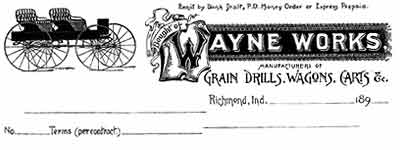
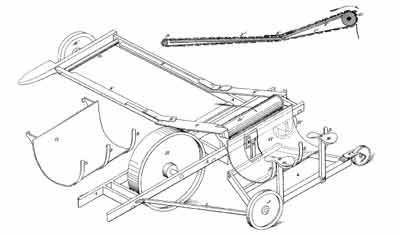
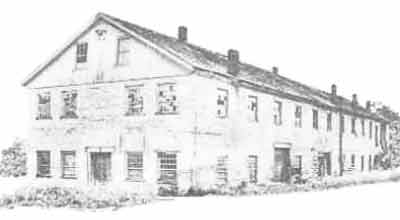
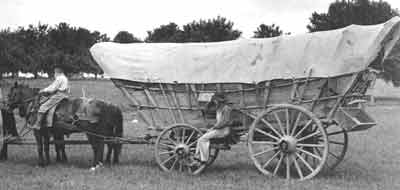
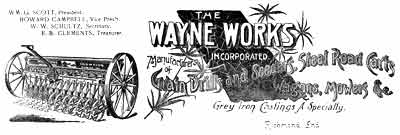
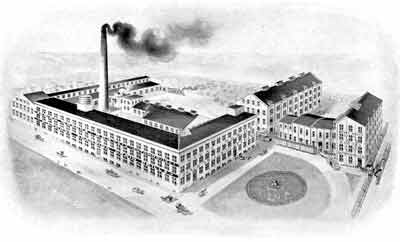
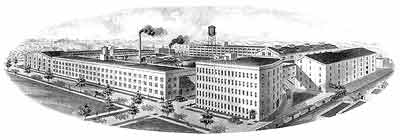
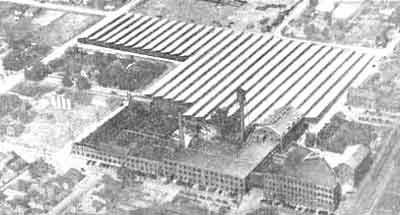
(Unrelated to the Wayne Works of Decatur Illinois, a small carriage manufacturer that built some fire apparatus at the turn of the century. Also unrelated is the Wayne Agricultural Works of Goldsboro, North Carolina which was founded by W.H. Smith and named after its county of residence, Wayne County, North Carolina. Another unrelated firm was the Wayne Body Corp., a 1926 reorganization of the American Auto Trimming Co. The Wayne, Michigan plant of Wayne Body Corp. was sold to Paige-Detroit Motor Car Co. in 1927.) The Wayne Works Story Part I The roots of Wayne Works, who were for many years the largest school bus body manufacturer in the United States, date back to 1837 when John Whippo and brothers Caleb W. and James Witt established a foundry in Dublin, Wayne County, Indiana to manufacture stoves. John Whippo, a resident of Monroe County, New York, brought his wife, Sarah M. (Lawrence) and young son, Charles Henry, to Jackson Township, Wayne County, Indiana in 1835 where he established a small farm just outside of Dublin. The town of Dublin was laid out in 1830 and in 1834 Caleb W. Witt relocated there from nearby Union County. Caleb Wyatt Witt was born in Jefferson, Tennessee on June 23, 1807 to the Rev. William and Jane (Wyatt) Witt. Witt’s official training was as a physician, but he was involved in many community activities and along with Jonathan P. Creager and future business partner John Whippo, built Dublin’s first female seminary in 1835. Two years later Witt helped establish the Dublin Academy and along with his brother James and John Whippo built a foundry for manufacturing stoves and other household iron goods. In 1839 John Whippo sold his share in the firm to two other Witt brothers, Caswell and Pleasant Witt, and in 1840 the four Witt Brothers erected a new factory on Dublin’s National Road (aka Cumberland St.). In addition to step stoves, the Witt brothers also manufactured reaping hooks, scythes, snatches and a novel grain cradle, which dominated the markets to the west for a number of years. As water power was unavailable, the plant’s machinery was powered by a horse-driven treadmill. Coincidently, during the 1860s and 1870s, John Whippo’s son, Charles Henry (b. 1830) worked as a traveling salesman for the Wayne Agricultural Co. The four Witt brothers - Caleb, James, Caswell and Pleasant - were well known to the residents of Dublin. Caleb was a minister in the United Brethren Church and he held services in a section of his Dublin foundry until a separate sanctuary was erected in 1846. Before he became an attorney, Caleb’s son Bennett Fryor Witt (b.1830, to Caleb and Elizabeth Mensch Witt), invented a number of farm implements and was granted 2 patents. In 1847 (some sources state 1845) the Witt’s sold the foundry to brothers James W. and Levi Lovell Lawrence. L. Lovell Lawrence was born in Monroe County, New York in 1821 to Erastus and Harriet (Woodford) Lawrence, his father a native of Vermont and his mother of Hartford, Connecticut. The Lawrence family relocated to Dublin and bought out the Witt Brothers interest in the Dublin Foundry. By that time the firm’s stoves were distributed in Eastern Indiana and Western Ohio by horse-drawn wagon. As Lawrence & Brother, the pair continued that business into 1852, when it was sold to a partnership headed by Caleb W. Witt, a former owner. Joining Witt in the enterprise as equal partners were William Hollingsworth and a foundry employee named Norton Davis, who began doing business as Hollingsworth, Davis & Co. Norton Davis was born on February 1, 1817, in Monroe County, New York and at the age of 20 came to Dublin. Davis found employment as a clock salesman for Abner T. Bond and in 1840 took a job with the Witt Bros.’ foundry. He remained with the firm when it became Lawrence & Bro., and when Caleb W. Witt repurchased a share in the firm, Davis became one of his partners. Incredible as it seem now, three successive partners in the Dublin Foundry - John Whippo, Levi Lovell Lawrence and Norton Davis - were all born in Monroe County, New York - whose largest city was, and remains, Rochester. It’s not known if the three knew each other back in New York, but they were likely drawn to Wayne County for the same reason - opportunity. The end of the American Revolution marked the start of a decades long migration from New England to Western New York State. Many early Western New York settlers who themselves had migrated from New England later journeyed west to Ohio, Indiana and Illinois. Known as internal immigration, these groups commonly settled in a community, developed their lands, sold out, and migrated once again, typically to the next frontier, which in the 1820s was Indiana. The 1850 census revealed that 24,310 then-current Indiana residents had been born in New York State. Included in those numbers were a significant number of former Monroe County, New York residents who had migrated to Wayne County, Indiana due in large part due to reports of Indiana’s favorable weather and increased farming and business opportunities - at the time undeveloped land could be purchased for as little as a dollar an acre. The Dublin Foundry, which was now conducting business in the style of Hollingsworth, Davis, & Co. began to concentrate on the manufacture of small farm implements. Sometime around 1855 an East Germantown, Indiana investor named Samuel Binkley bought out William Hollingsworth’s one third share in the firm, and it was renamed Binkley, Davis & Co. In 1858 Samuel Binkley sold his share in the firm to Wilson Jones, his brother-in-law. Soon after, Caleb W. Witt withdrew from the firm and sold his third of the business to a former partner, L. Lovell Lawrence, and it was renamed Davis, Lawrence & Co. Caleb W. Witt was soon back in business as Witt-Butler & Co., a partnership formed with his son Bennett F. and Dublin wagon maker Anselm Butler. Their initial product was a grain reaper that initially held much promise. The device gathered the grain into a metal trough from which an operator who sat on the machine ejected the sheaf with a revolving rake. On July 7-8, 1858, Witt-Butler & Co. received their first premium at a grand trial of reapers in LaPorte, Indiana. A subsequent version, which was patented by Caleb W. Witt in 1860 used two binder/operators. An apron on the machine carried the reaped wheat up into a concave receiver in front of the binders’ twin seats. By taking turns, the binders took a bundle from the receiver and bound it with straw and tossed it upon the ground. The entire apparatus was very heavy and was normally pulled by a team of four horses. Unfortunately it was quickly superseded by the self-binding reaper and the firm was out of business before it become well-known and extensively used. Witt-Butler’s first address (1858-1859) was E. Germantown (3 miles east of Dublin) although a later account states the factory was in Dublin. During the war Caleb W. Witt and his son Bennett F. who was now a lawyer, moved to Indianapolis where the latter practiced law. After the war Caleb W. Witt devoted all of his energies to the United Brethren Church and he passed away in Dublin in1880. 24-year-old Wilson Jones and his family came to Cambridge City from their home in Lancaster County, Pennsylvania in 1834. Early on he earned a living as a shoe maker and farmer before joining his brother Alexander’s flourishing cooper shop in Milton in 1846. After two years he withdrew from the enterprise and became associated with John Calloway, Jerry Snofford and Jacob Kimmel in a flour mill which he operated for the next ten years. For a short time he then ran a Milton dry goods store with Joseph Shissler, but soon moved to Indianapolis where he entered into grocery business with his brother-in-law, Samuel Binkley. In the meantime he had taken his savings and invested in Iowa real estate, at one time owning a reported 5,000 acres. In 1858 Jones returned to Wayne county and purchased his brother-in-law’s one-third share in Binkley, Davis & Co. In 1868, Davis, Lawrence & Co. manufactured its first true vehicle, a freight wagon based on the popular Conestoga wagon, which was first built by German immigrants in the Lancaster County, Pennsylvania, township of Conestoga sometime in the late 1700s. The 16.5 long x 4.5 feet wide vehicle featured a slightly upward curving floor that prevented its contents from tipping and shifting during transport. A white canvas cover supported by huge wooden bows was often added to protect goods from inclement weather, and its massive wooden hubs were lubricated by tar-based grease, giving rise to its nick-name, “tar grinder”. On the 20th of January, 1871, Davis, Lawrence & Co. was reorganized with a capital stock of $80,000 as the Wayne Agricultural Co. Its officers were, Norton Davis, president; Levi Lovell Lawrence, vice-president; Wilson Jones, actuary; Albert L. Davis, secretary; Edmund Lawrence, treasurer. In 1871 the firm’s 60-75 hands produced $150,000 worth of farm implements. A period catalog advertised the following products: reapers, mowers, wheat drills, hay rakes, churners, coal stoves, grain binders, broadcast seeders, seeding machines, grain drills, corn planters, cultivators, harvesters, scales, platform scales, and fence machines. In 1872 Norton Davis resigned from the firm and L. Lovell Lawrence was made president. Davis purchased a 300 acre farm outside of Dublin which he held until his death in 1883. On November 17, 1873, the Wayne Agricultural Co. increased their capital stock to $100,000 and their factory’s payroll to 100. In 1875 the firm’s directors began searching for more suitable quarters, and due to the efforts of L. Lovell Lawrence and a Richmond-based businessman named David Sutton, an agreement was made with the city of Richmond, Indiana and construction of a new factory commenced. A number of the firm’s stockholders were opposed to the move, chief among them Wilson Jones, who consequently sold his share in the firm. The Dublin based Wayne Agricultural Co. was dissolved on October 16, 1875 and its assets were purchased by a Richmond-based firm with the same name. Headed by Levi Lovell Lawrence, the group of Richmond investors included; William Baxter, David Sutton, B.G. Kelley, Edward Sutton and Hugh Moffitt. At the firm’s first board meeting L. Lovell Lawrence was once again named president, William Baxter, vice-president, and Thadeus Wright, secretary. An 8-page catalog dating from 1882 depicted the following products:
Apparently the firm had a satellite factory in Milton, Indiana which escaped a September 19, 1884 fire that destroyed much of the village. A period newspaper account states: “The Opera House, drug store, hotel, business houses, in fact almost everything except the Wayne Agricultural Works was burned.” At the 1885 Indiana State Fair, Meal & Bradley, their Indianapolis distributor exhibited a full line of Richmond Champion products. The fair catalog descriptions follow:
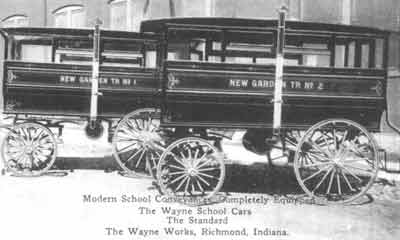
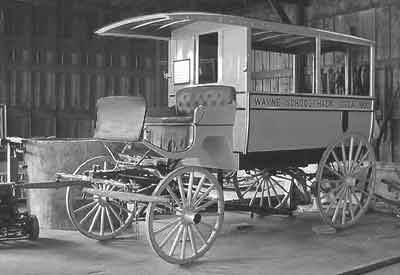
The firm’s agricultural products were well thought of and during the late 1800s the State of Kansas used a Richmond Champion Shoe Drill with press wheels to conduct seed yield experiments at Kansas State University’s Kansas Agricultural Experiment Station in Manhattan, Kansas. The term “Richmond Champion” was used to distinguish the firm’s products from those manufactured by the Champion Machine Co. of Springfield, Ohio, who built grain drills and harvesting machines during the same time period. Another Richmond, Indiana firm, the Hoosier Drill Company, also manufactured grain drills. Started by Joseph Ingels in 1857, it was originally based in Milton, Indiana until an 1868 reorganization which brought the firm to Richmond as the Hoosier Drill Company. Hoosier specialized in corn planting drills (hollow spikes that 'drilled' into the ground and deposited a seed) and broadcast seeders. In 1903 they became part of the American Seeding Machine Company which was absorbed by the Oliver Farm Equipment Company in 1929. Jesse Parker Fulghum (b.1835) is credited with the design of a large number of Wayne Agricultural Co.’s machinery. Fulghum was raised in Randolph County, Indiana, the son of a carpenter named O.B. Fulghum. He was trained in the profession of his father and at the age of 20 relocated to Richmond, Indiana, where he found employment with Gaar, Scott, & Co., a threshing machine and steam traction engine manufacturer. In 1864 Fulghum accepted the position of superintendent with Joseph Ingels, a Milton, Indiana seed drill manufacturer, and within a year’s time was made a partner. He was instrumental in the 1866 relocation of the Ingels Works to Richmond, Indiana where it was reorganized as the Hoosier Drill Company. He accepted the position of secretary of the new firm, but soon became dissatisfied with the arrangement and in 1868 he resigned and sold his share in the firm. In 1869, he took a job as chief mechanic with the Wayne Agricultural Co. and during the next four years designed and patented a number of agricultural products for the Dublin manufacturer. In 1873 he moved back to Richmond as chief mechanic/engineer of the Hoosier Drill Co. Soon after the Wayne Agricultural Co. relocated to Richmond, Fulghum was hired back as their chief engineer, a position he held until the firm’s 1887 bankruptcy. He then went to work for the Micajah C. Henley, Richmond’s “Roller Skate King”. In 1884 Henley patented a roller skate bearing his name and in partnership with his son Harry, produced 15,000 "Chicago Skates" a week during the height of the roller skate craze (1885-1895). Sometime after 1880 Lawrence retired and his post was taken by the firm’s vice-president, William Baxter. Prior to his association with the firm in 1876, Baxter had served as Wayne County’s representative in the Indiana State Senate. Baxter was a prominent member of the Quaker Church and he was the main sponsor of a pro-temperance act which was passed by the Indiana legislature in 1873. Known as the Baxter Act, the bill enacted strict regulations on liquor traffic, and imposed severe penalties for their violation. Although most legislators were against the bill, they feared a backlash from pro-temperance voters if they voted against it, and the Indiana Governor likewise felt compelled to sign it into law. The Baxter Law was subsequently repealed as being “too prohibitive” in 1875. In late August, 1886 the Hon. William Baxter contracted typhoid fever, and on September 8, 1886, he passed away aged 63 years. As Baxter was one of Richmond’s leading citizens of the day, his passing put the future of the Wayne Implement Co. in jeopardy. The firm’s creditors became nervous and although the firm’s December, 1886 financial statement revealed that the firm’s debt was fully $100,000 below its aggregate resources of $315,000, by May of 1887 $34,405 worth of obligations were past due and the firm’s largest creditors, among them the First National Bank of Richmond, called for a receiver. On May 29, the State Court Judge appointed Thaddeus Wright receiver. He gave bond of $150,000 with James E. Reeves, Isaac Kinsey and Jesse Ostes as sureties. David Sutton was appointed the firm’s trustee. In January of 1888 the firm’s assets were purchased for $26,600 by a new company consisting of Thomas Creamer, E.B. Clements, and W.W. Schultz. The partners announced that the new firm would “continue manufacturing the same line of agricultural implements as made by the old company.” Richmond businessman, William G. Scott, the secretary of Gaar-Scott & Co., and vice-president (later president) of the Second National Bank of Richmond, was brought in as president of the reorganized firm. New stationary gave the firm’s name as Wayne Works Inc. and its officers were listed as follows; William G. Scott, president; Howard Campbell, vice-president; Edward B. Clements, treasurer; and Walter W. Schultz, secretary. Although the majority of the firm’s sales remained in agricultural equipment, in the 1890s they began to offer light carriages, primarily buggies and sulkies in addition to their line of commercial farm wagons they had started manufacturing in 1868. In 1892 the Kingsville, Ashtabula County, Ohio school district commissioned The Wayne Works to build them a wagon specifically designed to transport children to and from school. Wayne Works christened the vehicle a ”School Car” and it’s passenger compartment featured perimeter seating, with wooden bench seats facing the sides rather than the front of the vehicle as is now the normal configuration. The first publicly-funded transportation of school children took place in Quincy, Massachusetts in 1869 and it was another quarter century before Mid-west school districts adopted the practice. By 1910, thirty states had pupil transportation programs in place and in 1919 Delaware and Wyoming became the last two states to enact public transportation funding. Wayne Work’s agricultural products continued to be marketed under the “Richmond Champion” brand name with grain drills and corn planters being their most successful lines. Although the firm was producing a small number of school cars at the time; road carts, delivery wagons and buggies made up the majority of their vehicle sales. On February 11th, 1902 tragedy stuck the works as reported by the Fort Wayne Sentinel:
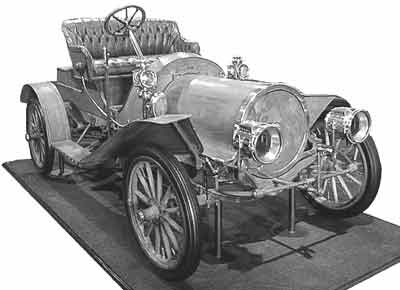
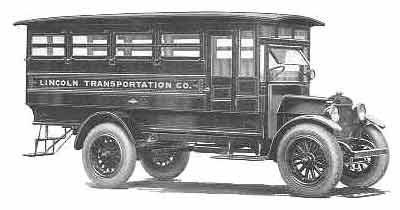
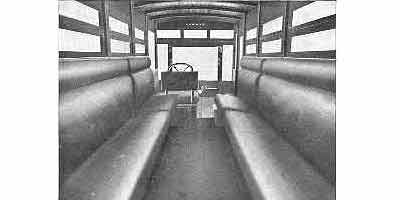
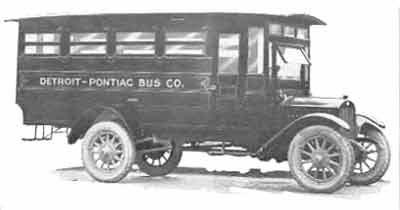
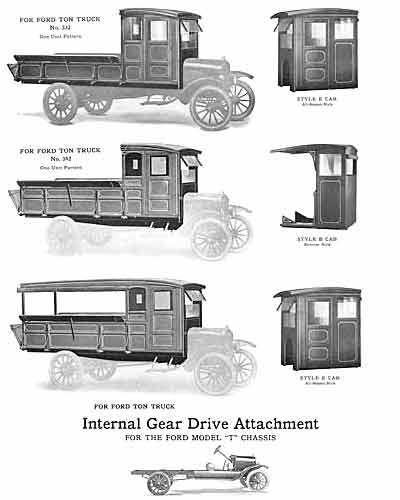
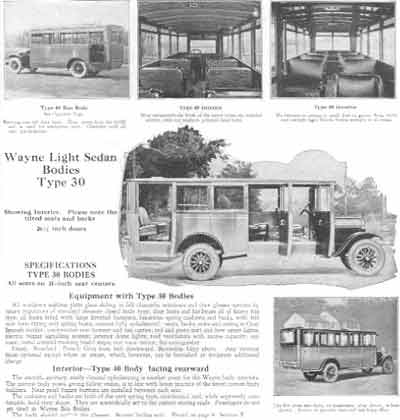
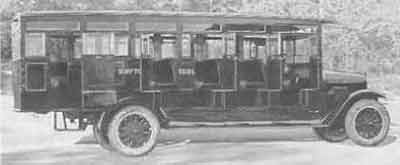
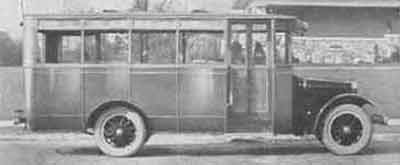
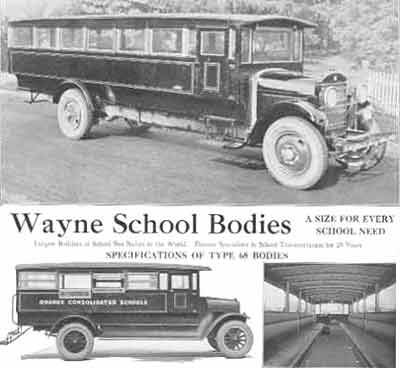
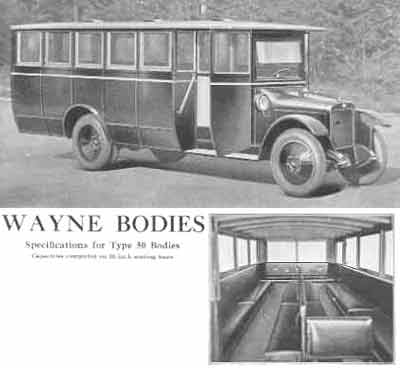
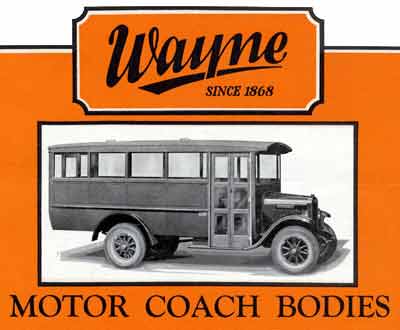
When William G. Scott passed away unexpectedly in 1897 the firm’s secretary, Walter W. Schultz, took over as president and Edward B. Clements as factory manager. In 1901 Schultz commissioned his chief engineer, Jack St. John to build him an automobile. St. John developed an assembled 2-cylinder air-cooled touring car which was produced in very small numbers into 1904, when a larger 4-cylinder air-cooled touring debuted. In its early days the car was occasionally called a Wayne, although its manufacturer never used that moniker. Several body styles debuted prior to 1910 when a new water-cooled 4-cylinder was substituted for the earlier air-cooled powerplant. By that time the car had grown in size and could now be considered a mid-sized automobile. Most Richmonds were sold locally and it had enjoyed a good reputation as a strong and reliable vehicle. A water-cooled six-cylinder Richmond debuted in 1914 as a companion to the substantially lower-priced four. Between 1915 and early 1917 Wayne Works supplied the Herff-Brooks Corp. of Indianapolis, Indiana with Richmond automobiles built with a Herff-Brooks badge. Between 1913 and1917 national magazines listed the Herff-Brooks Corporation of Indianapolis as "General Sales Agents", rather than manufacturers. The Herff brothers, George, Herbert and Jacob, were the Indianapolis distributor of the Marathon automobile, an assembled car first built in Jackson and later in Nashville, Tennessee. Just before Marathon went bankrupt in early 1914 H.H. Brooks, its sales manager, entered into an August 1913 partnership with the Herffs with the goal of finding a replacement vehicle that would keep both parties in business. When the supply of Marathons was exhausted, the Herff-Brooks Corp. made a deal with Wayne Works to purchase white-label Richmonds which would then be re-badged as Herff-Brooks automobiles and then sold through the latter firm’s Indianapolis distributorship. Both 4- and 6-cylinder Richmonds were made available in the Herff-Brooks line. When Wayne Works discontinued production of the Richmond in early 1917, Herff-Brooks withdrew as well. Richmond Production (may or may not include 1915-1917 Herff-Brooks): 1901, 1; 1902, 2; 1903, 5; 1904, 15; 1905, 25; 1906, 50; 1907, 50; 1908, 75; 1909, 100; 1910, 100; 1911, 100; 1912, 150; 1913, 150; 1914, 200; 1915, 200; 1916, 100; 1917, 25. A handful of Richmonds are thought to remain, and one 1907 touring is owned by the Wayne County Historical Museum in Richmond, Indiana. South Carolina automobile collector/appraiser Paul Ianuario owns the only known Herff-Brooks, a 1914 model built by Marathon in Nashville. The failure of the Richmond coincided with increased competition in the farm implement field which was now dominated by huge firms such as International Harvester. Luckily the recent popularity of the motor truck and Henry Ford’s Model T presented Wayne Works with new opportunities, and they began to develop a line of commercial bodies for motorized chassis. Before the start of the War they were offering a complete line of closed and open cabs, depot hacks, and both open and closed delivery van bodies. One body in particular, the School Car, attracted the most attention. Built in 1914 on an extended wheelbase Model T chassis, the motorized School Car Body was based on their horse-drawn School Car Body, and featured a metal reinforced wooden structure with a single rear entrance and four padded bench seats. The debut of Wayne’s motorized school car came at a time when the nation’s rural school district’s were receiving increased funding for transportation and although the firm’s school bus business didn’t take off until after the end of the First World War, they had their foot in the door and were poised to take advantage of the emerging market. Declining rural populations, better roads and the emergence of the school bus all contributed to the end of one-room schools. In 1920 Indiana had 4,500 one-teacher schools; in 1945, just 616. The bus gave progressive educators a means to provide a more standardized education that was only possible in larger, centrally located schools. Wayne Works built production automobile bodies for at least one outside automobile manufacturer in the late teens. George L. Moore a Minneapolis, Minnesota for dealers decided to build his own car to compete against the Model T and from 1916-1920 he manufactured the Moor Four which was priced at $550. Moore eventually ran into legal problems associated with the firm’s stock and in 1919 it relocated to Danville, Illinois. Between 1916 and its bankruptcy in 1920 approximately 1,000 Moores are thought to have been constructed. During World War I, they manufactured hand grenades, machine gun shells, rations carts and field ovens. After the War Wayne offered a complete line of cabs and commercial bodes for the Model T, and began to aggressively market their school busses in nationally distributed periodicals such as Bus Transportation, School Executive and School Board Journal. John W. Clements Sr. became general manager and president of the company when his father, Edward B. Clements, died in 1920. It was John W. Clements who paved the way for the firm’s eventual dominance in the school bus business. His son, John W. Clements Jr., eventually joined the firm, becoming its vice-president of sales. The following copy appeared in Wayne’s early 1920s commercial bus body brochures, which were produced for distribution by Commerce, GMC, Graham Bros. and Republic truck dealers:
In 1922 Wayne offered a specially outfitted coach they called the Wayne Touring Home which according to the flyer “Opens the Doors of the World”. The 12’to19’ bodies were available in two heights, the standard 56” and a high-headroom 76” version which allowed its used to walk upright inside of the coach. The Literature explained:
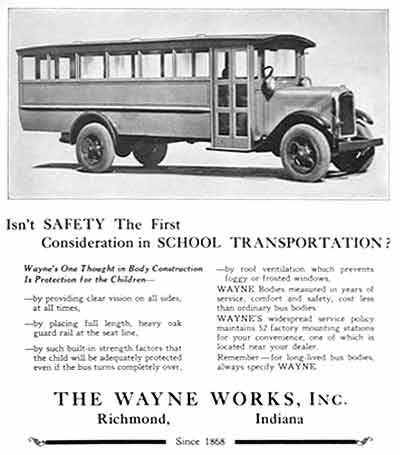
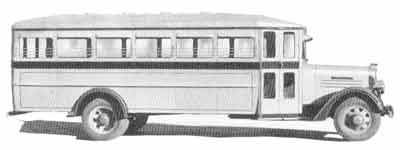
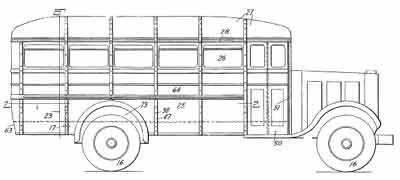
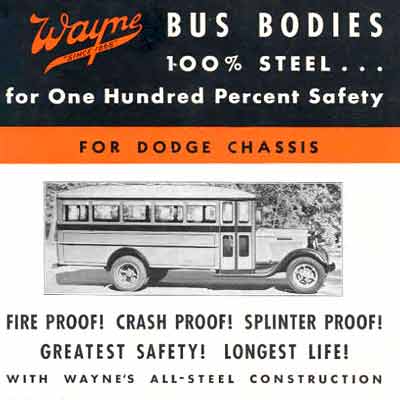
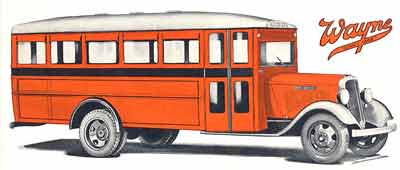
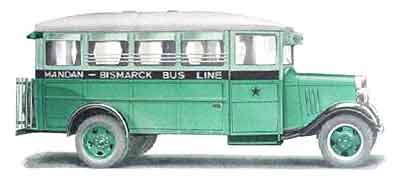
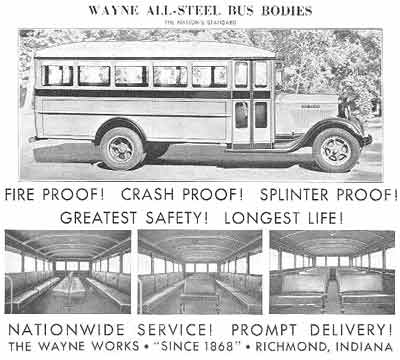
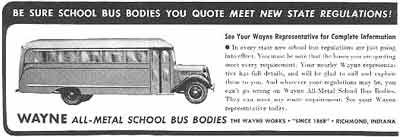
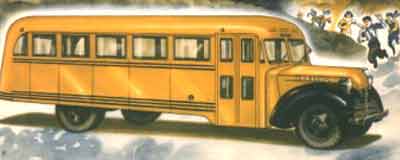
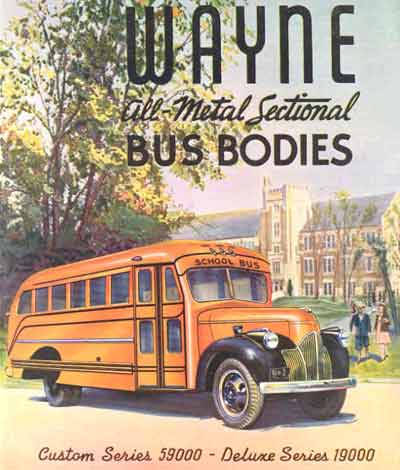
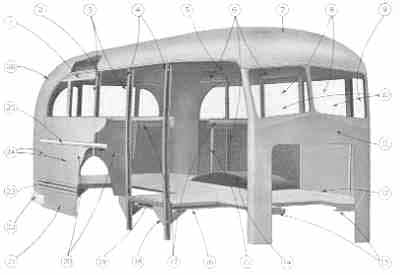
Constructed of the same materials as Wayne’s school bus bodies – iron-reinforced wood frame & plywood panels - the touring coach included a built-in stowable 56” x 76” bed on one side of the rear compartment and a small kitchenette with a moveable bench seat on the other. The interior could be easily re-arranged from daytime eating and entertaining to a comfortable sleeping chamber in a matter of minutes. Options included a potable water system (water bag), an auxiliary bed, a canvas awning, a tool kit, built-in cabinetry and a full compliment of kitchen utensils. As had most commercial body builders, by the late-twenties Wayne had adopted a steel-paneled wood-framed construction for most all of their bus and commercial bodies. Despite claims to the contrary, Albert L. Luce Sr. did not build the first all-steel school bus in 1927. The Model T bus he constructed in 1927 was a typical steel-sheathed wood-framed body. Bluebird’s all-steel bodies would not be built until the mid Thirties. Wayne Works introduced the industry’s first all-steel school bus body in 1930. The event marked the most dramatic step forward in bus body safety. By the mid Thirties, they had added heavy-duty "collision rails" around the bodies at the passenger seat level, providing substantially increased protection. The second firm to build an all-steel school bus body was Lima, Ohio’s Superior Body Co. which introduced their all-steel body in early 1931. Safety glass was standard equipment, and they can rightly claim credit for the first all-steel school bus with safety glass. It was available as an option on Wayne’s buses, but did not become standard equipment for a couple more years. Both firms continued to offer metal sheathed wood-framed bodies for a couple of years, but by 1933 all of Wayne Works’ buses were built entirely of steel. Early All-steel Wayne bodies were assembled using bolts, not rivets and were typically shipped completely knocked down (CKD) to one of Wayne’s numerous authorized distributors who would then assemble the body and mount it on a customers chassis. This gave the firm a distinct advantage in the marketplace and quickly propelled them to the nation’s number one manufacturer of school buses. Although safe automobiles were a tough sell in the early thirties, safe school buses were another matter entirely. Although the nation wasn’t as safety conscious as today’s nanny state, school boards at the time were easily convinced that an all steel body was safer than an all-wood or metal-skinned, wood-framed body. When coupled with the potential savings in fuel and insurance that the lighter all-metal bodies could provide, school boards were typically willing to spend the extra money to purchase the all steel units, despite the fact that the nation was still suffering the long-term affects of the Depression. As the all-steel school buses took to the road, a handful of accidents occurred and as Wayne Works advertised in 1933, not a single child had been killed in a Wayne all-metal school bus:
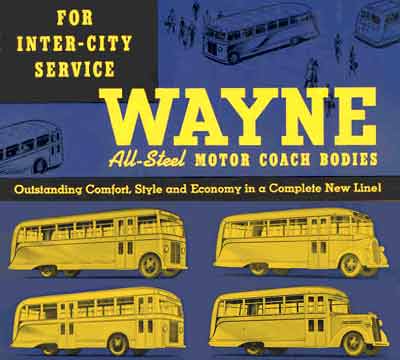
Once the word got out, districts from around the country scraped together the necessary funds to purchase new school buses, and the resulting sales helped Wayne, and their competitors weather the Depression. Wayne also marketed their new all-steel bodies to railroads, liveries, bus lines and metropolitan transit authorities. Available in PAYE (pay as you enter) City Service or luxuriously appointed Inter-City Service versions, the same all-steel attributes applied. By the end of the decade school bus chassis had
become a big business and the following manufacturers offered either
purpose-built bus chassis or complete buses; ACF-Brill, Aerocoach,
Brockway, Buick, CCF, Chevrolet, Commerce, Diamond T, Dodge Bros.,
Fageol, Fargo, Federal, Ford, FWD., Garford, Gar Wood, GMC, Graham,
Hug, Indiana, International, Kenworth, Mack, Oldsmobile, Pierce-Arrow,
Reo, Safeway, Sterling, Stewart, St. Louis Car, Studebaker, Twin Coach,
White, Willys-Overland and Yellow Coach. The
school bus business operated on an unusual schedule for most of the
20th century. Although school boards and superintendents put off
ordering new buses for the coming school year until the very last
minute – typically April or May – they demanded the vehicles be ready
in time for the upcoming school year, typically the last two weeks of
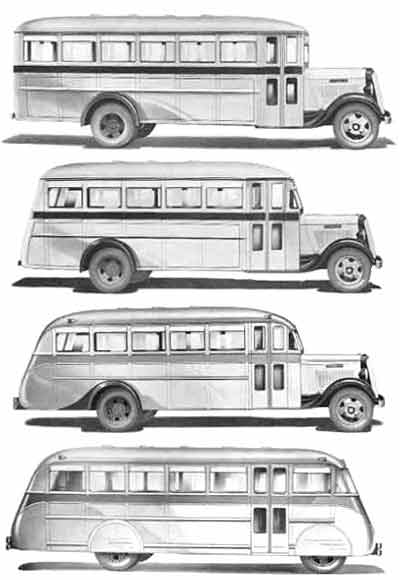
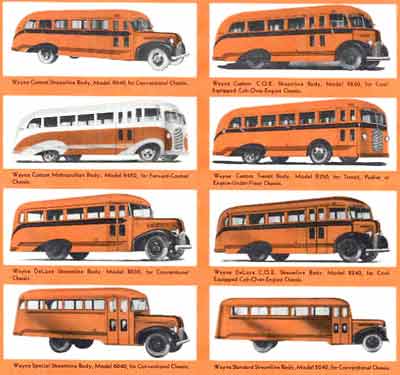
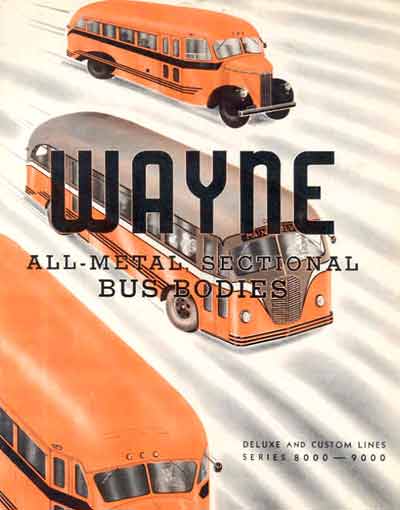
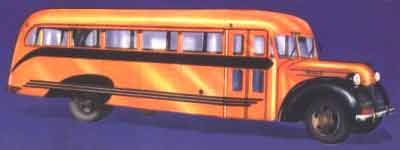
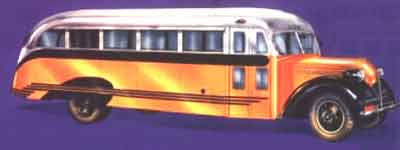
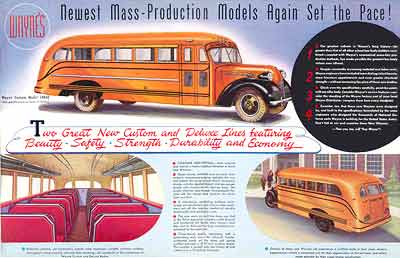
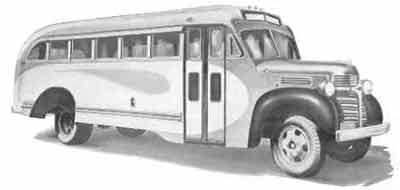
August or first week of September. Unless the constructor was well-heeled, building school bus bodies was a highly seasonal enterprise, with four months on, then eight months off. Money was unavailable until deposits were made in the spring, and the flow of money ended when the buses were delivered in August. Consequently many Wayne employees were part-time farmers, relying upon their bus building income to tide them over during the hot summer sabbatical. In 1936 Wayne introduced a new line of streamlined all-steel bodies, which are outlined in the following transcription of a 1936 mailer:
The July 12, 1937 issue of the Charleston Gazette contained the following article/advertisement:
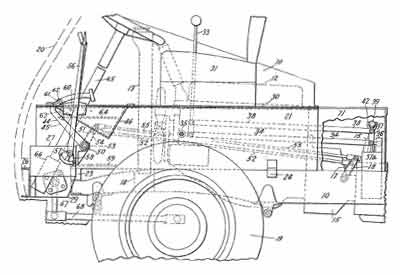
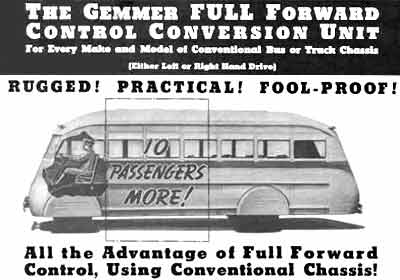
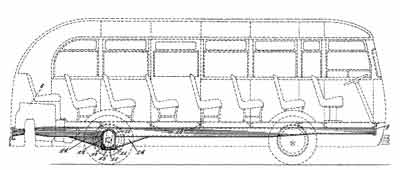
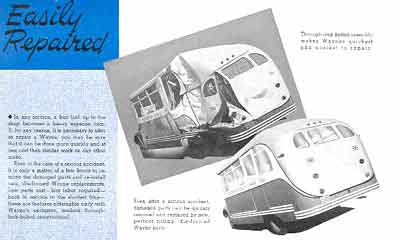
Although the first Wayne-built School Car debuted in 1892, not 1877 as the article infers, the rest of the facts are slightly more accurate. Wayne first true vehicle, a Conestoga-style wagon, was built in 1868. 1876 was the year they moved to Richmond, Indiana. Because of Wayne’s through bolted construction, their sectional bodies could be easily repaired when damaged in an accident. Additionally existing bodies could be shortened or lengthened as desired by simply unbolting the body panels and either removing or inserting a section in the middle and bolting it back together. In 1938 Wayne offered a Gemmer forward control option for bodies built on conventional chassis. A transcription of Wayne’s advertisement for the Gemmer Full Forward Control Unit follows:
George Andrew Gemmer was chief engineer of the National Motors Mfg. Co. of Irvington, NJ, the manufacturers of the Day-Elder truck. He had earlier founded the Gemmer Manufacturing Co., 741 Merrick Avenue, Detroit, Michigan, a longtime manufacturer of steering gears. Gemmer’s worm drive steering gears were licensed to ZF Friedrichshafen AG a German manufacturer who marketed them as ZF-Gemmer steering gears. A rise in fatal school bus accidents resulted in an April 1939 conference in New York City where representatives from all 48 states gathered to develop a set of national standards for school bus construction and operation. The symposium was chaired by Frank W. Cyr, a Columbia University professor and a former superintendent of the Chappell, Nebraska school district. The conference was attended by representatives of the bus body industry and at the end of the 7-day event the group released a list of minimum standards and recommendations. Among them were specifications for type of construction, body length, ceiling height and aisle width and color. Strips of different colors were hung from the wall and the participants in the conference slowly narrowed down the colors until three slightly different shades of yellow remained. National School Bus Chrome became the chosen shade with slight variations allowed as yellow was a difficult color to reproduce exactly. Yellow had been decided upon because it provided good visibility in the semi-darkness of early morning and late afternoon. Since then, 12 National School Transportation Conferences have been held, giving state and industry representatives a forum to revise existing and establish new safety guidelines operating procedures for school buses. For many years the Federal Government allowed he industry to regulate itself, but they became directly involved in motor vehicle safety with the passing of the National Traffic and Motor Vehicle Safety Act of 1966. A School Bus Safety Amendment was passed in 1974, and since that time the National Highway Traffic Safety Administration has issued 36 Federal Motor Vehicle Safety Standards (FMVSS) which apply to school buses. In 1940 G.W. Gayle, Wayne Works sales manager, sent out four damning letters (they called them 'Inter Office Correpondance') to their dealer network, many of which distributed both firm's products, advising that Hicks (Wayne Works' chief competitor in the midwest school bus field) was experiencing some 'manufacturing difficulties' implying they were knocking on death's door. Two of the letters, which are so libelous as to be laughable, are included as appendix 1. Unsurprisingly Hicks took Wayne Works to
court, whereupon they were awarded a $35,000 judgement. Wayne Works
appealed the decision in 1944, requesting a new trial, which was denied
on June 5, 1944 by State of Indiana Appeals Court Justice Floyd S.
Draper, who wrote:
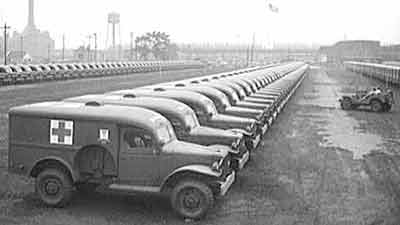
Wayne manufactured approximately 300 pusher type sectional-bodied forward control buses on rear-engined Reo chassis between 1941 and 1946. The sectional pusher style bus was originally designed by Christian J. Hug, the builder of the Hug Truck, in the mid 1930s. The sectional-bodied Wayne pusher chassis was abandoned after the War in favor of a new mid-engined forward control bus that Wayne marketed as the Transicoach. In May of 1941 the Hicks Body Co. of Lebanon, Indiana, another school bus body builder, sued Wayne Works for $500,000 alleging that Wayne Works distributed letters designed to injure the credit and business reputation of the Lebanon concern. The case went to trial in 1944 and Hicks was eventually awarded $35,000 in compensation. The penalty proved of little significance as Wayne Works had won a contract at the start of the war to supply ambulance bodies for the US Army. The World War II-era Dodge SNL G-657 Mast Parts List included the following body suppliers:
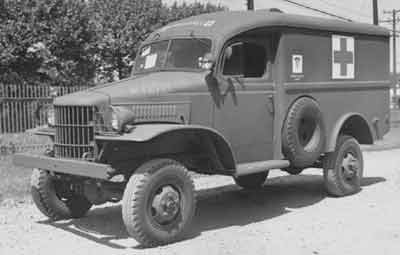
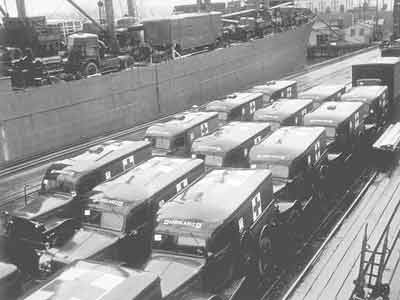
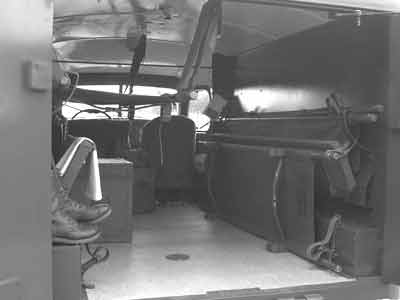
The Wayne-built Dodge T214-WC54 was the most common ambulance used by the Allies during World War II, with 22,857 examples. The ¾ ton Dodge four-wheel-drive chassis were built at Dodge’s newly constructed Mound Rd. Assembly Plant in Detroit then shipped to Richmond where the ambulance bodies were constructed on the chassis. Deliveries of the ambulance began in May 1942 and the design was standardized on October 23, 1942. A little less than 10% of all 255,173 ¾ ton Dodge T214 chassis built from 1942-1945 were turned into ambulances. They Dodge chassis arrived in Richmond with the hood, radiator, cowl, V-windshield, front doors and fenders intact – essentially everything from the a-pillar forward. Wayne constructed the entire body from the firewall back and a noticeable seam just above the windshield marks the start of Wayne’s bodywork. The driver and medic could enter the rear compartment without exiting the vehicle, although most passengers entered the ambulance through the double rear doors which were located above a folding rear step. The all-steel body was lined with Masonite and twin longitudinal folding benches providing seating for 7 ambulatory patients. Roof-mounted slings and wall brackets held 2 stretchers at shoulder height and if the rear bench seats were folded up, two more stretchers could be placed on the floor. The rear compartment was ventilated and spare tires were carried in recessed wells built into the rear compartment just behind the full-length side doors. Most WC-54s included a pistol-operated spotlight and a pioneer tool kit mounted on the outside of the ambulance body. The right front fender included a jerry-can holder and a siren was occasionally mounted on the left fender. A small number of WC-54s were fitted with large whip antennas and field radios, indicating they did double duty as radio cars. During the War WC-54s were used by the US Army Medical Corps, the British Royal Army Medical Corps and the Free French Forces. After the war the US Army presented thousands of used WC-54s to their European allies under a lend-lease arrangement and the sturdy vehicles remained in use into the 1960s in Austria, Belgium, France, Greece, the Netherlands and Norway. During the war Wayne Works also constructed mobile machine shops, military buses and semi-trailer bus bodies for transporting war workers some of which could carry up to 150 passengers. The semi-trailer buses were built on deep-drop frame trailer chassis and included a streamlined front end module that was fitted above the fifth wheel of the semi-tractor two vehicle. In 1946, the Rio Grande Southern Railroad, a small narrow-gauge line based in Colorado, purchased 3 Wayne bus bodies for use on three of their Galloping Goose hybrid railcars. Originally constructed during the 1930s, the unusual vehicles were constructed using highly modified truck chassis that were attached to an integral freight/passenger rail car body. The original Geese were built using Pierce-Arrow bodies and chassis, and by 1946 the single car mixed-use vehicles were in a sad state. The railroad retrofitted the vehicles with surplus GMC truck engines and Wayne Bus bodies, and they continued to serve the railroad’s Durango to Ridgeway route into the early 1950s. Following the war Wayne heavily advertised their investment in a new Bonderizing plant, an automated line that applied a zinc phosphate coating (Bonderite) to their bodywork in order to provide a better bonding surface for primer, paint or lacquer. The following transcription is from a 1948 Bonderizing brochure:
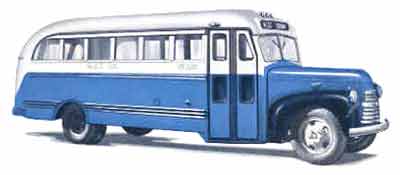
On August 8, 1948 900 UAW workers at the Richmond plant walked off the job following the discharge of several employees in the paint department as a result of a dispute over the application a piecework scale. A company spokesman said the company offered to arbitrate the dispute and the workers returned to work soon after. A second, nationwide United Auto Workers strike forced the closure of the plant on November 1st, 1948. On December 2, 1848 a Wayne Works spokesman announced that they were in talks “regarding the future of the plant” with the Ford Motor Co. The national union ended their strike in February and the plant reopened on February 21st, 1949. It turned out that the talks with Ford were in regards to a new Ford-branded bus that was to be built by Wayne Works and the Union City Body Co. of Union City, Indiana. The Ford contract ran from 1949 to 1950, when Ford entered into a contracted with Marmon-Herrington for their buses. Just before the strike, Wayne Works and its West coast distributor, the Crown Coach Co. entered into a joint venture, Transicoach Inc., in order to market a revival of C.J. Hug's sectional bus. The Transicoach was a lowcost underfloor-engined forward-control school bus with a Hercules engine and 5-speed Fuller transmission mounted amidships on a Reo-supplied chassis. Only 200 Transicoaches were sold before the Richmond, Indiana-based Transicoach Inc. was dissolved in 1950. After the War a number of major Wayne distributors issued their own co-branded Wayne Bus catalogs, among them Crown Coach in California, Hercules-Campbell in New York, and Baker Equipment Engineering Co. in West Virginia. By that time there were over 50 authorized Wayne distributors and the firm hard partnered with H.V. Welles Ltd., the Canadian distributor of Marmon-Herrington drive-trains and Dearborn truck cabs. Based in Windsor, Ontario, H.V. Welles also maintained a satellite branch in Toronto. Originally called the Warford Corp. of Canada, it was established in 1925 to distribute Warford transmissions in Canada. The Warford was a popular aftermarket Ford Model T/Model A transmission that enabled a much higher cruising speed. The firm also manufactured heavy-duty drive-train conversions which allowed Model Ts to be converted into 1½-ton trucks. Halsey V. Welles, the firm’s owner, reorganized it as H.V. Welles Ltd. in 1929. Welles specialized in aftermarket products for Fords, and they became the Canadian distributor of Thornton 2-axle drive conversion units in the 1930s. Later in the decade they became the Canadian distributor for Transportation Engineers Inc., the Detroit manufacture of Dearborn Ford COE truck cabs. Like Proctor-Keefe in Detroit, Welles modified standard Ford panels vans and sedan deliveries into specialty vehicles. During the 1930s, 40s and 50s they built a number of paddy wagons, invalid coaches and municipal ambulances and coroners’ hearses, almost always on Ford chassis. A small fleet of 1940 Ford ambulances built on standard Ford 122" 1-ton cab and chassis were bodied by Welles for use by the Canadian Air Force. The bodies featured an unusually wide humpbacked rear compartment that gave its military occupants a few additional inches of both head and shoulder room. During World War II Welles outfitted a large number of Canadian Army vehicles with Thornton and Marmon-Herrington drive systems and also produced service bodies for the Allies. After the War the firm was reorganized as Welles Corp. and they became the sole Canadian distributor of Wayne Works bus bodies. Welles became the sole Canadian distributor of Wayne Works school buses in 1948, and when Marmon-Herrington started selling their buses in Canada in 1950, Welles distributed them. To avoid any conflicts, Welles set up two subsidiaries; Welles-Marmon-Herrington Corp. Ltd. and Welles-Wayne Corp. Ltd. By late 1949 Wayne Works’ board of directors had grown tired of the stranglehold the United Auto Workers appeared to hold over the firm’s future, and decided to put the firm up for sale. An attractive prospectus was sent out to prospective buyers and in early 1950 an interested party made a visit to Richmond. Newton Glekel (1914-2007), a successful New York real estate investor and partner in the law firm of Glekel & Drimmer, was in Indianapolis hoping to acquire some business property. Although that deal was scrapped, he decided to take a look at Wayne Works’ Richmond facility, whose availability he had been alerted to. Gleckel founded Glekel & Drimmer in1938 with fellow Columbia University law graduate Harold L. Drimmer (1914-2005). Located at 521 Fifth Avenue, New York, the law firm specialized in real estate and by 1944 had abandoned all outside work, concentrating on the partners’ holdings which included the publishing house of J.J. Little & Ives. In December of 1950 the Jeffrey Ives Corp., a wholly-owned subsidiary of J.J. Little & Ives, purchased the Clements family’s holdings in Wayne Works and became its new owner. 500 members of UAW local 721 struck Wayne Works on February 1, 1951 after negotiations between the union and company officials over increased wages broke off. The two parties came to terms and the strike ended shortly thereafter. In 1952 Wayne introduced their new “Curv-a-Corner” rear windows that offered 156% more rearward vision than competing designs and gave the bus driver a “panoramic” view of the road. Their 1954 advertising stated that the Wayne was:
The Wayne Works story is continued here © 2004 Mark Theobald - Coachbuilt.com, with special thanks to Bernie deWinter IV.
|
|
|||||||||
|
||||||||||
|
||||||||||
|
||||||||||
|
||||||||||
|
|
||||||||||
| |
||||||||||
|
||||||||||
|
|
||||||||||
|
||||||||||
| |
||||||||||
|
||||||||||
|
|
||||||||||
|
|
||||||||||
|
|
||||||||||
|
© 2004-2012 Coachbuilt.com, Inc.|books|disclaimer|index|privacy |
||||||||||