|
|
|
 |
||||||||||
|
||||||||||
|
|
||||||||||
|
||||||||||
|
||||||||||
|
|
||||||||||
|
|
|||||||||
|
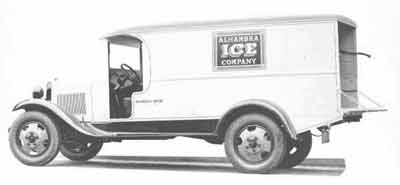
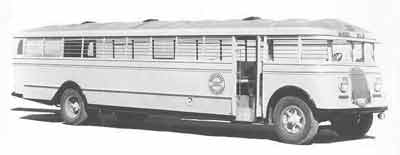
In the early part of the twentieth century there were 3 unrelated firms named Standard that produced vehicle bodies in metropolitan Los Angeles, California. The oldest was the Standard Wagon Works (1890s-1910s) which was founded in the late 19th century and survived into the teens producing horse-drawn wagons and delivery vehicles for Los Angeles farmers and businesses. The next oldest and best known was the Standard Carriage Works (1895-1985). Founded in 1895 by Tony Martin, the firm produced wagons and delivery vehicles and survived the transition to the automobile age, becoming Los Angeles best-known commercial body builder. In 1960 new management relocated the firm from downtown Los Angeles to the suburb of Vernon, which was coincidentally the new home of the similarly-named Standard Auto Body Co., the third LA-based Standard The third Standard, the Standard Auto Body Company (1928-1979) was a traditional full service truck equipment supplier that also built their own truck bodies. After a move to the Los Angeles suburb of Vernon in the 1940s, Standard Auto Body began to manufacture a standardized line of steel and aluminum truck bodies. They also distributed third-party accessories such as St. Paul Hydraulic Hoists and Tulsa Truck Winches. In 1967 Standard Auto Body was acquired by Hercules Galion Products, Inc. of Galion, Ohio. That firm became the Truck Equipment Group of Galion, Ohio-based Peabody Solid Wastes Management Corp. which was commonly known as Peabody-Galion. From 1967 until its demise in 1979, Standard Auto Body Co. was better known as SABCO, or the Sabco Division of Hercules-Galion (later Peabody-Galion). A number of body shops going by the name Standard Auto Body remain in business in and around Los Angeles today, however none of them are related to any of the older firms. At the turn of the century a number of Los Angeles carriage builders were situated in the immediate area surrounding South San Pedro St., and its carriage dealers were located 1 mile to the north along N. Los Angeles St. Among the better known dealers and manufacturers located along S. San Pedro were the following:
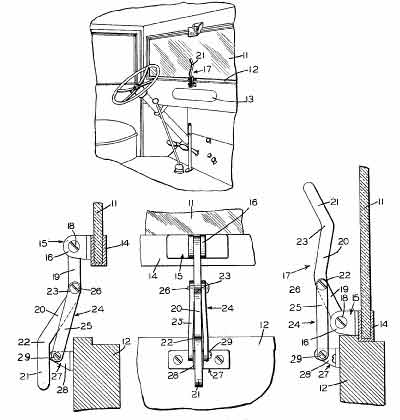
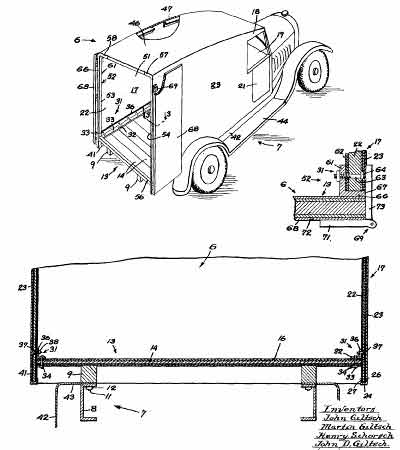
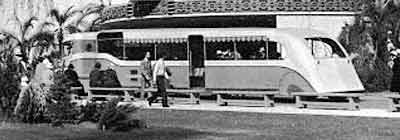
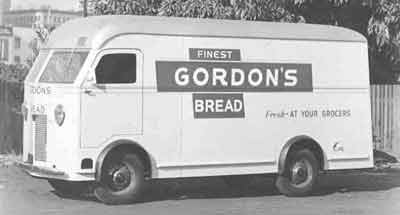
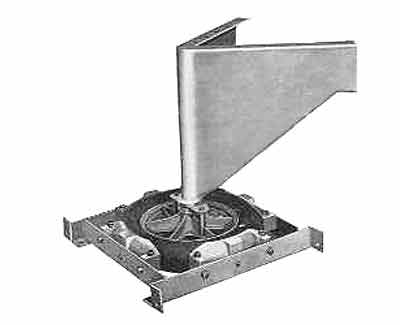
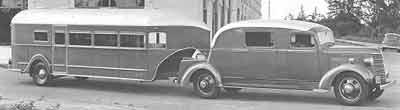
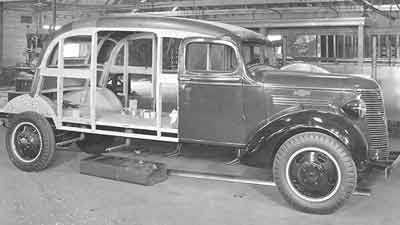
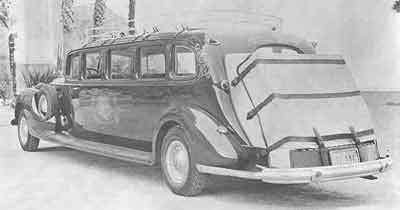
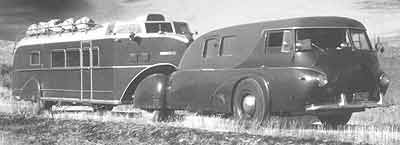
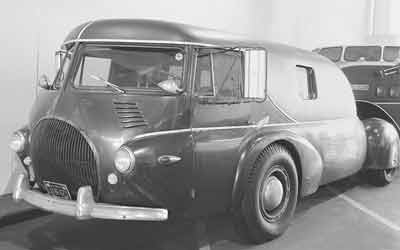
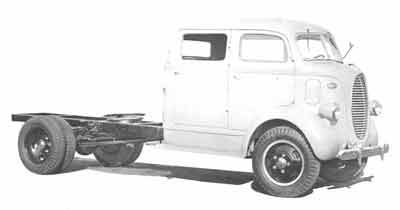
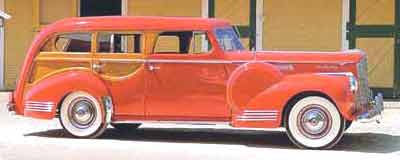
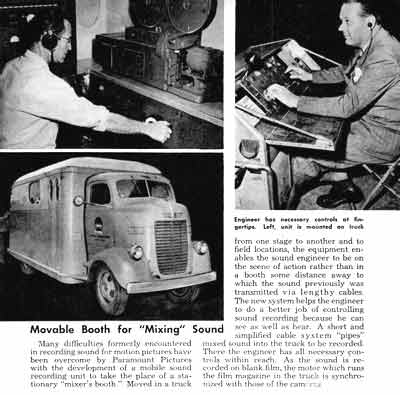
Of those, the Earl Carriage works remains well-known today, due to the later career of its founder’s son, the famous General Motors design chief, Harley Earl. The Zenz Brothers produced a number of interesting vehicles as well, and remain well-known for their work for early Hollywood studios. Founded in 1898 by brothers Frank and John Zenz the firm produced the vehicles used in Pasadena’s annual Tournament of Roses chariot races which were held between 1904 and 1915. They also supplied the chariots used in Cecil B. DeMille’s 1925 epic, Ben Hur, and produced many of the carriages and wagons used in Hollywood’s early motion pictures. The 1915 Los Angeles Directory lists the firm principals as John Zenz, J.B. Hawks and F.A. Martin. John Zenz remained at the helm of the firm bearing his name until it withdrew from business in 1934. In the late teens Hawks established his own truck equipment company, J.B. Hawk Sales, which was located at 665 N. Broadway in Los Angeles. F.A. Martin is believed to be the ‘Tony Martin’ who also held an interest in the Standard Carriage Works which was founded in 1895. As its name suggests the firm’s first products were carriages and wagons but by 1910 the firm had commenced the production of auto truck bodies. Standard Carriage Works also built multi-passenger open and closed bus or stage bodies for early passenger car and truck chassis that were popular with a number of Los Angeles-based interurban railway and land transportation companies. During the early Twenties an enterprising Austro-Hungarian-born carriage builder named John Giltsch (1882-1961), purchased a controlling interest in the firm from Martin. Giltsch was born on August 10, 1882 to Martin and Marie (Fleischer) Glitsch in Glogon, Austria Hungary. After a public education and subsequent apprenticeship, John and his older brother Martin, (b.1878), emigrated to the United States sometime around 1900. The brothers found work with one of Pittsburgh’s numerous carriage builders and in 1908 relocated to Los Angeles where they found employment with the Standard Carriage Works. While in Pittsburgh Martin Giltsch married another Austro-Hungarian immigrant named Katharena Wagner and on January 3, 1907 they were blessed with the birth of a son, Martin Glitsch Jr. (b.1907-d.1979). On December 27, 1913 John Giltsch married a another Austro-Hungarian immigrant, Rosalia Scherer (b.1892). It was not by accident that the Giltsch brothers chose to move to Los Angeles as a number of their former neighbors and relatives had established residence there in the early 1900s. Located approximately 15 miles NE of Pancevo, their hometown of Glogon (aka Glogau) Austria Hungary, became Galagonyas, Hungary after the end of the First World War. It became Glogonj, Yugoslavia at the end of the Second World War and after Yugoslavia was dissolved in 2003 it is now known as Glogonj, Serbia. During the early twenties Rudy Stoessel, the founder of Coachcraft, worked for a number of early Los Angeles commercial body builders, who included Advance Auto Body Works, Columbia Night Coach, and Standard Carriage Works. A third Giltsch, a Los-Angeles-born cousin named John D. Giltsch (b.1902-d.1974), joined the firm in the early twenties as did Henry Schorsch, another Austro-Hungarian immigrant. From 1928 to 1930 - John Giltsch, Martin Giltsch, Henry Schorsch and John D. Giltsch were awarded a number of patents for various auto-related devise which included a truck body, a door latch and a windshield wiper controller. In 1934 Standard Carriage Works hired a 20-year-old engineer named Kenneth Fleetwood Pittman as a draftsman. Born in Bordentown, New Jersey on October 13, 1914 to Walter Freeman and Josephine (Poole) Pittman, Kenneth would go on to serve as Standard’s chief designer, purchasing agent and project estimator. In 1935 Standard Carriage Works produced the special sightseeing trailer buses that were used by the San Diego Electric Railway Co. at the 1935-36 California Pacific International Exposition which was held in San Diego’s Balboa Park. Designed by John D. Giltsch, the trailers were 45 ft. long, 8 ft. wide and 8 ft. wide and were styled to match the color-coordinated tow vehicle. In 1938 the firm produced 2 streamlined 5th wheel truck tractors that were used to tow custom-built Curtiss Aerocar travel trailers. The first was built for Dr. Hubert Eaton, the proprietor of L.A.’s Forest Lawn Memorial Park. Built using a 1938 Reo tractor powered by a flat-12 White truck engine, the aerodynamic cab-forward ash-frame aluminum-skinned body featured a large storage area, sleeping quarters for the driver, and a 4-cylinder generator that supplied uninterruptible electric power for the Aerocar trailer. The forward portion of Eaton's bi-level Aerocar trailer was equipped with skylights, a speedometer, compass, and intercom for communication with the driver of the tow vehicle. Eaton named the vehicle the Vagabond and it survives today in the collection of the Peterson Automobile Museum, Los Angeles, California. The second tractor was built for pioneer balloonist and aviator Augustus Post, a close personal friend of Glen Curtiss, the designed and manufacturers of the Aerocar 5th wheel trailer. Built using a 1938 Chevrolet 1-ton truck cab and chassis, Standard Carriage Works constructed an attractive ash-framed body which included a large storage area behind the driver’s compartment. The rear sleeping quarters and 4-cylinder generator found on the Reo were not included on the budget-priced Chevrolet tow vehicle. The vehicle was later used by the Los Angeles Biltmore to transport hotel guests on weekend excursions. It was later acquired by the Santa Monica branch of Republic Van Lines after which it was purchased by Hollywood stuntman Robert Breeze (aka Wolf River Bob). Today the vehicle is owned by Prospect, Kentucky travel trailer collector Henry Wallace. The Curtiss Aerocar was the most luxurious and expensive 5th wheel trailer in its day, not surprising considering it was built and designed by Aviation pioneer Glenn Curtiss in a purpose-built Coral Gables, Florida manufacturing facility. The Aerocar’s long streamlined bodies had an airplane-style framework made of vertical oak struts interconnected by diagonal nickel steel truss wires. The framing was covered by a nitrite coated fabric stretched tightly across tempered Masonite panels and some versions included a roof-mounted observation deck / baggage rack. Interiors were well appointed and typically included a small kitchenette/lavatory and convertible sleeping quarters for six. The Aerocar’s wheels were placed at the rear end of the trailer. The trailer was connected to the tow vehicle through a pneumatic hitch made up of a horizontally mounted rubber airplane tire and wheel mounted inside a steel box built, providing an effective cushion against road shock. Although they’re not normally associated with automotive coachwork, Standard Carriage Works built an occasional woody station wagon on special order. One magnificent example was built on a 1941 Packard 160 chassis for opera star John Charles Thomas. Unlike the standard production Packard 110/120 wagons that were built by Hercules of Evansville, Indiana, the Thomas wagon was unusual in that it was built like a British shooting brake and featured standard metal covered front doors. The wood paneling started at the B-pillar and swept down to the bottom of the vehicle by the time it reached the rear doors. The framework was metal, with wooden panels and trim fitted over the steel structure. Fortunately the Packard still exists and is currently owned by William E. Harris of Indian Head, Maryland. In 1944 Standard Carriage Works constructed 4 mobile sound recording control trucks for Paramount Studios. The vehicles heavily insulated bodies were constructed of Durel, and featured a large window enabling recording engineers to keep track of the action while on location. One of the vehicles was featured in the February 1946 issue of Popular Mechanics:
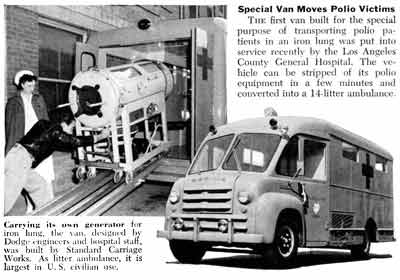
The June 1951 issue of Popular Science included pictures of a Standard Carriage Works-built vehicle:
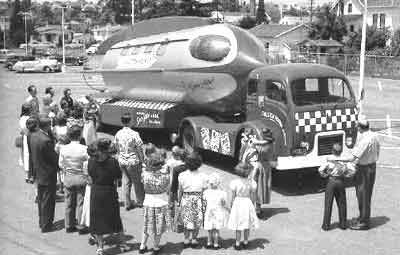
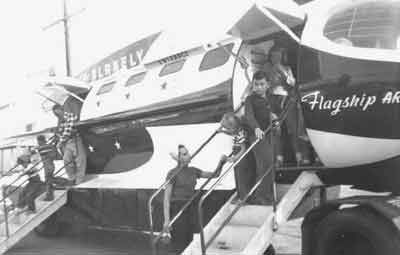
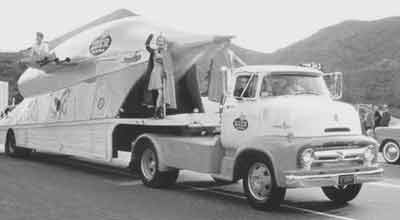
During the mid-1950s Standard Carriage Works built a number of promotional trailers that were outfitted to look like rocket ships, which were a common fixture in early children’s television programming. In 1953 they built two Ralston Rocket promotional trailers, a deluxe one used in promotional tours to promote Ralston’s Space Patrol TV Show (aired on ABC 1950-1955), and a second smaller version that was awarded to Ricky Walker, the winner of the show’s “Name the Planet” contest. They are also credited with building the similarly-styled Luer Meat Packing Company rocket which first appeared in late 1955. The Ralston Rocket was later sold to the Blakely Petroleum Co., who sent the re-christened Blakely Oil Rocket to promote its ‘Rocket Gas’ on promotional tours of the firm’s Arizona and California during the late 1950s. The Luer Rocket featured a 24-seat, 16 mm movie theater and a vibrating floor and was used to promote the firm’s products at supermarket openings and other public events. In an interview with author Jean-Noel Bassior pertaining to Standard’s construction of the various rockets, legendary Walt Disney Imagineer Bob Gurr, the designer of such Disneyland features as the Matterhorn, Monorail and Autopia Cars stated:
Located next door to Standard Carriage Works at 717 S. San Pedro St. was Langlois Bros., a well-known school bus body builder and distributor founded by twin brothers, Harry F. and Herbert N. Langlois. The Langlois were born in Paso Robles, California on February 24, 1891 to William H. and Lizzie L. (Terry) Langlois. After a public education they attended Santa Maria College., graduating in 1910. They became interested in the emerging auto truck field and after working for a number of Los Angeles-based firms entered the trailer, truck equipment and school bus distribution business in 1919, when they purchased the business formerly operated as the Bennett Auto Body Company. Bennett was best known for their commercial body building activities on the Ford Model T chassis and also distributed heavy-duty Model T frame extension, suspension and drivetrain kits. Bennett was the successor to the Williams Brothers, an early Los Angeles carriage builder who had been in operation at 717 S. San Pedro St. since the 1890s. Early in their life the Langlois Brothers offered their own line of school bus bodies for the Model T chassis, but soon became distributors only becoming the Los Angles agents for Superior Body Co. of Lima, Ohio. The brothers prospered and put some of their profits into Diatom Co. a successful Nevada mining operation. They also were heavily invested in developing the town of Desert Hot Springs, California and held a number of US patents relating to heavy-duty brakes, transmissions and oil filtration systems. In 1955 Standard Carriage Works relocated into leased facilities in the Los Angeles suburb of Vernon at 4120 Bandini Blvd. that were formerly occupied by the Moda Truck Body Company. Moda was founded by Albert E. Chariot, a film industry accountant, and managed by E.R. Cosgrove. Moda Truck Body Company did repairing, painting and fabrication of custom truck bodies. By 1959 John Giltsch was in failing health and he consequently sold the firm to Standard Truck & Trailer Inc. and retired. Out of a job, his nephew, Martin Giltsch Jr., launched his own metal fabrication business, Giltsch Manufacturing Co., at 483 N Prairie Ave in Hawthorne, a Los Angeles suburb. Today 721 S. San Pedro is at the center of Los Angeles’ wholesale flower district and the former Carriage Works plant is now the home of the Los Angeles Flower Mall. The firm’s listing in the 1961 edition of Walker's Manual of Far Western Corporations & Securities follows:
Barbour was a former officer of the Los Angeles Stock Exchange and had vast holdings in a number of LA-based businesses. Glendon Tremaine was a well-known LA attorney. 1969 - Standard Carriage Works, Inc., of Los Angeles was awarded a $14,962 contract by the City of Long Beach, California to furnish and install three new truck bodies, and to recondition and install two city-owned truck bodies on new chassis furnished by the city. Standard Carriage Works was in business as late as 1985. Today 4120 Bandini Blvd. is home to Southwest Processors, Inc. / Southwest Treatment Systems, Inc. and Mikes Fleet Services. © 2004 Mark Theobald - Coachbuilt.com
|
||||||||||
|
||||||||||
|
||||||||||
|
||||||||||
|
||||||||||
|
||||||||||
|
|
||||||||||
|
|
||||||||||
|
|
||||||||||
|
||||||||||
|
|
||||||||||
|
|
||||||||||
|
|
||||||||||
|
© 2004-2012 Coachbuilt.com, Inc.|books|disclaimer|index|privacy |
||||||||||