|
|
|
| |
|
 |
||||||||||
|
||||||||||
| |
||||||||||
|
||||||||||
|
||||||||||
|
||||||||||
|
|
|||||||||
|
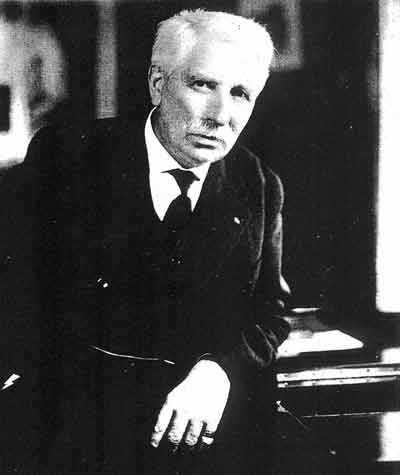
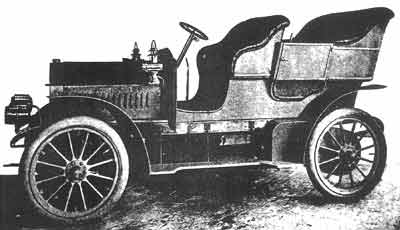
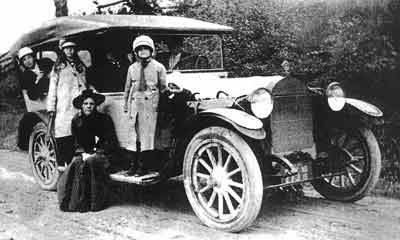
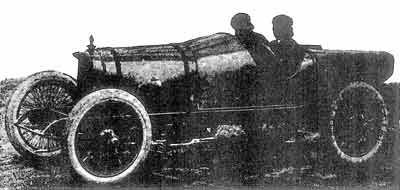
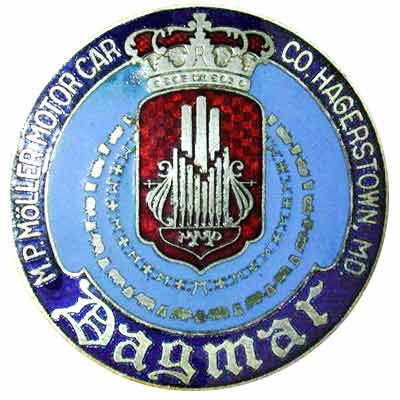
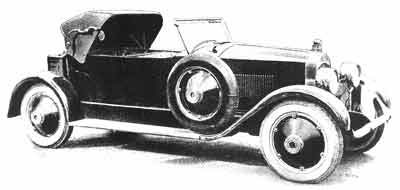
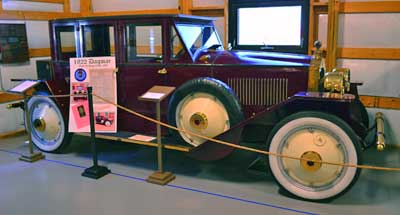
The M.P Moller Motor Car Company of Hagerstown Maryland is remembered today as the producer of the Dagmar, an elegant early twenties sports roadster named after the owner’s eldest daughter. Produced in small numbers between 1922 and 1927, the Dagmar competed against mid-priced luxury cars offered by Cadillac, Packard, Peerless and Pierce-Arrow. The firm’s owner and namesake was a Danish immigrant named Mathias Peter Möller (originally spelled Møller), born September 29, 1854 in Bornholm, a large Danish-controlled island located just south of Sweden in the Baltic Sea. Danish records list his christening in the village of Østermarie, Bornholm on October 8, 1854, his parents being Niels Jörgen Möller and Ane Cathrine Pedersen. The Washington County, Maryland history of 1906 erroneously states his birthdate as “September 29, 1855” and that he is “a son of Nelce J. and Johanna (Heldebrand) Moller”. After serving an apprenticeship with an Allinge cabinet-maker, Möller set sail for America in 1872 where a job awaited him in Warren, Pennsylvania where he went to work for Peter Greenlund, a Bornholm-born cabinetmaker. Soon afterwards Möller relocated to Erie, Pennsylvania where he was employed by the well-known Buffalo, New York pipe organ builders Derrick & Felgemaker, who had recently relocated their operations to Erie. After three years with the firm, Möller built an organ on his own design, which was sold to the Swedish Lutheran Church in Warren, Pennsylvania. In the spring of 1876, he went to Philadelphia, where he manufactured and sold four more instruments, one of which built expressly for the Philadelphia Centennial Exposition. In 1877 Möller moved to Greencastle, Pennsylvania were he took on a partner, John W. Brenisholtz. Located at 42 East Franklin Street, Möller, Brenisholtz and Co. produced both reed and pipe organs for the growing populations of south-central Pennsylvania, Eastern West Virginia and northern Maryland. Möller sold out his interest in the Greencastle firm after a solicitation by several prominent Hagerstown citizens, among them U.S. Senator McComas and Governor Hamilton, convinced him to establish an organ works in Maryland. He moved to Hagerstown in March of 1881 where he began in a very modest way what was to become the largest and most-widely known organ factory in the United States. Möller set up shop in April, 1881 in a small building located near the Western Maryland Railroad on Potomac Street where he and a small staff produced organs for the parishes of Maryland and southeastern Pennsylvania. On July 6th 1892, Möller married Julia May Belle Greenlund, the daughter of Peter Greenlund, his first boss in America and to the blessed union was born had four children: Mathias Peter jr., Louise, Mary Dagmar and Martha. The original Möller plant burned down in 1895, after which the City fathers deeded a North Prospect Street plot to Möller, allowing the struggling firm to stay in business, which commenced in a brand-new brick factory in January of 1896. By 1902, the factory had 50,000 square feet of floor space, offices and sheds. It was on the western side of the factory complex where the actual work of building organs took place and where raw materials arrived by rail. The history and success of the M.P. Moller Organ Company is far too large and complex a subject to covered in any greater detail as this write-up tells the story of his success in the automotive field, which begins with the 1902 organization of the Crawford Automobile Co. The firm was named after Robert S. and George Crawford, two Hagerstown brothers who had made a small fortune manufacturing bicycles. Just as the bicycle craze peaked at the turn of the century, they sold the Crawford Bicycle Company to representatives of the Pope “bicycle trust” and were eager to use the proceeds to get their foot in the door of the burgeoning automobile industry. The Crawfords began making prototypes in George’s Surrey Street stables and soon enlisted Möller to join the group of forward-thinking Hagerstown businessmen who planned to finance mass production of the vehicle. Organized in 1902, the directors of the Crawford Automobile Co. included Robert S. and George Crawford, Mathias P. Möller, George Nelson and Henry Holzapfel, Jr. William F. Bickle was hired as plant superintendent and the first production Crawford automobiles went on sale in 1904. Production of Crawford cars gradually increased from two vehicles in 1904 to a record high of 275 cars in 1910. Rather than invest in an all-new plant the existing Surrey Street structure was enlarged numerous times as the need arose. Early Crawfords featured a front-mounted 10 h.p. water-cooled 2-cylinder engines powering the rear wheels via a planetary transmission and chain drive. A four cylinder engine debuted in 1906 and an all-new sliding gear transmission and shaft drive appeared in 1908 which also marked the debut of a noticeably larger 4-cylinder Crawford. After four years of limited production and non-existent dividends, a sizeable portion of the firm’s directors and investors wanted out, Robert S. Crawford among them. Möller’s only hope of salvaging his already sizeable investment was to buy out the faint-hearted and assume financial control of the firm, which he did in 1908. During most of its active life the Crawford plant employed a labor force of 40 to 50 hands who were overseen by plant manager Abel A. Miller, a nephew of M.P. Möller Sr. Charles Bickel is credited as the firm’s chief designer and body draftsman and John E. Harbaugh was in charge of motor and chassis engineering. A handful of Crawford trucks were built starting in 1910, many of which were designed for use by various Möller operations, which now included the Kinetic Engineering Company of Philadelphia, in addition to the world’s largest organ factory. Under Möller the Crawford evolved from a hand-made car to a totally assembled one. By 1915 the only parts of the vehicle locally made were its distinctive radiator shell and coachwork. Four-cylinder-only models were produced until 1912 when a new Continental-sourced six-cylinder power-plant was introduced. The six became standard equipment on all Crawfords from 1916 onwards, with its horsepower increased in tandem with the size and weight of each successive vehicle. Although the Crawford was an assembled car, the firm is known to have built a handful of custom vehicles starting in the mid-teens. A long-wheelbase Crawford truck was outfitted as a home on wheels for a Florida-bound Hagerstonian in 1915. The vehicle was equipped with bunk beds, a gas stove, and a built-in ice-box. A custom-bodied Crawford was built for a Hagerstown physician named Beachley who requested a vehicle equipped with an extra-long rear tonneau which was outfitted with a remote control horn button. A handful of factory-backed Crawford race cars were constructed during the middle teens that were equipped with potent 16-valve, 4-cylinder Duesenberg racing engines. The streamlined vehicles had distinctive pointed radiators and were purpose-built by John E. Harbaugh, Crawford’s chief engineer. William Chandler, a well-known mid-west Duesenberg pilot and mechanic, was hired by the factory to campaign their factory racecars at a handful of high-profile AAA National Championship Trail events during the 1916 racing season. The March 30, 1916 issue of The Automobile included the following item:
The May 18, 1916 issue of The Automobile yielded Chandler’s disappointing results:
The June 15, 1916 issue of The Automobile included the following results of the June 10th race at the Chicago Speedway which was won by Dario Resta in a Peugeot:
The article failed to mention that D’Alene’s pit mechanic, Ralph Hedlich, was severely burned while refueling D’Alene’s Crawford Special and failed to recover. Billy Chandler, who failed to qualify for the race, also burned his hands while trying to extinguish the flames. The November 1, 1916 issue of the Ford Wayne Sentinel reported: “D'Alene's Mechanician Dead”. All three Crawford Specials were entered in the 1916 Indianapolis 500 which was also won by Dario Resta’s #17 Peugeot. Art Johnsons’s #26 Crawford Duesenberg came in 8th place collecting $1,000; Billy Chandler’s #24 Crawford Duesenberg placed 9th, collecting $900 while Dave Lewis’ #25 Crawford Duesenberg dropped out of the race with a leaking fuel tank on lap 71. The July 20, 1916 issue of Motor Age reports that all three Crawford were entered at the 120-lap, 150-mile Omaha Derby which was held July 15, 1916 at the Omaha Speedway, Omaha, Nebraska. Once again Dario Resta finished first in his Peugeot, while the Crawford Specials finished 14th, 15th and 18th as follows:
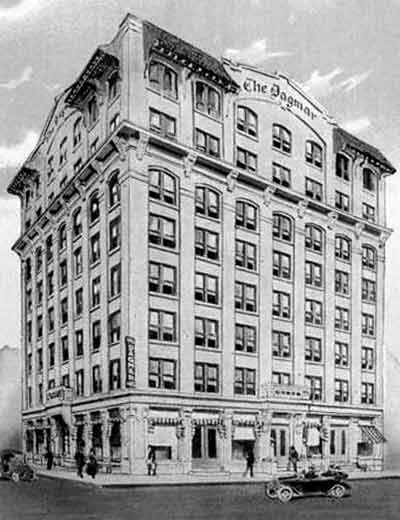
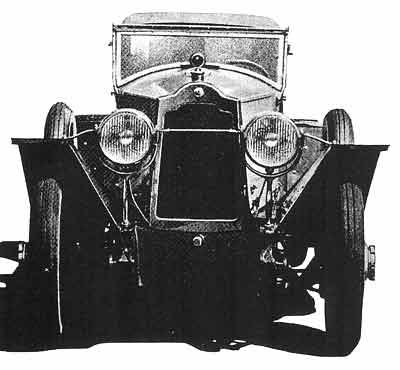
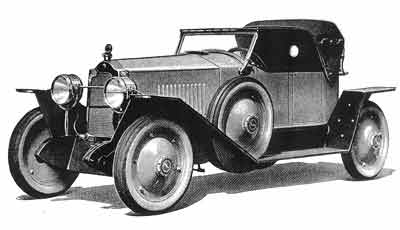
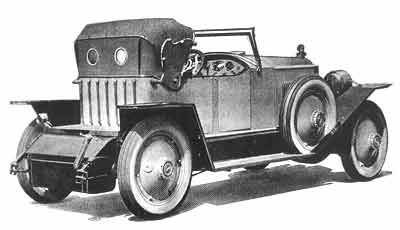
Lewis replaced the broken valve and managed to place 4th in the non-championship 40-lap, 50-mile race held immediately after the 150-mile feature, collecting $300. Crawford also competed at the brand-new Uniontown Speedway, a brand-new board track located in Uniontown, Pennsylvania whose inaugural 100-lap, 112.5-mile race was held on December, 2, 1916. Although Louis Chevrolet won the event in a Frontenac Special, Barney Newgard piloted his Crawford Special to the finish in 4th place. C.R. "Art" Klein’s Crawford Special failed to complete the race, retiring during the 19th lap. It is unknown if the Crawford Specials won any races during 1916, but they were unable to return in 1917 as the entire 1917-1918 AAA Championship series was killed by the country’s entry into the First World War and Crawford elected not to compete in the 1919 AAA events. During the War, production of automobiles dwindled due to cutbacks in both supplies and labor. In early 1917 a large order for US Army gunsights was undertaken and only 38 cars were produced through the end of the year. Production for 1918 was slightly increased with 59 Crawfords leaving the plant. However the post-war depression of 1919 seriously affected sales of the pricey car and only 42 vehicles were build during that year. Despite a dramatic upturn in sales during 1920 (312 units) and 1921 (327 units), the firm’s namesake and minority stockholder, George Crawford, resigned his post and sold all of his stock to Möller in early 1922. Although Henry Austin Clark and Beverly Rae Kimes Crawford production figures in the Standard Catalog of American Cars 1805-1942 mirror those of Keith Marvin and Arthur Lee Homan’s 1960 Automobilist article through 1918, large discrepancies appear starting in 1919. Clark & Kimes list the following production numbers; for 1919-42 cars; 1920-312 cars; 1921-327 cars; 1922-54 cars; 1923-36 cars. Marvin & Homan’s figures follow: 1919-142 cars; 1920-109 cars; 1921-23 cars; 1922-55 cars; 1923-1 car. They do agree that the final Crawford was built in 1923 for E.O. Schulenberger, superintendent of the M.P. Moller Organ Co. As Keith Marvin assisted Clark & Kimes in the preparation of the first edition of the Standard Catalog of American Cars 1805-1942 (published in 1985) we can only assume that additional information had been located to support the substantially higher numbers listed at that time. As Clark & Kimes production numbers are the “official” ones they are reproduced below: 1904 – 2; 1905 – 3; 1906-150; 1907-137; 1908-218; 1909-226; 1910-275; 1911-163; 1912-110; 1913-85; 1914-60; 1915-102; 1916-104; 1917-38; 1918-59; 1919-42; 1920-312; 1921-327; 1922-54; 1923-36. While the Crawford was for the most part an unremarkable car, the next Moller-built vehicle was just the opposite. During early 1922 M.P. Möller Sr. had personally supervised the design of a companion luxury sports car to the Crawford line which debuted in the summer of 1922. Named after Queen Dagmar of Bohemia, the legendary Danish monarch, the Dagmar moniker was also shared by his eldest daughter Mary Dagmar Möller as well as the magnificent 11-story all-concrete, fireproof hotel the organ-maker built in Hagerstown during 1911. Although it shared the Crawford’s six-cylinder 70 hp Continental engine and 138-inch-wheelbase chassis, the Dagmar’s straight-line military fenders and brass trim set it apart from its round-fendered, nickel-trimmed competitors. The first mention of the Dagmar in the automotive press appears in the August 10, 1922 issue of The Automobile:
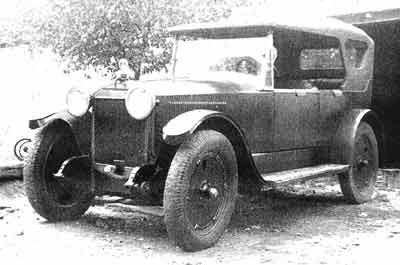
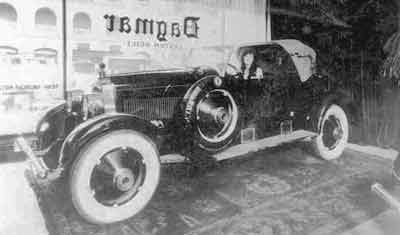
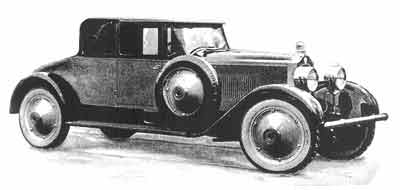
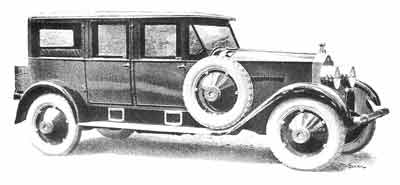
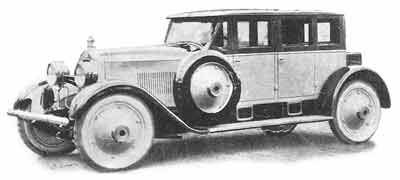
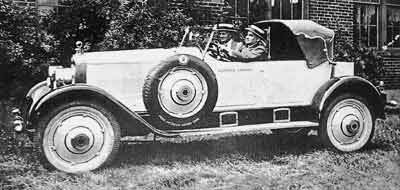
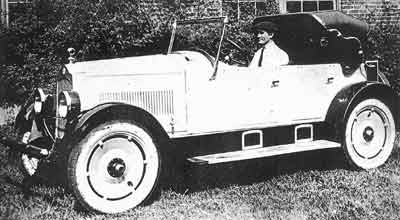
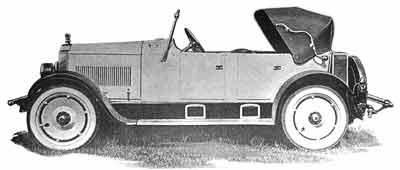
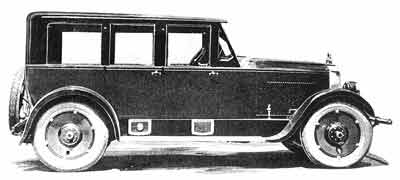
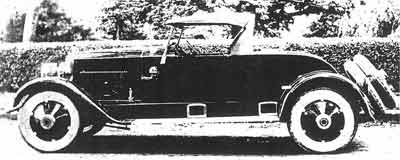
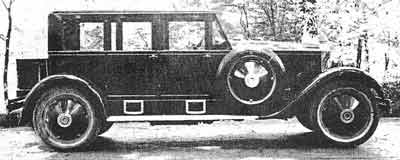
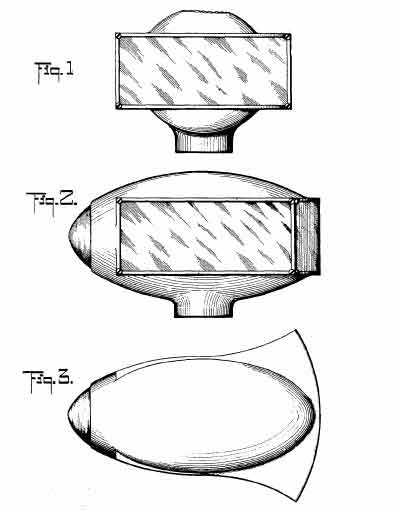
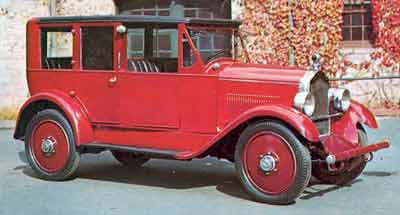
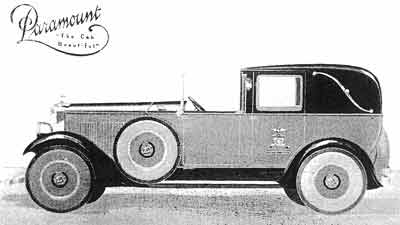
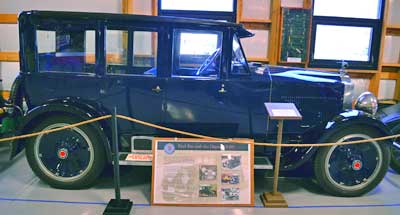
The diminutive four-passenger Victoria coachwork gave the Dagmar a sporting look, not unlike the popular Packard Victorias of the time. Its artillery spoked 35-inch wheels were covered with conical steel wheel covers capped off with brass hubcaps that featured a red hexagonal indentation a-la Packard. Although no formal lawsuit was brought, former Moller Motor Car Co. accountant Edward Darner recalled to Arthur Lee Homan that Packard made his firm aware of the fact that the red hexagons were their trade-mark, after which Moller introduced a redesigned unit. The radiator cap consisted of a nickel-plated sphere in which were installed nautically orientated red and green electric running lights. The included Motometer looked back towards the driver while a blue lens faced oncoming traffic. A massive gas tank resided behind the rear tonneau which was serviced by a foot-long filler tube. The 138” wheelbase single drop frame chassis was powered by a Continental 6-T engine which developed just over 70 hp , comparable to the 75 hp Twin-Six offered by Packard. The Brown-Lipe 4-spd overdrive transmission made a top speed of 87 mph possible, however two-wheel brakes made stopping the massive vehicle from that speed a dicey proposition. A Neville “More Room” steering wheel was standard equipment allowing the driver to slide the wheel up and out of the way before leaving or entering the driver's seat. Also included were folding front seat backs that allowed the vehicle’s owner to take a short nape if desired. It’s difficult to tell from photographs that the sleek-looking Victoria measured fully six feet tall at the windscreen. Open versions weighed in at 4700+ pounds, closed versions considerably more. A single-drop frame combined with 35-inch wheels accounted for the Dagmar’s substantial height and road clearance. The Dagmar’s low appearance was further enhanced by its long 138” wheelbase frame and carefully proportioned coachwork. In January of 1923 a Petite Sedan joined the Sport Victoria in the Dagmar lineup. The proportions of the four-door close-coupled coachwork and sharply slanted brass-plated windscreen and matching front quarter windows gave the car a distinctive look which was further compounded by the flat military style fenders. The interior was upholstered in high-grade mohair with exposed mahogany bows covering the inside of the roof. Autobody included a profile of the petite sedan with the following description:
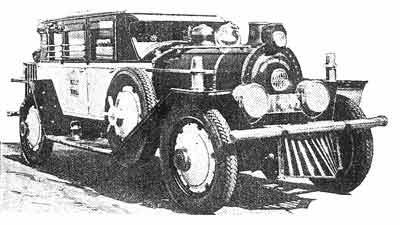
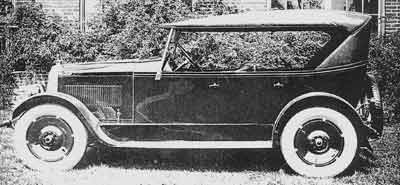
A picture in the June 14, 1929 issue of The Autocar depicts an early Dagmar petite sedan, pictured to the left, that had been further accessorized into a road-going locomotive in 1926. The captions reads:
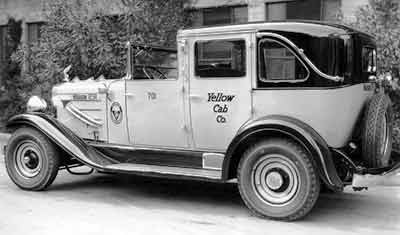
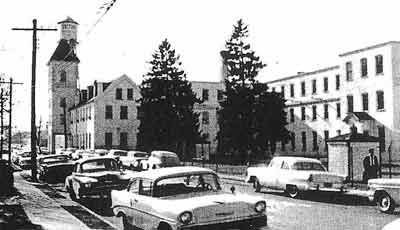
During the fall of 1923, M.P. Möller, sr., entered in negotiations with a Manhattan-based taxicab syndicate to supply them with Crawford-based taxis. As the boilers in Crawford’s ramshackle Summit Avenue plant were unlikely to last the winter, Moller began searching for a suitable manufacturing facility that would allow the firm to manufacture vehicles in a more modern setting. The 355,000 sq. ft. former Pope-Tribune factory was likely his first choice. Its giant metal presses that once turned out casket covers could be easily converted over to produce body and fender stampings. A siding of the Baltimore & Ohio railway ran alongside the building and a built-in freight elevator allowed components and completed bodies to be sent back and forth between the second, third and ground floors. The building had recently changed hands and was currently owned by R.J. Funkhouser & Co., a Hagerstown-based commercial real estate firm that specialized in buying up idle business properties and liquidating their assets. The December 8, 1923 Frederick News Post reported:
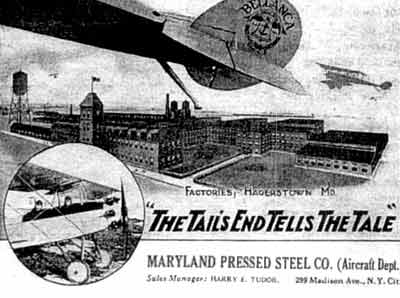
The move from the outmoded Crawford Automobile factory into the firm’s newly acquired Pope Ave. factory took place over the Christmas holiday. The vacant Summit Ave. plant was subsequently converted into an apartment building which to this day is known as the Moller Apartments. A short history of Moller’s Pope Ave. factory follows. When the bicycle craze petered out just after the turn of the century, the American Bicycle Co., successor to the Crawford Bicycle Co., sold their factory to the associated Pope Manufacturing Co., who used it to manufacture the short-lived Pope-Tribune automobile, a smaller 6 hp companion car to the Connecticut-built Pope-Hartford. By 1907 the Pope-Tribune was gone and the former Crawford Bicycle plant was sold to the Montrose Metal Casket Company, a New York City based coffin manufacturer. Montrose closed down their Hagerstown operations in 1913 and the vacant facility was purchased by the New York & Hagerstown Metal Stamping Co. in 1914 in order to produce munitions for the British Army. That firm was reorganized as the Maryland Pressed Steel Co. on March 30, 1915, and within the year it had been purchased by the Poole Engineering and Machine Co., a large Baltimore-based ammunition manufacturer who held $17 million in government munitions contracts. In 1916 Maryland Pressed Steel introduced the Bellanca C.D., a small 35 hp biplane designed by the legendary Italian engineer Giuseppe M. Bellanca, in the hopes of getting a lucrative US government contract for its manufacture. The August 1918 issue of “Compressed Air” included the following:
As indicated above, the signing of the Armistice brought the War to an end in November of 1918 and along with it Maryland Pressed Steel’s lucrative ammunition contracts. Although the $3,500 55 h.p. Anzani-engined 5-seat Bellanca C.E. was actively advertised in the nation’s aeronautical journals during 1919, it was difficult to sell any new airplanes as scores of cheap surplus military aircraft were flooding the market and only two prototypes were completed. Maryland Pressed Steel began the manufacture of PASCO and National wire automobile wheels under license starting in mid-1919, saving the firm from insolvency, at least for the time being. The March 1920 issue of Motor Record included the following item:
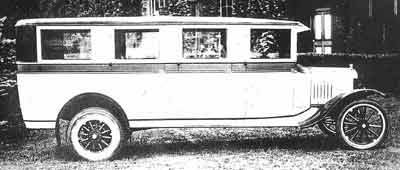
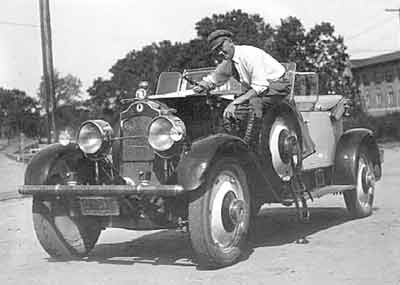
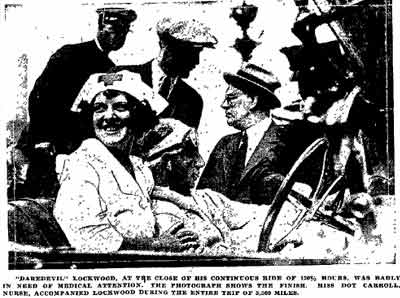
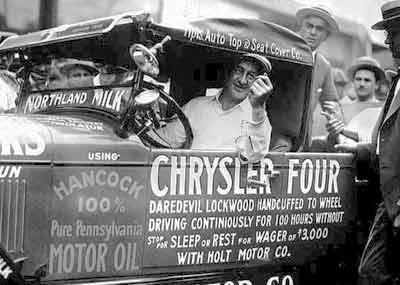
Unfortunately the post-war recession affected the sale of new automobiles during 1920 and 1921, and an absence of orders for the firm’s wire wheels forced the firm into bankruptcy. In 1922 Poole Engineering sold the Maryland Pressed Steel Works to R.J. Funkhouser & Co., who subsequently sold it to Moller. Shortly after Moller moved into the old Bicycle Works, he reorganized the Crawford Automobile Company as the M.P. Moller Motor Car Co. The official announcement appeared in the automobile trades in March of 1924. "Crawford Passes Out of Picture After Twenty Years; Makers Say Dagmar Is to Take Its Place." The announcement coincided with the debut of a substantially revamped Dagmar lineup. Although the new Dagmar used the very same chassis and coachwork, the new car, known as the 1924 Model 6-80, abandoned the military fenders of the previous line for more conventional cully crowned units, made possible by the firm’s new sheet steel preses. Horsepower was also increased by installing a new 80 hp Continental 6-cylinder engine. The 1924 Dagmar 6-80 could be ordered with a choice of brass or nickel trim, and prospective customers could have their car painted and upholster in any color combinations or materials that they saw fit. In addition to the popular Petite Sedan, Dagmar closed coachwork now included a Coupe, Brougham and Seven-passenger Sedan. Open styles were now the Sport Victoria, plus a Two-Three Passenger Single Seat Roadster that was also available with a rumble seat. Suggested retail price of the 1924 Sport Victoria was $3500, the Petite Sedan, $4500, and the Town Brougham, $6,000. The 6-80 was also distinguished by a larger, broader radiator and a travel trunk was now included on close-coupled models. Also new were faux leather-surfaced aluminum kick plates, aluminum cowl-lamps and a two piece ruby-colored stop light. The spare tire’s disc wheel covers included a small door with a hidden tool compartment. As the Dagmar’s wheels were not demountable, only its rims and tires required changing when a puncture presented itself. For the most part Dagmars were sold and serviced out of the firm’s office in the Dagmar hotel in downtown Hagerstown. Each car was built on special order and although the car was not nationally advertised, the car was mentioned in the automobile trades shortly after its New York City debut. All of the firm’s vehicles were assembled by hand as the plant’s output didn’t justify the expense of installing a moving assembly line. Teams of mechanics assembled each chassis in place, with the various components wheeled from the warehouse as they were needed. Dagmar’s were assembled on the first floor while the taxicabs were constructed on the third floor, but not before a new elevator was built as the existing one was too small to carry a taxicab, once it was fully assembled. The second floor was devoted to body building and finishing whether the vehicle was destined to be driven by a chauffeur or by a cabbie. Once completed, the coachwork would be transported on wheeled stands to the elevator then transported to waiting chassis on the first and third floor. Although the adjacent railroad siding was mostly used for incoming parts and raw materials, the B&O railroad owned special freight cars that were specially outfitted for transportation of vehicles, which allowed Moller to ship completed cars by rail when necessary. A picture of a Moller-bodied 1924 Ford Model T school bus indicates the firm was building commercial bodies in addition to Dagmars and taxicabs. The only known authorized Dagmar distributor was the Penn-American Motors Corporation, a small operation owned by George A. Brower, and located next door to his Philadelphia Moon distributorship. A handful of Dagmars were owned by the celebrities of the day. Gloria Swanson owned a 7-passenger sedan while another was used by an advance man for George White’s Scandals, a popular touring burlesque show. Another Dagmar was purchased by Harold L Lockwood, a Hollywood movie stuntman, airplane jumper and human fly better known as “Daredevil” Lockwood. His Dagmar Roadster was ordered from Penn-American Motors in late 1924. Lockwood planned on using the car in his thrill show whereby it would serve as a mobbing platform from which he would catch a rope ladder dangling from a low-flying airplane, then climb aboard it to commence a series of wing-walks and sky dives. Lockwood had recently made headlines when he drove a Maxwell, handcuffed to the steering wheel, in a series of record-breaking 100-hour long endurance runs that commenced in September of 1923. The September 16, 1923 Indianapolis Star reported on his Indianapolis attempt:
“Daredevil” Lockwood toured the country for the next two years repeating the stunt for various automobile dealerships, for fees ranging from $2,000 to $3,000. Surviving photographs show Lockwood handcuffed to a 1925 Chrysler, 1926 Kissel and 1926 Paige. The cars were covered with advertisement for his numerous sponsors. He eventually raised his own record to an amazing 125 hours. Joining him in his notorious rides was Miss Dot Carroll, a “nurse” from Hollywood, California, who fed him and helped take care of other necessities. Lockwood later joined the Gates Flying Circus and as late as 1933 was still touring the country with his own “automobile driving and high-diving” thrill show. Soon afterwards the Luxor Cab Manufacturing Corp., a Manhattan-based cab distributor owned by Allie S. Freed began building taxicabs on the third floor of the Moller Motor Car Co.'s recently acquired factory. Coincidentally Luxor had recently begun manufacturing taxicabs in Framingham, Massachusetts in one of Richard H. Long's former Bay State automobile plants under the watchful eye of Morris Heit, Luxor's manufacturing supervisor. Unlike R.H. Long's automobile enterprises, Moller was well-financed, built their own high-quality coachwork, and was conveniently located near Freed’s current and potential customers. The following article appeared in the January 28, 1924 Hagerstown Morning Herald:
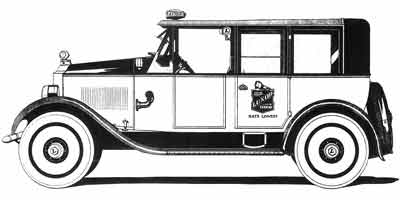
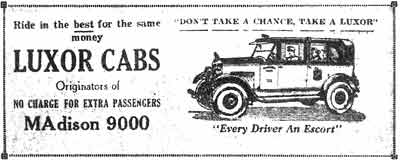
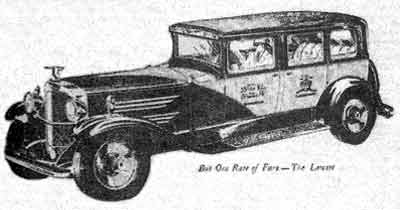
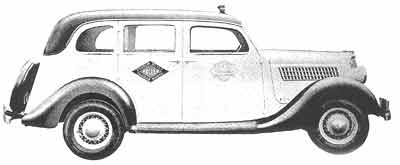
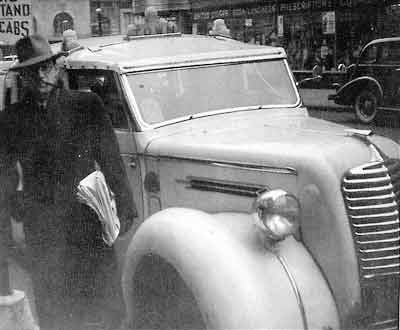
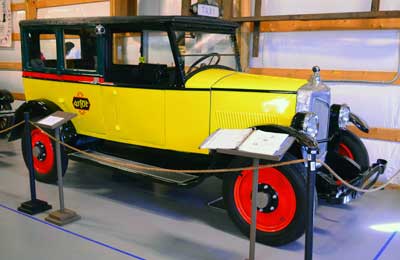
Freed had his own design and management team that not only designed the vehicles but also oversaw their production. A skilled delineator named Wehrle did all the design and engineering work while Heit took care of the manufacturing end. The pair made regular trips between Framingham, New York City and Hagerstown, and occupied their own offices in all three cities. Like the Crawford, the Luxor was an assembled vehicle, and was built using a heavy-duty 114-inch wheelbase chassis equipped with Budd disc wheels, Brown-Lipe transmission and a 4-cylinder Buda light truck engine. The Luxor’s heavy-duty fenders were stamped out of sturdy sheet steel and its Moller-built limousine and landaulet taxicab bodies were painted cream and light blue with red striped black moldings. The same spherical illuminated radiator caps found on the Dagmar were employed as were bi-lateral colored carriage lamps housed under a nickel-plated lion’s head. The leather-upholstered interiors were of a quality not normally seen in a taxi and the sturdily built taxicabs had a suggest list price of close to $3,000. When given a choice, the typical cab customer would choose to ride in a Luxor over any of its competitors. Apparently Luxor's Framingham operations were going smoothly as the May 14, 1924 issue of the Automobile reported the sale of the former Bay State factory to Luxor:
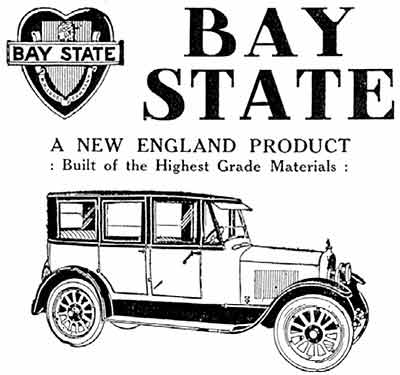
During much of 1924 Luxor cabs were manufactured on the production line formerly used to produce the Bay State. Luxor also utilized unused Bay State components for their taxicabs, and close examination of the two vehicles reveals that the Luxor and Bay State shared the same chassis, drivetrain and coachwork, most of which was supplied by the Woonsocket Mfg Co. Despite the fact that Bay State's main assembly plant had been sold off to Luxor, the firm's creditors elected to keep the remaining plant open as reported by the August 21, 1924 issue of Motor Age:
Even though they were built in two different cities, the Framingham- and Hagerstown-built Luxors shared the same parts and were nearly identical in appearance save for slight variations in the coachwork. In late 1924 Luxor sued another Manhattan cab operator, the Leading Cab Co., for appropriating the cream and light blue paint scheme of the firm’s taxicabs. New York State Supreme Court justice Levy ruled in favor of Luxor and granted them an injunction forbidding Leading Cab et al. from using the Luxor colors. Luxor’s vice-president, attorney Joseph Sapinsky, stated:
The following text is from a 1925 Luxor advertisement:
The demand for the Luxor was so great that Freed continued to use both manufacturing facilities throughout 1924. In fact, Moller’s success with its recently introduced Dagmar luxury car prompted Freed to announce the pending production of his own luxury car, the Standish, in the September, 1924 issue of Autobody:
A single prototype (possibly two) was produced and, not surprisingly, eyewitnesses claimed the car looked like a Dagmar with wire wheels and a Mercedes-style grill. No production Standish’s were forthcoming and after being used by Freed as a daily driver, the prototype disappeared. It took from five to six weeks to complete each Dagmar, with vast majority of that time spent in the Moller paint shop, where anywhere from seven to thirteen coats were applied, depending on the color. Once dry, the vehicle made its way to the firm’s trimming department where the car was outfitted with whatever type and color of material specified on the build sheet. William L. Beitler, Moller’s general manager at the time, then personally inspected each vehicle before its new owner was notified of its completion. The experience of John M. Zerley, the purchaser of a 1924 Dagmar Sedan, was typical. His story was told by Hagerstown historian Harry Warner in a short piece in the April 27, 1974 Hagerstown Daily Mail:
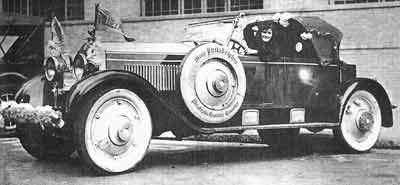
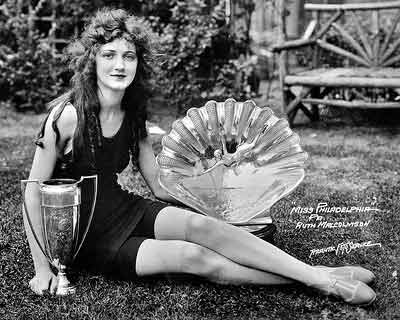
A reported 300 hands were employed at the Motor Car Company during its peak periods of operation, one of which was mid-1924 when the firm was putting out scores of Dagmars as well as the first batch of Luxor taxicabs. In September of 1924 much publicity surrounded the selection of Ruth A. Malcolmson, the current Miss Philadelphia, as the new Miss America. The pageant was a professional affair at the time, and Miss Malcolmson’s Philadelphia-based sponsors were eager to enlist local businesses to help celebrate her crowning. George A. Brower, president of the Penn-American Motors, the Philadelphia Dagmar distributor convinced M.P. Möller that it would be in his best interest to supply Malcolmson a Dagmar for use on her victory tour of the United States, and a round-fendered blue and yellow Sport Victoria was presented to her in a special ceremony at the Fall 1924 Hagerstown County Fair. It remains unclear whether Malcolmson actually owned the vehicle, as it’s possible the car was merely loaned to her, as was common practice at the time. Wire service and newspaper accounts of the events leading up to and including the presentation follow:
Malcolmson, who had previously won the “silver sea shell” grand prize in the 1923 Atlantic City amateur pageant, was selected Miss Philadelphia on August 27, 1924, paving her way to compete as a professional in the 1924 Miss America contest. Thursday’s Chair Parade was the first of many events that took place over the weekend, with the official contest taking place on Saturday. The Associated Press Wire Service reported on the latter event's results:
The October 16, 1924 Hagerstown Morning Herald gave details on the presentation of the Dagmar to Malcolmson:
The next day, the Herald reported:
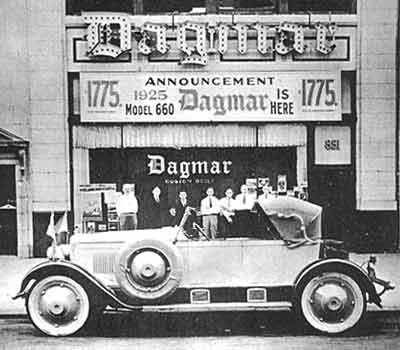
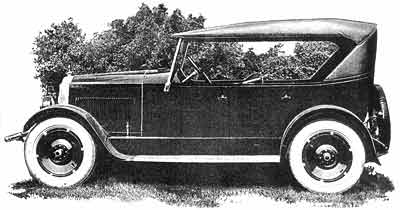
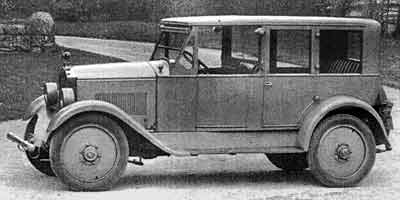
The Dagmar 6-60, a budget-priced 120-inch wheelbase companion to the original Dagmar debuted in late 1924 as a 1925 Model. This car was initially called "Petite," but soon earned the nickname Baby Dagmar. The senior Dagmar, now designated the 6-80, retained its 138–inch wheelbase and 80 hp engine. Equipped with and a three-speed Brown-Lipe transmission and 60 hp Continental 8-R six-cylinder engine, the 6-60 abandoned the larger car’s artillery wheels in favor of Tuarc solid discs, with the spares now located at the rear of the car. Also missing where the red hexagonal hubcaps and custom radiator cap, the latter replaced by a standard Boyce Motometer. Black-finished drum headlamps also helped reduce the cost and all remaining trim was nickel plated. The pricier 6-60 Victoria retained the senior car’s elaborate illuminated radiator cap as well as its deluxe equipment which included a trunk, twin bumpers and kick-plates. Prices for the 6-60 started at $1775 for the touring, about half of what a senior Dagmar cost at the time. The 6-60’s redesigned radiator was placed just forward of the front axle, as opposed to the 6-70 and 6-80s which was placed substantially behind it. The crowned fenders of the larger model were replaced by flat fenders which required fewer stamping operations to manufacture. The trailing edge of the rear doors on the smaller four-door sedans and tourings had a cut-out for the rear fenders which weren’t necessary on the long wheelbase cars. Close examination of the 6-60 reveals many similarities with the firm’s Luxor taxicabs, although the Dagmar’s designer, John E. Harbaugh, shared credit for the design with Charles Bickel, Moller’s body engineer and delineator. Photographs of a circa 1925 Series 6-70 senior Dagmar touring show an all-season California-style top with windshield wings and an unusual leather molding along the top of the rear tonneau. The crowned fenders of the earlier cars are also absent, as is the illuminated spherical radiator cap. The side-mounted spares were now placed in wells built into the running boards although pictures of a 1925 Series 6-70 roadster show dual spare tires mounted at the rear. The new senior cars also lost the distinctive brass trim found on earlier Dagmars and for the first time looked almost identical to many of their competitors. Moller began advertising their factory service department in large display ads that appeared in a number of regional papers at the start of 1925. The text from a couple of the ads follow: 2-14-1925 Hagerstown Daily Mail Display Ad:
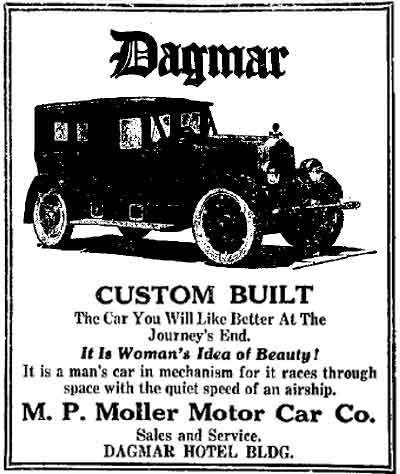
2-26-1925 Hagerstown Daily Mail Display Ad:
3-12-1925 Hagerstown Daily Mail Display Ad:
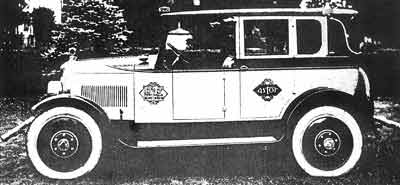
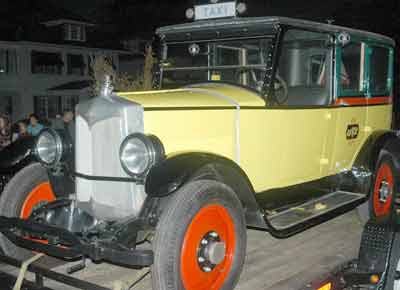
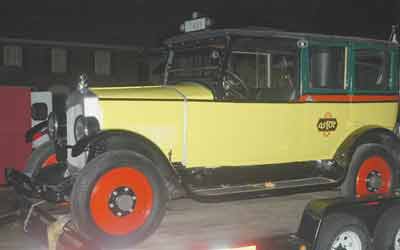
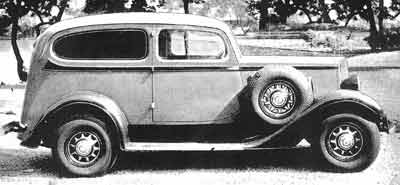
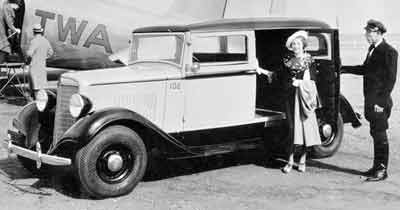
Approximately one year after the firm received their first large order for taxis, Moller received an order for 500 cabs from the Astor Cab Sales Corp. of New York City. The Astor shared the same 4-cylinder Buda powered 118” wheelbase chassis and coachwork of the Luxor, differing only in that it included less elaborate lighting and a slightly V-shaped radiator. The Astor was a product of another Freed organization, the Astor Cab Sales Company, Inc. of New York City. Astor was headed by Elihu N. Kleinbaum, a 1912 graduate of Columbia and former treasurer of the Luxor Cab Mfg. Corp. The taxicab was offered as a $2,295 limousine or $2,345 landaulet as outlined in the following article in the August 27, 1925 Automotive Industries:
The April 14, 1925 Hagerstown Daily Mail had been the first news outlet to report the sale:
The June 2, 1925 Hagerstown Daily Mail reported on an even larger sale:
In an interview with Marvin & Homan, Morris Heit stated that whenever he or Allie S. Freed thought a new name or design would stimulate taxicab sales, they would trademark it and form a new company to market it, which explains why nearly identical Moller-built cabs were marketed by Freed under so many different names. Moller officially incorporated the Motor Car Company at the start of 1926 after which he sold the firm's factory to the new corporation as recorded by the January 5, 1926 Hagerstown Morning Herald:
An order for 50 new taxicabs was reported by the February 2, 1926 Hagerstown Morning Herald:
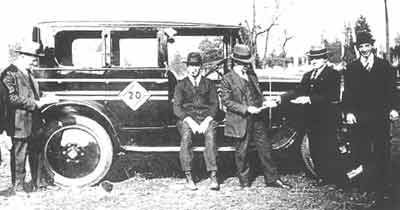
In addition to the Astor-based Liberty, Moller produced another Astor-based cab called the 20th Century which was sold in small numbers to a Philadelphia cab syndicate. A surviving picture of a 1925 20th Century show three Moller staffers, from left to right; William F. Bickel, Draftsman and designer, standing at left; John E. Harbaugh, seated on running board; and Robert L. Whitmer, sales dept., standing to his right. Two additional Astor-based taxis, the Moller and Blue Light, were sold to taxicab operators in Baltimore, Maryland; Richmond, Virginia; and Washington, D.C. Like the Liberty and 20th Century, these cabs were sold by Moller salesmen and Freed insisted that these Moller-marketed cabs could not be sold in Boston and New York, which were controlled by Astor Cab interests. No pictures or information has been located in regards to the 3,000 cabs ordered by the Tri-State Taxi Sales Co., other than the item in the June 2, 1925 Hagerstown Daily Mail. As many of the vehicles were to be operated by the Checker Cab Co., it’s likely that they were to be badged as Checkers, or even sold as Kalamazoo-built Checkers which were very similar in appearance to Moller’s taxicabs. One of the very last Dagmars manufactured was a nine-passenger Model 6-80 Limousine built for the firm’s owner and namesake, M.P. Möller, sr. The massive vehicle was shipped overseas during the summer of 1927 where the Möller family used it to tour England, Italy, Holland, France, Germany, Norway, Sweden and Switzerland. The brass-trimmed Limousine featured an upright windshield and was outfitted with a large brass luggage rack on the roof. Artillery wheels were needed to support the weight of the massive vehicle, which even at that late date was still equipped with brakes on the rear wheels only. By the time the Möller family left for Europe, the Motor Co.’s prestigious Dagmar Hotel showroom, which had been established by Moller after the cars 1922 debut, had been discontinued. Henry Austin Clark and Beverly Rae Kimes’ Standard Catalog of American Cars: 1805-1942, list total Dagmar production as 417 vehicles: 1923-135; 1924-127; 1925-93; 1926-61; 1927-1. Clark & Kimes figures are substantially greater than estimates supplied by Keith Marvin and Arthur Lee Homan in their 1960 article in the Automobilist. The M.P. Moller story is continued on page 2 © 2004 Mark Theobald - coachbuilt.com with special thanks to Keith Marvin
|
|
|||||||||
|
||||||||||
|
||||||||||
|
||||||||||
|
||||||||||
|
|
||||||||||
| |
||||||||||
|
||||||||||
|
|
||||||||||
|
||||||||||
| |
||||||||||
|
||||||||||
|
|
||||||||||
|
|
||||||||||
|
|
||||||||||
|
© 2004-2012 Coachbuilt.com, Inc.|books|disclaimer|index|privacy |
||||||||||