|
|
|
 |
||||||||||
|
||||||||||
|
|
||||||||||
|
||||||||||
|
||||||||||
|
|
||||||||||
|
|
|||||||||
|
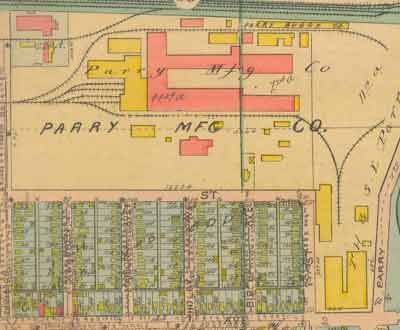
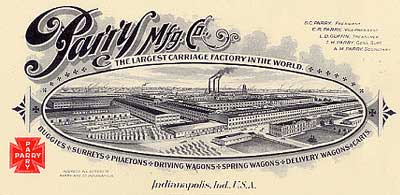
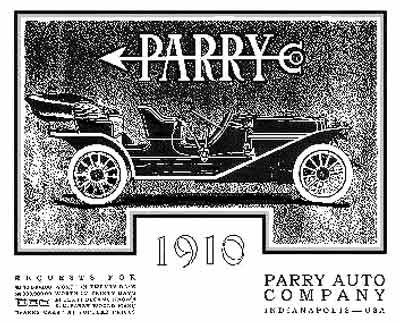
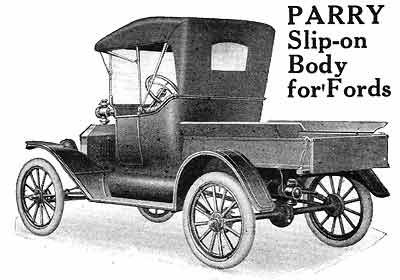
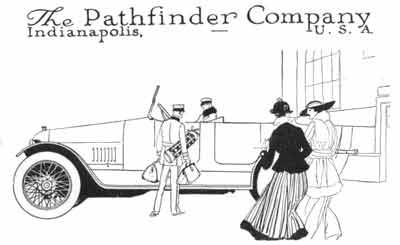
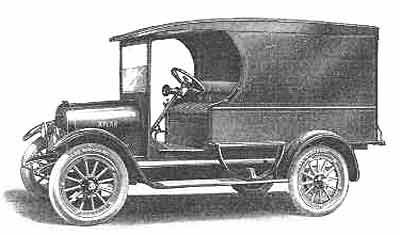
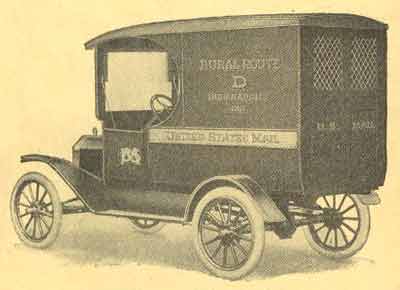
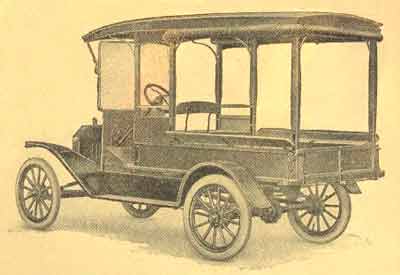
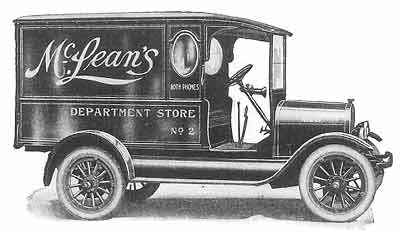
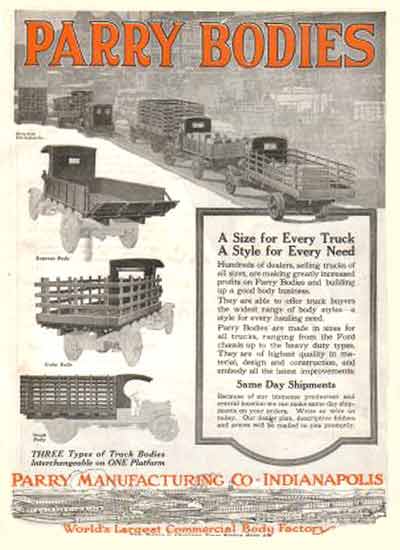
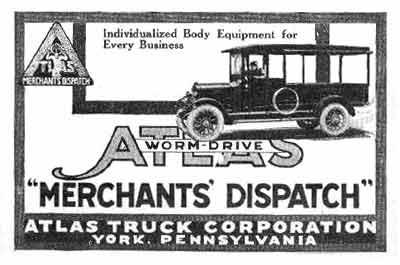
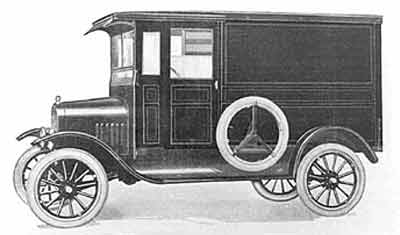
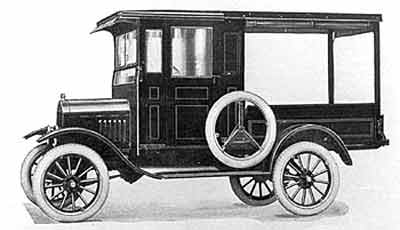
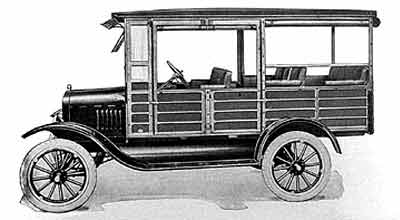
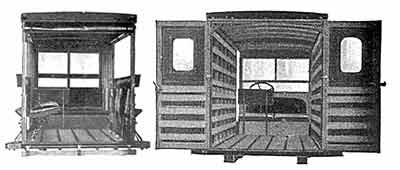
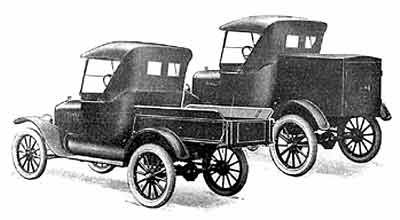
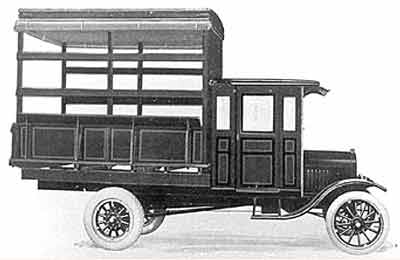
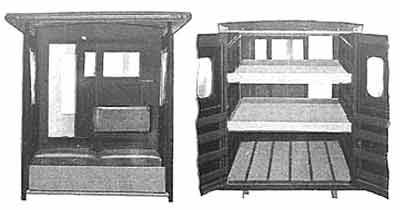
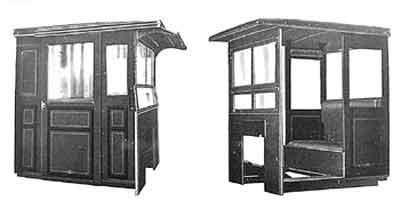
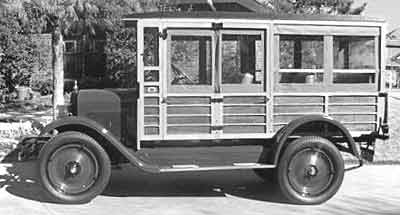
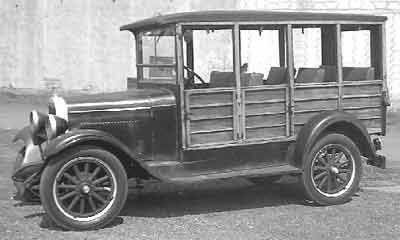
The Martin-Parry Corp. was the result of a 1919 merger between the Martin Truck & Body Corp. of York, Pennsylvania and the Parry Mfg Co. of Indianapolis, Indiana. The firm was purchased by GM in March of 1930, renaming it the Chevrolet Body Division, General Motors Corp. The Parry Mfg Co. can be traced to two Indiana brothers, David Maclean Parry and Thomas H. Parry, who purchased Rushville, Indiana’s C. Spring Cart Co. in 1882. The firm specialized in wagons, road carts and buckboards and sold direct to the regions farmers and businessmen. A fired destroyed their small Rushville factory in 1884, and the pair relocated to Indianapolis, where the purchased the factory and assets of the Great Woodburn Savern Wheel Co. renaming it the Parry Manufacturing Co. In 1888, a third brother, St. Clair Parry, joined the firm as secretary/treasurer with D.M. Parry President, and T.H. Parry Gen. Sup. of Mfg. Parry Mfg enjoyed great success in the marketplace, and by 1890 they occupied a 20-acre tract of land adjoining the Pittsburgh, Cincinnati, Chicago and St. Louis Railway. heir 410 Parry Ave parcel included 19 separate structures enabling the firm to set a production record of 1000 vehicles built in a single day. By 1896, they employed 2800 hands, and claimed to be the largest manufacturer of vehicles in the world. By 1898, the second generation of the Parry family had joined the firm. Edward R Perry was Sales Manager and two of D.M. Parry’s son-in-laws, Frank N. Fitzgerald and Lot D. Guffin, served on the firm’s board of directors. David Maclean Parry had taken an early interest in the horseless carriage going so far as to build his own motorized cart/chair around the turn of the century. With funding from the Standard Wheel Co. of Terre Haute, Indiana, Claude E. Cox introduced the Overland automobile in 1903. Following a devastating boiler explosion at the 671 Ohio St plant, Standard Wheel got cold feet and withdrew from the project during the following year. Cox had to pay $8000 to Standard Wheel for the rights to the project and turned to David M. Parry to help finance his reorganization which took place on March 31st, 1906. Parry held 51% of the stock in the new Overland Automobile Co. and was elected president. Unfortunately Perry suffered a shortage of working capital in the recession of 1907 and was unable to fulfill what few orders had been taken in during the year. Enter John North Willys, a successful Elmira, New York car dealer who had sent the fledgling automaker a $10,000 deposit for an initial order of 500 vehicles. When no cars were forthcoming, he traveled to Indianapolis and found the plant in disarray, with no money to finish what few chassis had already been started. Willys raised enough capital to get the factory moving, and bought out Perry’s share of the business in early 1909, forming Willys-Overland, one of the few early automakers that survived into the 21st century, albeit under foreign ownership. The Parry’s relationship with Overland was not completely over with as they (now Martin-Parry) furnished the commercial bodies for Overland’s factory commercial vehicles in the early 20s. Undaunted by his experience with the Overland, David M. Parry formed the Parry Auto Co. in 1910, which soon ran into problems and was reorganized as the Motor Car Mfg Co., which produced the New Parry from 1911-1912. The most successful of Parry’s automobile ventures was the Pathfinder. Manufactured in small numbers by the Pathfinder Co. from 1912-1917, it billed itself as Pathfinder, the “Great” King of Twelves. The Overland, Parry New Parry and Pathfinder automobiles were personal side projects of D.M. Parry’s and didn’t affect the family business. St. Clair Parry had assumed control of Parry Mfg. by 1910, assisted by E.R. Parry Vice-President, L.D. Guffin, Treasurer and Abram Parry Secretary. By 1915, it was clear that the horseless carriage was well on its way to replacing the automobile, and Parry turned to the manufacture of all-weather automobile tops, trailers, and commercial bodies for the popular Ford Model T. Although some very early Ford trucks were sold with commercial bodies, Ford discontinued the program in 1913. For over ten years Ford had literally given away their truck body business to independent builders around the country and in 1923 decided to stop being so generous, and implemented a new fully equipped Ford Truck sales program starting with the 1924 model year Parry Mfg. produced their last buggy during 1916 and their 1917 catalog advertised 22 different types of commercial bodies for the Model T. In 1919 Parry Mfg. merged with the Martin Truck & Body Co. of York, Pennsylvania. The M.D. Martin Carriage Works was formed in West York, Pennsylvania in 1890. By the turn of the century, Martin and the George W. Hoover and Sons were the region’s largest builders. Both firms would later play a role in the region’s automobile and commercial body manufacturing business. The emergence of the motor truck, and in particular, the International High-Wheeler did not go unnoticed by Martin. They introduced a ½-ton high-wheeled truck in 1909 designed by Edward C. Kraft (formerly of Hart Kraft), that was powered by a 16hp 2-cylinder engine that delivered power its rear wheels via a planetary transmission and chain drive. A re-designed ½ -ton to 6-ton COE debuted in 1911 powered by a choice of either a 29- or 66-hp Wisconsin 4-clinder engine. The 2-cylinder Martin was discontinued in 1913 and the 4-cylinder chassis became the all-new Atlas truck in 1916. Although some very early Ford trucks were sold with commercial bodies, Ford discontinued the program in 1913; leaving the field wide open for enterprising commercial body builders through 1924 when the first factory-built Ford Model T pick-ups were introduced. Being a carriage maker, Martin offered a complete line of commercial bodies not only for the Model T, but also for their own line of chassis, renaming the firm to the Martin Truck & Body Co. in the mid-teens to better reflect their line of work. Following the introduction of the Dodge Bros. truck in 1916, Martin was one of the first body builders to advertise bodies built specifically for the new light truck. Martin, Waterloo Wagon Co. of Waterloo, New York and H.H. Babcock of Watertown, N.Y. specialized in station wagon and depot hack bodies for both the new Dodge as well as the Ford Model T. Martin’s station wagon was called the “Park Auto Body” and was marketed directly to Ford and Dodge Bros. dealers in the Northeast. As with all early station wagons, the respective factories did not assemble these vehicles, they only supplied the chassis. When a wagon was ordered by a dealer, the chassis would be delivered to the body company where the bodies would be mounted. Completed vehicles would then be picked up at the factory, or shipped directly to the respective dealership. Bodies shipped overseas or by rail were normally sent disassembled in crates or “knocked –down” and then reassembled once they reached their final destination. The worm-drive Atlas survived into 1921 although it became a separate firm, now called the Atlas Truck Co., following Martin’s merger with Parry. During the early 20s Martin-Parry’s advertisements in Commercial Car Journal touted the firm’s popular line of “Multi-Service Bodies” for the Model T and TT chassis. Ads in Town & Country and National Geographic advertised the firm’s Park Auto Body, a continuation of the series of suburban bodies introduced by Martin Truck & Body in 1916. During the mid-to-late twenties, separate Martin-Parry catalogs and data sheets appeared advertising the firm’s Chevrolet, Dodge, Ford and Whippet commercial bodies. Martin-Parry’s corporate headquarters relocated to New York City at 61 Broadway, with service depots located in Detroit, Michigan at 6201 Woodward and in Long Island City, New York on Hulst St. By the late twenties, most of the firm’s business was with Chevrolet truck distributors, as they were the last of the major manufacturers that sold their chassis without a body. When their passenger car business hit the skids at the start of the Depression, General Motors Chevrolet division quickly switched gears in an effort to build sales of their commercial chassis, and purchased Martin-Parry’s Indianapolis operations in April of 1930 for $900,000. Up until that time, only cab and chassis had been available from the factory. The 1931 Chevrolet truck catalog offered a complete line of standard bodies for their ½-ton chassis; pickup, panel truck, and canopy express, as well as an offering of canopy express and stake bodies for the 1-½-ton chassis. Under General Motors’ ownership, Martin-Parry’s Indianapolis plant was renamed the Chevrolet Body Division. For a number of years, US-made Chevrolet passenger cars had bodies built by Fisher Body and Chevrolet and GMC trucks used bodies built by Chevrolet Body. Later body tags indicate that the Indianapolis plant was now the Indianapolis, Indiana plant of the Chevrolet Division of General Motors Corp. Most of the firm’s York, PA plant was shuttered, although they continued to produce a small number of bodies and other products into the late 30s. At the start of WWII, Martin-Parry furnished the Allies with field gun conversion kits that allowed formerly horse-drawn artillery to be towed by more modern methods. Each kit consisted of two pneumatic-tired steel disc wheels on stub axles carried on a cranked adapter which fitted over the end of the original axletree. Included were the necessary radius rods, brake gear, layers' seat brackets, etc. needed to enable the guns to be safely towed at speeds up to 30 mph. © 2004 Mark Theobald - Coachbuilt.com
|
||||||||||
|
||||||||||
|
||||||||||
|
||||||||||
|
||||||||||
|
||||||||||
|
|
||||||||||
|
|
||||||||||
|
|
||||||||||
|
||||||||||
|
|
||||||||||
|
|
||||||||||
|
|
||||||||||
|
© 2004-2012 Coachbuilt.com, Inc.|books|disclaimer|index|privacy |
||||||||||