|
The handwriting was on the wall and with its
government work
winding down, and no new products under development, Great American
Industries
began looking for a buyer for their Oneonta subsidiary. The April 21,
1954
Oneonta Star reported on the pending closure of the Linn Coach plant
and what
progress had been made in the search for a buyer:
“New Industry Negotiating for Purchase of
Linn Plant Here -
May Expand Operation If Deal is Closed.
“Sale of Linn Coach and Truck plant in
West
End to another
industry, which may operate it on a larger scale, is under negotiation,
it was
announced yesterday by Manager William Buck. Mr. Buck said there is a
good chance
that the transaction will be completed, and that the plant will
continue in
operation where Linn leaves off.
“The Linn company will discontinue
operation
June 1, when
existing contracts are completed, Mr. Buck said. The decision was
reached
yesterday after a two-day visit here by Robert Dunlap of Hartford,
Conn.,
president of Great American Industries, Inc., which has headquarters In
Meriden, Conn.
“The West End plant is properly described
as
Linn Coach and
Truck Division of Great American Industries, a name given it when the
parent
company took possession in 1946. At present the Linn plant is finishing
work on
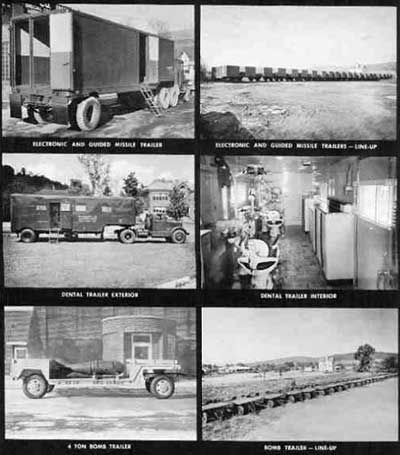
two Air Force contracts totaling about $1,500,000. One for ten dental
trailers,
the other for 818 bomb trailers.
“These jobs will be finished mid-May, Mr.
Buck said, and all
other odds and ends of work will be wound up by June 1, he added. Since
the
plant was taken over eight years ago it has lived from one contract to
another,
mostly government contracts, some for the government of Cuba but most
for U. S.
government. The plant now has 126 employees, and within the past two
months it
reached its largest personnel with 160 to 170.
“‘The plant is up for sale, and we are
negotiating with an
industry, which I can't name now,’ Mr. Buck said. ‘There is a good
chance that
this industry will take over and operate on a larger scale than we did.
Our
president has a deep feeling for Oneonta, and would like to see things
left in
good shape here. The men we employed are fine . . . they are
intelligent men and
good workers, and the word has been passed along the line, it ought to
help in
putting this plant under the operation of a new Industry.’”
Three weeks later, the Oneonta Star
announced the pending
sale of the firm’s assets in its May 10, 1954 edition:
“Two Bids Made for Linn Plant; Deal May be
Closed Today -
One Firm May Operate Plant, Employ 200
“Two prospective buyers of the Linn Coach
and Truck Division
plant in West End will meet this forenoon with executives of the parent
organization, Great American Industries Inc., in the latter's main
office in
Meriden, Connecticut. Whether the plant will be bought and operated by
a new
industry likely will be determined at this conference.
“William Buck, manager of the Linn plant,
said one firm
wishes to buy only the machinery with intent to move it while the other
wishes
to buy both the building and machinery with intent to operate a new
business
employing upwards of 200 persons.
“If a deal is closed, the new buyer will
come to Oneonta
tomorrow, Mr. Buck said. The firm which wants the building and
machinery, Mr.
Buck said, is located in Pennsylvania, and is engaged in fabrication of
steel.
Apparently the other firm which wants only the machinery, is offering a
better
price for it than the Pennsylvania company.
“Mr. Buck said Great American Industries
hopes for sale of
both to one buyer ‘so nothing will he moved out of Oneonta . . . they
want the
business kept here if possible.’
“Announcement was made recently that the
Linn plant will
close June 1. It was also announced then that the company was in
contact with a
prospective buyer who might continue the plant in operation.”
The meeting resulted in the sale of Linn
Coach’s tools and
equipment to the Electric Equipment Company of 63 Curlew St.,
Rochester,
New York (Electric, not Electrical as the paper states below). Founded
in 1934
by Irving S. Norry, the firm specialized in purchasing electric-powered
tools
and equipment of bankrupt firms, which were then warehoused and resold
to other
businesses.
The Electric Equipment Co. was the sales
subsidiary of the
Norry Electric Corp. which claimed to have the “World Largest
Inventory”
of electric motors and generators. A related firm, the
Ajax Electric
Motor Corp., manufactured new electric motors, starters and
transformers
which were distributed through the other firms. The Electric Equipment
Co. was
reorganized as the Norry Electric Equipment Co. sometime around
1970.
Norry also purchased the manufacturing
facilities of failed
businesses and by the time of his death in 1997 owned commercial and
industrial
properties in Indiana, Michigan, New York, Pennsylvania and Texas.
Although
Norry’s electric companies faded from the scene in the 1990s, his
commercial
real estate investment firm, the Norry Management Corp., remains a
major player
in the field.
The May 20, 1954 edition of the Oneonta Star
announced the
sale of the equipment to Norry:
“Linn Plant Machinery Sold. Buyer Also
Bids
For Building
“Daniel Sutch of Meriden, Conn., vice
president of Great
American Industries Inc., announced in Oneonta last night that the
company had
sold the machinery and equipment of Linn Coach and Truck Division, West
End, to
The Electrical Equipment Co. of Rochester.
“About 300 pieces, Including, jigs and
fixtures, are to be
moved out by July 1, Mr. Sutch said. Meanwhile, negotiations are under
way for
sale of the building, but nothing definite has been concluded. “The
building
has been privately offered, and if not accepted shortly it will offered
publicly," Mr. Sutch said.
“The Rochester firm "has indicated they
have some
interest in the building but they haven't put down any money yet," Mr.
Sutch said. From other sources it was learned that “the price was the
point at
issue and if agreement could be reached the Rochester firm would move
in and
operate a business in the plant.
“Another possible buyer of the building is
a steel
fabricating firm in Pennsylvania, but the height of the ceiling is a
stumbling
block, Mr. Sulch said. A height of 20 feet is desired but the Linn
building's
ceiling is 15 feet at the highest. The Pennsylvania firm had considered
taking
the plant, even with its low ceiling, and using it for manufacture of
light
stuff, but no word has come from the firm in recent days.
“The Linn plant has virtually completed
all
its contract
work, Mr. Sutch said, and will shut down on June 1 as previously
announced.
Yesterday the plant had 22 men on the payroll, and at its maximum it
had 170
employees, Manager William Buck said. Mr. Sutch said all personnel
connected
with the Linn plant would be severed, including Mr. Buck, who will
return to
his home in Buffalo. 'The company has made numerous attempts to secure
products for the plant,' Mr. Sutch said, 'but these have been
unsuccessful,
resulting in recurrent prohibitive operational losses.'”
Linn Coach & Truck’s inventory and raw
materials were
purchased by the Otsego Iron & Metal Corp. of Oneonta. Over the
next few months,
the firm ran the following classified ad in a number of regional
newspapers:
“Liquidating; Having purchased the
complete inventory
of raw material and parts of the Linn Coach And Truck Co., we are
offering same
for sale at prices way below manufacturer's cost.
“Tons-Tons-Tons; New prime steel in all
shapes and forms.
New aluminum sheets and plates. New stainless steel sheets. Diamond
plate, etc.
“1,001- Different New Parts For Building
Trailers of All
Kinds
“Paint: Hundreds of gallons paint,
reducer,
primers, copper
tubing and fittings, electric automotive supplies, hardware, bolts and
nuts,
all sizes of steel and wood work tables and benches, vises. Many more
items too
numerous to mention.
“Everything offered subject to prior
sale.
Otsego Iron &
Metal Corp. Rose Ave. Oneonta - Phone 1768”
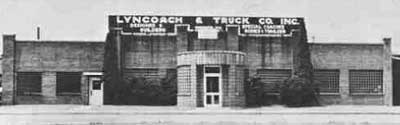
For all intents and purposes the Linn
Truck
& Coach
Company was gone. However, James M. Friery, the firm’s comptroller and
Frank E.
Humphries, its chief engineer, saw an opportunity and started making
inquiries
with the US Government.
Since G.A.I. would not relinquish the Linn
name, a similar
one, 'Lyncoach,' was substituted on the contracts.
The government was interested and within
the
month the pair
had been awarded a half-million dollar contract. With financing
provided by a
small group of Oneonta–based investors who included attorney Harold C.
Vrooman,
Friery and Humphreys formed the Lyncoach & Truck Company and rented
a 5,000
sq foot garage at 95 W. Broadway, Oneonta.
July 22, 1954 Oneonta Star:
“Manufacturing Firm Started Here:
Government
Contract Is
Awarded
“By Bob Warner, Star
Staff Writer
“Formation of a new firm to preserve the
Linn Coach brand
name and continue to supply parts, etc., was revealed yesterday by a
government
announcement of the award of a $33,255 contract for the replenishment
of 42
tactical vehicles.
“Announcement of the contract was made,
by
the field service
of the U.S. Department of Commerce, on behalf of the Ordinance
Tank-Automotive
Center, Detroit, Mich.
“James Friery, plant manager, said that
a
new company, to be
known as Lyncoach & Truck Co. had been organized. It has not yet
been
incorporated, but probably will become a corporation, Mr. Friery said.
“‘This is not a big thing,’ Mr. Friery
said,
‘We are just
getting started. In addition to the government contract, we have some
smaller
orders.’
“The new company, Mr. Friery revealed,
also
plans to
manufacture fire escapes, and has several orders on hand.
“‘A lot of people are going to install
fire
escapes,’ Mr.
Friery commented. He said the new firm is also bidding on contracts for
television units.
“The company has rented the new building
of
Angelo Scavo on
West Broadway, with 5,000 square feet of floor space.
“‘We are just getting organized,’ Mr.
Friery
said. ‘We will
employ some of the old workers, but right now we have no idea how many
we can
employ.’
“Some of the necessary welding
operations,
he said, will be
sublet to other concerns in the city or area, and if necessary, other
operations may be sublet. He said the firm hopes to be able to do much
of its
own assembly work.
“Frank Humphreys, who also was connected
with the old Linn
Coach & Truck Division, has joined the new firm as chief engineer.”
September 7 1954 issue of the Oneonta Star:
“New Industry Has Five Army Contracts,
Bids
For Six More;
'Coming Along Nicely’ Says James Friery
“The newly formed Lyncoach & Truck
Co.,
at 95 West
Broadway, which began operation July 15, now has five Army Ordnance
contracts
and is bidding on six others.
“‘From a small beginning, we're feeling
our
way,’ Manager
James M. Friery said, ‘and things are coming along fine.’
“Already a contract for 42 gunmount
trailers
is more than
half completed, Mr. Friery said, and work is progressing on four
smaller
contracts. The five contracts run over $40.000.
“Mr. Friery has rented the large new
building that has 5,000
square feet of floor space, and has bought some of the machines from
the former
Linn Coach & Truck Division in West End, with which he had been
associated.
“Frank Humphreys, a former chief engineer
of
the West End
plant, is working with Mr. Friery in the same capacity. Seven men are
employed
at the plant now, and some of the special machine work is sublet to
firms in
Syracuse.
“The personnel naturally will fluctuate
with
the contracts,
Mr. Friery pointed out. He said he was keeping his fingers crossed on
the bids
he has made, and while hopeful, he would not indulge in expansive
prophecies.
“‘We have plenty of room for expansion,’
he said, ‘and we
plan to do some special all-make bodies and complete trailers. But I
want to
repeat that we are not talking in big terms, we're just making a start
and
hoping, and things are looking pretty good.”
April 5, 1956 Oneonta Star:
“Revived Industry Give Oneonta
Shot-in-the-Arm; Lyncoach to
Expand Operations
“It's hard to keep a good man down. In
fact,
one of
Oneonta's world known products is proving that it is practically
impossible.
“Linn Coach & Truck Co., established
many years ago to
make trailers on a new idea, made a good product, but had difficulties,
and was
taken over by Great American Industries.
“During the war and immediately
thereafter,
the division
blossomed into a major industry for the community, but as military
orders and
orders for specialized trailers from other governments and public
bodies
tapered oil, it again ran into difficulties.
“But its products was sound - finely
crafted
equipment for
specialized mobile units. James M. Friery, who was comptroller of the
Division,
and Frank E. Humphreys, its chief engineer, still had confidence in the
soundness and desirability of their product. Alter the division closed
its
doors and sold both the plant and its equipment, they joined forces and
formed
Lyncoach & Truck Co.
“The two men made no attempt to carry on a
business on a big
scale. Their ideas was to be able to service the products of the former
concern, and to take on specialized jobs as they might be able to get
them.
“A few of the master craftsmen who had
been
with the old
company were welcome employees of the new. This small firm started off
well, and
gradually grew, calling back more and more of the men who knew the fine
work
necessary.
“They acquired quarters at 93 West
Broadway. The staff grew to about 23 men
with a weekly
payroll of $2,000. Not content with sitting back and waiting for
business to
come to them, they started out to find types of enterprises where their
product
could be utilized profitably.
“For example, veterinarians of the nation
were circularized with
a questionnaire to determine what type of mobile unit would be most
valuable to
their profession. On the basis of several hundred replies to that
questionnaire,
Lyncoach developed a veterinary trailer which many veterinarians have
purchased.
In the meantime, the big plant in West End stood virtually idle,
stripped of
its ponderous machines.
“Soon it will be humming again, because
Lyncoach is going
home.
“Mr. Friery and Mr. Humphreys have leased
the main building
from its purchaser, Donald Sutler, and about May 1 will transfer their
work to
the old plant. Ail their equipment is new and modem, and Mr. Friery
said the
company has a substantial backlog of orders which will keep the men
busy for a
long time. Moreover, they are bidding on at least six government
contracts, and,
Mr. Friery said, ‘we are sure we will get our share of them.’
“Mr. Friery has consistently maintained
that
he would rather
have a slow, steady and healthy growth for the company than a
recurrence of the
‘boom and bust’ days of the past. But he admitted that the main reason
for the
move back to the old location is to provide room for increased work. He
expects
that within a short time his work force will double—meaning jobs for
about 50 men.
“The company’s careful, specialized work
has, during the past
year or two, established a reputation at one of the foremost producers
of
mobile equipment for such industries as television.
“A new dental office trailer illustrative
of
the equipment
now produced rolled off the lines the other day, and yesterday was put
on
display on Main Street in front of Oneonta Department Store.
“In the new plant, the firm will be able
not
only to produce
its specialized equipment, engineered to meet the particular needs of
its
different customers, but also will be able to produce standard bodies
on more
of a mass production basis Lyncoach is on the way up— a revived
industry
contributing to the sound economy of Oneonta.”
Lyncoach’s old West Broadway plant was
subsequently leased
to the King Products Co., a Carterel, New Jersey-based manufacturer of
variegated lighting fixtures.
September 21, 1956 issue of the Oneonta
Star:
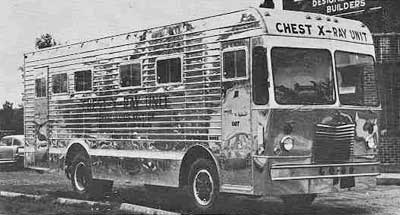
“Lyncoach Doing Work For Brazil: Medical
Coaches Cost $200,000
“Six Vehicles Will Promote Public Health
“Oneonta's department of foreign relations
that being Lyncoach
& Truck Co., is now doing business with Brazil.
“From the improvised assembly line in West
End, combination
medical and dental coaches are moving down to Rio, there to fan out
into
countless small villages to extend a broad program of public health to
the
natives.
“Into these big mobile units, each bearing
the stamp, ‘Made
in Oneonta,’ will troop many thousands of Brazilians to have their
chests and
teeth x-rayed and otherwise get medical examination.
“Already three of these units have been
completed and sent to
New York for shipment below the equator, and three more are under
construction.
“James M. Friery, president of Lyncoach,
explained that his
firm receives the x-ray equipment ready-made, and that he installs it
in the coaches
which he makes. He estimated that each coach, when built and equipped,
costs around
$35,000, the total thus approximating $200,000.
“The units are similar to the seven dental
coaches which
Lyncoach made for U.S. Air Force. The coaches for Brazil were designed
and sold
by *Medical Coaches Inc., 16 Dietz St., about which a feature story
will appear
soon in these columns.
“Last year, Lyncoach made three smaller
medical coaches for
the Canadian government. Mr. Friery had no idea what part of the world
would be
their destination until they were finished. Then he was notified to
deliver
them to New York City for shipment to Ceylon.
“The made-in-Oneonta vehicles are now
bringing better health
to the hinterlands teeming with millions of Ceylonese.
“Oneonta coaches also have gone to Egypt,
Cuba and other
foreign lands. Altogether, about 30 have been turned out since Mr.
Friery and
Frank E. Humphreys founded Lyncoach & Truck Co., following the
closing of
Linn Coach & Truck Division of Greet American Industries.
“Starting with four men they now have
about
30, and from a
relatively small location on West Broadway they have moved back into
the
original Linn plant in West End.
“While wining up the contract with Brazil,
Mr. Friery and
Mr. Humphreys are doing some U.S. Government work in a small way as a
preliminary to bidding on some big work.”
*Originally founded in 1949, Medical
Coaches
Inc. was a New
York City-based marketer of portable medical vehicles to domestic and
international public health agencies. The firm sub-contracted the
actual
manufacture of the vehicles to the Linn Coach & Truck division of
Great American
Industries, which was located in Oneonta, New York.
Business increased to the point where Linn
Coach & Truck
created a separate mobile health division to oversee the vehicle’s
manufacture.
When a strike forced the closure of Linn Coach & Truck in late
1953,
manufacture of the firm’s Medicoaches was taken over by Linn Coach
& Truck’s
successor, the similarly named Lyncoach & Truck Co. Inc.
Medical Coaches relocated to 16 Dietz St.,
Oneonta in 1955
in order to more closely oversee the manufacture of their products.
February 23, 1957 Oneonta Star:
“A made-In-Oneonta product was seen in the
traffic stream moving
up Main Street yesterday. It was the Nestle's Hospitality Caravan,
designed and
sold by Medical Coaches, Inc., 16 Dietz St., and manufactured by
Lyncoach &
Truck Co, West End. The big blue and cream coach is to tour the
country, giving
away samples of Nestle products. It was delivered two weeks ago and
yesterday
happened to come back through Oneonta on its ‘Hospitality’ Tour. Last
year
another one like it was made and delivered to Nestle.”
January 29, 1958 Oneonta Star:
“Lyncoach Purchases Sales Rights
“The Lyncoach and Truck Co., Inc., of
Oneonta, has purchased
the manufacture and sales rights for aluminum truck body kits from
Reynolds
Metals Co., together with all existing inventories, tooling, and
assembly
fixtures.
“The sale was announced jointly by David
P.
Reynolds,
vice-president in charge of sales for the aluminum firm, and Lyncoach
President
James M. Friery. The action was taken, Mr. Reynolds said because the
Reynolds
truck body program ‘has achieved its objective of stimulating wider use
of
aluminum on the truck and trailer industry.’
“Mr. Friery said that the newly acquired
tools and inventory
will enable Lyncoach and Truck Co., to ‘greatly enlarge the scope of
its
operation.’
“For a number of years Lyncoach coach has
been a leading
designer and manufacturer of custom built coaches, medical units,
trucks and
trailers for both industry and the armed forces.
“Frank E. Humphreys, vice-president and
chief engineer of
Lyncoach, advised that the jigs and fixtures were now being assembled
at the
Lyncoach plant and shipments of truck bodies would begin in late
January to
former Reynolds dealers and to new dealers set up by Lyncoach.
“The Reynolds program which has been
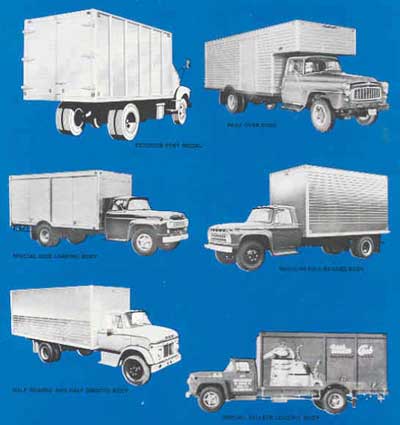
carried
out to
approximately 40 dealers was built around aluminum kits and fabricated
parts for
two basic types of truck body kits - an outside post model and a beaded
panel
model. Optional items included smooth panel sides, aluminum doors, and
truck
flooring.
“The program, according to Mr. Reynolds,
was
successfully
promoted on the basis of aluminum's light weight ‘reducing dead load by
as much
as 40 percent.’ The minimum maintenance required because of its freedom
from
rust and its heat reflectivity, which helps keep interiors as much as
13
degrees cooler.
“He said that Reynolds, as a basic
producer
will continue to
supply aluminum to manufacturers of truck and trailer bodies. He
predicted that
the industry will grow in importance as a market for aluminum.
“According to the contract, Lyncoach will
supply service
parts to all former Reynolds' Truck-Body Dealers.”
May 10, 1958 Oneonta Star:
“Army Lets $650,000 Job To Lyncoach Plant
Here
“Jupiter Job Awarded To Oneonta Firm
“An Army contract of approximately
$650,000
has been awarded
to Lyncoach & Truck Co. Inc., West End.
“The contract is for electrical equipment
trailers which
will be used in the Jupiter missile program. The announcement was made
yesterday in Rochester by Lt. Col. W.B. Loomis, commanding officer of
U.S. Army
Ordnance District.
“The commanding officer said the
‘selection
of this company
to make the trailers was based on quality of work of the company in
making
vehicles previously for use in the Jupiter missile program.’
“The contract is to be carried out this
year
and may start
within 30 days. It is for manufacture of big four-wheel trailers.
Elsewhere
they wilt be fitted with electronic equipment.
“In carrying out about $2,000,000 of
government work last
year, Lyncoach & Truck Co. made a lot of trailers. Inspectors gave
the
trailers a superlative rating, and on the basis of this, the company
got
another contract without having to enter into competitive bidding.
“The company, headed by James M. Friery,
has
Frank E.
Humphreys as engineer. Both were with the original Linn Coach and Truck
Division of Great American Industries.
“When that firm closed its plant at
Chestnut
and Oneida
Streets, Mr. Friery and Mr. Humphreys formed a new company and began
operation
in a small way on West Broadway.
“They made mobile dental units and other
custom vehicles,
starting with a hall dozen men. Soon they had expanded to 25 men. Then
they
needed more space and moved into the quarters in West End where the
original
Linn Plant had been.”
June 17, 1958 Oneonta Star:
“Lyncoach To Expand Overseas
“Lyncoach & Truck Co., Inc., is
extending its operations
into the foreign markets, James F. Friery, president, announced
yesterday.
“‘Our new export department,’ Mr. Friery
said, ‘will take
Lyncoach Mobile Health Units and our Aluminum Truck Bodies to the four
corners
of the world.’
“This new department will be under the
direction of Joseph
H. Sanchez, who has had over 15 years experience in the Export Field.
“It was also announced that exclusive
distribution contracts
covering the Latin American markets were signed with the firm of Oscar
D.
O'Neill, Inc., of New York City.
“This firm, long established in Latin
American Trade
circles, over the years has represented such highly regarded companies
such as
Ritter Co., Westinghouse Electrical International, Hamilton Mfg. Co.
and many
other leading U. S. manufacturers.
“‘Working together with our export
department,’ Mr. Sanchez
said, ‘the O'Neill organization will represent Lyncoach throughout
South and
Central America. The highly trained resident and traveling, force of
technical
and sales personnel maintained by O'Neill will assure our clients of
the
highest caliber on-the- spot assistance possible for the effective
development
of their Mobile Health programs.
“Arrangements for the distribution of
Lyncoach units in
Europe, Asia, Africa and the Near East are presently being developed.”
August 16, 1958 Oneonta Star:
“First Atomic Lab Made Here
“A made-in-Oneonta contribution to the
International Atomic
Energy Exposition is on the high seas, bound for Geneva, Switzerland,
there to
become a world celebrity. It is a mobile radioisotope laboratory
costing about $56,000,
made at Lyncoach and Truck Co. Inc., 443 Chestnut St. The big vehicle
is the
first of its kind and is one of two which United States is presenting
to the
International Atomic Energy Agency (IAEA).
“It was completed Monday and driven to New
York City, there
to be hoisted aboard a ship Thursday with Joseph Sanchez of Lyncoach
present.
Work on another has started at Lyncoach.
“Two technicians, Harry E. Kimball and
Harry
Williams of Oak
Ridge, Tenn., were here for two weeks representing the Institute of
Nuclear
Studies. Both checked out of Oneonta Hotel Tuesday.
“This nuclear classroom on wheels will be
part of the U. S.
display at the Second International Exhibition of the Peaceful Uses of
Atomic Energy
- a commercial exhibit. The United States Atomic Energy Commission
provided The
Oneonta Star with the following information:
“After the exhibition closes, the
laboratory, which is
completely equipped for basic training in radio isotopes handling
techniques,
will be sent to IAEA headquarters in Vienna, Austria.
“The commercial exhibit will be presented
in
the Palais des
Expositions in down town Geneva September 1 to 13 at the same time that
the
United Nations Second International Conference on the Peaceful Uses of
Atomic
Energy is in progress at the Geneva Palais de Nations.
“The two laboratory units were offered to
IAEA by United
States as part of the atoms-for-peace program proposed by President
Eisenhower
in a speech before United Nations December 8, 1953.
“The laboratories will enable IAEA to
initiate, for
interested countries, a program similar to the radioisotopes training
courses
offered by the Oak Ridge Institute of Nuclear Studies (ORINS) at Oak
Ridge,
Tenn., thus enabling foreign universities and research institutions to
give
such instructions.
“The mobile units were designed by ORINS
at
the request of
the Atomic Energy Commission. The first unit was put aboard the S.S.
American
Archer of the United States Lines and will arrive at Rotterdam,
Holland, August
24. From there they will be driven to Geneva.
“Equipment in the laboratory includes:
“Medical spectrophotometers, radium safe
or
vault, latest
equipment to measure and count radio isotopes, air conditioning and
heating,
three fume hoods, compressor and pump, 120-gallon gasoline tank,
60-gallon
water tank, 40-gallon stainless steel waste tank, special venting
system for
fume hoods and special retractable smoke stack which can be raised
above the
unit to disperse radioactive fumes so as not to contaminate the unit.
“Lyncoach was given just 30 days to build
the unit so as to
meet the shipping date. The designer mentioned in the AEC new release
furnished
the layout, telling what he wanted, not how to do it. The problem of
designing
the equipment, such as the fume hoods, retractable smoke stack,
etcetera, had
to be solved by Lyncoach.
“The second unit is to be ready in about
one
month.
“The self-contained, bus-type unit is
about
35 feet in
length and carries its own 10-killowatt generator to provide power for
the
training equipment. It will accommodate six students at each session.
The total
cost of each laboratory, including the equipment, will be paid from the
Mutual
Security funds which have been made available to the commission by the
United
States International Cooperation Administration.
“A model of the laboratory was presented
to
Sterling Cole,
director general of the IAEA in Vienna on April 29, 1958, by Robert
McKinney,
head of the United States delegation to the IAEA, at the time that he
announced
the United States offer to the international agency.”
August 29, 1958 Oneonta Star:
“For State of Idaho Oneonta Firm
Manufactures Mobile Dental
Laboratory
“Lyncoach & Truck Co., West End, is
manufacturing a
mobile dental laboratory for Idaho State Health Department, according
to James
M. Friery, president.
“The unit is similar to others, which the
Oneonta firm has
turned out for states and foreign countries.
“When this job is completed, Mr. Friery
said, work will
start in on the second mobile radioisotopes laboratory for U. S. Atomic
Energy
Commission.
“The first made-in-Oneonta atomic
laboratory
was completed
and delivered August 14 to Pier 74, Manhattan, there to be loaded onto
a
freighter which arrived Saturday at Rotterdam, Holland.
“The lab proceeded under its own power to
Geneva,
Switzerland, for public viewing at the Second International Exhibition
of
Peaceful Uses of Atomic Energy.
“The $56,000 self-contained, bus-type unit
is about 35 feet
long and carries its own 10-kilowatt generator to provide power for the
training equipment. It will accommodate six students at each session.
“It is completely equipped for basic
training in the
techniques of handling radioisotopes. After the Geneva exhibition it
will go to
Vienna, Austria, to the headquarters of the International Atomic Energy
Agency.”
December 8, 1958 Oneonta Star:
“For Rural Service Oneonta Firm Builds
Medical Unit for
State Health Dept.
“The State of New York is planning to
extend
its public
health program into rural areas, and to that end a mobile medical
screening
unit is being manufactured at Lyncoach & Truck Co. Inc., West End.
“The spacious 35-foot vehicle likely will
be
finished in
January, and may see initial service in Oneonta area.
“It is being made for the Department of
Chronic Diseases and
Geriatrics, State Health of Health, and will be equipped for:
“Screening and diagnosis of diabetes, mass
chest x-ray
examinations, electrocardiograms, dental x-ray examinations, topical
fluoride
treatment (painting teeth with fluoride), and complete medical
examinations.
“Dr. Hermann E. Hilleboe, commissioner of
health, and Dr.
Frank Reynolds, head of the Department of Chronic Diseases, State
Department of
Health, are pushing the program.
“The unit being made here represents a
pilot
program, if it
works out satisfactorily the state may order four others, one a year
for four
years making five in all.
“Joseph R. Sanchez, manager of the mobile
health division of
Lyncoach, said the unit under construction is more complete than the
one made
several years ago for International Ladies Garment Workers Union.
“Work was begun on this unit soon after
Lyncoach completed
and delivered its second Mobile Radio Isotope Training Laboratory for
U.S.
Atomic Energy Commission.
“The new unit is now at Oak Ridge, Tenn.,
where portable
equipment is being installed. Mr. Sanchez said the word he got is that
the unit
will be exhibited in Washington, D. C., then sent to South America.
“The first AEC lab was delivered in August
and sent to
Geneva, Switzerland, for the huge exposition sponsored by the
International
Atomic Agency.
In 1958 Medical Coaches Inc.’ deemed that
business was
sufficient to justify the establishment of their own manufacturing
facility. They
purchased the assets and intellectual property of Lyncoach and Truck
Co.’s
mobile health division and moved into their own factory at 300 Country
Club Rd,
Oneonta.
May 19, 1959 Oneonta Star:
“AP Says Oneonta Got $43,000 in Military
Contracts
“Lyncoach Head Says Figure Much Higher
“Oneonta was one of 22 labor-surplus areas
of New York State
which received almost 1½ billion dollars worth of prime military
contracts last
year, the Associated Press reported yesterday.
“The amount listed as spent in Oneonta was
$430,000. The
industry was not identified, but Lyncoach & Truck Co. Inc., West
End, is
known to have had military contracts.
“James M. Friery, president of Lyncoach,
said:
“‘That (the $430,000) was just one
contract
that came out of
the general office in Washington. We had a lot of other contracts. All
the rest
came out of district offices, and each branch of service has its own
districts.’
“Mr. Friery did not state the total of
business which
Lyncoach had from government contracts but indicated it was
considerably more than
the amount mentioned in the Associated Press story.
“The balance of the AP article:
“The total of $1,471,843,000 accounted for
nearly one-sixth
of the value of all military supply, service and construction contracts
of the
nation, $10,000 or more distributed last year in 342 labor-surplus
areas of the
nation.
“Only California, which received contracts
totaling
$1,827,926,000, topped New York.
“The figures were contained in recent
testimony before a
House appropriations subcommittee that studied Defense Department
budget requests.
“New York City received the lion's share
of
the New York
State contracts - $1,019,307,000. Syracuse with $183,739,000 worth was
second.
“Other labor-surplus areas in the state
and
the total value
of military contracts they received included:
“Binghamton $25,457,000; Kingston
$6,796,000;
Newburgh-Middletown-Beacon $998,000; Oneonta $430,000.”
December 22, 1959 Oneonta Star:
“Oneonta-Born Plant Shows Steady Growth,
Expansion
“Lyncoach & Truck Company Has 3-Phase
Operations
Extending to Space Age
“Space Age Feels Impact of Lyncoach
Missile
Launching and
Tracking Trailers
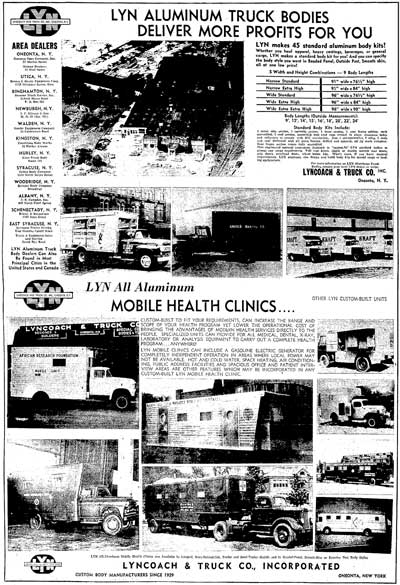
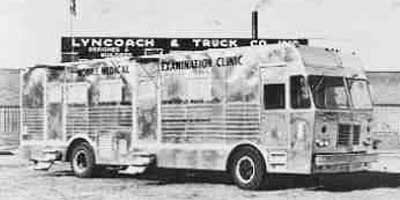
“Lyn Mobile Clinics Bring Better Health
Services to People -
the World Over.
“These headlines typify the
diversification
of Oneonta's
largest industrial firm - Lyncoach and Truck Co., Inc. The Oneonta-born
industry, now mushrooming into a huge operation, produces prefabricated
aluminum truck bodies, fills complicated and important government
contracts and
constructs mobile health units now used throughout the world.
“‘It's really a three-phase operation,’
Joseph Sanchez, export
director and manager of the mobile unit division, explained in an
interview.
“And the three-phase operation has paid
off.
Today, it's not
surprising to see a Lyn manufactured mobile dental health unit,
chugging
through the small hamlets of Venezuela.
“Nor is it surprising to see a Lyn missile
launching and
tracking trailer at the Jupiter missile launching site.
“Nor is it surprising to see a Lyn
prefabricated truck body
being assembled in Dayton, Ohio.
“Nor is it surprising to see a truck body
bound for the Far
East, being fitted together here in Oneonta.
“For the last two years, a progressive
manufacturing and
sales expansion program has been developing at Lyncoach.
“First step in this direction came in
December of 1957, when
James M. Friery, president of the corporation, announced the purchase
of the manufacturing
and sales rights for the aluminum truck body kits from Reynolds
Aluminum Co.
together with all existing inventories, tooling and assembly fixtures.
“Directed by Chief Engineer Frank
Humphreys,
a production line
was set up in the Oneonta plant and shipment of truck body kits began
to 12 former
Reynolds dealers.
“Rapid Growth
“From this humble beginning, the operation
mushroomed and today
there are more than 180 franchised dealers serviced by seven Lyncoach
field
representatives, to insure that the Oneonta-made product can be
distributed all
over the US and Canada.
“Special working agreements were developed
with leading trailer
manufacturers, whereas Lyn could supplement their trailer models.
“Charles MacLean, sales manager,
commenting
on the operation
said ‘The Lyn truck body kits are completely prefabricated at our
Oneonta plant.
Outstanding design and construction features make Lyn bodies stronger,
more
durable.’
“‘Designed for easy on-the-spot assembly
by
local Lyn body
dealers, Lyn body kits save many man-hours of labor and ship easily.
Mass
production facilities assure prompt delivery of customer orders.’ He
continued,
‘and we have just completed a 30 ft. by 120 ft. addition to our factory
to
warehouse over $250,000 worth of Lyn truck body kits ready for
immediate
shipment.
“Further to assure prompt regional
deliveries and reduce inland
freight charges, more than $100,000 worth of Lyn bodies are warehoused
in
central distribution depots in Columbus, Ohio; Atlanta, Georgia and
Grand
Prairie, Texas.
“Second Largest
“National distribution of a better truck
body for less money
supported by aggressive national advertising has enabled Lyncoach to
achieve its
position as the world's second largest manufacturer of Aluminum truck
body
kits.
“And the progressive budding industry,
keeping up with the
times, sailed straight into the ‘space age.’
“Over the years Lyncoach engineers have
designed and developed
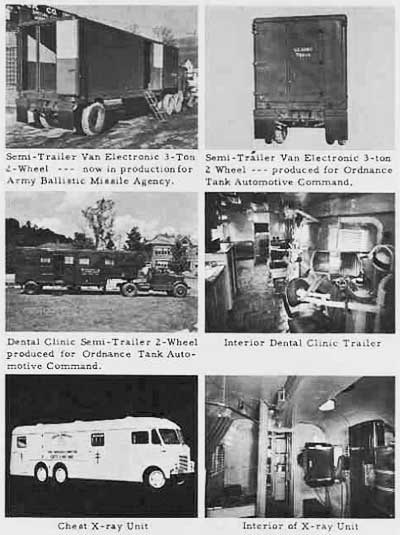
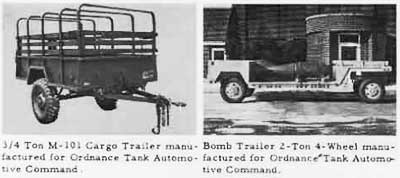
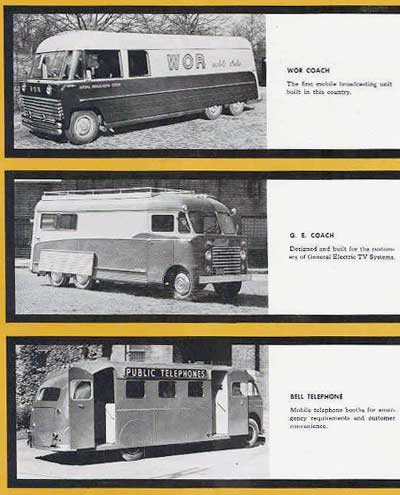
many special-purpose military vehicles including the M-101 cargo
trailer, military
mobile television units, 2-ton bomb trailers and electronic trailers.
“In 1958, Lyncoach was awarded over two
million dollars in
government contracts to manufacture special purpose trailers for Army
and Air
Force missile bases throughout the United States and the free world.
“In announcing one of these contract
awards,
Lt. Col. W.B. Loomis,
commanding officer of U.S. Army Ordnance Rochester District, said.
‘Selection of
this company to make the trailers was based on quality of work of the
company in
making vehicles previously for use in the Jupiter Missile Program.’
“Even now, 30 of these highly specialized
custom-built missile
launching trailers are on the Lyncoach assembly line being readied for
delivery.
“The importance of the part played by
Lyncoach in the
development of these weapons-for-peace is best summed up in a letter
from Brig.
Gen. A.B. Barclay, commanding officer, Redstone Arsenal, Army
Ballistics
Missile Agency, which reads:
“‘Commendation
“‘The Army Ballistics Missile Agency
wishes
to commend you
and the personnel of Lyncoach & Truck Co. for the work performed by
your
company which contributed to the successful completion of the Jupiter
Ground
Support Equipment Development Engineering Inspection (DEI).
“‘Through your efforts we were able to
satisfy the
requirements of the fast countdown for missile preparation and to
demonstrate
same to DEI participants.
“‘The fine cooperation demonstrated by you
in furnishing equipment
for the DEI is most gratifying. Successful completion of this task,
with many
inherent, unknown and unpredictable problems and delays, could only
have been achieved
by the sincere and conscientious effort demonstrated by you on this
project.’
“The third phase of the operation is
devoted
to the
construction of highly mobile medical laboratory units. Early in 1958,
the
Lyncoach Mobile Health Division was set up with Mr. Sanchez as
director.
“And the operation was intensified. A
Mobile
Radioisotope Training
Laboratory was built in 30 days ... in time for the U. S. Atomic Energy
Commission to display it at the Second International Exhibition of the
Peaceful
Uses of Atomic Energy held in Geneva, Switzerland, in September, 1958.
“Atomic Laboratories
“Two Mobile Atomic Laboratories – nuclear
classrooms-on- wheels
– built in Oneonta by Lyncoach for the Oak Ridge Institute of Nuclear
Studies, were
turned over to the International Atomic Energy Agency to enable
universities in
NATO and South American countries to give instruction courses similar
to those
conducted in Oak Ridge, Tenn.
“In Idaho, a completely equipped two-chair
Mobile Dental
Clinic, bearing the names . . . Oneonta and Lyncoach . . . brings the
benefits of
modern dental service to people in sparsely populated areas where
dental care
was seriously lacking.
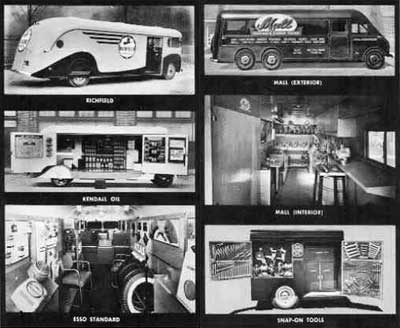
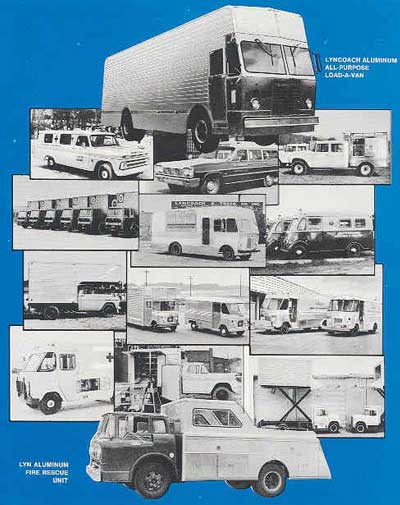
“A custom-modified Lyn aluminum truck
body,
housing complete
laboratory equipment, was built for Esso Refineries in Connecticut.
Mounted on
skids, it can easily be transported to any location.
“In Minnesota, the General Electric
Company
utilizes a Lyncoach
Laboratory Trailer. Here again a Lyn aluminum body was specifically
modified to
meet exact customer requirements.
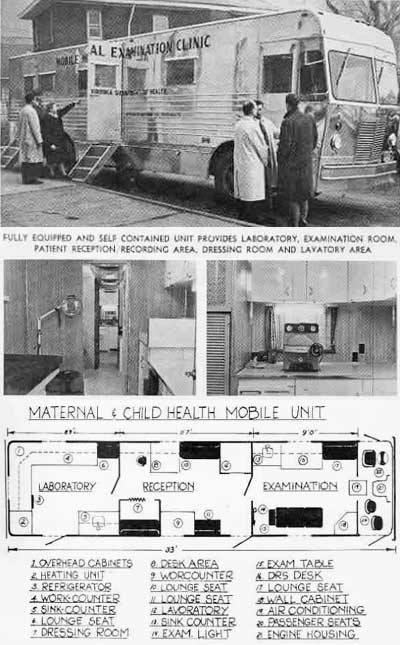
“The New York State Department of Health
uses a Mobile Medical
Screening Unit built in Oneonta by Lyncoach. The most modern and
complete unit of
its kind in the world it permits the Bureau of Chronic Diseases and
Geriatrics
to conduct such medical programs as Glaucoma Testing, Diabetes
Screening; X-
Ray; Hematocrit; Electrocardiographic examinations and many others.
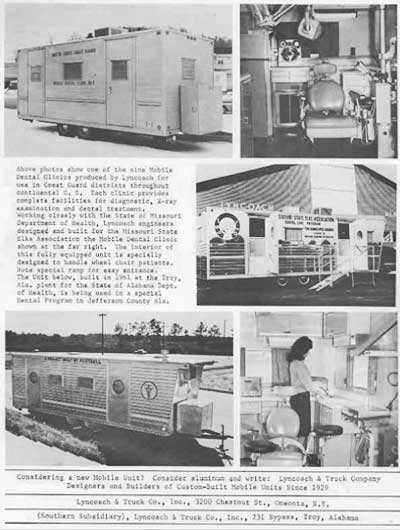
“3 Chair Dental Clinic
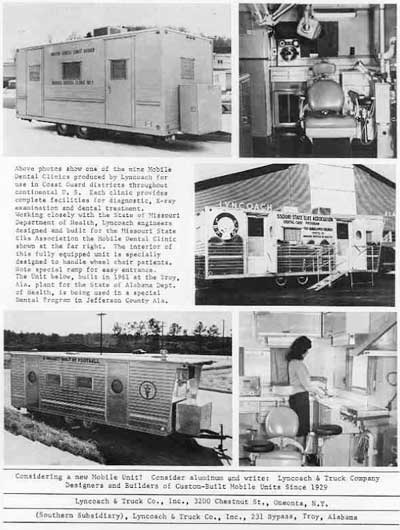
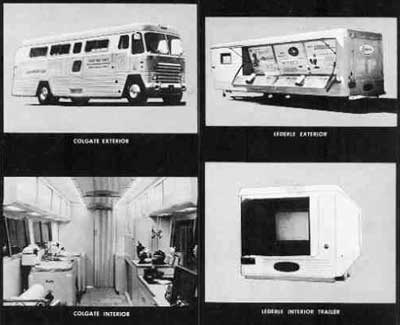
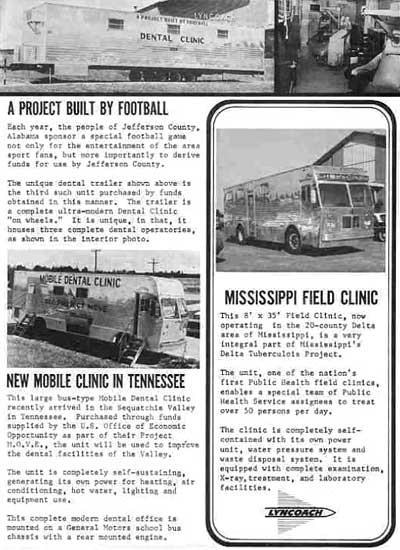
“The first three-chair- Mobile Dental
Trailer designed to
conduct dental care programs for school and pro-school children is
operating in
Jefferson County, Alabama. Again, built by Lyncoach, this unit includes
all the
equipment and facilities required to conduct dental diagnostic and
treatment programs
except orthodontic and extreme prosthetic cases.
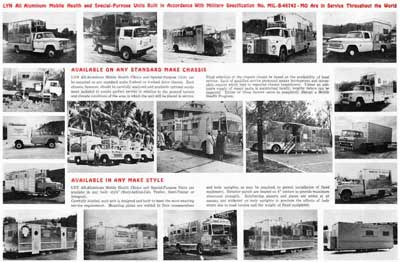
“Lyncoach mobile health clinics, however,
are not restricted
to human medicine alone.
“In the field of Veterinary Medicine
Lyncoach Mobile Veterinary
Clinics, mounted according to customer specifications, are in use
throughout
the United States.
“Featuring stainless steel sink and work
counters, hot and cold
water, refrigerator for drugs and vaccines, electric instrument and
syringe sterilizers,
electric blood testing boxes, portable X-ray and surgical instruments
and other
needs for treating livestock and poultry in the barn or in the field
these
customized clinics-on-wheels make it possible for a veterinarian to
increase
the scope of his service and the radius of his operations.
“Many exports
“Exporting then became intensified and now:
“India, the University of Orrisa operates
a
Lyncoach Mobile
Veterinary Clinic . . . donated by the University of Missouri.
“Guatemala, the U.S. Institute of
Inter-American Affairs
purchased a Lyncoach Mobile Clinic for the Guatemalan Ministry of
Education and
Welfare.
“Kuwait, two Oneonta-made Lyncoach Mobile
Units form a part
of a very progressive Rural Health Program.
“Venezuela, the Ministerio de Sanidad
Militar operates a
Lyncoach Mobile Dental Clinic in its Army Training Centers.
“Columbia, two made-in Oneonta Lyn Mobile
Chest X-Ray
Clinics make it possible for the Ministeria de Salubridad to conduct
mass chest
survey program in rural areas.
“Africa, the African Research Foundation
uses a Lyncoach mobile
medical screening clinic to bring the benefits of modern health
services to
natives in remote jungle areas.
“Ceylon, two Oneonta-made Lyncoach mobile
medical clinics provide
medical care in under-developed areas.
“And so it goes, Iran, Pakistan, and Chile
. . . all boast
mobile health clinics which have name-plated that rear ‘Made in Oneonta
by Lyncoach & Truck Co., Inc.’
“In addition to the complete Mobile Health
Clinics, the standard
Lyn Aluminum Truck Body Kit is also being sold internationally.
“Recently 21 units were shipped to Cuba to
help in the
reconstruction of transportation facilities torn to shreds by the
recent Civil
War.
“Other orders are presently being
processed
for Brazil, Nicaragua
and Venezuela.
“That's the story of Lyncoach & Truck
Co., Inc., owned and
operated by Oneontans in Oneonta. As its products continue to find
additional markets,
Lyncoach will play a role of greater and greater importance in
Oneonta's
economy by providing more jobs and more income for area people.”
1959 sales office:
“SALESMAN WANTED We require ambitious man
to
learn truck
body business. Excel- lent opportunity to have an exclusive sales
territory
with top earnings. LYNCOACH & TRUCK CO. 443 Chestnut St,
Oneonta, N.
Y.”
Gerald ‘Gunnysack’ Gunthrup’s column in
the
December 16,
1959 issue of the Oneonta Star:
“Frank Perretta and the writer toured the
Lyncoach and Truck
Co., Inc., yesterday under the guidance of Joe Sanchez and we were
amazed at
the size of Oneonta’s largest industrial plant, and more so when we
were
advised the company is now manufacturing missile launching and tracking
trailers.”
Lyncoach and Truck Co.’s military vehicle
and truck body
division was unaffected by the transaction and continued to manufacture
trailers and truck bodies in Oneonta through 1972 when the moved all of
their
operations to their plant in Troy, Alabama, which had been established
in 1959.
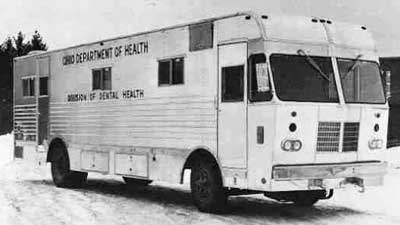
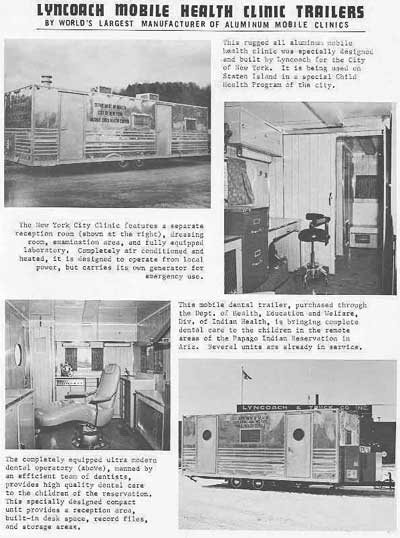
May 31, 1960 Oneonta Star:
“Public Health Service Puts Oneonta-Made
Trailer on Show
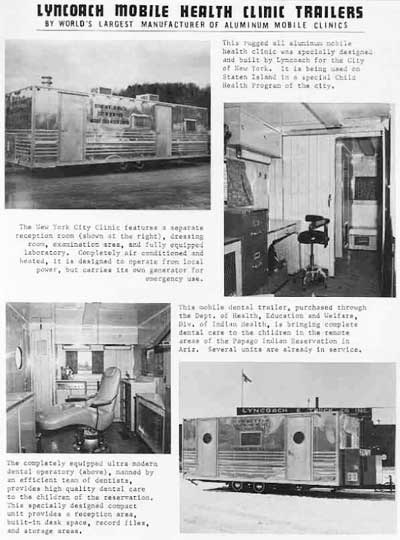
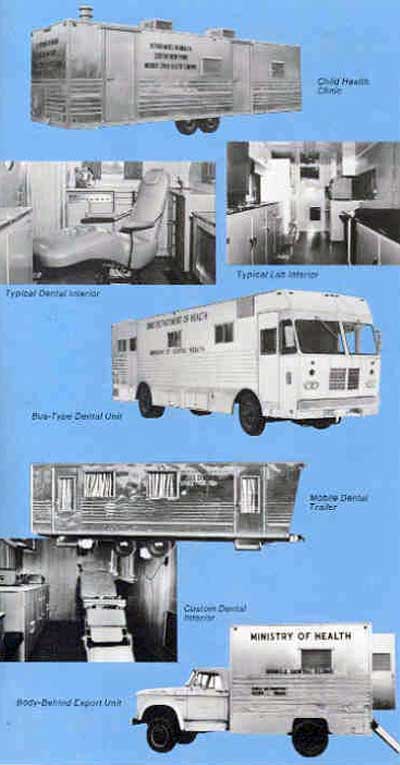
“A custom-built dental trailer clinic,
designed to bring
improved dental health service to thousands of American Indian children
in the
Southwest, was on display at the U.S. Department of Health, Education
and
Welfare headquarters in Washington, D. C.
“Among those inspecting the unit was
Congressman Samuel S.
Stratton of New York. Following his tour through the unit Congressman
Stratton
stated, 'I was very much impressed with this fine coach. It is one of
the
finest pieces of workmanship I have seen. It is in line with the high
traditions of Otsego County, and I am sure that it will be of great
benefit in
the work of improving the health of the American Indians in the
southwest."
“The Division of Indian Health of the
Public
Health Service
has just purchased two of these completely equipped ‘dental clinics on
wheels’.
One is for use in New Mexico among the Pueblo Indians, and the other on
the
Papago, Pima and Colorado River Indian Reservations in Arizona.
“These dental trailers, custom-built by
Lyncoach & Truck
Co., Inc., Oneonta, will enable the Division to provide dental care on
a
regular basis at Indian schools to a large number of Indian children
who
otherwise would either have to go without care, or else lose
considerable time
away from school to travel to the nearest Public Health Service Indian
hospital
or clinic with dental facilities.
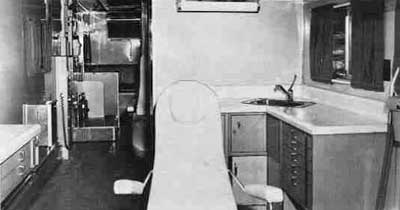
“Completely equipped these Mobile Dental
Clinics will make
it possible for Public Health Service dental officers, with the aid of
dental
assistants, who are assigned to each unit, to provide all except the
most
complicated dental treatment and surgery.”
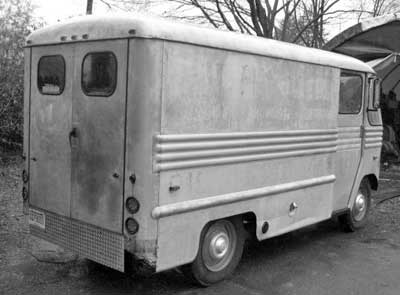
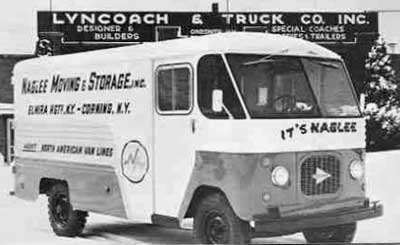
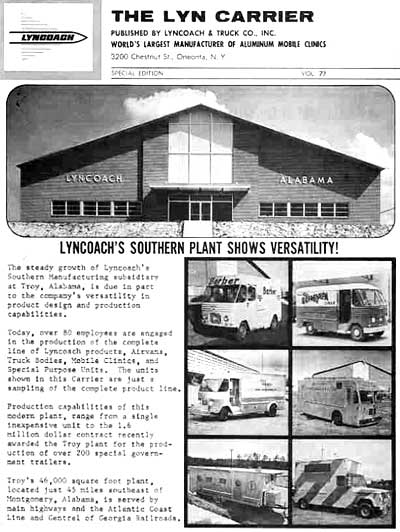
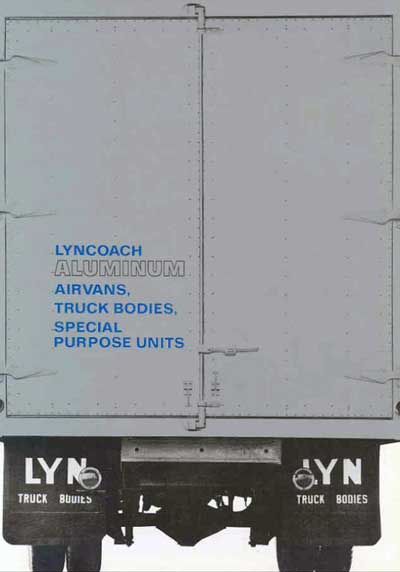
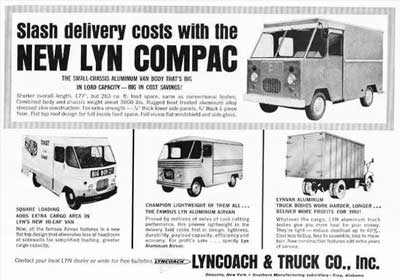
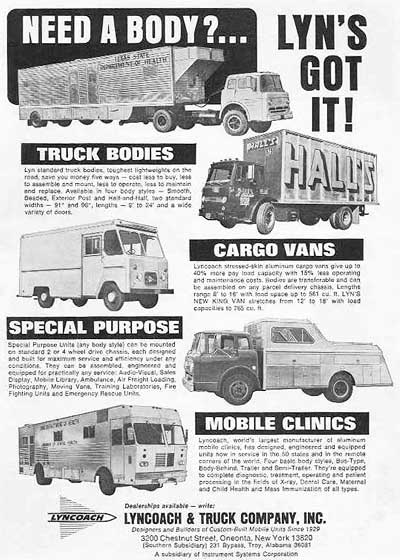
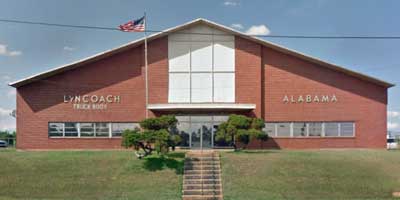
A new plant at Troy, Alabama was opened in
1960 to make
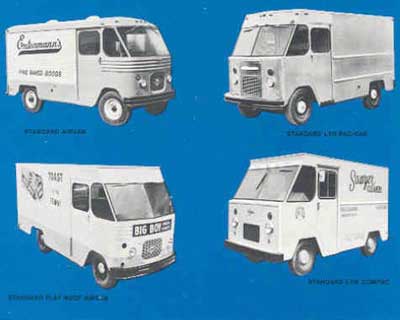
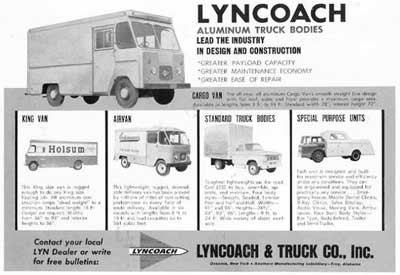
aluminum truck bodies and trailers, and this plant made the Lyn Airvan
using
Ford and other chassis in varying sizes from ¾-ton to 3-tons.
November 18, 1960 Oneonta Star:
“Lyn’s New Plant Opened
“Production of LYN truck bodies is
expected
to begin shortly
at the new 28,000 square foot plant opened recently in Troy, Alabama,
by
Oneonta's Lyncoach & Truck Co., Inc.
“The new plant, located approximately 50
miles southeast, of
Montgomery, Alabama, will be operated as Lyncoach & Truck Co. of
Alabama,
Inc., a Southern manufacturing subsidiary. The company's main operation
will
remain in Oneonta.
“Lyncoach officials, accompanied by
several
of their wives,
business associates and representatives of Reynolds Metals Co., flew to
Alabama
last week for official opening ceremonies.
“In recognition of the official opening
date — November 10 — the day was designated as ‘Lynday’ by an
official proclamation issued by the mayor of Troy. Attending, the
ceremonies — which
were broadcast over a Troy radio station — were city, county and state
officials from the area, representatives of the Alabama Trucking
Association,
owners of several large trucking fleets in the south, business and
industrial leaders
from the area, and a number of Lyncoach dealers and sales
representatives from
the south.
“LT. Governor Present
“Speakers at the opening included Lyncoach
President James M.
Friery, Alabama's Lt. Gov. Albert Boutwell, the mayor of Troy, and
heads of the
Troy Chamber of Commerce and Industrial Development Board.
“In his talk, Mr. Friery explained that
Lyncoach selected
Troy, Ala., as the site for its second plant ‘because of its strategic
location’
in the South. He later added that the ‘tremendous growth of trucking,’
coupled
with ‘an increasing demand for Lyn truck bodies,’ made a second
operation necessary.
“In his broadcast talk, Mr. Friery praised
the local
officials for their efforts on behalf of Lyncoach. He compared cities,
counties
and states to ‘candidates’ in a race to win new industries. ‘Their
campaigns,’
he said, ‘are directed by Chambers of Commerce, industrial development
organizations and various other groups.’ He concluded by outlining the
importance
of diversified industry to a community's economy.
“Lt. Gov. Boutwell, the main speaker,
praised Mr. Friery and
Lyncoach Vice-President Frank E. Humphreys for ‘sparking the rapid
growth of
Lyncoach.’ The company, he added, is an outstanding leader in its field.
“City officials who spoke at the opening
outlined the months
of work that went into establishing the Lyncoach plant there, and the
vital
importance it would have on that area's economy.
“During a radio interview following the
ribbon cutting
ceremonies, Joseph R. Sanchez, Lyn coach's export manager and director
of the
firm's Custom Mobile Unit Div., predicted an increase in Lyncoach
exports to
Latin America. The plant is relatively close to New Orleans and other
shipping
ports on the Gulf coast.”
May 27, 1961 Oneonta Star:
“Lyncoach Buys Another Plant
“Oneonta's Lyncoach & Truck Co., Inc.,
producers of Lyn
aluminum truck and trailer body kits and custom-built vans, Friday
announced
another major expansion of its operations,
“According to James M. Friery, Lyncoach
president, the
company has just acquired the Airvan Division of Dayton T. Brown, Inc.
a
testing engineering and manufacturing firm in Copiague, L.I.
“The acquired division handles the
production of aluminum
delivery truck bodies, a type used widely by bakeries, laundries,
dairies and
for parcel delivery.
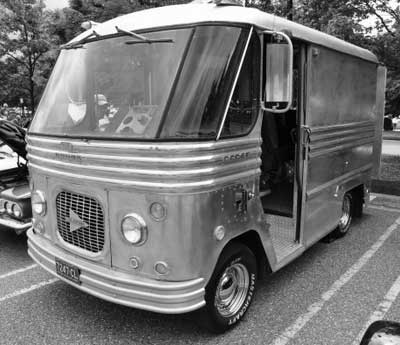
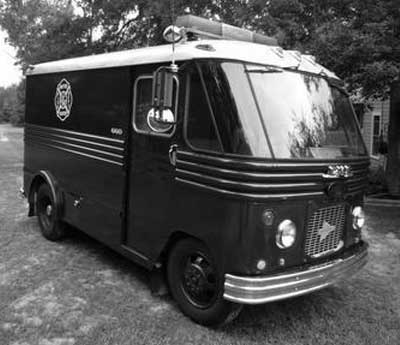
“Production of the new bodies, to be known
as Lyn Airvans,
will begin here next month at Lyncoach's Chestnut Street plant.
“The bodies will also be assembled at
Lyncoach's
recently-opened plant in, Troy, Ala., Mr. Friery said, but not until a
later
date.
“The Long Island facilities, he explained,
will be used by
the division for design, sales and service work.
“Dayton T. Brown Sr., president of the
Brown
corporation,
said the Airvan Division was sold to Lyncoach in order to expand his
company's
other operations. The firm, does extensive testing and evaluation work
for the armed forces and
manufactures precision sheet metal components.
“Mr. Brown, a leading consulting
aeronautical engineer,
designed the U.S. Navy's first dive bomber and later combat aircraft.
He
reportedly used the ‘same aeronautical principles of aircraft
construction’ in
designing the Airvan truck body. The units are assembled with large
pre-formed
aluminum sections.
“Acquisition of the Airvan Division marks
Lyncoach's third
major expansion in less than two years. It recently enlarged its
Chestnut
Street plant and last November opened a 28,000 square foot southern
manufacturing subsidiary in Troy, Ala., approximately 50 miles south of
Montgomery.”
May 9, 1963 Oneonta Star:
“Lyncoach Mobile Units Cover World, Corner
U.S. Market
“Oneonta Firm Leads Nation In Building
Truck
Bodies
“by Frank Perretta, Star City Editor
“The pasty-faced ambulance driver kicked
the
floor button
and the siren screamed as the ambulance speeded down 42nd
Street. .
.
“Two Dominican Republic natives looked at
each other
sheepishly, shrugged their shoulders and were off to learn how to vote.
. .
“Four burly, sweating workmen loaded the
huge, tractor-
trailer knowing that the freight must reach St. Louis as early as
possible. . .
“The sailor removed his shirt and with his
white hat cocked
on the back of his head waited in line for an x-ray. . .
“The rugged Missouri farmer gingerly
carried
the young .girl
in his arms . . . her leg dangled uselessly. . .
“The bakery truck driver took four loaves
of
fresh bread
from his racks and walked across the suburban lawn . . .
“The Tunisian merchant shuttled the papers
in his hand and t
waited to present his argument for a bank loan. . .
“The brown - skinned Arizona Indian, her
jaw
wrapped in a
dirty bandage, waited to see the dentist. . .
“What have all these incidents in common?
“They are all linked together through
products made by
Lyncoach and Truck Co., Oneonta -
whether the units be aluminum truck bodies, delivery trucks, mobile
health
clinics or emergency vehicles or other specialized units.
“Financial Value
“The firm which employs 140 people — only
four
women—provides an estimated $600,000 in payroll to Oneonta. Officials
of the
firm also point out that the local plant spends $250,000 more each year
to
boost the city's economic picture in the form of necessities used to
operate
the sprawling, 73,000 square foot plant.
“Joseph Sanchez, manager of Lyncoach, says
that the local
plant is now the world's largest manufacturer of mobile, custom-built
units for
a variety of needs — the average American takes for granted.
“He points out that the local firm is also
the largest
manufacturer of truck bodies in America. And Lyncoach, he says, is now
in
second place in the manufacture of aluminum, walk-in, delivery-truck
bodies.
“The local operation, once geared simply
for
government
contracts, has been diversified through the last five years and now a
major
portion of the production is slanted toward the commercial market.
“Mr. Sanchez points out that
diversification
has been one of
the key factors in the growth of the local plant.
“He noted that local officials thought it
necessary to
diversify in order to offset the seasonal slumps brought about by the
erratic
procurement procedures associated with purchasing of mobile units as
well as
government contracts.
“It is through this diversification, the
manager said, that
the local plant can continue stable employment practices throughout the
entire
year.
“In order to handle the orders and sales
of
the diversified
line, Lyncoach has set up 210 domestic distributors and 39 foreign
distributors.
“A map in the sales manager's office
resembles a military
map with colored pins pointing out where the local firm is represented.
There
are ‘pins’ located in Latin American countries, the Ivory Coast of
Africa, Singapore,
Beirut and cities in Europe.
“Military Work
“But even though the firm has diversified
its production to
accent commercial work, it still handles military contracts. Currently
under
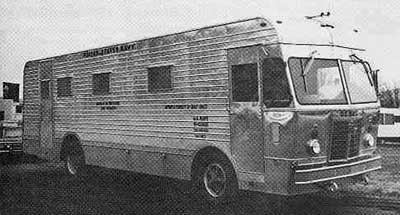
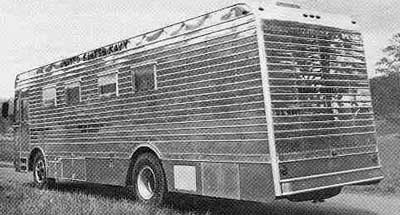
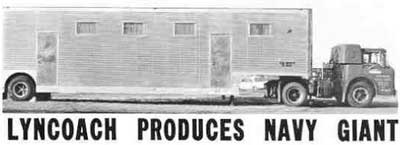
construction are huge Navy bus-like units which will be used for dental
and
x-ray clinics.
“‘We like the government contracts because
they fill in and are
able to keep the men working year round,’ he says.
“Some of the custom built clinics already
in
operation are enough
to tax the imagination of the most imaginative.
“There are mobile clinics - equipped to
offer veterinary
medicine, now in use in Uganda.
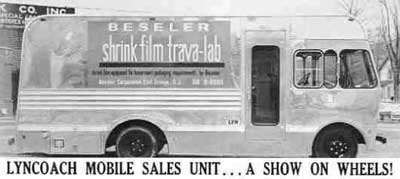
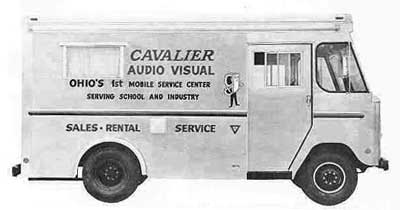
“The audio - visual mobile units in use in
the Dominican
Republic are credited with causing an 80 per cent vote in the nation's
last
election — the first one in many years. The units were sent out to show
the
people how to take part in the election.
“The Missouri Elks lodges purchased the
mobile health units in
an effort to deal with the crippled children living in remote sections
of the
state.
“The U.S. Navy purchased the mobile x-ray
and dental clinics
so that they can be moved from base to base to care for the sailors'
health.
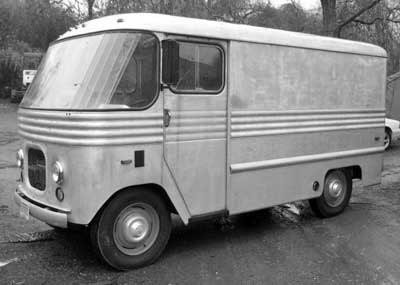
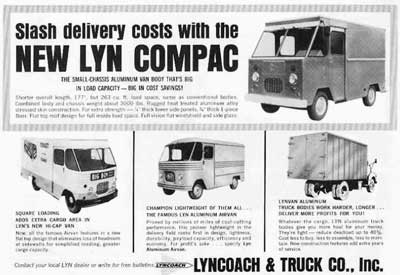
“The Airvans - walk-in delivery trucks are
all over America.
“‘The world is our market,’ Mr. Sanchez,
says, ‘And we have
to be aware of many of the political situations and subtleties that
exist in
foreign countries if we are to sell our products. We're represented in
a major
portion of the world,’ he added.
“Speaking of the diversification, Mr.
Sanchez points out
that the construction of aluminum truck bodies is ‘our bread and
butter. The
construction of the specialized mobile units is the gravy.’
“Mass Production
“To enter the sprawling factory in
Oneonta's
West End, is similar
to stepping from small-town America to the industrial world of mass
production.
“For it is in this plant that huge, flat
sheets of aluminum are
bent and molded into separate entities. The firm uses two to three
million
pounds of aluminum each year purchased from Reynolds, Alcoa and Kaiser.
For a
short time, the Oneonta plant was purchasing metal from Austria and
Italy
because the American consumer showed a preference for the glossy
aluminum. But
now American producers also process this shiny aluminum sheets at
competitive
prices.
“The aluminum sheets are then transported
into Oneonta by a
rail spur that adjoins the plant or by truck.
“But getting some of the products from
Oneonta to their
destination poses problems.
“‘We're not ideally located and common
carriers don't like
to transport our products because they are bulky and are light,’ Mr.
Sanchez
explained. Lyncoach now has three of its own tractor-trailer rigs so
that its
aluminum kits can be transported to central points.
“Lots of Bustle
“The factory itself is a beehive of
activity. Huge sheets of
aluminum slide down a ‘jig’ where they are perforated for riveting by a
multi-drill
machine. Workers also use hand drills.
“The noise in the plant is loud and
workers
scream to one
another to be heard.
“In one section of the plant carpenters
are
busy making the shelving
and other components utilized in both the walk-in trucks and the
custom-made units.
“Mr. Sanchez said that the walk-in
aluminum
delivery trucks
can be assembled at a rate of eight to 10 a week. The custom units -
depending
on their complexity - take from 15 to 60 days.
“The plant is a melee of different sounds
and sights. In one
section, the clattering riveter dominates the scene. In another, the
blinding
flash of the welding torches are highlighted. Another scene is
punctuated with
the whirring noise and sparks of the grinders.
“Final Form
“The final assembly line is different.
Here
all the
piecemeal work takes final shape and the products take on an identity.
Here the
products are completed. Electrical units are hooked up. A dental chair
is
bolted to the floor. An x-ray machine is focused and bolted down. The
safe is
anchored in a banking unit.
“Further down the line, workers swarm over
the gleaming
aluminum walk-in delivery trucks, readying them for the road.
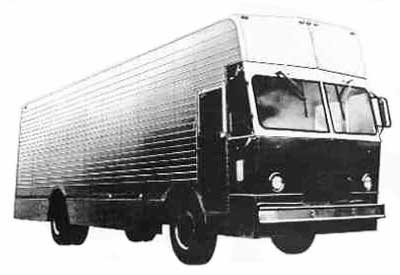
“Huge bus-type vehicles — in a row — get
the
finishing touches.
It's not rare to see military personnel tour the plant, it was pointed
out.
“And then almost forlornly sterile
skeletons
— truck
chassis— await workmen to give them ‘bones, skin and flesh.’
“Ringing Bells
“In another section of the plant are the
business offices,
where phones ring constantly and conversations with people in exotic
lands can
be heard. No one blinks an eye when Mr. Sanchez begins talking in
fluent
sing-song Spanish (he's been known to wave his arms even though the
party on
the other end of the line is 3,000 miles away).
“One portion of the building is reserved
for
the engineering
department. Here's where the creative know - how and ingenuity are put
to the
drawing board.
“Chief Engineer is Frank Humphreys. Often
it
is his ideas that
become new units. Often the units are requested by customers. ‘If they
(customers) have a program we'll put it on wheels,’ Mr. Sanchez says.
“Earlier, the manager says, Lyncoach
developed all-aluminum construction
of truck bodies. ‘We promoted the concept and since then it now appears
in military
specifications.’
“The generating force behind the present
operation begun in 1953,
is a native Oneontan, James Friery. Since its eady humble beginnings,
when Mr.
Friery and Mr. Humphreys assembled the units by themselves, the
operation has
blossomed.
“Two Who Stayed
“Mr. Friery, now 38, was comptroller for
the
old Linn Plant that
was owned by Great American Industries. Mr. Humphreys was engineer. The
holding
company closed the local plant in 1952.
“Mr. Friery and Mr. Humphreys determined
to
stay in
production and moved to a small ‘plant’ on West Broadway — now used for
storing
beer.
“In 1956, the pair opened up the West End
plant. Mr.
Humphreys took over the engineering duties, Mr. Friery handled the
operation of
the business.
“Native born James Friery doesn't fit the
stereotype of grey-flannelled
industrial executive. He likes sports coats. And he hustles from one
department
to another almost on a dead run.
“‘Where's Jim?’ That's a constant question
you can hear at the
plant. And invariably, the answer is the same — ‘He was here just a
minute ago . . .’
“Noisy Conference
“The first session for the interview on
this
story was held in
the ‘conference’ rooms — probably the ‘un-plushiest’ conference room in
existence. Outside the conference room, there is a constant flow of
human traffic.
If you listen closely you can hear the diesel engine on the railroad
track
adjacent to the building.
“The world is different inside of the
plant.
The problems
are different. Men use a jargon all their own. They speak with
familiarity of
some of the faraway lands that fill today's geography books. They speak
of
international trade — what will influence one foreign buyer and not
affect
another. They trade contacts. ‘I remember him. I met him in the
Dominican
Republic’.
“But Lyncoach is an industrial
organization:
in the ‘jungle
marketplace’ of the world. It's only when you step out onto the
circular drive
path outside the plant that you can look around and realize that you're
still
in Oneonta, New York, United States of America.”
January 30, 1968 Oneonta Star:
“Lyncoach Records Broken During ‘67
“Progress assumed many forms during the
past
year at
Lyncoach and Truck Co. Inc., as government and civilian contracts
reached an
all-time high.
“Employee ranks grew to 140 people. New
equipment and work
areas were added as the company continued its expansion and
modernization
program.
“New dealers and distributors joined the
Lyncoach family.
The company announced its entry into the milk delivery field.
“In 1967, Lyncoach's government contracts
totaled close to
$3 million, the largest single contract being In excess of $1.6
million, for
260 specially designed and equipped trailers like the one shown in the
leak
testing rack.
“Lyncoach's Specials Division recently
completed and shipped
eight 33 foot semi-trailers, two-chair dental units to Vietnam for use
by the
Seabees.
“Each unit contained complete diagnostic,
x-ray, and
treatment facilities. Two fully equipped, modem dental operatories like
the one
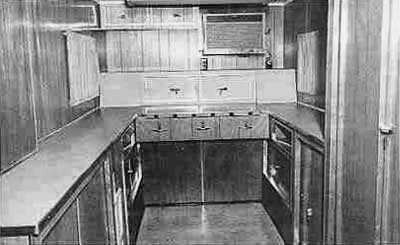
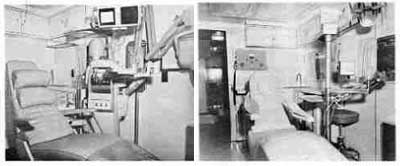
shown, were housed in each trailer. Most recently work has begun on 40
special
parcel delivery vans for the Hertz Corporation.
“Lyncoach also announced its entry into
the
Milk Delivery
field with a new line of specialty engineered delivery, vans like the
one shown
for the Cooperstown Dairy.
“As these production demands increased,
Lyncoach kept pace
with the addition of five new assembly bays, the installation of new
equipment,
and a substantial increase in the work force.
“1967 was indeed a Year of Progress at
Lyncoach & Truck
Co, Inc. The main Lyncoach plant is located at 443 Chestnut Street in
Oneonta.”
March 29, 1968 Oneonta Star:
“Lyncoach official discloses merger with
L.I. corporation
“Instrument Systems has 'Superjet’ pact
“James M. Friery, president of" Lyncoach
and
Truck
Company of Oneonta and Troy, Alabama, announced the merger of the firm
with
Instrument System's Corporation of Huntington, Long Island.
“Mr. Friery said that the 140 man labor
force in Oneonta's
West End plant will remain intact.
“Lyncoach is one of the city's largest
employers and has
been a substantial boost to the city's economy for many years.
“Edward J. Garrett, president of
Instrument
Systems, said
that the acquisition represented their first entry into the special
purpose
automotive market.
“‘I expect that Lyncoach and Truck Company
will work closely
with our White Electronics Development Corporation,’ he said.
“The White Corporation manufactures
learning
laboratories in
the development of customized mobile language and educational units.
“Carroll said, ‘It will also furnish us
with
facilities for
the manufacture of aluminum components which we will require in
fulfilling our
recently acquired contract for the intercontinental system for the
Boeing 747
Superjet.
“Friery, a native Oneontan who graduated
from Hartwick
College founded the present Lyncoach Company in 1954 with five people.
After
the present Oneonta plant was expanded to a labor force of well over
100
persons, Friery then constructed a subsidiary plant in Troy, Alabama.
“That plant — a new one — now employs 140
people also.
“Lyncoach has been involved in the
manufacture of aluminum
walk-in delivery trucks, aluminum truck bodies and is one of the
nation's
largest producers of mobile medical dental, x-ray and special units and
trailers.
“The Oneonta firm through an international
sales staff has
placed these specialized units in nations throughout the world.
“’Only 20 per cent of the production of
the
plant is through
government contract,’ Friery said, ‘most of our work is civilian.’
“‘The Oneonta plant will now focus on
construction of these
educational laboratories — a market that is ever expanding in this
country and
throughout the underdeveloped nations in the world,’ he said.
“Friery will remain as president of the
Lyncoach subsidiary.
“Frank E. Humphreys, a co-founder of
Lyncoach
in Oneonta,
will remain as vice president and chief engineer. The Humphreys and
Frierys
will continue to live in Oneonta.”
August 17, 1968 Oneonta Star:
“Lyncoach Units Fights Unemployment
“A new approach to the joint problems of
unemployment among
Negroes and Spanish-speaking minority groups and the lack of effective
communication between officials and those they govern has been launched
in
Islip, Long Island, about 50 miles from the City Department of
Community of a
mobile interview, recruitment, and referral unit custom-built by
Lyncoach &
Truck Co., Inc. of Oneonta.
“According to Cleveland Johnson, Director
of
Islip's
Department Of Community Affairs, the program marks a first in respect
to the fact
that a community almost rural in character has recognized, despite the
affluence of a considerable number of its citizens, that, like large
urban
centers, it too has a growing problem in low income, deteriorating
areas and
is seeking solutions, before the problems get out of hand, by bringing
town
officials and helpful agencies directly to the people.
“Fully equipped, with seating for 14 at
fold-down desks,
audio visual aids including projector, screen, and record player, as
well as
internal and external speaker systems, air conditioning, and
fluorescent
lighting, the unit has been constructed according to town
specifications that
will permit its use not only for interviewing of job applicants, but
for a wide
range of other significant community programs currently being explored,
Johnson
declared.
“‘These programs,’ Mr. Johnson said, ‘take
on special
importance in the light of troubles that have plagued other communities
which
failed soon enough to recognize their problems and failed to improve
communications
between minority groups and officials.
“‘We have under consideration such
additional projects for
the unit as job training, the teaching of English as a second language,
and
using the equipment for private and group meetings at which community
officials
will be on hand to hear complaints from citizens.
“‘Because the rear doors swing open to
full
width of the
vehicle, we even may wish to use it as a focal point for block parties,
with
rock and roll band seated inside.’
“Also contemplated, Mr. Johnson said, is
the
vehicle's use
as an information center and to transport industrialists, whom the town
is
seeking to interest in locating in the area, to sites which are
available.
“Likewise, it is expected to serve as a
mobile office where
those about to be displaced because of neighborhood renewal projects
can come
to find help in relocating.
“Lyncoach & Truck Co., Inc. builds a
variety of special
purpose aluminum vehicles and is the world's largest supplier of mobile
health
and dental clinics. It is subsidiary of Instrument Systems Corporation
of
Huntington, Long Island.”
August 31, 1968 Oneonta Star:
“Oneonta-built units go to Virgin Islands
“A dozen mobile aluminum units,
custom-built
and equipped so
they can bring modern medical, dental, x-ray, and other facilities to
all parts
of the Virgin Islands, including many of the most isolated areas, have
been
ordered by the Island government from Lyncoach & Truck Co., Inc.,
of
Oneonta and Troy, Ala., and are scheduled for delivery on a staggered
basis
between now and the first of the year.
“Lyncoach, a subsidiary of Instrument
Systems Corporation,
is the world's largest builder of such equipment.
“Many Lyncoach units similar to those for
the Virgin
Islands, as well as a wide variety of the Company's other custom built
special
purpose vehicles, have for years been bringing vital 20th Century
facilities
and services to the almost forgotten people in remote parts of Africa,
Central
and South America, Europe, Asia, and the United States.
“A fleet of ten Lyncoach built audio
visual
education
vehicles have been in service in Santo Domingo, one of its dental units
is
being used in the Republic of Dahomey, two of its traveling banks
provide
financial services in rural areas of Tunisia, its mobile clinics are in
Uganda,
Senegal, Algiers and Kenya, there is a Lyncoach audio visual library
trailer in
Pakistan, and a dispensary fleet of 23 units, purchased through A.I.D.,
went to
the Republic of Niger, Mali, the Ivory Coast, Guinea, and Mauritania to
play an
important role in a $2 million measles vaccination program.
“Other Lyncoach vehicles, custom built to
meet special
requirements, are in Ethiopia, Turkey, Zanzibar, Ceylon, and many other
by-ways
of the world.
“Because of the nature of the terrain, the
Virgin Island
units called for special engineering to fulfill the needs of mountain
driving
where top speed is limited to 35 miles an hour. Besides 4-wheel drive,
a
special transmission and gear ratio, each unit is being designed for
driving on
the left hand side of the highway over roads so narrow that the overall
width
of the vehicles is reduced considerably from those in use in the United
States.
“St. Thomas and St. Croix each are getting
five units. These
are a medical clinic, dental bus, dental trailer, medical trailer, and
vehicle
especially designed for the testing of hearing. St. John is getting two combination clinics and ambulances.
“Each dental clinic consists of the latest
in dental chairs
and chair accessories, x-ray facilities including a developing and dark
room,
refrigerator, dental lights, and air conditioning.
“Each has a pleasant reception area done
in
Biscayne blue,
with walls carpeted and windows draped. The other units are being
designed with
the same care and as fully equipped for their special services.”
December 17, 1968 Oneonta Star:
“Lyncoach Receives $1.2 Million Order
“Lyncoach & Truck Company revealed
Monday receipt of a
$1.2 million contract from Hertz Truck Rentals for 800 semi-special
truck
bodies built to Hertz specifications.
“Sales Manager Ron Minette said the bodies
will be
constructed in Santa Ana, California, Alabama and Oneonta according to
the
contract terms.
“Minette said that to the best of his
knowledge, this is the
single largest order ever placed for special truck bodies.
“The firm will lease temporary plant space
in Santa Ana to
handle West Coast deliveries with East Coast deliveries to be handled
by the
Alabama and Oneonta plants. The present production schedule calls for
delivery
of the initial vans to be made February 1, 1969, at the California
facility.
Oneonta production should start April 1. He said the bodies will be
similar to
those the firm is now producing here for Ryder Truck rentals, a direct
competitor with Hertz for the do-it-yourself trucking market.
“The Hertz order tops Ryder's
order to Lyncoach by nearly a quarter of a million dollars. Ryder
placed their
order at the end of October for 575 special bodies. Minette said the
contract
with Ryder approximates $1 million. The bare bright yellow Ford chassis
have
become a common sight for motorists passing the West End Plant on Route
23.
“The Hertz trucks will be
delivered in two lengths, 12 and 18 feet. The 12's will be fitted with
aluminum
loading ramps, and many of the 18's will have power lift gates to
facilitate
loading heavy objects.
“Minette said he did not know
exactly how many men would be added to the total work force, which now
includes
140 men on the day shift and 30-40 men on the evening shift. The plant
has a
present need for additional men, and Minette hinted that with both
contracts
dovetailing, a third shift might have to be scheduled. He added that
the new
contract will mean an extension until at least June for present
employees.
“He said that until Oneonta
begins
actual body fabrication, it will make parts for distribution to other
plants
where contract delivery schedules are earlier.”
May 26, 1971 Oneonta Star:
“Storatz is named Lyncoach
president
“G. J. Storatz, former managing
director of International Harvester of Germany, has been named
President of
Lyncoach and Truck Co., a division of Instrument Systems Corp.
“Storatz succeeds James Friery,
who is no longer associated with the company, an Instrument Systems
Corp.
release said.
“Lyncoach, which has its
headquarters in Oneonta, is a leading manufacturer of mobile aluminum
special
purpose vehicles, which cover a broad range from mobile health centers,
such as
X-ray and dental care vehicles, to mobile pollution detection and
monitoring
vans.
“In addition, Lyncoach
manufacturers a wide variety of aluminum truck bodies and vans for many
different fields. It has additional manufacturing facilities in Troy,
Alabama.
“Storatz, who had 18 years of
experience with International Harvester and who has a total of over 30
years in
management positions both in the United States and overseas, will be
responsible for the complete overall operations of Lyncoach.
“He received his B.S. in
mechanical engineering from Marquette University and both his M.S.M.E.
and
M.B.A. from the University of Wisconsin. He now resides in Oneonta,
with his
wife, Dorthea. They have one son, Richard.”
The name was later changed to Lyn Arrow,
but by the 1970s
productions was back to bodies and trailers only, and the Oneonta plant
was closed.
October 7, 1971 Oneonta Star:
“Oneonta's Lyncoach lays off
one-third of its work force
“Firm calls cutbacks temporary
“Forty employees were laid off Friday by Lyncoach & Truck Company,
leaving
75 employees in the West End based plant.
“The personnel cutbacks effect
about one-third of the company's work force.
“David Birnham, new president of
Lyncoach said the 40 persons were laid off from work because ‘after an
analysis
of the company's operation, it was discovered there was an excess of
people on
both the direct and indirect level.’
“Birnham maintained there are no
plans to shut down the plant's operations.
“‘We
hope, in the near future, to start rehiring
again,’ he said.
“The pessimistic economic news
becomes public just a day after officials of Oneonta's Corning plant
issued the
most promising reports of the company future since the Corning plant
opened
here five years ago.
“Area residents and leaders were
buoyed by the news that Coming employment is at an all-time high. About
a year
ago, Corning underwent lay-offs similar to those now taking place at
Lyncoach.
“Lyncoach manufactures aluminum
bodies for coaches and trucks.
“The firm began operations in
Oneonta in 1955, when James M. Friery, Frank E. Humphreys and one
employee
opened the plant on West Broadway.
“By 1960, the company had 200
employees and government contracts for mobile health units,
laboratories and
wheels and bomb racks.
“In July, 1960, Lyncoach opened
another plant in Troy, Ala.
“Lyncoach is now a division of
Instrument Systems Corporation, which has its headquarters at Jericho,
Long
Island.”
January 25, 1972 Oneonta Star:
“Lyncoach reorganization means
Oneonta plant phase out
“By Mickey Hirten, Star Staff
Writer
“The reorganization of Lyncoach
and Truck Company is going to include almost a complete phase out of
the
Oneonta Plant, says David Birnham, company president.
“Late last year, company
officials
predicted that the reorganization plans would not force production in
the West
End plant to cease, but sources in the company now feel there will be
no work
at the plant for quite a while.
“This is a damaging blow to the
employment outlook of Oneonta since at one time Lyncoach employed
nearly 200
people. In recent years the number of workers had dwindled to
approximately
100, depending on the company's commitments.
“There are still contracts
which have to be filled by Lyncoach, says Birnham but he indicated
these will
be farmed to the company's other plant in Troy, Alabama.
“He says there will be some
workers employed at the Oneonta division to finish up some of the
previous
commitments, but the number would be very small.
“A noticeable change in
the company's operation, former Lyncoach employees feel, came when
Lyncoach was
purchased by Instruments Systems Corporation of Jericho, Long Island.
“The take-over, they
contend, precipitated a new management relationship, less favorable to
the
employees, and ultimately responsible for the decision to move the
operation
from Oneonta. There are many former workers dissatisfied with the
policy the
company used to phase out its operation here.
“Managerial personnel were
reportedly given two weeks' severance pay, and little notice of whether
they
would be asked to move to the Troy plant area.
“The employees,
complaining about this treatment felt for their 10 or more years'
service, they
deserved better treatment from Lyncoach.
“The operation in Oneonta is
now comparatively quiet, as more than 30 workers were laid off last
Friday,
joining the already silenced sales and engineering departments.
“A count of cars at the
plant yesterday revealed only 13 cars in the lot, an indicator of
employment picture.
Inquiries about future employment brought a sympathetic no, and an
explanation
that operations were being terminated in Oneonta.
“Company sources did
indicate there have been individuals looking at the facilities, with
the idea
of resuming the operation again, but they would not speculate about the
possibilities of such a move being finalized.
“Lyncoach manufacturers aluminum
bodies for coaches and trucks. The firm began operations in Oneonta in
1955,
when James M. Friery, Frank E. Humphreys and one employee opened a
plant on
West Broadway.
“In July 1960, Lyncoach
opened the Troy, Ala. plant.”
May 13, 1972 Oneonta Star:
“Lyncoach Closing Is Official
“Officials of Instrument Systems
Corporation yesterday officially confirmed what has been long knonw in
Oneonta.
The Lyncoach and Truck Company operation here has been shut down.
“Instrument System’s president
J.G. Mitchel said all operations in Oneonta have been switched to the
company’s
headquarters in Troy, Ala.
“The Star reported last winter on
plans to close down the local operation.
“While officially announced the
Oneonta closing, Mitchel took pains to say the Lyncoach van body has
some new
innovations.”
August 15, 1972 Oneonta Star:
“Cooperstown Area Acquires
Industry
“By Irene Mozolewski, Star Bureau
Chief
“Cooperstown - A new industry,
Pan
American Body Corporation, which will produce varied medical units,
aluminum truck
bodies and special purpose units, has located in the township of
Otsego, a mile
south of the village of Cooperstown on Route 28.
“Reginald Grantier of Central
Bridge,
Pan American president, said Monday that the firm already employs six
men,
three of whom left the ranks of the unemployed in Otsego County; will
employ 10
within the next three weeks, and by January 1, plans to employ 21
persons in the
production of X-ray units, truck body kits, medical units and others.
“‘We hope to produce fiberglass
truck bodies in the very future,’ Grantier said.
“Both Grantier and Frank
Humphreys
of Oneonta, the vice-president, explained that several of the former
Lyncoach employees
elected to stay north when the company moved to Troy, Alabama.
“The Lyncoach and Truck Corp.
headquartered in Oneonta, formally closed its doors in the beginning of
this
year. ‘We were invited to join the company at their southern plant in
Alabama,
but I don't like the south,’ Grantier said.
“The firm was incorporated May 11
this year. The new industry indicates an improved employment picture as
well as
a brighter economic outlook since everything possible is being
purchased
locally.
“‘When Lyncoach moved from
Oneonta,
a void was created that our company will attempt to fill,’ both
officials
stated.
“Pan American Body Corporation
have
a two-year lease with an option to buy the Daniel Slover building, an
8,000
square feet structure on two acres of ground, allowing ample room for
expansion. Formal production started Monday, August 7, Grantier said.
“Grantier was a salesman for
Lyncoach
from 1965 until 1969. From 1969 until 1971 he was a salesman with the
Walsh
Body and Trailer Corporation, West Hanover, Mass.
“The company already has two
distributorships:
The Penn Walk-In Delivery truck, Chicago, and Divco, a snub nose retail
milk
delivery truck.
“In July Pan American delivered a
walk-in delivery truck to be used as an emergency squad vehicle in
Glenville
Hill, the Pan Am officials revealed.
“Humphreys, the vice president,
an
engineer, who was 30 years with Lyncoach, first as engineer, then chief
engineer and finally vice president of the company, said that he did
not want
to retire which is why he, Grantier and two other officers of the
corporation
got together 'after leaving Lyncoach.
“Gary Fisher of Morris is
secretary,
purchasing agent and comptroller, and Ronald Minette of Oneonta is the
treasurer and sales manager here.
“When production attains full
swing,
truck bodies will go to Massachusetts, New Hampshire, eastern parts of
Ohio, and
the entire north east including Jersey, New York State and
Pennsylvania.”
January 30, 1973 Oneonta Star:
“Commerce Commissioner Says Oneonta
Prospects Bright
“A good example of the prevailing
optimism was recently provided by Miller Trailer, Inc., a subsidiary of
Ryder
Systems Corp. of Bradenton, Fla., which announced plans to begin the
manufacture of truck bodies in the recently vacated Lyncoach &
Truck
Building In Oneonta. Eventually this could mean as many as 200 new area
jobs in
the 78,000 square foot facility.”
© 2014 Mark
Theobald for Coachbuilt.com
|