|
The end of the First World War marked the
introduction of aircraft
construction techniques to automobile body construction. In the United
States aviator
Glenn H. Curtiss (b.1878-d.1930) started manufacturing travel trailers
using
fabric stretched over a light wooden frame, and in France another
American
aviator named Charles T. Weymann (b.1889-d.1976) introduced a similar
construction method that added flexible metal joints allowing the
normally rigid
airframe to flex when the body encountered ditches, bumps and other
road irregularities.
Both
systems incolved the use of pre-finished nitrite-coated fabric
leather as the vheicle's outer surface. The recently introduced
lightweight material substantially reduced the amount of time need to
finish
a body by eliminating the time-consuming sanding, rubbing and
varnishing process, reducing the
amount of time needed to construct an automobile body by 50% or more.
A former tailor turned textile
manufacturer’s representative
named Kenneth L. Childs came up with an alternative system by
substituting
pre-finished fabric leather with the metal panels of the now-standard
rigid
wood-framed composite automobile body. When compared to the intricate
wooden
and metal structures utilized by Curtiss and Weymann, Childs’
System, as it became known, was better
suited to the manufacturing system currently employed by American
coachbuilders
as it could be quickly and easily implemented without the need for
expensive re-tooling
and training.
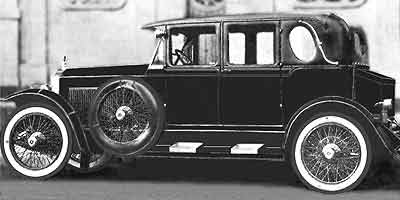
The Fabric Body Corp. of Detroit, Michigan was a
short-lived but noteworthy firm that sold licenses for a Meritas
fabric-covered
composite body patented by its president, Kenneth L. Childs (b. March
26, 1889-d.
April 7, 1984) in the early 1920s.
At that time a number of manufacturers toyed
with the
concept and licenses were purchased by a number of coachbuilders which
included: American Auto Trimming Co., Henney Motor Co., Meritas Fabric
Body
Corp., Merrimac Body Corp., Mengel Co., Model Body Corp. and E. J.
Thomson Co.
(Although corporately unrelated, the Meritas
Fabric Body
Corp. was a similarly-named Los-Angeles based firm that held a license
to
manufacture Childs’ bodies on the West Coast.)
From 1923-1928 a number of Meritas-bodied
cars were
displayed at the New York Auto Salon / Automobile Shows on Apperson,
Auburn, Chandler,
Chrysler, Dodge, Ford, Marmon, Moon, Packard, Peerless and Stutz
chassis. Automobile
manufacturers that are known to have licensed Childs’ system included
Brooks, Chrysler,
Elcar, Henney, Moon and Peerless.
Kenneth Lawrence Childs was born on March
26, 1889 in
Middleboro, Plymouth County, Massachusetts to Abbott L. (a druggist, b.
Dec.
1853-d. Feb. 4, 1927) and Eva M. Shaw (b. Sept. 1851) Childs., the 1900
US
Census also listing a sister Cora A. (b. July 1875) Childs.
Childs followed a circuitous route to the
automobile
industry, his first career being that of a custom tailor. After
graduation from
High School he spent 5 years as a clerk/tailor at a Boston men’s
clothier.
On August 5, 1911 Childs married (marriage
#1) Laura C.
Clough and to the blessed union was born 2 children; Dorothy Eva (m.
Barber, b.
May 8, 1912-d. August 29, 1971) and Kenneth Lawrence jr. (b. Dec. 30,
1913 – d.
Feb. 10 1914) Childs.
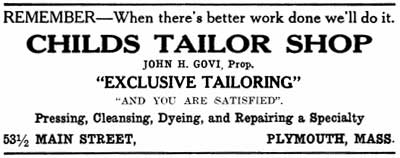
In 1914 he established his own custom
tailoring shop at 7-9
Main St., Plymouth, Mass. Business increased and in 1916 he relocated
to larger
quarters at 53 ½ Main St., his June 5, 1917 draft registration listing
his
occupation as ‘Merchant’, Plymouth, Mass.
In 1918 Childs accepted a position in the
Manhattan sales
department of the Standard Textile Products Co. and sold his Tailor
shop to
John H. Govi, the 1919 Plymouth Directory lists Childs Tailor Shop at
53 ½ Main
St., John Govi, proprietor.
The 1920 Manhattan directory lists him as a
‘salesman’ at
their 320 Broadway Manhattan office:
“Standard Textile Products Co. (Ohio) Hy. M.
Garlick, pres.;
Alvin Hunsicker, v-p; Harold H. Hull, Sec.; Wm. E. Thatcher, asst.
treas. Table
oilcloth, leather substitutes, 320 Broadway, rm. 301.”
The Standard Textile Products Co. was a
December 1918
reorganization of the Standard Oil Cloth Co., which was incorporated in
the
state of Ohio on June 17, 1914. The latter firm was successor to the
Standard
Oil Cloth Co. of New Jersey, which was organized on May 2, 1907. That
firm
succeeded the Standard Table Oil Cloth Co. of New Jersey which was a
holding
company which was formed in 1901 to consolidate the nation’s leading
manufacturers of light weight oil cloth. The firm controlled factories
in Akron,
Ohio; Youngstown, Ohio; Rock Island, Illinois; Athenia, New Jersey;
Buchanan,
New York; Columbus, Georgia; Mobile, Alabama; McComb, Mississippi and
Selma,
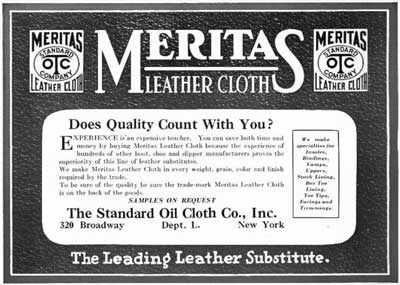
North Carolina. The company's southern cotton mills provided the
fabrics used
by the converting plants located in the north, where the firm’s
best-known
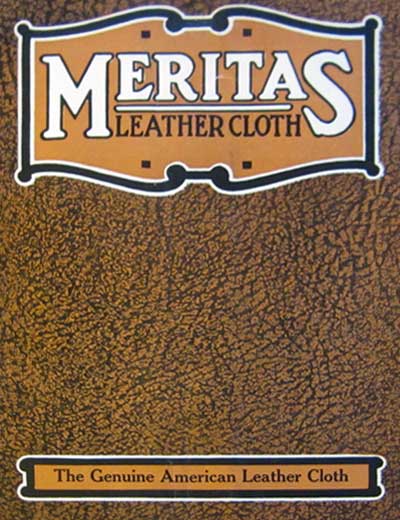
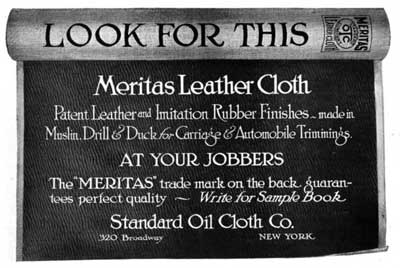
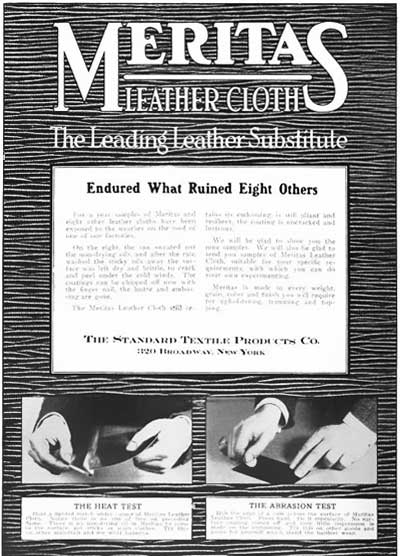
product, Meritas Leather Cloth, was manufactured.
The process involved spraying a uniform
coating of
boiled linseed oil mixed with dryers and lampblack or
other pigments onto tightly knit fabric which then passed through
metal
rollers that applied either a smooth or grained surface. End users had
a wide
range of colors, widths and textures to
choose from and special colors and surfaces could be special ordered at
additional cost.
Meritas competitors at the time included
Zapon
(duPont),Fabrikoid (duPont), Drednaut (Chase), Elascofab (GM), Rexine
(British), and Tole Souple (French).
Meritas brand oilcloth - originally
introduced by Montrose,
New York’s A.F. Buchanan and Sons in
1869 – had been eagerly adopted by the nations’ textile manufacturers
in the
construction of slippers, boots, furniture and other household goods. It was slowly adopted
by the carriage
industry as a leather substitute and its use expanded when automobile
manufacturers
started using it for automobile seats and interior panels. Meritas leather cloth proved an
ideal
material for covering the exposed wooden framework in the center of the
roofs
of early sedan bodies, and was often used on faux-leather Victoria tops.
Kenneth L. Childs married (marriage #2)
Dorothy Catherine
Dudley (daughter of Herbert F. Miller & Nettie S. Torrey) on
October 26,
1921 in Derry, New Hampshire – his occupation was listed as sales manager on the marriage certificate.
By that time Childs was in charge of Standard Textile Products’ automotive
accounts, and he represented the firm at the yearly New York Automobile
Body
Builders’ Show which was held at the Twelfth Street Armory during the
New York
Automobile Show.
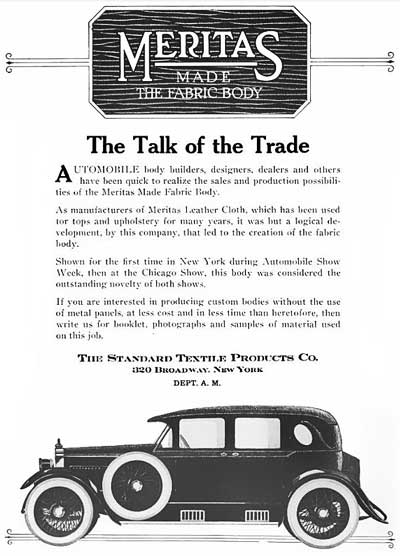
Shortly after the 1922 show Childs had a
brainstorm – why
not cover entire automobile bodies with Meritas Leather Cloth? The
company
directors thought the idea had merit and commissioned Childs to come up
with a
suitable prototype. The April 7, 1922 edition of the Middleboro Gazette
(Mass.)
reports he had recently moved to Detroit in the interests of the
Standard
Textile Products Co.
From his headquarters in the Hotel
Stevenson, 46 Davenport
Street, Detroit, Childs set about getting more firms interested in
using
Meritas leather fabric in the interiors and exteriors of automobile
bodies.
At the time imitation leather was coming
into use as a
low-cost method for covering the rear and rear side upper panels of
enclosed
bodies. Some manufacturers were using it to simulate collapsible roofs,
early
models were sometimes referred to as fixed head coupes, convertible
coupes or faux
cabriolets and Victorias. The misleading roof treatment was often
accompanied
by corresponding faux landau bars, which gave the impression of a
folding top
at a fraction of the cost.
Automotive Industries explained:
“This side quarter is without any window
opening to break up
the expanse. Metal used here makes it look cumbersome and the shape is
more
clearly defined with leather cloth goods provided that they are of a
bright
finished lustre and are fairly well finished where joined at the belt
line. The
Budd body has one of the best looking finished joints that is being
shown. Here
the fabric is assembled to a separate panel which is inserted and the
joint is
hidden by a generous size pipe which is applied so that the method is
concealed.
However, Childs and his employer (Standard
Textile Products Co.),
wanted to cover the entire coachworks with Meritas Leather Cloth,
thereby
tripling or quadrupling its use (and profits). Childs got body
designer, George
J. Mercer, interested in the project, and Standard Textile Products
commissioned
him to construct an attractive Meritas-clad 5-passenger sedan body on a
1922
Packard Single-Six chassis at Mercer’s Model Body Corporation, which
was
located at 7201 Six Mile Rd., Detroit.
Unlike Charles Weymann’s Flexible Body
System, whose wood
framework was specially constructed using moveable metal plates,
Childs’ system
utilized standard composite body wood framing, substituting a padded
nitrite
coated fabric in place of the standard sheet metal skin.
(FYI: Weymann’s American-built cars that
debuted in 1926 utilized
duPont Zapon leather, not Meritas leather)
Model Body Corp.’s George J. Mercer thought
the system held
promise, and presented a technical paper on the subject before a
gathering of
SAE engineers held during the 1923 New York Automobile Show, the
February, 1923
issue of Bus Transportation reporting:
“Engineers Meet at New York Show
“George Mercer, Model Body Corporation,
Detroit, announced a
new type of closed body. This consists of the conventional hardwood
frame with
galvanized wire netting tacked across it. Next is a covering of
three-ply
buckram and outside a new fabric known as Meritas, and developed by the
Standard Textile Products Company. It is said that this panel
construction,
which replaced metal panels weighing about 11 lbs. per square foot,
itself
weighs less than ½ lb. per square foot. The outside material, or
Meritas, is
black and shiny and resembles leather in appearance. It is claimed for
this
that dust, grease and mud will not mar the surface, and that it will
not expand
or contract under variations in temperature. In case of damage it is an
easy
matter to substitute a new prefinished panel.”
Mercer surmised:
"Childs isn't an automotive man but he's
drawn on his
background for a new body of outstanding originality."
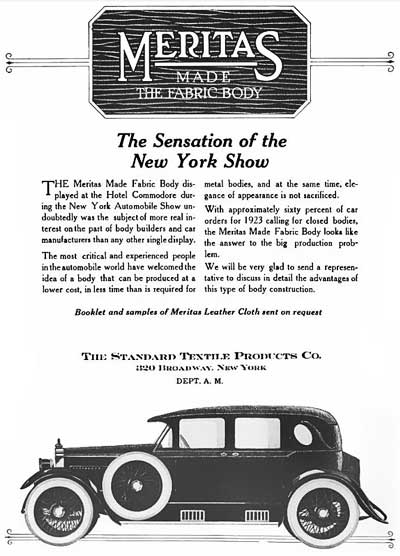
Child’s prototype Meritas-bodied Packard
debuted at the 1923
New York Auto Salon, with Vanity Fair postulating:
“The Meritas fabric body on a
Packard Single-Six
chassis which may bring about a complete change in the construction of
automobile bodies throughout the world.”
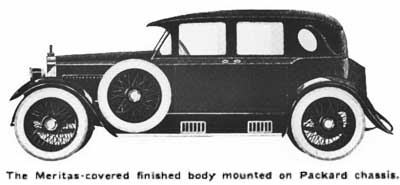
Pictures of Childs' Meritas–bodied Packard
Single Six
accompanied a review of the New York Auto Show published in the January
11,
1923 issue of the Automobile / Automotive Industries:
“The one novel body construction feature
which is being
shown is at the Hotel Commodore. This body, which is mounted on a
Packard
single-six chassis is made with the conventional wood frame but in
place of
metal panels a foundation of No. 19 two-mesh wire is used. One
thickness of
3-ply buckram is placed over the wire mesh and then the entire body is
covered
with Meritas leather cloth. The outer covering is not pasted or glued
to the
frame but stretched tight and fastened under the mouldings which are
also
covered with the same kind of material but of a different color. The
advantage
of this form of construction is that the body is lighter in weight; has
a more
permanent and less easily damaged surface coating and its good
appearance is
kept more easily. This material will aid materially in reducing body
costs and
it is also absolutely sound-proof.
“The body was made for their concern by a
Detroit body
company for demonstration purposes. K. L. Childs of
the Standard-Textile Products Co., who is the patentee of this form
of
construction, claims that the surface of this material will look well
with
ordinary care for two years and at the end of that time the material
can be
coated with carriage varnish in the ordinary way and the will last for
the life
of the body. The interior trimming is also the product of this company.
The
rear seat is covered with a waterproof material which has a flowered
silk
effect. Curtains are the same material but double faced, and the
driving seat
is covered with an imitation of morocco leather, still another Standard
Textile
product. The trimming design is plan with a center pipe.
“The attention which this new construction
attracts is due
no doubt to the fact that the use of fabric for covering has made
converts for
the past two years and at the Palace show there are numerous examples
of bodies
that are using this construction in various ways, but based on the
fabric as
the finishing part. The examples here shown are a few of the bodies so
finished. There are others which are cheaper in finish than those
illustrated
and several that are of high grade body work.
“There is one advantage of this form of
construction that
will appeal to manufacturers, that is the advantage or rather quality
which is
inherent in a pliable material, which will enable that which is with
steel
panel work an expensive form of construction, to be made even less
expensive
that the straight lined, conventional bodies are now.
“A rounded surface with metal covering means
die and tool
expense. With fabric this only means the additional labor of making the
frame
understructure the required shape. These illustrations show that
advantage has
been taken of the manufacturing latitude above mentioned and we can
look
forward during the coming season to see changes in closed-body models.
This
will tend toward making the lines of the bodies less severe and boxlike.
“Taking standard practice as it is to-day,
there is a
stereotype pattern which is followed by the majority of body
manufacturers and
a general description of any one make of body is nearly applicable to
quite a
number of others. The use of a flexible material for panel work will
free the
designer from the prevailing tendency to keep body lines of more or
less
puritanical severeness.”
Additional pictures and a more detailed
account of the
Meritas-bodied Packard’s construction in the January 1923 issue of The
Automotive Manufacturer:
“Lighter, Cheaper Bodies Through New Type of
Construction
“Entirely New and Different Form of Body
Construction
Includes Use of Fabric Exterior - Surface Over Wood Frame and Wire
Reinforcement
“Undoubtedly one of the greatest advances in
motor vehicle
construction' and certainly the real surprise of Automobile Show week,
was the
new Meritas fabric body. Coming at a time when all manufacturers are
attempting
in every way possible to reduce weight, its saving of 10 percent and
upwards on
the body alone should be sufficient of itself to warrant giving it more
than an
ordinary reception. But this is only one of its many forward-looking
features,
and by no means the most important. When one adds to reduced weight a
considerable cut in manufacturing cost, improved appearance, economy of
operation, ease of repair, partial elimination of vibration and thus
increase
in riding comfort, and in that way decrease in noise,—or put the other
way,
greater quiet and claimed greater strength, it will be seen at once
that the
body is more than a novelty and offers real advantages which must have
serious
consideration.
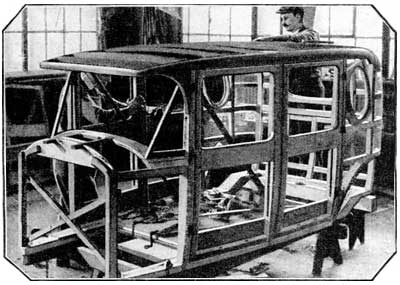
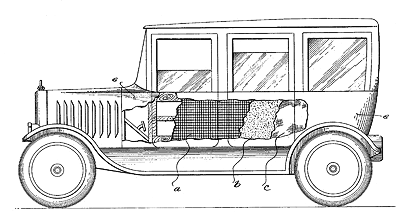
“In brief the construction, as it was shown
in the lobby of
the Commodore Hotel on a Packard chassis, consists of an outer surface
entirely
of fabric, this being an imitation leather. It is stretched over a
foundation
of wire and buckram fastened to the conventional wood framing.
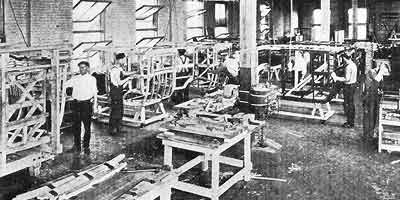
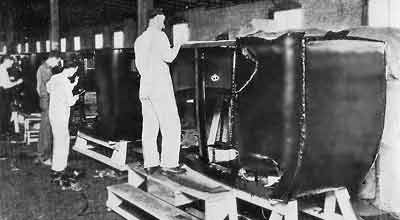
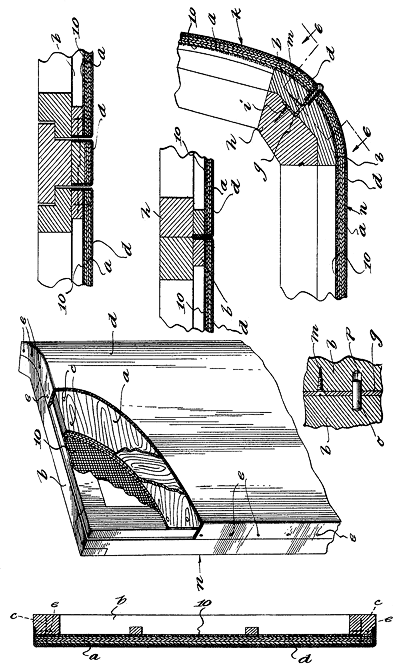
“In constructing one of these bodies, the
work progresses as
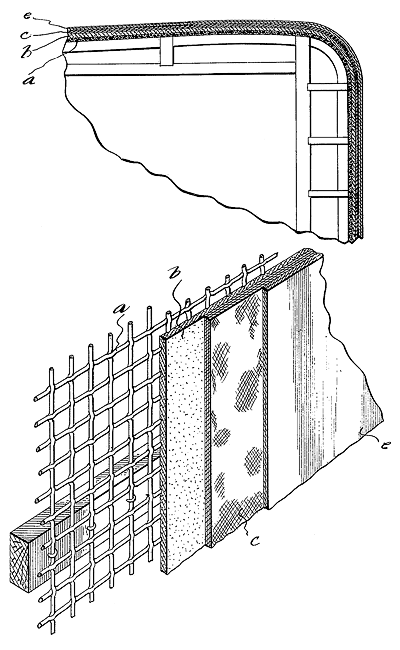
follows, and as shown by the accompanying figures.
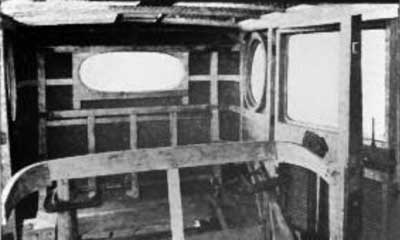
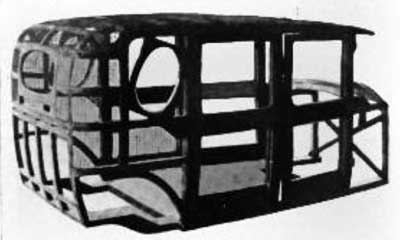
“First, as shown in Fig. 1, conventional
wood frame work is
erected, using the same size of posts, pillars and cross members as in
other
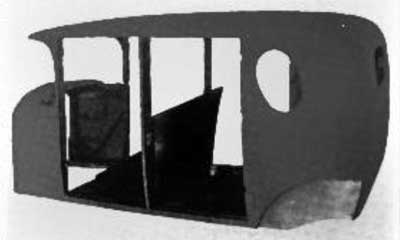
forms of construction. Then when this is completed the wire which forms
the
basis of the construction is applied, as shown in Fig. 2. This is a No.
19
two-mesh wire, that is two meshes to the inch, and is fastened with
staples, or
if necessary or desirable, with screws. It is heavily galvanized, which
makes
it rustproof and permanent, added to which is the incidental advantage
that the
galvanizing process fills up the corners where the wires cross so as to
make it
considerably stiffer and stronger.
“Over this wire is laid a rather thin layer
of cotton
wadding. On top of this is placed the buckram, which is really a
three-ply
burlap, approximately 3/32 in. in thickness. The wadding between wire
and
buckram prevents any possible rubbing of these two stiffer members, and
obviates the possibility of noise arising from this source.
“The frame work is double rabbeted, with one
rabbet for the
wire and one for the buckram. The latter is made wider so as to have
the
buckram cross the joint and be nailed beyond the wire edge, thus making
the
buckram construction somewhat independent of the wire beneath it. It
has the
additional advantage of giving greater strength in that the two
materials do
not attach to the wood at the same but at different points. The window
openings
will be noted in the illustrations as having rounded corners. This is
not a
necessity but was done for the same reason, namely, to allow the fabric
to be
carried over and fastened to the inside at a different point, and
without
cutting the goods.
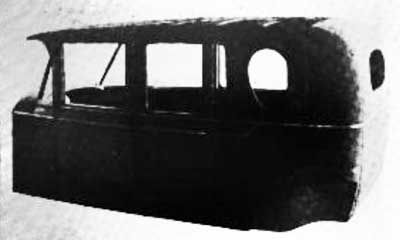
“The fabric, a rich lustrous deeply-grained
imitation, is
stretched over the buckram, being put on much as any leather
upholstering is.
The body shown in New York has an additional layer of wadding between
buckram
and fabric but this was done solely to obtain a rounded appearance,
distinctly
different from the smooth flatness of metal plates. The wadding again
has the
advantage of smothering noise, of preventing wear between fabric
interior and
buckram exterior surfaces, and others, but it is pointed out by the
makers and
developers of this body that it is not a necessity.
“Omitting this, and stretching the leather
tightly a
reasonably smooth exterior would be obtained, but even this would lack
the
flatness of the all-metal body or the wood with metal panels.
“The leather exterior will always give a
different and
richer appearance than either metal or wood. This construction whether
carried
through wholly or in part will have a largely-leather surface. In this
it will
match the older carriage bodies. It will be remembered that the finest
coach
bodies of early days were constructed with top and quarters of leather.
“Strength and durability are included in the
maker’s claims for the new form of body construction, which are
given in
detail later. Both are very important, for saving in weight at the
expense of
either would not be tolerated by the buying public. However, the
experimental
bodies constructed along these lines have stood the tests of two years
continuous use without failing, are still in service, and the
foundation
leather is so well preserved after this two-year exposure to all kinds
of
weather that a little rubbing with a soft cloth will brighten it
practically
like new.
“This and the ease of refinishing the fabric
surface are
strong claims to the average driver. Rubbing up with a soft cloth and
some
leather renovator liquid will make the body look like new at any time,
but
granting a desire for an entirely new surface, the average man would be
able to
wash the surface clean, rub it dry and varnish it himself within half a
day.
The surface produced in this simple way should be practically perfect
because
of the fact that the leather takes the varnish coating so well.
Comparison of
this with the ordinary removal of old paint, the refinishing of the old
surface
and the gradual building up of an entirely new coat on wood or
aluminum, and
the new construction stands out as a remarkable advance.
“Weight is, of course a very big item, as
stated at the
outset. The body shown indicated a saving, it was said, of 350 lb. over
the
average Packard body on the single six, which with body weighs
approximately
3,200 lb. This is on the enclosed body not the open phaeton. Inasmuch
as this
saving in pounds would be almost the same regardless of the size of the
body,
on a smaller job, as for instance a car of the 115-in. wheelbase group,
the
percentage of saving would run much higher than the 11 percent of this
case, in
fact it might easily run as high as 20 percent. And in combination with
another
big weight saver, as for instance the new Chevrolet copper cooled
chassis, in
which 140 lb. is saved, the total weight reduction of the combination
might
easily be so great as to be revolutionary in principle.
“The weight of the combined wire, buckram,
wadding and
fabric is less than ¼ lb. per sq. ft. As stated before, the wood
framing
is the same for this type of body as for aluminum or steel paneled
jobs. The
steel body braces, the doors, roof and windshield are the same, in fact
this
body followed conventional light-weight metal paneled construction up
to the
point of application of the metal panels.
“On the first body, the flat cost of
covering and foundation
material was 26 cents a square foot. Aluminum costs 30 cents and steel
7, but
to the cost of both these must be added stamping or hammer cost as well
as
finishing and painting. Mill work and framing cost the same in the two
body
types but a great saving in finishing is effected with the fabric body.
Two men
finished the interior and exterior in two weeks with one day out for a
holiday.
The finishing too was easier and simpler, for at no time was it
necessary to
keep hands off the finished surface nor was it necessary to give any
special
attention to protecting the fabric surface. The finished body was
transported
without covering, as compared with considerable cost in protecting the
finished
surface of the ordinary wood or metal finely painted job.
“This ruggedness of the surface combined
with the simplicity
of finishing is bound to make the new construction popular if nothing
else
does. From the time standpoint, there is much saving to the
manufacturer. The
time usually needed for painting is saved. The exterior of the body can
be
covered with fabric in a day, which is a gain of 5 to 11 days,
according to the
quality and materials usually used. Moreover, the design is most
flexible, and
can be changed as desired without changing expensive tools and jigs. As
additional advantage is the ease of transporting, storing and using the
rolled
fabric as compared with wood or metal panels. Moreover, the form or
contour of
the body can he changed readily from straight to curved, or to part
straight
and part curved or otherwise as desired without expense or delay. When
a
paneled body of any form is changed from a straight to a curved or part
curved
surface there is delay, expense, new fixtures and jigs, other
complications.
“Over and above the advantages now apparent
or claimed for
the new form of construction, undoubtedly a large number of smaller but
worthwhile advantages will develop during more extended use of this
body.
“Those advantages which the patentees of the
process and
makers of the fabric claim for the construction, and which appear to be
well
substantiated are:
“Reduced Cost of Production—(a) The cost of
raw materials
used in the Meritas-made body is approximately one-half the cost of
materials
used in a metal body, (b) The time required in production of this body
makes it
possible to produce not less than three bodies in the time and with the
labor
now charged against one body of similar type, constructed of metal.
“Economy in Operation—(a) A very important
saving in cost of
operation of a car equipped with the Meritas made body is effected
because of
its difference in weight as compared to a metal body. Metal panels
weighing
about 1 1/4 lb. per sq. ft. are replaced by materials weighing less
than 1/2 lb. per sq. ft.
“Improved Appearance—(a) When new, the
finish of the
Meritas-made body is identical to the finish of a metal body in
smoothness,
luster and brilliancy. The construction of the Meritas leather cloth
used on
this body provides a permanency of finish which metal bodies do not
possess.
Meritas leather cloth has been used on a large number of passenger cars
and
busses for a number of years. This experience has demonstrated that
dust,
grease and mud will not mar the surface but can be wiped off easily,
maintaining the original luster unimpaired' (b) The leather cloth
panels used
in the Meritas-made body do not expand or contract under variations in
temperature. This factor eliminates the cracking and checking of
varnish such as
found on metal panels.
“Increase in Comfort of Owner—(a) The
Meritas-made body
eliminates in large measure the drumming and vibration of a closed
metal body'
(b) The leather cloth used in the Meritas-made body is non-conductive
of heat;
therefore the fabric body is warmer in winter and cooler in summer. (c)
The
rattles and squeaks of a metal body are eliminated in the Meritas-made
body; no
metal rubbing against metal.
“Ease of Maintenance—(a) Damage to metal
bodies require long
and expensive repairing. The painting operation alone requires weeks.
The
Meritas-made body can be repaired in a few hours by the substitution of
a new,
pre-finished panel in place of the one damaged. (b) In order to
revarnish the
Meritas-made body, it is necessary to only wipe off the surface and
apply a
coat of varnish; no burning or scraping off of the old paint is
necessary to
secure a perfectly smooth face. (c) The destroying effect of vibration
and
distortion which plays such a large part in the deterioration of a
metal body is
eliminated.
“Strength of Body—The Meritas-made body
being provided with
additional strainers and wire fabric, forms a stronger and more rigid
body than
the present-day construction.”
Kenneth L. Childs was listed in the 1923
Detroit Directory at
the Whittier Apt. Hotel, 415 Burns Dr., Detroit.
August 1, 1923 New York Lumber Trade Journal:
“WOOD FABRIC, NO METAL AUTO BODY
“When announcement was made some months ago
by the makers of
a popular price automobile of an all-steel body it was quite generally
said
that marked the passing of wood so far as the auto body building
industry was concerned.
“Constructed with the wide poplar panels and
all wood frame
of a few years ago, it has the appearance of an almost total eclipse of
wood.
But all things change and necessity and competition are mother and
father of
new inventions, so we find at recent auto shows a new type of body
in
which no metal is used and wood conies back in an important role. The
latest is
the wood-frame fabric body. The fabric body is a contribution by the
Standard
Textile Products Company, New York. It consists of that company’s
'Meritas'
water-proof leather cloth over a wood frame, dressed with a coarse wire
fabric
and the necessary padding to fill out the curve lines, etc. In the
construction
of this type of body a frame work of Hardwood lumber is first built.
This is covered
by a heavy close mesh wire netting which gives a surface on which to
build the
panels as well as providing means to tie in the entire body. A
felt
padding is then applied and a coarse, heavy fabric placed over this,
thus
providing a substantial base for the outside cloth which carries a
thoroughly
waterproof finish.
“The claims for this new type of body
included the
following:
“Cost of raw material in the body is
approximately one-half
of the cost of material used in the metal body. The time required in
production
of the 'Meritas' cloth body makes it possible to produce not less than
three bodies in the time and with the labor now charged
against one
body of similar type constructed of metal.
“When new the finish of the cloth body is
fully equal to a metal
body in smoothness, luster and brilliancy. The life of the ‘Meritas’
leather
cloth is considered longer as regards finish than the usual finish of
the metal
job and from an operating standpoint there is a great saving in weight,
as the
cloth panels complete weigh less than one-half of similar metal panels.
“That the new development utilizes a full
wood construction
as opposed to the trend toward metal construction is of particular
interest and
concern to the producers of hardwoods.
“The body was shown mounted on the chassis
of one of the
higher priced cars and evoked a great deal of favorable criticism.”
The September 1923 issue of Popular Science
Monthly:
“Closed Auto Body Made of Chicken Wire
“Many a motorist prefers a car with a closed
body, yet does
without it because of the additional expense involved, or because he
fears that
neither his skill nor equipment is sufficient to construct the metal
panels
himself.
“But now K. L. Childs, of Detroit,
Mich., has
designed a type of body construction for enclosed cars that offers many
attractions to the ambitious and skilful amateur. His idea is being
developed
commercially, but it may be used effectively also by amateurs desirous
of
remodeling their cars.
“Originality of Color and Design
“Fabric laid over ordinary chicken wire
furnishes the
groundwork for the body; it minimizes the painting problem, because the
fabric
is already colored and enameled before use; it is more easily repaired
and is
not so easily damaged. Dents may be removed quickly, and the body is
not
subject to the noises and rattle common to most metal bodies.
“As in all metal bodies, a frame or skeleton
is built of
wood. Over this the wire is laid and padded with cotton wadding, which
is held
in place by tacking a layer of buckram to the frame. The body is then
finished
by stretching over this relatively smooth but soft surface a special
fabric,
such as imitation landau leather, although any enameled or painted
fabric may
be used.
“The result is said to be a closed car as
attractive in
appearance as the most expensive, with the added advantages that its
color and
design may be altered easily and cheaply, and that repairs can be made
with
little trouble.
“With the growing popularity of the closed
car, the need for
just such a body that can be built economically yet will prove durable
for
everyday use has long been apparent.”
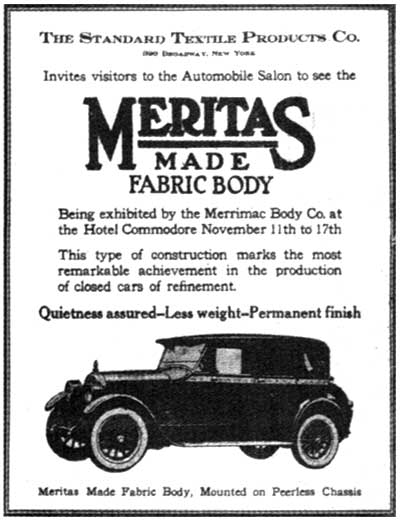
During
that fall a second, almost identical-looking Meritas-clad prototype was
constructed by the Merrimac Body Co. on a Peerless chassis, the
November 17, 1923 issue of Automobile Topics reporting on its debut at
the New York Auto Salon:
“Automobile Salon Shows the Finest of Cars
“Another Peerless model which attracted
considerable
attention was the one shown by the Merrimac Body Co. The entire body of
this
model was covered with fabric which has the appearance of leather. The
rear
quarter is solid with oval windows placed at an angle and dummy landau
braces.
A wicker belt with a heavy nickel bead on either side extends from the
cowl
around the rear of the body. Natural color wood wheels are used. These
two
features of design serve to set off the fabric finish and produce an
attention
commanding job. The distinctive feature of this car is its construction
- fabric
and padding over a wire mesh base. Aside from the novelty of the finish
its
sound proof quality is advanced as its chief advantage.”
One month later persons associated with the
Standard Textile
Products Co. and Detroit firms formed a $200,000 firm headed by Childs
to
promote the manufacture of Meritas-clad automobile bodies, the December
20,
1923 issue of The Automobile / Automotive Industries announcing:
“New Company Organized To Make Fabric
Bodies
“DETROIT, Dec.17 - The Fabric Body Corp.
has been formed to
operate as sole licensee in promoting the building of fabric
bodies
in the United States and Canada and has opened offices and
show rooms at
5940 Cass Avenue, this city. Kenneth L. Childs, originator
of this
type of automobile body, has been elected to the presidency. He
also is
consulting engineer of the Standard Textile Products Co.
The Body Builders Notes column of the
January 1924 issue of
The Automotive Manufacturer also noted the debut of the firm:
“Fabric Body Corp., 5940 Cass avenue,
Detroit (Block Motor Co. bldg.), has been incorporated with capital
stock of $200,000 to
manufacture
automobile bodies of special design. Work will be done by contract.
Kenneth L.
Childs, formerly research and development engineer of the Standard
Textile
Products Co., New York, is president; J. H. Main, director of purchases
for the
General Motors Corp., vice president and treasurer, and W. W. Gedge,
for the
past 10 years experimental engineer with
the Stearns & Foster Co., Detroit, is secretary.”
Other addresses used by the firm included 12-244
GM Bldg., and
the Stormfeltz Lovely Bldg. (Woodward Ave. & Grand Blvd.), an
address that
was later shared by George J. Mercer’s design offices.
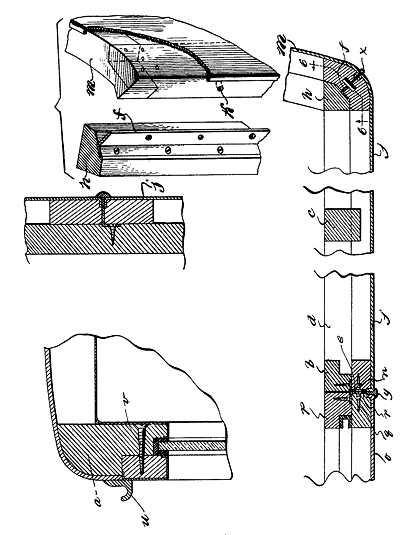
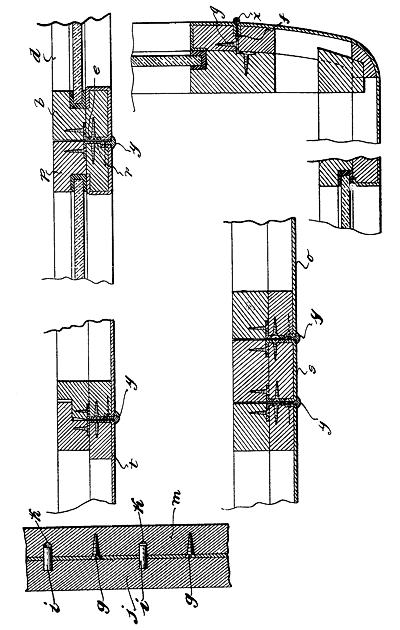
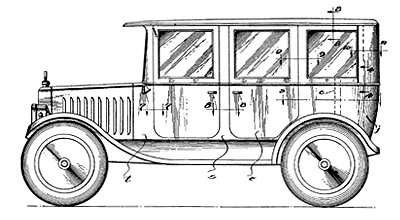
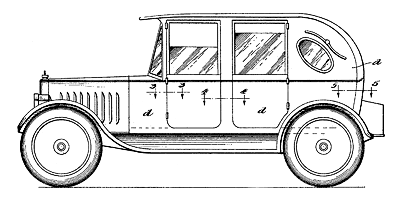
Over the next few months Childs applied for
3 US Patents
relating to the system:
Automobile Body Construction – US Pat. No.
1498234 - Filed
Nov 17, 1922 - Issued Jun 17, 1924 to Kenneth L. Childs
Vehicle Body Construction - US Pat. No.
1579466 - Filed Jan
2, 1923 - Issued Apr 6, 1926 to Kenneth L. Childs and assigned to the
Fabric
Body Corp.
Automobile Body Construction - US Pat. No.
1641319 - Filed
Apr 30, 1923 - Issued Sep 6, 1927 to Kenneth L. Childs and assigned to
the
Fabric Body Corp.
The Fabric Body Corp. was listed amongst the
exhibitors at
the 1924 New York Auto Salon in the December 1923 issue of American
Motorist:
“Among the custom-body builders who will
exhibit their skill
and quality workmanship on the various chassis will be the Fleetwood
Metal Body
Company, Le Baron Studio, The Fisher Body Corporation, Derham Body
Company,
Locke & Company, Willoughby Company, Springfield Body Corporation,
J. B.
Judkins Company, Hume Body Corporation, Paul Ostruk, Meritas
Fabric
Body Corporation, Brunn & Company, The Holbrook Company,
Kellner of
Paris and the Merrimac Body Corporation.”
The January 1924 issue of Autobody contained an
in-depth article on Childs and his fabric body evangelism and the
January 6,
1924 issue of the New York Times stated the fabric body was the
most
important development of the past year:
"WOMEN'S INFLUENCE IN MOTOR CAR DESIGNING;
Closed Car
Popularity Largely Due to Feminine Preference -- Tendency Toward
Dignified
Simplicity in Exterior and Interior Finish.
“Of all the new features that have been
introduced during
the past year the fabric body is regarded as the most important
development. In
Europe, as well as in this country, the fabric body is rapidly forging
to the
front. It was the sensation of the Paris salon and the American fabric
body
built on the Childs system is also being received with favor. It has
the
conventional wood-frame construction used in standard cars, with the
addition
of thin. Light strainers where panel contours are required.
“Instead of the customary wood or metal
panels, meshed
galvanized wire is stretched over the frame, upon which is placed two
layers of
cotton wadding, which are tensioned into the wire by stretching canvas
over
then tightly. This provides as strong but flexible panel over which is
stretched the Meritas leather cloth. This cloth is specially made for
the
purpose and differs from ordinary artificial leathers in that it is a
two-ply
or laminated fabric, bonded with a special oil cement, and the coating
will
retain its lustre almost indefinitely. It may be refinished when
necessary with
a single coat of varnish.
“From the car owner’s standpoint the
principle advantages
claimed for the fabric body are lighter weight with corresponding
economy in
operation, elimination of the drumming, rumbling noises due to
vibration – this
body is said to absorb even road shocks – distinctive appearance, and
the ease
with which it is cared for and repaired. To these may be added a lower
first
cost and a saving in insurance rates.
“It is said that the Meritas fabric body can
be built in
less time than it requires to paint the old-type body, and the cost of
materials used is approximately one-half. It permits, even on a
production
basis, of artistic contours with marked variations. When the fabric is
worn out
the body can be recovered at less expense than it has cost to have a
car
repainted, and the time spent is much less.”
The January 6, 1924 issue of the New York Times noted the appearance of fabric-bodied at that years' New York Automobile Show:
“More Auto Men Arrive For Show:
“While the big show was closed yesterday,
the overflow
exhibition in the Hotel Commodore attracted many visitors. The two new
cars of
the year are displayed there, the Chrysler and the Rollin. The Stutz
also has a
large display of its newest models, and another interesting exhibit
comprises
half a dozen closed bodies constructed of the recently introduced
Meritas
fabric material. There is a sedan body on a Ford chassis which is as
comfortable as many bodies on larger cars. The possibilities of the
fabric
material for more elaborate bodies is shown in sedan types on the
Chandler,
Lincoln, Peerless and Packard chassis, and there is also one on a Dodge
chassis. The fabric body weighs considerably less than the metal-made
bodies.”
The January 10, 1924 issue of The Automobile / Automotive
Industries reported on the four automobiles that were displayed at the Automobile Show's annex:
“Four cars with Meritas
fabric bodies are being
shown at the Commodore.
“The display includes the
original Meritas body on
a Packard chassis which was exhibited last year, and which has since
seen 20,000 miles of usage, a three-door sedan on a Dodge chassis,
a
Berlin on a Lincoln chassis and a four-door on a Ford chassis.
“Each of these bodies is being produced by a
different
company under license from the Fabric Body Corp., Detroit. The
Packard
body is the product of the Model Body Corp., Detroit; the Lincoln
Berlin comes
from the Merrimac Body Co.; the Dodge sedan body is being made by the
E.J.
Thompson Co., and the Ford sedan is being produced by the Mengel Co.”
The 1924 New York Auto Show issue of Vanity Fair also made amnetion of the cars on display at the Commodore:
“This is a Hudson chassis equipped with
a Meritas
fabric body, displayed in the lobby of the Hotel Commodore, New York,
during
the week of the show. Other Meritas bodies were shown, on Packard,
Peerless and
Marmon chassis.”
Between 1923 and 1930, Merrimac built a
small number of
fabric-covered bodies using Childs’ patents. The first were two
Meritas-covered
four-door Peerless sedans constructed for display at the 1924 New York
Auto
Salon, Merrimac’s first-ever display at the event. The same show
included Childs’
Meritas-bodied Packard that had been driven twenty thousand miles
during the
previous 12 months, highlighting the durability of his product. At
least one
Meritas-bodied Lincoln is known to have been built by Merrimac, as well
as a
tiny roadster body built for Springfield, Massachusetts’ Indian
Motorcycle
Company. In 1927 Indian briefly tinkered with the idea of introducing a
small
automobile, and hired Merrimac to build the bodies for two prototypes -
the
first, the Meritas-bodied roadster – the second a metal paneled
delivery van
that is still known to exist.
Fabric
Body Corp. had big plans for the cupcoming year, the Feb 2, 1924 issue
of the Daily Silver Belt (Miami, Arizona) reporting:
“WILL MAKE FORD, DODGE AND CHEVROLET BODIES
“Plans of the Fabric Body Corporation call
for the
production of 100,000 Ford bodies with Chevrolet and Dodge Brothers in
proportion. Of this number, 2,500 Ford bodies are now in the course of
production. In view of the gratifying reception tendered the exhibit at
the
Hotel Commodore In New York during the Automobile show there last
month.”
The February 10, 1924 issue of the Kansas City Star noted that fabric bodies were the latest thing:
“Fabric Bodies Gain Favor
“Lightness and Economy Are Advantages of the
New
Construction
“The fabric body is now recognized as an
important
development in the motor car body field. In Europe as well as in this
country,
the fabric body is attracting attention. It was a feature of the recent
Paris
salon and has been adopted by several prominent British manufacturers
of high
grade cars, including the Sunbeam, Daimler, Talbot, Singer, Triumph and
Rover.
“Lightness, durability and economy in
construction are
claimed for them. The new type has the great advantage of requiring a
comparatively small investment for machinery: labor cost is also lower.
This
will enable the car manufacturer to bring out his closed models at a
price that
will appeal to a larger public than at present.
“The fabric body in Europe is built on what
is called, after
its originator, the Weymann system. It is an extremely light body, with
wooden
frame members that do not touch each other, but are Joined by metal
plates.
There are no longitudinal sills, and the seats and floor board rest
directly on
the chassis, so that the body supports only its own weight. It consists
of a
light frame over which the fabric is stretched.
“The American fabric body, built on the
Childs system, is
far more substantial. It has the conventional wood frame construction,
with the
addition of a few thin, light strainers where panel contours are
required.
Instead of the customary wood or metal panels galvanized wire is
stretched over
the frame, upon which is placed two layers of cotton wadding, which are
tensioned into the wire by stretching over them tightly a No. 10
canvas. This
provides a strong but flexible panel over which is stretched the
leather cloth.
“Several body builders are producing bodies
on the Childs
system and it is asserted that over three thousand jobs are now in
course of
construction.”
The
February 24, 1924 issue of the Oakland Tribune included a review of a
Meritas-bodied Peerles that was currently on display at the local
Peerless distributor:
“Innovation in Body Building Demonstrated
“Fabric As Used For Cars Claimed to Add to
Power By
Lightness
“An innovation in body building is
demonstrated at the
automobile show which opened last night. The car is a Peerless,
equipped with a
Meritas made fabric body.
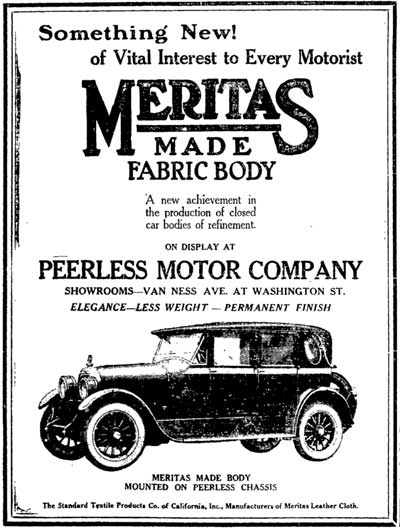
“J. W. Gotwals, manager of the Textile
Products company of
California, is the man who has arranged this unique display. The car is
a
standard Peerless chassis, but the body is built of Meritas.
“The inventors claim that this type of
fabric body
eliminates vibration, and reduces the weight of the car, thus giving
greater
power, and making for longer life of the whole machine.
“Another feature that is causing a great
deal of comment is
the permanency of the finish obtainable by using this new fabric for
bodies.
“‘This new type body created a sensation at
the New York and
Chicago shows, and many orders were taken.’ states Gotwals.
“‘For many years automobile body
manufacturers have been
trying to reduce the weight of the bodies of cars, and have succeeded
to a
great extent.
“‘This new fabric body carries the weight
reduction idea to
an irreducible minimum, because no metal body could approach the fabric
body in
lightness.’
“Gotwals states that processes are now being
perfected to
adapt this style of material to body building on a large scale, and
‘that it is
certain that many manufacturers will adopt the new system before long.”
The Personal Notes of the Members column of
the March 1924
SAE Journal notes that Childs was no longer a representative of Standard Textile Products:
“Kenneth L. Childs is no longer
engineer of research
and development for the Standard Textile Products Co., New York City,
but has
become associated with the Fabric Body Corporation, Detroit, as
president."
The April 12, 1924 issue of the Daily Silver Belt (Miami,
Arizona) incldued detilas on the aftermarket Ford bodies currently being manufactured in Kentucky:
“Fabric Body Designed for Use on Ford Chassis
“Another of the Meritas fabric bodies on
which there is
planned a large production, is that built for use on the Ford chassis.
This is constructed
by the Mengel company, Louisville, Ky., as license under the patents of
the
Fabric Body corporation.
“In building this body for the Ford chassis
one of the
foremost aims was to provide roominess and comfort for all of the
passengers, an
aim which has been satisfactorily attained. In addition to this, the
company
has given a distinctive air to the chassis through flattening the hoed
and
cowl, making the rear quarter solid and using wheel conforming fenders
which
lengthen the running board.
“Included in the standard equipment are
bumpers for both
front and rear. The one at the rear is unique in its mounting. The ends
bear
around the spare tire and trunk and are attached at the side. This
trunk, by
the way, is sturdily .constructed and is weather and dust proof.
“The belt line is marked by a double molding
set between the
door handles and the windows. This is supplemented by a single molding
which
forms a graceful curve around the back of the car. The radiator shell
and
headlights are nickel finished.”
The May 1, 1924 issue of Motor West included the projected price of the Mengel coachwork:
“Meritas Body for Fords
“A Meritas fabric body for Fords
is being
manufactured by Mengel Co., Louisville, Ky., under license from Fabric
Body
Corp., Detroit. By flattening the hood and cowl, lengthening the
running board
through conforming fenders, with front and rear bumpers, the rear
curving
around the spare tire and trunk, and double belt line moulding, the
body is
given a distinctive appearance. It sells for $463, f.o.b. Detroit.”
The
June 29, 1924 issue of the Ogden Standard-Examiner highlighted the
advantages of fabric bodies that Childs had presented to the SAE
conference earlier in the year:
“Fabric Auto Bodies Tried
“Better Than Metal For Wear and Less Noise
“New York June 28. – Automobile bodies of
fabric
construction in place of sheet metal have been tested and found
serviceable.
“This is the report made to the Society of
Automotive
Engineers here by K. L. Childs, president of a corporation
manufacturing fabric
auto bodies. After driving a fabric body car 20,000 miles under all
kinds of
road and climatic conditions, Childs makes these claims:
1-Fabric-bodies are quieter than equivalent
metal bodies,
eliminating most of the drumming – and rumblings sounds encountered in
sedans
2-Fabric bodies average from 25 to 110
pounds lighter than
corresponding metal bodies.
3-They can be cleaned more easily than the
painted metal
bodies because the fabric coating is hard, and withstands abrasion.
4-All panels are made in sections, so that
any part of the
body that may happen to be dented or injured can be removed without
disturbing
the rest of the body or, any of the interior trimming.
“The last feature, Childs says, has led
insurance companies
to insure fabric bodies at a lower rate than metal bodies. At the same
time, he
adds, construction of fabric bodies is easier, speedier and cheaper. In
the end
it may mean a reduction of at least 15 per cent in the body costs of
cars."
In John Bentley’s ‘Great American
Automobiles” he mentions
the following incident:
“In July of 1924
George A. Hoeveler, Stutz distributor from Pittsburgh, appeared
with a
fabric-bodied Stutz sedan known as the 'Meritas.' Built
specially for him by the E.J. Thompson Company, it was
the first
automobile body of fabric construction ever produced in
the
United States — and it went over big.”
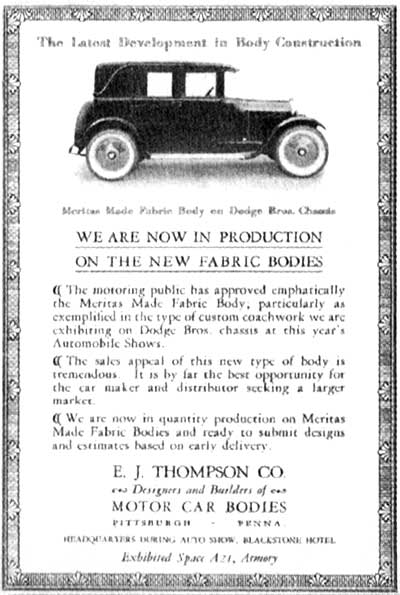
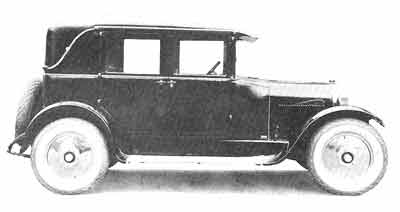
Between 1924 and 1926 Pittsburgh’s E.J.
Thompson turned out a
small series of fabric-covered bodies using the Childs system for
regional
Dodge Bros. distributors who marketed the car as the Thompson-Dodge
Landau
Sedan. The four-passenger three-door sedan body included a heavily
padded top
and a distinctive forward slanting oval rear quarter window, on top of
the Meritas-covered
tonneau.
The October 9, 1924 issue of Automobile /
Automotive Industries’
included coverage of the October 9, 1924 AERA convention in Atlantic
City where
E.J. Thompson debuted the first Meritas-clad motor coach body:
“Motor Coach Built With Fabric Body
“What is said to be the first fabric-leather
coach body to
be constructed has been produced recently by the E. J.
Thompson Co.
of Pittsburgh. This body is of the type advocated by the
manufacturers of Meritas fabric-leather which is used for covering it
and the body is built under the
Childs
patents. The interior is trimmed in brown brocaded fabric-leather. This
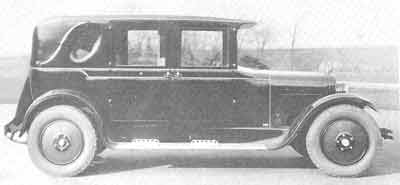
body, a
photograph of which is reproduced in the accompanying cut, is equipped
with Pullman
type berths, wicker chairs, shower bath, toilet and a kitchen fitted
with
stove, sink and refrigerator. Two thirty-gallon water tanks are
suspended from
rear of chassis and water is supplied under pressure from an engine
driven
pump. Ventilation is provided through Nichols-Lintern ventilators,
electric
fans and windows which are designed to drop flush with the belt. The
windows
are equipped with specially designed roller screens and curtains. A
number of
other features are incorporated in this body to provide comfort in
touring.”
In 1925 the Commercial Car Journal reported
that Thompson
had built a 5-vehicle fabric-bodied delivery truck fleet for the Select
Furniture Corporation of Pittsburg, so it’s possible the Childs system
was used
on other commercial bodies produced by the firm, but the evidence is
lacking.
The January 4, 1925 issue of the New York Times mentions that Fabric Body Corp. was exhibiting at the Commodore Auto Show annex:
“LIVELY WEEK IN THE HOTELS; DINNERS AND
PARTIES GALORE;
Motor Chiefs and Dealers With Their Families Flock to New York for
Business and
Festivity During the Jubilee Show
“Perhaps the most impressive of the
independent shows is to
be found at the Commodore. For this display the holiday decorations
have been
removed and replace with hangings and ornamentations of the automobile
show. This
display includes exhibits by the Maxwell & Chrysler Company, which
will
show ten cars; The Auburn Automobile Company, with four cars; the
Sterling-Knight Automobile Company, and the Fabric Body Company.”
One of North America’s last steam-engined
production
automobiles used Meritas-clad bodies exclusively. There are
approximately 5
known survivors of the approximately 180-250 Brooks sedans manufactured
between
1924 and 1928 by Brooks Steam Motors, Ltd. of Toronto, Ontario,
Canada.
The firm’s bodies were constructed by the American Auto Trimming
Company in
Walkerville, Ontario, a firm that’s covered elsewhere on the site. An
article
in a 1925 issue of Canadian Magazine provided details on the advantage
of using
a fabric body:
“The new Meritas Fabric Body is
standard in Brooks
cars. Among the numerous advantages over wood, steel, or aluminum are
its
flexibility, entire absence of rumbling and vibration, and the
elimination of
squeaks and rattles.”
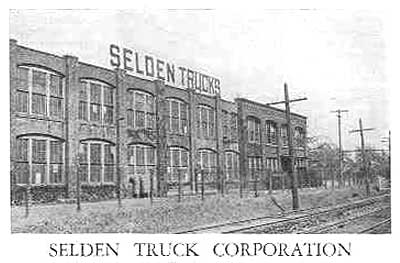
On March 16, 1925 the Fabric Body
Corporation purchased
the Selden Truck Company, of Rochester, New York for
$450,000, the
March 19, 1925 issue of the Democrat &
Chronicle (Rochester, NY) announcing:
“First Fabric Bodies for Busses to Be Made
at Selden Truck
Plant by Detroit Company, New Owners
“The sale of the Selden Truck Corporation in
Probert street,
to the Fabric Body Corporation, of Detroit, for $450,000 this week was
the
first step in a plan of expansion which calls for enlargement of the
present
plant had introducing to Rochester a new industry - the manufacture of
fabric
bodies for motor busses.
“Arthur S. More, operating receiver of the
Selden Track
Corporation who arranged the sale of the plant, declared last night
that the
new owners plan to place on Selden chassis the first fabric bus bodies
ever
produced in this country and later to manufacture these bodies at the
Selden
plant. This will mean enlargement of the present building, or erection
of a new
one to care for this end of the business, he said.
“The sale of the plant, which was made
Monday, was approved
by Federal Judge John R. Hasel in Equity Court at Buffalo Tuesday.
Under the
terms of the sale the Fabric Body Corporation bought the property,
machinery,
equipment, patent rights and rights to the name ‘Selden’. The Selden
Corporation has been operating under a receivership since July when Mr.
More,
who was president of the truck corporation, was appointed operating
receiver at
the instance of Continental Motors, a creditor.
“It is understood that under the terms of
the sale the
Fabric Body Corporation agreed to make separate settlements with the
various
creditors of the truck corporation. A new company, which according to
Mr. More,
will bear the same name as the old, is now being organized, and the
election of
a board of directors and officers is expected on April 1st. Present
plans call
for retaining the present executive staff. Mr. More said, but the board
of
directors probably will include men now active in the Fabric Body
Corporation.
“The new owners will act only as a holding
corporation,
leaving the sales and manufacture of Selden trucks and busses to the
new
company now being organized. Selden at the present time is enjoying
greater
prosperity than during any corresponding period since 1920.
“The Fabric Body Corporation, according to
Mr. More, is the
largest manufacturer of fabric bodies in the world, controlling all the
basic
patents for this product. At present it is concentrating only on
passenger car
bodies, but when the new company is organized hare, they will produce
bus
bodies, putting the first of these on Selden chassis.
“Headquarters of the body company are in the
General Motors
building, Detroit. The company is backed by New York, Detroit and
Louisville,
Ky. capital. K. L. Childs, of New York, is president; James Wilson, of
Detroit,
vice-president; W. W. Gedge, Detroit, secretary, and William Chatfield
Jr.,
Detroit assistant treasurer.
“The management of the old Selden Truck
Corporation, which
will undoubtedly head the new company, included Mr. More, president;
William C.
Barry, vice-president; S. P. Gould, secretary; and E.B. Osborn,
receiver.
“The late George B. Selden, who in 1877
invented the
automobile, founded the Selden truck business many years ago. For a
time, in
the early days of automobile manufacture, Selden controlled the
business
through his patent, receiving a royalty from every manufacturer,
despite the
fact that he had never manufactured a car for public sale. Henry Ford
stopped
the flow of royalties when he refused to pay. Selden sued and built a
car
according to 1877 specifications to prove it was workable, but Ford won
the
suit.”
The May 7, 1925 issue of The Automobile /
Automotive Industries annoucned the sale to the automotive trade:
“Selden Truck Starts Under New Control
“Rochester, N.Y., May 6 – A new Selden Truck
Corp., has
started functioning, replacing the old company which was sold last
month in
receivership proceedings to the Fabric Body Corp., of Detroit.
“The executive staff of the old
corporation has been
retained in the newly re-organized company as follows: A. S. Moore,
president
and general manager; William C. Barry, vice-president; S.P. Gould,
secretary;
E.B. Osborne, treasurer and F.J. Kolb, assistant secretary and
assistant
treasurer.
“The Fabric Body Corp., will act as a
holding company
through the following board of directors: Mr. More, Mr. Barry, K. L.
Childs, New York, president of the Fabric Body Corp., F. E. Devans,
Rochester; W. W. Gedge. Detroit, secretary Fabric Body Corp., W. S.
Speed,
Louisville, Ky.; Merlin Wiley, Detroit; James Wilson, Detroit,
vice-president
and treasurer, Fabric Body Corp., H. E. Zimmerman, comptroller,
Standard
Textile Products Co., New York.
“The new corporation will be amply financed
to carry on the
rapidly growing business in trucks and busses. President More declared
that
production has already been increased to take care of the largest
number of
unfilled orders on file since the spring of 1920. Production of fabric
bodies
for passenger cars and busses will begin shortly at the Selden plant
when
equipment has been installed to take care of this new branch of the
business.”
Fabric Body Corp.’s listing
in the 1925 Detroit Directory follows:
“Fabric Body Corp.; K.L. Childs, pres.; Jas.
B. Wilson,
v-pres-treas.; W. W. Gedge, sec.; 12-224 General Motors Bldg.”
The Middleboro Gazette reported that Kenneth
L. Childs wed Detroit
socialite Dorothy Reynolds (wife #3), on June 19, 1925.
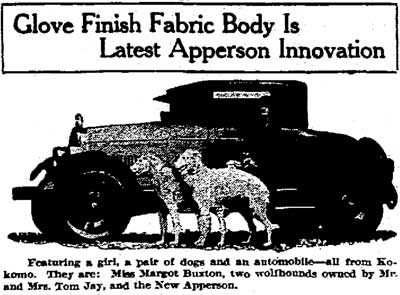
The June 29, 1925 issue of the Kokomo Daily Tribune annoucnede the debut of a fabric-bodied Apperson:
“Glove Finish Fabric Body Is Latest Apperson
Innovation
“Featuring a girl, a pair of dogs and an
automobile—all from
Kokomo. They are: Mrs. Margot Buxton, two wolfhounds owned by Mr. and
Mrs. Tom
Jay, and the New Apperson.
“The above photograph, which has appeared in
many leading
publications all over the country within the last few weeks, has done
much to
spread the fame of Kokomo products—not to mention the fame of Kokomo's
young
women.
“The principals in the picture are: The new
All-Weather
Glove Finish Sportabout Apperson, which forms the background for Miss
Margot
Buxton, daughter of Mr. and Mrs. B. C. Buxton, of Forest Park, and the
two
thoroughbred, prize winning Russian wolfhounds belonging to Mr. and
Mrs. Thomas
B. Jay.
“This new model Apperson is finished in a
special type of
French Fabricoid, gray in color, and is the first American car ever
offered to
the public in which the outside finish does not depend on paint or
enamel or
their derivatives. This finish has a very attractive appearance and is
unusually durable. It marks another Apperson innovation characteristic
of the
company that has kept a step ahead in automotive development for
thirty-three
years.”
The
August 1925 issue of Western Machinery World mentioned that a firm
called the Meritas Fabric Body Corp. was constructing a plant in Los
Angeles:
“Meritas Fabric Body Corp. will cons, plant
at Macy and
Mission Road to mf. coupe body for light cars. Roy L. Donley is an
official.”
Elcar showed a Meritas fabric-bodied
4-passenger Coupe at
the 1926 New York Automobile Show, Automobile Topics stating that the
firm was:
“one of the few manufacturers that had the
capacity to
fabricate its own bodies completely… This
concern is one of two now employing this style body as a stock
offering.”
The January 1926 issue of Motorland
commented on a Meritas-bodied
Auburn Coupe that appeared at the same event:
“Some of the smart cars to be seen for the
first time by
many motor car enthusiasts included a Diana sports roadster in white
with black
trim, an Auburn 2-3 passenger coupe done up in a Meritas fabric body…”
The Meritas-bodied Auburn
was also mentioned in the January 30, 1926 edition of the Olean Evening
Times:
“Auburn Coupe
“An outstanding model being displayed at the
show this week,
because of its smart appearance and unusual finish, is the new Auburn
Coupe,
which is being shown for the first time.
“The entrance of Auburn into the field with
a coupe model
which appears far in advance in style and equipment is of unusual
interest
because of the expressed demand in 1925 for a model of this type to
complete an
array of full models In the Auburn lineup.
“The new Auburn Coupe, while conforming to
the generally
different lines of other Auburn models, makes it original bow to the
public
with a novel dress in the shape of a Meritas Fabric exterior in
harmonizing
tones with the remaining finish of the car. Meritas Fabric has long
been
experimented with by other manufacturers as a last touch in automobile
finishing. It has remained for Auburn, however, to develop the new
finish to a
point superior in looks and quality never before achieved.
“Meritas Fabric, as employed on the new
Auburn Coupe, which
is obtainable on the four, six and eight-cylinder chassis, eliminates
the
painted finish problem of other manufacturers. The fabric before being
applied
to the body is finished in the exact tone desired and no further
painting is
necessary.
“All possibilities of shrinkage or misfit
are eliminated by
an unusual drying and stretching process before the fabric is applied,
resulting in a perfectly fitted exterior which neither fades, shrinks
nor stretches
and that is unaffected by weather changes.
“A unique advantage of the Meritas Fabric on
the new Auburn
installation provides for easy and quick replacement in case of damage
through
collision or other accident.
“The new Auburn model, as obtained on the
four, six and
eight-cylinder chassis, is exceptionally well made and completely
equipped.”
The
November 21, 1926 issue of the New York Times annoucned the American
debut of the Weymann fabric system at the upcoming New York Auto Salon:
“NEW BODY STYLES AT AUTOMOBILE SALON
“One of the interesting exhibits at the
Automobile Salon
opening next Sunday might in the ballroom of the Hotel Commodore will
be the
Weymann fabric body, examples of which in various colors proved an
attractive
feature at the recent Olympia show in London.”
Although the Weymann body was currently in the spotlight, small numbers of Meritas bodies continued to
be produced into
1928, the January 1927 issue of the automotive manufacturer noting the
display
of fabric bodies at that year’s New York Auto Salon:
“Another is the display of
fabric bodies, all
Stutz cars having Weymann fabric bodies, while other makers show the
Childs-Meritas fabric types.”
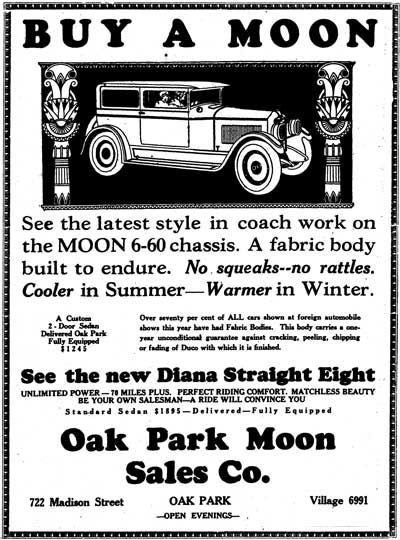
Moon Motors put out at least one and likely
several 1928
Model Six-60 sedans with a canvas-and-leather body. The August 13, 1927
issue
of Automobile Topics described the Moon’s coachwork:
“Over this expanded metal is placed a couple
of layers of
cotton wadding which serves not only as padding and to give smooth
appearance
when finished but also as a deadener for sound and an insulator against
heat
and cold. A heavy canvas is then stretched tightly over the wadding to
force it
into the openings of the metal in order to prevent any possibility of
its
shifting or changing position and to make a true surface for the
leather cloth
which forms the outer covering. In the next step the leather cloth is
drawn
tightly over the body and securely tacked in place and is so
sectionized that
the exterior of the body is composed of a number of separate panels.
“The unusual durability of the fabric
construction is due
beyond a doubt to its extreme flexibility which permits it to weave
with the
chassis, much the same as a sapling will bend before a wind that would
break a
more rigid obstacle. A fabric-paneled body is much lighter than a
composite or
all-steel body and by reducing the weight of the superstructure of the
car the
center of gravity is automatically lowered thus making the car
infinitely
safer.”
Chrysler was the last major manufacturer to
offer the option
of a Meritas body, the March 3, 1928 issue of the Evening Independent
(Massillon, Ohio) reporting:
“Fabric Body On Chrysler Limousine
“An announcement of more than usual interest
is made by the
Chrysler Sales Corporation through the Lowry Motor Sales Co., to the
effect
that this company is now offering for special orders a Custom Fabric
Body
Limousine on its ‘72’ chassis. The new car attracted much favorable
attention in
the Chrysler display at the Commodore Hotel during the New York
automobile
show.
“The fabric automobile body has won
considerable popularity
in Europe and some observers of motor car trends are forecasting for it
a vogue
in this country.
“The process of manufacture, as described by
its sponsors,
provides for making the body frame from selected kiln-dried hardwood,
which is
accurately machined, carefully glued and secured with joints reinforced
when
necessary. This is covered with expanded metal lath, giving strength
with
extreme lightness, the manufacturers explain. Cotton wadding is used as
the
next layer in the fabric to absorb vibration, and a heavy canvas is
stretched
tightly over it to assure smoothness of surface. The construction is
finished
with a covering of Meritas Leather Cloth, a fabric with a hard weather
proof
surface which is said to retain its beauty almost indefinitely.
“In the ‘72’ Custom Fabric Body Limousine,
now offered by
Chrysler, the fabric construction is employed rearward from the cowl
bar, the
hood being of metal, as usual.
“Appointments of the new limousine are of
characteristic
Chrysler luxuriousness. A disappearing glass partition, is provided,
and the
high quality of Broadcloth upholstery used
in both front and rear compartments makes the car
suitable for
either owner or chauffeur driving. Two theatre seats raise passenger
capacity
to seven. Arm rests are provided on both sides of the rear seat. Carpet
covered
hassocks, silk assist cords, dome light, Butler finish hardware, cigar
lighter,
and pockets in both rear doors add to the car's equipment.
“The color is a lustrous black, with a belt
moulding in
black ‘polished’ striping lacquer. Striping above and below the belt
moulding
is dark red. The car is listed at $1745. f.o.b. Detroit.”
In
addition to a handful of Meritas-clad bodies constructed by the firm
earlier in the decade, between 1928 and 1930 Merrimac constructed a few
convertible sedan bodies
for Rolls-Royce, although they
weren’t destined for new Springfield Rolls-Royce chassis.
In the late twenties
Rolls-Royce
did a considerable business selling refurbished Silver Ghost chassis
whose
older and worn-out limousine and town car bodies had been replaced with
more
saleable roadsters and sport coupes. They commissioned Merrimac to
built a
small series of convertible sedan bodies based on Brewster’s Newmarket,
that
was being currently outfitted on new Phantom I’s. At that time, the
Weymann
fabric body was gaining popularity in Great Britain, and by using a
Merrimac-built Childs’ body, Rolls-Royce could offer their American
customers
a similarly-equipped vehicle at a fraction of the cost of a new
Weymann.
Records indicate that at least ten were built, but gaps in the number
sequence
suggest a larger number of from 15 to 20. Two of them are known to
exist, both
bearing a Merrimac Body Company name plate on the doorsills. A few
leftover
non-fabric Merrimac roadster and touring car bodies were used in
Rolls-Royce’s
pre-enjoyed program as well.
The April 29, 1928 edition of the New York
Times included
highlights of a speech Herman A. Brunn, principal of Buffalo, New
York’s Brunn
& Co., gave before a meeting of the Society of Automotive Engineers
New
York chapter:
“SAYS CARS LACK PROPER COMFORT
“PRESENT-DAY interest on the part of
automobile engineers in
body design brought out the largest attendance ever registered at a
section
meeting of the Society of Automotive Engineers here last week.
“Nearly 700 were present to hear Mr. Herman
A. Brunn talk on
the trend of body design…
“Answering Questions, Mr. Brunn gave it as
his opinion that
the fabric body is not likely to supersede the metal type, since the
introduction of modern finishes gives opportunity to make repairs in
finish,
something, he said, that was impracticable in the fabric bodies because
of the
difficulty in making a satisfactory match between old and new material.”
Brunn’s
statements effectively marked the
end of fabric body
development in the United States. Weymann-American manufactured small
numbers
of their flexible fabric coachwork into 1930 when production shifted to
its replacement,
the 'semi-paneled' or ‘semi-rigid’ system which was introduced at the
1929
Paris Salon.
The January 1930 issue of Autobody proclaimed
“Weymann
American to
Build Metal Paneled Weymanns Here” but the onset of the Depression resulted in few customers for custom-built bodies and the
company
faded from the scene in 1931-32.
The plant was later utilized by former Weymann manager Albert H. Walker, who constructed a handful of bodies for Duesenberg. Walker also constructed a handful of Childs-like bodies
for the 1935 Ford-based Argonaut using a rigid-wooden frame. However
its exterior was covered with airplane linen coated with multiple
applications of airplane dope, not fabric leather.
Only 7 Walker-built Duesenberg bodies were built before he withdrew
from business in 1935, and today they’re referred to as
Walker-LaGrandes.
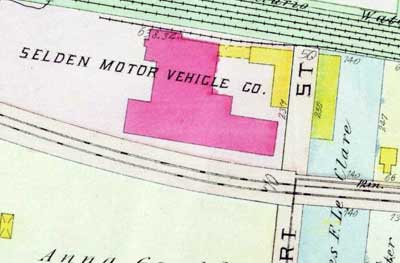
The Fabric Body Corp.’s, purchase of the
Selden Company was
ill-timed and the firm quietly withdrew from business in 1929. The
Selden
Truck subsidiary was sold to the Bethlehem Motors Corp. of Allentown,
Pennsylvania, who relocated Selden truck manufacturing operations to
their
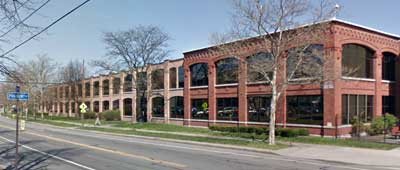
Allentown plan tin in 1929. The Selden factory still exists and is
currently
the home of Harris RF Communications, University Ave operations.
Fabric Body Corp.’s 1928 listing in the
Detroit Directory
indicates they had relocated from the General Motors building to
less-expensive
quarters:
“Fabric Body Corp.; K.L. Childs, pres.; J.H.
Main, treas.;
W. W. Gedge, v-pres- sec.; 228 Stormfeltz-Loveley Bldg.”
Kenneth L. Childs moved back to Boston,
Massachusetts where
he established the Auto-Hydro-Craft Co. in the spring of 1929, which
announced in
the May 31, 1929 issue of the Middleboro Gazette that it would be
manufacturing
the “latest type of motor boat”.
Their office was located in the Boston
Consolidated Gas Co.
building at 100 Arlington Street, Boston and they showed a small
outboard-equipped Auto Hydro Craft at the 1930 New York Boat Show.
Coincidentally Auto-Hydro-Craft’s aluminum hulls were constructed by another
automobile
body builder, Biddle & Smart of Amesbury,
Massachusetts.
The firm’s 16’ to 26’ runabouts were not entirely aluminum, being
constructed
using sheet aluminum over a wooden frame just like Biddle & Smart's
automobile bodies.
The 1929 edition of the Stone & Webster
Journal reported
that Biddle & Smart hoped their new boat manufacturing business
would help
offset the recent decline in auto body contracts:
“Biddle & Smart, automobile body
builders, are to begin
building boats for Auto-Hydro-Craft, Inc. It is hoped that this will
offset the
decrease in automobile body business.”
The pleasure craft industry was especially
hard-hit by the
Depression and Auto-Hydro-Craft, Inc. withdrew from business in 1932.
The 1936
edition of Marine Engineering and Shipping Review claims only four
hulls were
constructed by Biddle & Smart.
Childs married (marriage #4) Olivia M.
Rogers (daughter of
Frank & Olivia (Sylva) Rogers on August 21, 1934 in Hampton, New
Hampshire
– his occupation was restaurant manager.
The
1938 Boston Directory lists his occupation
as engineer, r.
316 Huntington Ave. (Somerville is a northern suburb of Boston). By
that time he had founded Automatic Food Equipment Inc.,
Somerville, Mass., to market the Shal-O-Fryer, a modern continuous
gas-guled short-order fryer that was consturcted in small numbers by
the Artisan Metal Prouducts Co. of Waltham, Mass. By that time his forerm employer, Standard Textile Products Co., had been reorganized as the
Standard Coated Products Corp.
His WWII Draft Registration Card lists his wife
as Olivia M.
Childs, address 120 Dwight St. New Haven Conn., his employer as the
Peter Forg
Mfg. Co., Somerville, Mass.
Founded
in 1881, Peter Forg Mfg. later manufactured stamped sheet-metal parts
for regional automobile manufacturers such as Stanley and Rolls Royce.
Still
in business today they specialize in deep drawn metal parts and have
the
capability of stamping material up to ¾" thick.
Childs retired in the late 1950s, moving to Boston, Mass where he lived at 218 Beacon St., passing away on April 7, 1984 in Barnstable, Mass.
© 2013 Mark
Theobald for Coachbuilt.com
Appendix 1 Childs Patents:
Automobile Body Construction - US Pat. No.
1498234 - Filed
Nov 17, 1922 - Issued Jun 17, 1924 to Kenneth L. Childs
Vehicle Body Construction - US Pat. No.
1579466 - Filed Jan
2, 1923 - Issued Apr 6, 1926 to Kenneth L. Childs and assigned to the
Fabric Body
Corp.
Automobile Body Construction - US Pat. No.
1641319 - Filed
Apr 30, 1923 - Issued Sep 6, 1927 to Kenneth L. Childs and assigned to
the
Fabric Body Corp.
Frying Apparatus – US Pat. No. 2124186 -
Filed Dec 4, 1936
- Issued Jul 19, 1938 to Kenneth L. Childs
Frying Apparatus - US Pat. No. 2176869 -
Filed Jul 6, 1936
- Issued Oct 24, 1939 to Kenneth L. Childs
Frying Apparatus - US Pat. No. 2219949 -
Filed Mar 9, 1927 -
Issued Oct 29, 1940 to Kenneth L. Childs
Frying Apparatus - US Pat. No. 2219950 -
Filed Aug 24, 1937
- Issued Oct 29, 1940 to Kenneth L. Childs
Frying Apparatus - US Pat. No. 2248659 -
Filed Dec 18, 1939
- Issued Jul 8, 1941 to Kenneth L. Childs
Design For A Cigarette Ash Tray Unit - US
Pat. No. D153115 -
Filed Apr 28, 1947 - Issued Mar 22, 1949 to Kenneth L. Childs and
assigned to
Ken Childs Inc.
Frying Apparatus - US Pat. No. 2652767 -
Filed Nov 27, 1948
- Issued Sep 22, 1953 to Kenneth L. Childs and assigned to Artisan
Metal
Products Inc.
|