|
|
|
 |
||||||||||
|
||||||||||
|
|
||||||||||
|
||||||||||
|
||||||||||
|
|
||||||||||
|
|
|||||||||
|
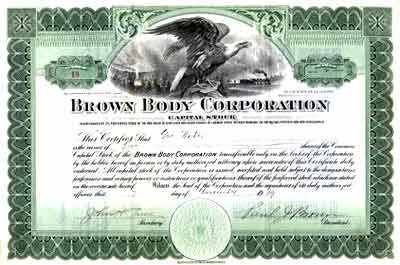
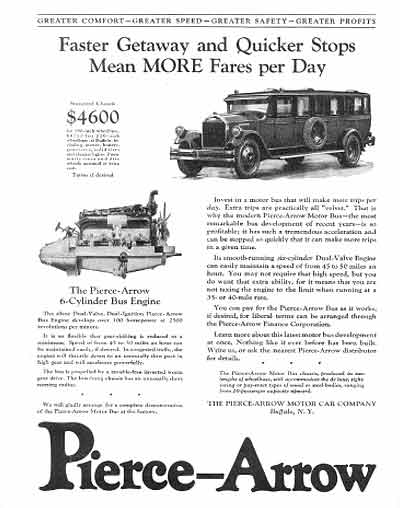
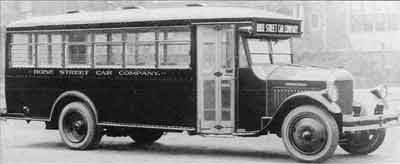
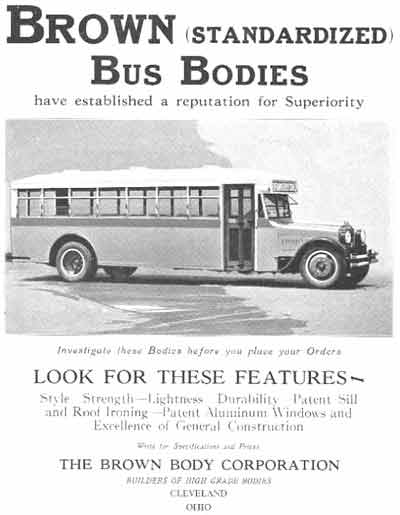
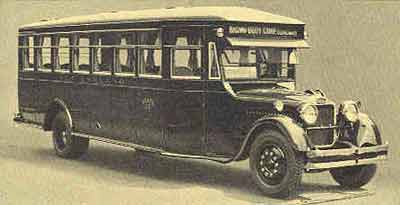
The Brown Auto Carriage Company was formed by Paul J. Brown (1864-19xx) to concentrate on the manufacture of automobile and commercial vehicle bodies. Incorporated in 1909 with $15,000 in capital stock, investors included P. J. Brown, president; H.E. Benfield, C.C. Wise, I.R. Graham, R.A. Wilbur. Brown served as President, and John H. Price, Secretary. Brown had been a partner in the Broc Carriage & Wagon Co., a Cleveland, Ohio coachbuilder who started producing automobile bodies in 1903. Brown was born in Zanesville, Ohio on November 10, 1864, and at the age of 11 was apprenticed to the Jacob Smith Carriage & Wagon Co. He completed his apprenticeship in 1879 and moved to Pittsburgh, Penn. to work in that city’s carriage industry. In 1890 he returned to Ohio as the shop foreman of Cleveland’s Jacob Hoffman Wagon Co. In 1898, Brown left Cleveland to work for the Otto Armleder Co., Cincinnati’s largest vehicle builder. He returned to Cleveland in 1901, where he established the Broc Carriage & Wagon Company with F.A. Brand. Brand had previously been a partner in the Black Manufacturing Co. of Erie, Pennsylvania, manufacturers of the Tribune Bicycle. At the time of Broc’s 1903 incorporation, Brown was elected its vice-president and general manager, F.A. Brand, president. Broc Carriage & Wagon Company began building automobile bodies as early as 1904 and business increased to the point where a new four story brick factory was erected at the corner of E. 40th St. (1667 E. 40th) and Payne Ave. in 1906. During 1908 Brand decided that the firm would manufacture an electric vehicle. Brown felt the venture was a risky one, and decided to sell his share in the firm and retire to his suburban Cleveland farm. Apparently the life of a gentleman farmer did not agree with Brown and within the year, he had formed a new business to manufacture automobile bodies. In the meantime, a prototype of Brand’s Broc Electric had been completed, and Brand’s ‘Perfect Car’ entered production in 1910. In a review of the Broc, the Cycle and Automobile Trade Journal thought that: “... it might be pertinent to enumerate some of the points on which the company bases its claims, and which go far toward putting it in the perfect class. These include theft proof safety appliances, continuous torque control, efficiency and durability, interchangeable bodies, simple and effective controller, ample brakes, interchangeability of parts, imported German ball bearings throughout, and the highest quality of material and workmanship possible." The Brown Auto Carriage Company was incorporated in 1909 with $15,000 in capital stock, investors included Paul. J. Brown, president and general manager; H.E. Benfield, C.C. Wise, I.R. Graham, and R.A. Wilbur. When Brown left Broc, the firm was reorganized as the Broc Carriage Company, and once production of the electric was in full swing it was once again reorganized as the Broc Electric Vehicle Company. In 1914 Broc merged with two smaller electric car manufacturers, Argo and Borland-Grannis, emerging as the American Electric Car Company. The corporation continued to market their vehicles under the Broc moniker and F.A. Brand remained president of the reorganized firm. In 1915, American Electric relocated to a new plant in Saginaw, Michigan. Early Broc Electrics were chain-driven, but an optional shaft-drive soon appeared. Various drive options were available, and some models featured duplex drives whereby the car could be driven from either the front or rear seat. Early versions were all tiller-controlled, but later cars were offered with steering wheels and a foot-operated speed control. Offered in four main body styles, Stanhopes, Victoria, coupes, or Brougham, the sturdy vehicles were equipped with Westinghouse motors, and were price from $2,100 to $3,500. Unfortunately the firm’s giant recapitalization coincided with a sudden decline in sales of electric vehicles and American Electric was forced into bankruptcy at the end of 1916. As Brown had anticipated, over the long run, his Auto Carriage Co. had been a less-risky venture. Although some very early Ford trucks were sold with commercial bodies, Ford discontinued the program in 1913. For over ten years Ford had literally given away their truck body business to independent builders around the country and in 1923 decided to stop being so generous, and implemented a new fully equipped Ford Truck sales program starting with the 1924 model year. Brown offered a number of commercial bodies for the Ford Model T and TT chassis ranging from simple screenside delivery vans to all-steel coal and rubbish bodies. The also offered bodies covered and/or lined with Agasote, a fire-resistant high-density fibre-board commonly used in rail cars for ceilings and compartment linings. During the teens there was plenty of automobile production in and around Cleveland, but many of the local firms had failed during the post-war depression of 1919. Brown started to concentrate on commercial and motor coach bodies and was reorganized in 1919 as the Brown Body Corporation, to better reflect its main line of work. Tragedy struck when Brown Body’s factory was destroyed by fire on Dec 7, 1922, placing all 65 of the plant’s craftsmen out of work. The loss was put at $60,000, and the fire was determined to be of an incendiary nature. Much of the loss was covered by insurance and the firm relocated to temporary quarters while the plant was rebuilt. Peerless distributors sold a small number of hearse and ambulances in the teens and twenties that had had ‘factory’ bodywork supplied by Brown and during the same period, they also supplied bus and parlor coach bodies to another Cleveland manufacturer, the White Motor Car Company. Brown also built a number of parlor coaches and commuter buses for the Pierce-Arrow Model Z bus chassis, which was introduced in 1924. Designed specifically for bus duty, the dropped-frame chassis used the Pierce-Arrow’s Series 33 Dual-Valve 6-cylinder engine and was available with a wheelbase of either 196" or 220". Brown had a formidable competitor in the Bender Body Company, and despite getting some work from White, Brown was out of business by the start of the Depression. There were two other unrelated firms that used the Brown Body Company moniker. The first was the Brown Body Company of Albany, New York. Incorporated in 1910 to manufacture automobiles and coachwork, it’s doubtful the firm survived to produce any actual bodies. A second firm, the Brown Body Company of Zanesville, Ohio, was marginally more successful. Brown Body Company started life as the Brown Manufacturing Corporation. Brown Mfg. was formed in the 1880s to manufacture plows and other agricultural implements. At the turn of the century they added trucks and farm wagons to their product line, and by the late teens were building commercial truck bodies. Brown Mfg. sold their truck body business in 1930 and the new owners established the Brown Body Company at 807 North 7th St. in Zanesville. Within the year the firm had reorganized as the Pioneer Body and Fender Company, a full service garage, service station and commercial body repair and manufacturing facility. D. W. Downing was General Manager of both firms. © 2004 Mark Theobald - Coachbuilt.com
|
||||||||||
|
||||||||||
|
||||||||||
|
||||||||||
|
||||||||||
|
||||||||||
|
|
||||||||||
|
|
||||||||||
|
|
||||||||||
|
||||||||||
|
|
||||||||||
|
|
||||||||||
|
|
||||||||||
|
© 2004-2012 Coachbuilt.com, Inc.|books|disclaimer|index|privacy |
||||||||||