|
|
|
| |
|
| |
||||||||||
|
||||||||||
| |
||||||||||
|
||||||||||
|
||||||||||
|
|
|||||||||
|
The Bender, Robinson Co, Inc. was a Delaware Corporation - sometimes referred to as Bender-Robinson or Bender & Robinson - organized in 1913 to manufacture automobile bodies. The firm was a reorganization of Bender & Robinson, a firm formed sometime around 1890 by John Bender and Andrew Robinson to produce fine carriages. The small factory was located at the corner of North 11th and Roebling Sts., in the Williamsburg section of Brooklyn, New York, near Greenpoint Park, (renamed in 1910 as McCarren Park). Some bespoke work was done by Bender, Robinson Co. for Manhattan automobile importers and retailers and between 1914 and 1917 the firm supplied production bodies for the Singer Motor Co. Inc. whose 630 Jackson Ave., Long Island City, New York manufacturing facility was located less than two miles away from the Bender, Robinson Co. factory. The 1880 US Census lists John Bender (I) as a carriage maker in Flushing, Queens. John Bender (I) was born in 1816 in Wittenberg (misspelled as Witenburgh), Germany. In Germany he married his wife Minnie, and the blessed Union produced two sons, John (II), born in Wittenberg in 1852, and Fredrick born in Wittenberg in 1853. The 1880 US Federal census lists John (II) as a carriage blacksmith and Fredrick as a carriage painter. Other members of the firm included Jacob Miller, a 45-year-old wheelwright, born in Wittenberg; L. Grossman, a 30-year old wheelwright born in Wittenberg; E. Washwell, a 30-year-old wheelwright born in Prussia; John Metzgar, an 18-year-old apprentice born in New York; John Donohoue, a 14-year old apprentice born in New York; T. Garowelly, a 30-year-old horse-shoer born in Ireland; and Sawler Bender <b.1866>, the 14-year-old daughter of ??? Bender, who was employed as a servant and born in New York. In the early 1890s Bender decided to relocate his carriage business closer to lower Manhattan, and entered into a partnership with a Brooklyn carriage builder and blacksmith named Andrew Robinson. The pair established their business at the corner of North 11th and Roebling Sts., Brooklyn in the style of Bender, Robinson Co. The factory was conveniently located to the Robinson family home which was located at 537-541 Lorimer St., less than a half-mile from the Bender, Robinson carriage factory. Bender searched for a new residence near the factory and on May 29, 1894, the New York Times reported:
91-93 North Seventh St. was also located within a half-mile of the new Bender, Robinson factory and as was the custom at the time, both proprietors (and a majority of their employees) now lived within walking distance of their business. During the first part of the twentieth century, John Bender (II)’s three sons; Herman (1883-1964), John (III)(1887-1967) and Joseph (1890-1967), began working for their father at his Brooklyn carriage shop. The three Bender brothers joined Andrew Robinson’s son, Andrew Jr., who was already working for the firm when Herman, the eldest Bender started his apprenticeship. On Mar 9, 1898, Andrew Robinson Jr., had filed a patent application for a carriage axle box: US Pat. #620673. The four apprentices started off working on carriages and were first-hand witnesses to the firm’s transition from manufacturing carriages to automobiles. Bender, Robinson Co. enjoyed a good reputation amongst New York City’s early automobile importers and produced a number of automobile bodies for Manhattan’s best-known independent automobile body designer, Karl H. Martin. That well-earned reputation led them to enter into a contract to supply production automobile bodies for the recently-organized Singer Motor Co. in late 1913. To gain much needed capital for the new contract, the firm was incorporated in the state of Delaware as Bender, Robinson Co. on November 13, 1913. Bender, Robinson Co. exhibited two bodies on Singer chassis at the January 1916 New York Auto Salon. The New York Times’ coverage of the event on Tuesday January 14, 1916 included a description of one of the vehicles:
The January 9, 1916 issue of the Automobile covered both Singers:
Noted auto body designer and engineer George J. Mercer mentioned the Bender, Robinson–bodied Singers in a column in the January 20, 1916 Automobile entitled “1916 Body Design is Uniform” which is excerpted below:
Charles Singer, Jr. one of the heirs to the Singer Sewing Machine Co., had been general sales manager for the Palmer & Singer Mfg. Co., the predecessor of the Singer, since 1910. When that firm went bankrupt in 1914, Singer purchased the name, patents, goodwill and parts of Palmer & Singer and set up the new business in the former Alco service facility in Long Island City. Unfortunately production of the Singer ceased with America's entry into World War I on April 4, 1917, and shortly thereafter Bender, Robinson Co. was forced into bankruptcy. Historian G.N. Georgano estimates that Singer produced 500-550 automobiles, most of them prior to the start of the World War. After an initial July 22, 1917 hearing, the Federal Court in Manhattan appointed B.B. Lewis trustee for the firm’s receivers on August 3, 1917. Additional motions were heard in the case on November 12, 1917 by Judge Augustus A. Hand and on December 24, 1917 Federal Judge Manton declared the firm insolvent. Early Duesenberg Model As were bodied by the New York distributor who purchased bodies from northeast coachbuilders who included H.H. Babcock, Springfield and Woonsocket. The first production Model A, chassis no. 600, survives today bearing an attractive circa 1917 Bender and Robinson opera coupe body. As the Model A debuted in 1921 it remains a mystery as to why an old body was used. Duesenberg historian Randy Ema reports that the vehicle’s serial number, 600, verifies that it is the very first production Duesenberg and states that after being used as a demonstrator it was sold in 1922 to Samuel Northrup Castle, a founder of the Castle and Cook Co., a Hawaiian sugar cooperative. The beauty of that car reveals how far ahead of the curve Bender, Robinson's designs were for that time. In 1920 Bender, Robinson Co.’s corporate charter was revoked by State of Delaware for non payment of their annual incorporation fee. After their stunning debut at the 1916 Auto Salon a number of northern Ohio- and Indiana-based automobile manufacturers had approached the Bender, Robinson Co. to see if they were interested in establishing a body plant in their part of the country. At that time, the partners were uninterested, but the when the firm was forced into bankruptcy eighteen months later by the evaporation of Singer body orders, the three Bender Boys started making inquiries. Realizing that their business prospects in the metropolitan New York area were severely limited, the trio eventually entered into a contract with Ohio-based financiers and relocated to their hometown of Cleveland, Ohio in 1919. In late 1919 the Bender Body Co. was organized with at capital stock of $75,000. Incorporators included Herman Bender, Emanuel J. Uhlyarick, Herman Kronenbergeer, John Kern and Peter Boeowski. One Bender, Robinson-bodied car, a 1914 REO recently owned by Jerry Singer of Cleveland Georgia, bears a coachbuilder’s plate from Andrew Robinson, Body Builder, with N. 11th & Roebling St., Brooklyn given as an address. At that time the R.M. Owen Co. was the Manhattan distributor of for Premier and REO automobiles, so it’s likely that Jerry Singer’s REO was bodied by Bender, Robinson. As to why the plate only bears Robinson’s name remains a mystery. The R.M. Owen Co. (Raymond M. Owen and his brother Ralph Owen) were also the manufacturers of the short-lived Owen Magnetic automobile, a car built using the Entz patent electric transmission. Bender, Robinson are thought to have bodied a handful of early bodies for that chassis as well. The following transcript mentions the relationship between R.M. Owen Co., Karl H. Martin and Bender, Robinson Co.:
With financial assistance from their new partners the brothers purchased a parcel of land at the southwest corner of Barberton Ave and 62nd St. and erected a 150,000 sq.ft. factory. Before they had even completed the building, the Bender Body Company had received firm orders for over 2,000 automobile bodies. At the 1921 Body Builders' Show, held in conjunction with the New York Automobile Show, Bender exhibited a Franklin Coupe and a Kurtz Automatic Sedan. Bender supplied production bodies to Duesenberg, Franklin, White and others early as 1919. The $2,250 Kurtz Automatic, the “car without levers” was built in Cleveland by Cyrus B. Kurtz and utilized his patented transmission that was shifted electrically using a small electric switch attached to the steering column.
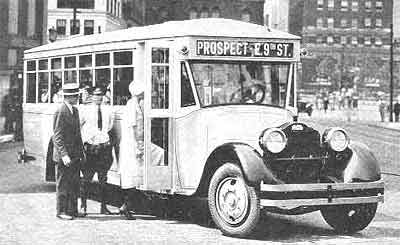
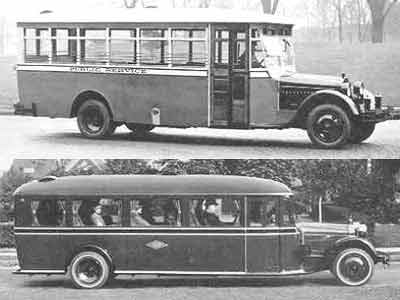
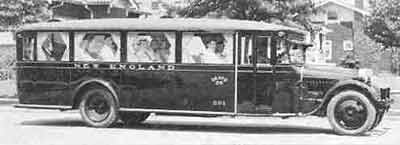
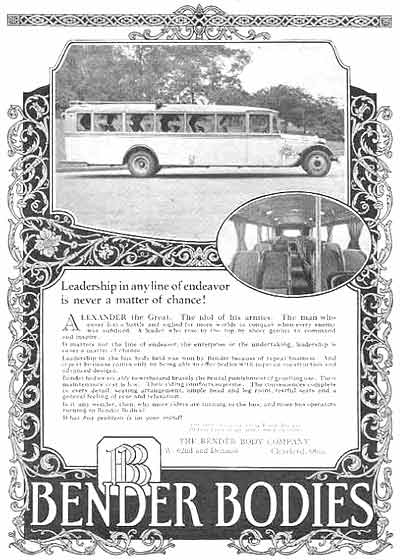
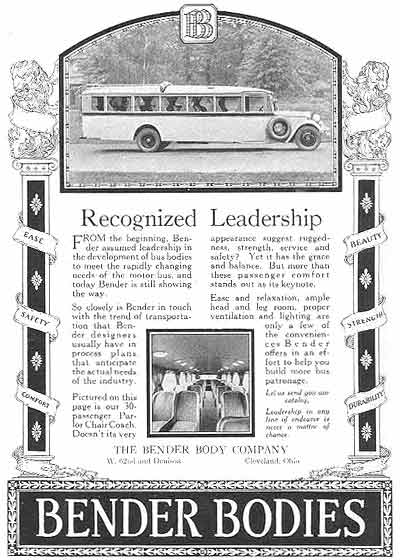
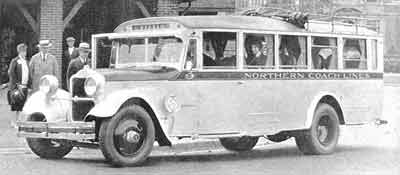
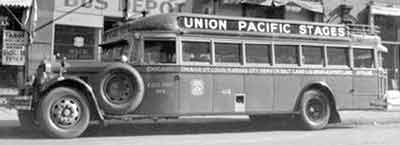
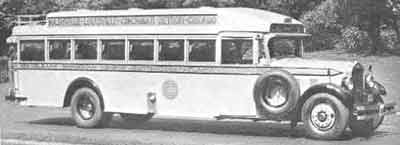
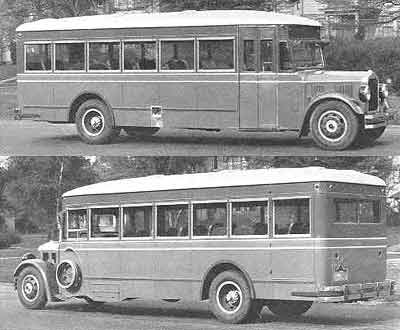
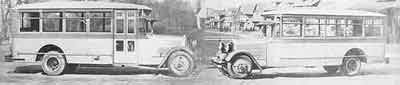
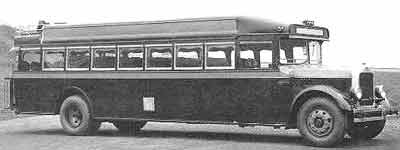
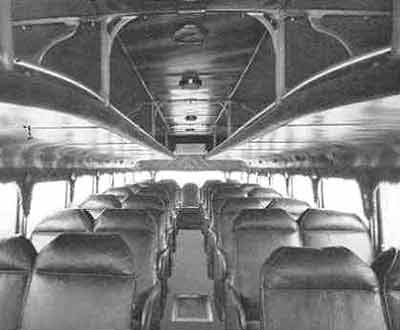
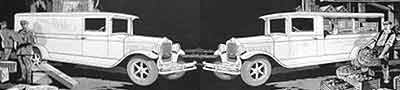
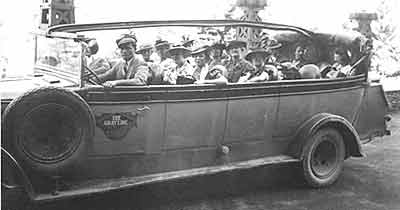
Although the Kurtz was “favored by women drivers” it was not favored by many others and didn’t survive the year. When the Leon Rubay Co., White Motor Co.’s captive coachbuilder, went out of business in 1923, Bender started getting work that would have normally been built at Rubay’s 1318 West 78th St. factory. The move coincided with White’s introduction of their first line of purpose-built bus chassis in 1923. From that point on, Bender’s success was closely tied to their relationship with White. A 1922 order for 9-12 passenger bus bodies from the White Motor Company caused the brothers to switch gears, and by the fall of 1923, half of the plant had been converted over to the manufacture of bus bodies for their Cleveland neighbor. During the mid-to-late twenties, White became the nation’s most popular bus chassis, and Bender, it’s most popular bus body. The increased business resulted in the construction of new outbuildings and the firm’s accounting and design offices were relocated one block north to a new office building at the corner of 62nd St and Dennison Ave. A second floor was added to the Barberton Ave plant and by 1929 the firm’s operations occupied 350,000 sq. ft. Bender also produced screen-side and van bodies for White's Model 60 light truck during the late 20s. Although Bender was White's primary supplier of bus bodies, the Brown Body Corporation, another body builder located in Cleveland, provided White with some bodies during the late twenties and early thirties. While an occasionally Bender body found its way onto a customer-supplied chassis, such as a fleet of Brockways built for the City of Syracuse, the bulk of the firm’s output rode on purpose-built White Motor Co bus chassis. In October of 1933 Bender supplied an oversized 35-passenger coach to the Nairn Transportation Company of Damascus, Syria for use on its Baghdad to Damascus run. The vehicles were similar to today’s toter homes although the bodies were very streamlined, looking like a Curtiss Aerocar on steroids. Early Nairn Transportation coaches were built by the Safeway Six-Wheel Coach Company of Philadelphia who had gone out of business in the late twenties. A press release gave details of the bodies which were to be mounted on what was essentially a super heavy duty White cab/chassis with an attached fifth-wheel trailer:
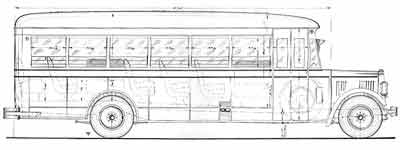
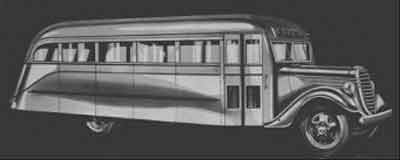
A 1936 press release introduced Bender's line of re-designed bus bodies:
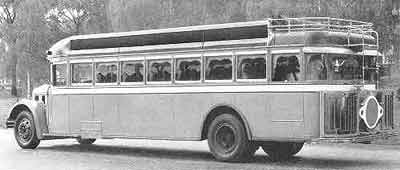
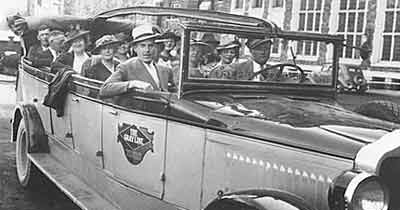
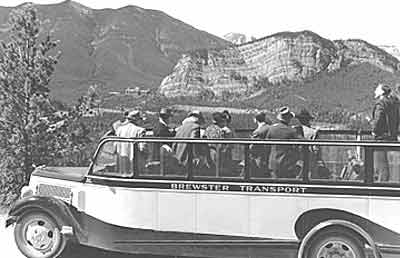
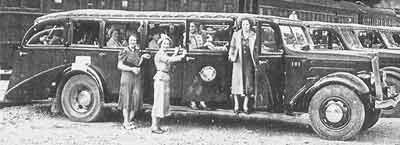
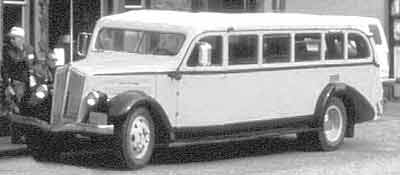
Bender’s lasting claim to fame is the open-topped tour buses they built for the National Park Service. During 1935, the Service conducted product evaluations at Yosemite National Park to determine the best vehicle for touring in western national parks. Four chassis manufacturer’s participated in the competition and the White Model 706, with its strong 318 cu. in. 6- cylinder engine outperformed the other entries and was awarded the lucrative contract to supply the Park Service’s tour operators with sightseeing buses. The 706’s innovative radiator cowling and grill was designed by Alexis de Sakhnoffsky, while Herman Bender and White’s F.W. Black were credited with the design and engineering of the innovative open-topped touring bodies built specifically for the competition. The bodies used 5 doors on the right side (passenger or curb side) and a single door on the left for the exclusive use of the driver. The current crop of 1:48 scale Model 706 die-cast replicas erroneously include 5 doors on both sides of the body. White had been supplying vehicles to Park Service tour operators since 1917 when Yellowstone took delivery of 117 White touring cars. In 1920 the cars were replaced by White Model 15/45 10-passenger bus chassis, and by 1924 over 300 Model 15/45 were in use at Yellowstone, most of which had been bodied by Bender. Those ageing Model 15/45 buses were replaced by the vastly superior Bender-bodied White Model 706 starting in 1936. Between 1936 and 1940, the Park Service’s concessionaires purchased 98 Model 706s for use at Yellowstone National Park and 35 for use at Glacier National Park in Montana. Many more were purchased by municipalities and private concerns, including the Broadmoor Hotel in Colorado Springs and the Skagway Streetcar Company in Skagway, Alaska. Some of the original vehicles remained in service through the late 1990s, when the National Park Service’s tour operators had a few of the original coaches rebuilt using modern medium-duty truck chassis. Fortunately the sturdy Bender bodies were still usable, and simply needed repainting and reupholstering to be placed back in service. Alexis de Sakhnoffsky and Eric Langlands (1885-1969) were freelance designers that worked on-and-off for White, with Langlands producing some freelance designs for Bender. Another Bender contributing designer was Betty Orr, the national sales manager of the Royal-Wilhelm Coach Company of Sturgis, Michigan. Orr was called in to help design the interiors for Bender’s Travel Mansion travel trailers. During the mid thirties, Bender hired H.O. DeBoer, the former sales manager of Superior Body Co. to head its transit and school bus body sales department. In 1937 Ford introduced a new forward control bus chassis, the Model 70, which featured a 171" wheelbase powered by an 85 hp flathead V8. For the Model 70 chassis, Bender introduced a very box-like 25-passenger forward control body that was fabricated in sections using an all-steel framework covered by an aluminum skin. Unfortunately, most Model 70’s were sold with standard Union City-built coachwork and the pricier Bender bodied-version didn’t catch on. By the late thirties, General Motor’s Yellow Coach Division had made significant inroads into the lucrative city bus manufacturing business and the sales of White coaches experienced a steady decline. Bender looked to other products to keep their factory busy, and it was decided that the emerging travel trailer business might be more lucrative. Although Bender was primarily a bus body builder, they had been building travel trailers since 1922-23 when the built a full custom job called ‘The Ark’ for Will Keith Kellogg, the millionaire breakfast cereal manufacturer. The luxurious trailer was towed by a specially built White tractor and featured imported mahogany paneling and Spanish leather upholstery throughout. The trailer boom of the mid thirties can be traced to improvements in the nation’s highways and to their appearance in a few popular Hollywood features. By 1936 an estimated 250,000 Americans were involved in the hobby which was featured in a humorous 1937 Terrytoons short, the ‘Tin Can Tourist’. Manufacturers couldn’t keep up with the demand and even luxury builders like Teller-Bowlus, Covered Wagon, Curtiss and Airstream had their production sold out months in advance. In 1936 Bender announced that they were purchasing the former Willys-Overland plant in Elyria, a small Central Ohio community located 25 miles southwest of the firm’s Cleveland factory. The 550,000 sq.ft. 4-story plant, located at 400 Clark St., was originally built in 1905 by the Garford Truck Co. The firm also manufactured the chassis for the Studebaker-Garford automobile at the Elyria facility through 1911. When Garford moved to Lima Ohio in 1915, the plant was acquired by Willys-Overland who used it to assemble automobile engines. From 1927-1928 the Falcon-Knight was manufactured there by the Willys-controlled Falcon Motor Company. Willys absorbed the firm in 1929, and from 1929 through 1931 the plant manufactured truck components for Willys-Overland. Willys had no luck selling the plant so from 1932-1936 it remained idle. At that time of the Elyria plant purchase, the firms officers were as follows; Herman Bender, president and general manager; John Bender, secretary and manager of the Cleveland plant and Joseph Bender Sr., treasurer and manager of the Elyria plant. The third generation of body-building Benders joined the firm in the mid thirties. They included Joseph Bender Jr., assistant manager of the Elyria plant, Joseph H. Bender a designer at the Cleveland plant, John Bender Jr., a staff engineer and Rudolph Bender, assistant works manager of the Cleveland plant. The Bender Travel Mansion debuted in 1937 and Bender hired White Motor Co.’s purchasing director Bert Graves to handle the same duties for the new plant in Elyria. Within a few short months, trailer production at the Elyria plant numbered 350 trailers per month. Bender’s sales force traveled the country in a fleet of company-issued Bender Travel Mansions. At a 1937 sales meeting, E. J Speh, manager of Bender’s trailer division, explained to his salesmen:
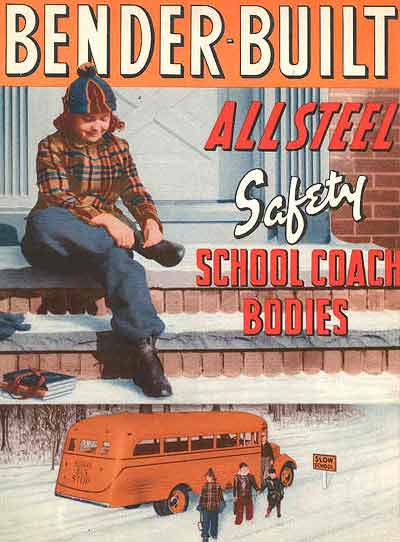
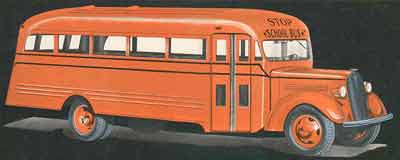
A July 8, 1938 John A Bender announced that the bus plant in Cleveland was recalling 150 laid-off workers to assist their current staff of 300 help complete an order for 1,500 school buses to be delivered by September 15th. At that time the firm’s Elyria, Ohio plant employed 140 workers. On October 17, 1939, a headline in the Elyria paper declared:
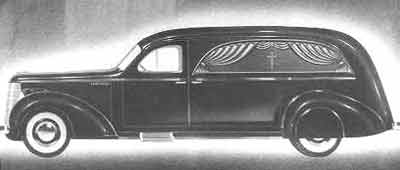
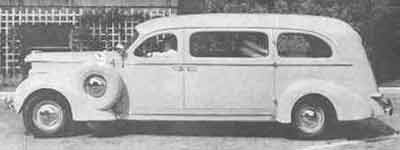
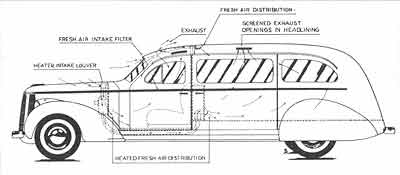
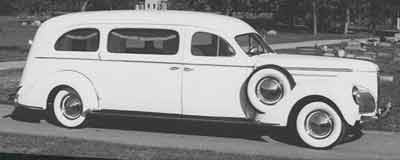
It turned out that the rumors were true and during early 1940, all the firm’s operations were transferred from Cleveland to the Elyria plant. By the time Bender entered the trailer manufacturing business in earnest, there were already a large number of trailer manufacturers, and their timing couldn’t have been worse. An economic recession in 1939 thinned out the ranks of the nation’s trailer manufacturers, and those that survived soon found that the raw materials used in their manufacture were increasingly being set aside for war-related manufacturing. At the start of the 1938 model year, Bender started producing hearse and ambulance bodies on Studebaker chassis. The two firms entered into a reciprocal agreement similar to the arrangement that Superior had previously enjoyed with the South Bend automaker. Bender’s coaches resembled the products of Superior however the rear side doors were noticeably narrower than Superiors. Starting in 1939 some Bender ambulances featured streamlined emergency light pods and backlit name-plates. A gothic hearse was also built that same year that was mounted on a 1939 Cadillac chassis, however the vast majority of the other firm’s professional cars utilized Studebaker chassis right up until the firm’s bankruptcy. When it became apparent that the production of travel trailers would not keep the firm afloat, Bender began promoting a steel wall construction system for new home construction. The Bender Steel Home Wall debuted in 1938 but was not readily accepted by the nation’s builders. The firm filed for bankruptcy under Chapter X of the Federal Bankruptcy Act on February 19, 1941. No reorganization plan was forthcoming so the company was adjudicated as bankrupt. Production continued and up to four hundred workers remained employed at the Elyria plant producing bus bodies and aircraft sub assemblies for the military. At the time of filing Benders largest creditor was the Federal Reconstruction Finance Corporation to which it owed $578,280. Accounts receivable totaled $326,331 which included $110,000 due from the US Army and Navy. The firm’s power was disconnected on June 25, 1941 and the doors were closed for the final time. At the August, 4, 1941 meeting of the firms creditors, it was decided that all of the firm’s assets and real estate would be auctioned off. Even though Bender’s Elyria plant was heavily involved in the manufacture of aircraft parts for the military, the attack on Pearl Harbor had not yet taken place so the firm was allowed to go bankrupt. As it turns out only one major manufacturer of travel trailers, Wally Bynum’s Airstream Corp., made the successful transition from the Depression into the post-World War II era. Three major bus body manufacturers, Flxible, Superior, and Wayne made the same transition. The Bender auction took place over a three-day period, October 7, 8 & 9 1941. The firm’s real estate, tools and equipment were appraised at $1.4 million, and brought in enough money to pay back the $578,280 Reconstruction Finance Corp. loan. Other creditors weren’t so lucky and could only hope that the $326,331 in accounts receivable would be collected and distributed by Bender’s receivers. © 2004 Mark Theobald - Coachbuilt.com
|
||||||||||
|
||||||||||
|
||||||||||
|
||||||||||
|
|
||||||||||
|
||||||||||
|
|
||||||||||
|
|
||||||||||
|
|
||||||||||
|
© 2004-2014 Coachbuilt.com, Inc.|books|disclaimer|index|privacy |
||||||||||