|
|
|
 |
||||||||||
|
||||||||||
|
|
||||||||||
|
||||||||||
|
||||||||||
|
|
||||||||||
|
|
|||||||||
|
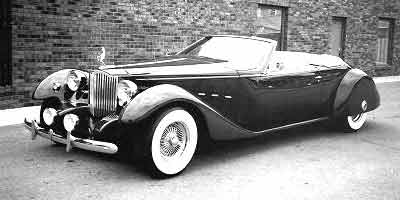
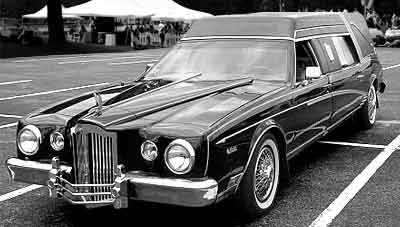
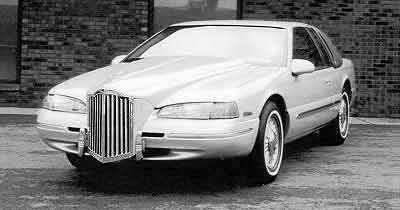
C. Budd Bayliff, was a huge Packard enthusiast who purchased the rights to the Packard name and trademarks in 1978 and soon introduced a line of Packard Custom Sedan and Coupe replicars based on late-model GM passenger cars at his 2100 Harding Highway shop in Lima, Ohio. His replicars ranged from simple cosmetic changes to elaborate body modifications such as new front and rear body structures with early-1930s style clamshell front fenders with side-mounts and a separate trunk. The front ends of some of Bayliff's modern Packards look remarkably like those found on the 1970 Stutzes and are often mistaken for them at car shows. A long-wheelbase Bayliff Packard was built for professional boxer Ernie Holmes in the early 1980s. Bayliff is known to have built 4 hearses, and had a hand in another one, which was the prototype 1983 front-wheel-drive Miller-Meteor Eldorado built by Jack Hardesty. Another one of the hearses was a service car conversion of a Suburban for a funeral home in Lima while the third was a short wheelbase Cadillac hearse built for his brother in Spencerville, Ohio using a "theft recovery" purchased from an insurance company. In the mid 1980s, the Long & Folk funeral homes of Wapakoneta and St. Marys, Ohio, had worn out a pair of 1981 Superior combination coaches they had been using for non-emergency medical transfers and funeral service. The 1981 Superiors were among the last combination coaches offered by any professional car manufacturer and John Long of Long & Folk visited just about every coachbuilder in North America trying to find new ones. Coming from a family of funeral directors, Bud Bayliff was a natural choice to handle the commission, and his shop's close proximity to the Long & Folk funeral homes allowed for close collaboration between Long and Bayliff. Bayliff had recently helped finished Jack Hardesty's fwd Miller-Meteor prototype and offered to build a similar vehicle for the Longs. After consulting with his clients, Bayliff chose the Buick Riviera as a donor-vehicle because of its size, strong V8 engine and automatic leveling rear suspension. Because of the expense involved in building these cars and the fact that going from Cadillac to Buick chassis would have meant a step down in prestige, it was decided to convert the coaches to Bayliff Packards. In the conversion process, the cars would have lost their Buick Riviera identity at the rear anyway, and Bayliff was already building Packards from Rivieras, so the conversion was a natural. Construction began in 1986 and the first one was completed in 1987, the second in 1988. Even though they were complete a few years after their titles indicate, both cars are registered as 1985 Rivieras. The two Rivieras were cut, stretched 46 inches and converted into five-door pillared hardtop landaus. The rear side doors are Riviera coupe doors, while the front doors are re-skinned Cadillac Seville units. Roof construction is all steel. A pair of 1973 Superior Cadillac combination coaches were cannibalized for components such as rear loading doors, attendant jump seats and miscellaneous hardware. Long & Folk's distinctive Bayliff Packard funeral coaches were finished in black with black vinyl tops and gray vinyl interiors. Rear compartments feature dual attendant seats and individually reversible rollers. The division partition houses the rear air conditioner, spare tire and storage compartments. One of the many problems encountered in the project was the taillights. Originally outfitted with large, round taillights in the rear doors and auxiliary taillights mounted beneath the rear bumper, Long and Folkes eventually replaced them with units from a 1985 Cadillac Eldorado. Only two Bayliff Packard funeral coaches were constructed, however production of Bayliff's
other Packards continued into the late 1980s. In 1992 C. Bud Bayliff sold the Packard name
and trademark to Canadian millionaire Roy Gullickson for an estimated
$50,000. By 1996 Gullickson had
developed his own full-size model for a modern Packard, inspired by the 1941
Packard Clipper sedan. Over the next two years he and five engineers and
technicians (plus a stylist from the original company) pounded out a
handcrafted working prototype at a cost of $800,000. Although he claims to have orders for 70 cars, Gullickson has yet to raise the $10 million needed to build his first batch of 10 to 12 cars, priced at $160,000 apiece. And he's managed to alienate himself from a major portion of his potential customers by sending cease-and-desist letters to anyone using the Packard logo on their website or parts business. © 2004 Mark Theobald - Coachbuilt.com, with special thanks to Bernie DeWinter IV.
|
||||||||||
|
||||||||||
|
||||||||||
|
||||||||||
|
||||||||||
|
|
||||||||||
|
|
||||||||||
|
|
||||||||||
|
||||||||||
|
|
||||||||||
|
|
||||||||||
|
|
||||||||||
|
© 2004-2012 Coachbuilt.com, Inc.|books|disclaimer|index|privacy |
||||||||||