|
The S.S. Albright Company of Sacramento was
typical of the many regional American coachbuilders who operated in the
early part of the twentieth century. When the principals of those firms
passed away in the second half of the century, their history was lost
forever. They can only be traced by using city directories or an
occasional advertisement in the local newspaper, which typically give
little to no information about the history of the firm or the quality
of its products.
Unlike the vast majority of those builders,
Albright’s history has been reasonably well-documented. An article
written by Albright giving the history of the firm was printed in a
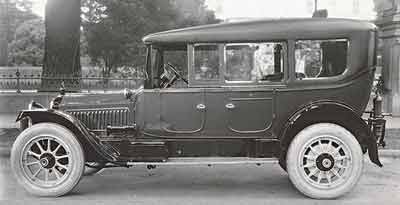
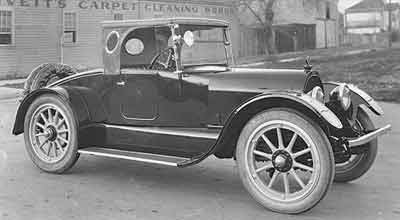
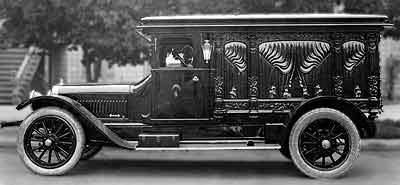
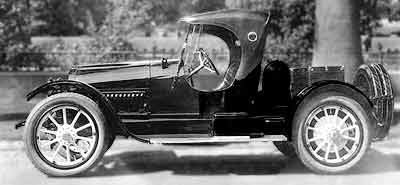
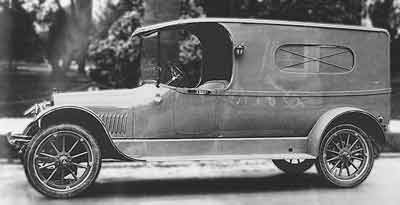
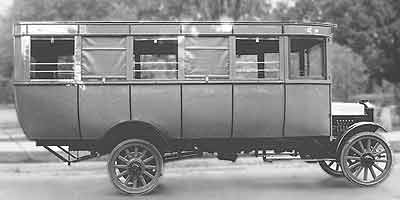
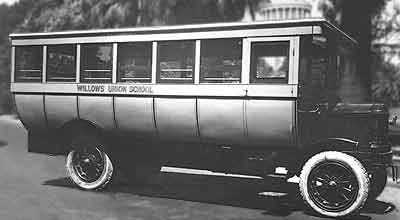
central California trade magazine and a handful of pictures of the
firm’s work taken by a commercial photographer, the McCurry Foto Co.,
managed to escape the paper drives of the Second World War.
Consequently, Albright’s story is not that of the
well-advertised bespoke custom body builder, but rather of the
forgotten regional firms which were located in every mid-to-large sized
city in North America. Many of these firms built bodies that were of
equal quality to those produced by the more celebrated practitioners of
the coachbuilder’s art, and it’s immediately obvious that Albright was
among them.
Sidney S Albright (b.1876-d.1948) was born near
the city of Bucyrus in Crawford County, Ohio. At the age of sixteen
years Albright was apprenticed to a Crawford County carriage-builder
where he became experienced in all aspects of the trade. After the
requisite three years had passed, Albright plied his trade in Dayton,
Ohio; Jackson, Michigan and metropolitan New York City.
It came to pass that Albright became known as a
first-rate painter and in 1896 he accepted a position as the foreman of
the large Studebaker Bros. Works in South Bend, Indiana. In 1903,
Albright left Indiana to take charge of the paint department of A.
Meister & Sons Company, a well-known Sacramento, California vehicle
builder.
By 1909, Albright had saved up enough money to
open his own firm, and established the S.S. Albright Co. on the first
floor of a leased building located at the intersection of 24th and K
Sts. in midtown Sacramento.
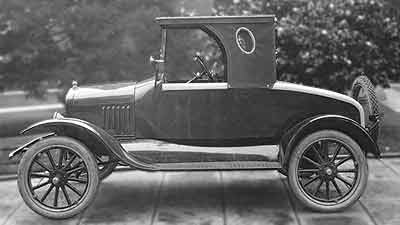
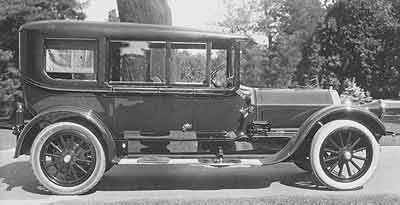
Early on Albright manufactured commercial bodies
and hearses for local customers and during the early teens began to
manufacture an occasional automobile body for Sacramento’s luxury car
dealers.
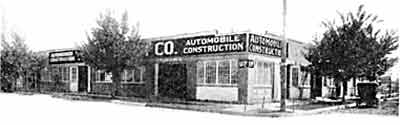
The second floor of the 28’ by 60’ structure was
soon utilized for storage of completed vehicles and in 1916 Albright
relocated from 1112–1114 24th St. to a new 30,000 sq.ft. daylight
factory located at the intersection of 13th and U Streets.
Period advertisements offered blacksmithing,
spring and radiator work in addition to the firm’s well-accepted
commercial and custom automobile body construction.
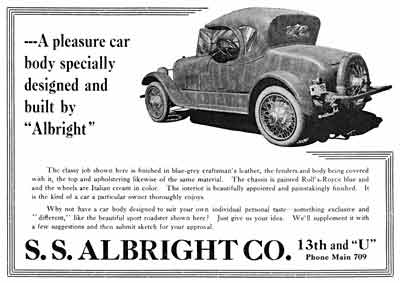
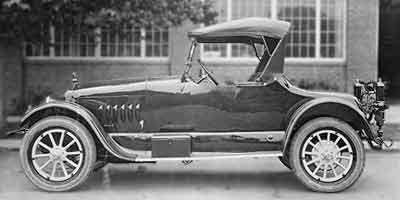
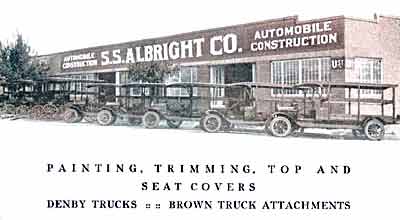
The advertisement at the top of the page reads:
A pleasure car body specially designed and
built by "Albright"
"The classy job shown here is finished in
blue-grey craftsman's leather, the fenders and body covered with it,
the top and upholstering likewise of the same material. The chassis is
painted Rolls-Royce blue and the wheels are Italian cream in color. The
interior is beautifully appointed and painstakingly finished. It is the
kind of car a particular owner thoroughly enjoys."
"Why not have a car body designed to suit your
own individual taste - something exclusive and 'different', like the
beautiful sport roadster shown here? Just give us your idea. We'll
supplement it with a few suggestions and then submit sketch for your
approval."
Another advertisement prompted Albright's
customers to:
"Paint Your Car A Victory Color. The new
victory colors are attracting the attention of many motorists whose
cars need painting. Why not choose one for your car?
Pershing Green, St. Mihiel Brown, Rheims Gray,
Armistace Yellow, Joffre Blue, Victory Red, Verdun Maroon and Italian
Cream were available.
"You know of course, that an "Albright" paint
job is done by expert workmen, using the finest materials. It is then
finished in scientifically constructed bake ovens that give a luster
and permanence that's unequaled."
Most of Albright’s work was for local merchants
and his well-equipped facility sold and installed the popular
Browntruck and Longford rear axle conversion kits which turned a
standard Ford Model T into a ½- to 3-ton medium-duty truck. They also
built a large number of delivery vehicles and distributed the popular
line of Reliance trailers.
Albright was vice president of the Sacramento
Auto Trades Association and wrote the following article for the June
1919 Your Protection magazine, a regional automotive-related trade
magazine:
“The Daylight Plant
“From a modest beginning in a 28 by 60
two-story building just a trifle more than nine years ago to a plant
now occupying approximately 30,000 square feet of space, thoroughly
modern and splendidly equipped in every detail, is the story of the
rapid growth of the S.S. Albright Co.
“October, 20, 1909, on Twenty-fourth, between K
& L, S.S. Albright started his little carriage shop, and the
quality of his work soon attracted a large following. In a short time
more space was necessary, and still more and more, until finally on
October 31, 1916. the S.S. Albright Co. moved to its present location
on Thirteenth and U, where a space of approximately 30,000 feet is
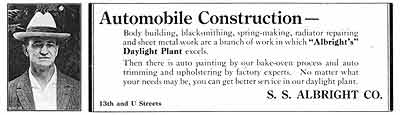
devoted to automobile construction in all phases, body building,
blacksmithing, bake-oven auto painting, trimming, radiator and
sheet-metal work.
“Besides, this progressive firm also
successfully handles the agency for BrownTruck and LongFord truck
attachments and Reliance Trailers.
“The BrownTruck attachment enables the owner of
any pleasure car, either new or used, to be conveniently converted into
a capable, finely constructed truck of from one to three ton capacity.
This enables the man with a hauling problem to solve it at the least
possible cost.
“The LongFord Truck Attachment makes the
ordinary Ford roadster or touring car into a three-quarter ton truck.
The wheel base is increased to 136 inches, thus providing a loading
space of eight feet back of the driver's seat. The original Ford is
thoroughly reinforced and the same pneumatic tires are used.
“The Reliance Trailers permit greatly
increasing the hauling capacity of a motor truck without appreciably
burdening it. It is a well-know fact that a man, a horse, or a motor
truck can pull more than it can carry - consequently one or more
Reliance Trailers is the ready solution of rapidly increasing hauling
problems at a greatly reduced cost.
“One of the outstanding featured and one that
invariably impresses every visitor to the plant is the continual flood
of daylight. By means of a saw-tooth roof a great abundance of natural
light is made possible at all times. This permits the men in the
various departments of the plant to do their work under the best
possible conditions. It also eliminates electric light bills, thus
reducing overhead expense, and finally, the cost of the finished work.
More than this, the plant is finely ventilated and so arranged that
every detail is handled with the least possible loss of time and effort.
“Body building of all kinds - pleasure cars,
stage bodies, bus bodies, truck bodies, delivery bodies, etc. - are a
very special feature in which the Albright Co. has earned an enviable
reputation for the sturdiness of its construction.
“Recently several specially designed passenger
car bodies have been started in the body building department and they
have attracted the attention of every one who has visited the plant and
seen them. A specially designed passenger car body permits the owner to
incorporate his own ideas as to convenience and such other special
features as may appeal to him; at the same time giving him the benefit
of the unusual work turned out by the Albright Company. Hearse bodies
also have been given very special attention and some of the finest jobs
of this kind that can be found in the Sacramento Valley are products of
the Albright plant.
“Blacksmithing, spring-making and repairing,
and auto chassis lengthening are also an important branch of this
firm's service.
“A special spring furnace and special tempering
process enable the Albright Company to build a complete spring or to
make accurate, satisfactory and lasting repairs of broken sections of
springs. This is just a special featured of the blacksmithing
department, which is equipped to handle all classes of blacksmithing
work, including auto chassis lengthening.
“But perhaps, most important of all is the bake
oven process employed in the final finishing of automobile painting.
This process gives to the varnish finish a permanence that outclasses
and outwears the finest factory job.
“Recently the auto trimming department was
moved into larger and more convenient quarters, due to the great volume
of work attracted to this department through the exceptionally fine
work turned out - particularly, the beautiful "Deluxe" tops.
“In order to meet a continual demand for
radiator and sheet metal work a department devoted to this class of
automobile construction has been installed. Special attention is given
the automobile, truck, and tractor radiator repairs as well as to
fender repairs, straightening bento or jammed fenders and removing
dents from automobile bodies. All other phases of sheet metal work are
given the accurate attention of expert workmen assisted by the best of
modern equipment.
“All in all, the S.S. Albright Company plant is
a credit to the community in which it is situated, catering to a large
volume of business through the entire Sacramento Valley and extending
well into the San Joaquin Valley.
“Visitors to the Albright plant are welcome at
any time, and those who are interested in seeing one of the best
arranged plants of its kind on the Pacific Coast will be more than
delighted with the systematical arrangement and efficiency methods
employed here.”
The combination passenger and freight commercial
body became popular on the west coast during the late twenties and a
period Albright advertisement offered their version of the vehicle
mounted on a 1930 White bus chassis. The bus/truck carried 8
passengers in the front compartment, with room for 1 1/2 tons of
freight in the rear.
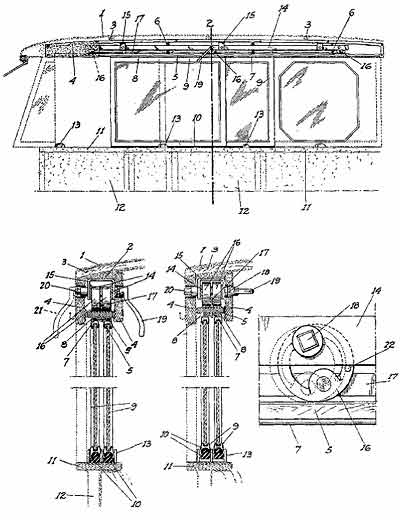
Albright held a number of patents relating to
'California Top' sliding windows and lightweight bus construction and
was an authorized distributor for the Denby Motor Truck Company in the
late teens and early twenties.
Unlike many of his competitors, Albright survived
the Depression although he was forced to vacate his 30,000 sq ft
factory in 1934 and relocate to a leased 50’ x 150’ facility located at
235 North 16th St. in north Sacramento. The city directory includes a
listing for S.S. Albright Co. through 1939, but from 1940-1943 it only
lists Albright’s home phone number and address – his occupation,
salesman.
Albright passed away at an Oakland residence in
1948 at the age of 73.
© 2004 Mark Theobald for coachbuilt.com
|