|
Formed in 1899, the American Car &
Foundry Company was one
of the numerous ‘trusts’ formed at the turn of the century - in effect
an
association that shored up its members through economies of scale by
combining their
supply, manufacturing, sales and marketing into one cohesive unit. At
the time
of its formation American Car and Foundry Company (or the ‘Car Trust’
as it was
popularly known) owned no factories or inventory, and was solely a
holding
company that controlled the majority of the capital stock of the firms
in which
it was associated. Its goal was to control the manufacture of railroad
rolling
stock by eliminating their competition through association, friendly
acquisition,
hostile takeover or putting them out of business.
All perfectly legal, providing they strictly
adhered to the guidelines
established by the Sherman Antitrust Act of 1890, which was designed to
prohibit
certain anticompetitive practices that jeopardized the well-being of
the public.
The goal of the three part legislations was to prevent restraints of
free
competition in business and commercial transactions which tended to
restrict
production, raise prices, or otherwise control the market to the
detriment of
purchasers or consumers of goods and services.
Section 1: “Every contract, combination in
the form of trust or
otherwise, or conspiracy, in restraint of trade or commerce among the
several
States, or with foreign nations, is declared to be illegal.”
Section 2: “Every person who shall
monopolize, or attempt to
monopolize, or combine or conspire with any other person or persons, to
monopolize any part of the trade or commerce among the several States,
or with
foreign nations, shall be deemed guilty of a felony”
Section 3 simply extended the provisions of
Section 1 to
U.S. territories and the District of Columbia.
The Clayton Act of 1914 added certain
practices to the list
of impermissible activities, which was followed two decades later by
the even
stricter Robinson-Pattman Act of 1936 which eliminated price
discrimination against
equally-situated distributors.
The formation of the firm was announced to
the country in
the February 7, 1899 issue of the Chicago Tribune:
“Car Companies Combine
“Detroit, Mich., Feb. 7.—It is positively
known that eight
big car companies scattered over the United States have been combined
under the
name of the American Car & Foundry company.
“The new company is incorporated under the
laws of New
Jersey with a capital of $60,000,000. The companies beside the
Michigan-Peninsular of this city entering the consolidation are as
follows:
Jackson & Woodin Manufacturing company, Berwick, Pa.; Missouri Car
& Foundry company,
St. Louis;
Ohio Falls Car Manufacturing company, Jeffersonville, Ind.; Union Car
company,
Buffalo; St. Charles Car company, St. Charles, Mo.; Wells & French
company,
Chicago; Terre Haute Car Manufacturing company, Terre Haute, Ind.”
Further details emerged in the February 8,
1899 issue of the
Boston Daily Globe:
“The American Car & Foundry company with
an authorized
capital of $30,000,000 7 percent non-cumulative preferred stock and
$30,000,000
common stock, has been formed to take over the following firms and
corporations
engaged in the manufacture of freight and passenger cars:
“Michigan Peninsular Car company, Detroit,
Mich., Jackson
& Woodin manufacturing company, Berwick, Penn.; Missouri Car &
Foundry
company; Ohio Falls Car Manufacturing company. Union Car company,
Buffalo,
N.Y.; St. Charles Car company, St. Charles, Mo; Wells & French
company,
Chicago; Terre Haute Car & Manufacturing company, Terre Haute, Ind.
“These companies have an annual capacity of
86,500 freight
cars, 500 coaches, 820,000 wheels, 125,000 tons castings, 30,000 tons
pipe and
90,000 tons bar iron.
“It is estimated that the net profits of the
company on a
business to the extent of 70 percent of the capacity of the plants
would
produce $4,000,000 annually. It is
proposed to begin payment of dividends June 1—1 3/4 percent on
preferred stock
and 1 1/4 percent on the common stock. The cash assets of the
constituent
companies to be covered into the treasury of the new company exceed
$5,000,000.
“The Pullman and Barney & Smith
companies have not
joined the combination, but it is expected that they will eventually
join.”
The Michigan-Peninsular Car Company was the
largest ACF
holding, and like ACF had been formed through an 1892 consolidation.
Originally
capitalized at $8,000,000, the firm was headed by General Russell A.
Alger and
included the former assets of the Michigan Car Company, the Peninsular
Car
Company, the Detroit Car Wheel Company, the Michigan Forge & Iron
Company
and the Detroit Pipe & Foundry Company (and possibly the Baugh
Steam Forge
Co. as well.) At the time of its joining ACF Peninsular employed 9,000
and enjoyed
sales of $28 million per annum.
The news rocked the nation’s producers of
railroad rolling
stock and within the next few weeks five additional firms joined ACF.
The March
8, 1899 issue of the Logansport Reporter reported on the acquisition of
the Indiana
Car & Foundry:
“Sold to the Car Trust
“Indianapolis, Ind., March, 8.—It is
reported that the
Indiana Car & Foundry company has been sold to the American Car
&
Foundry company, commonly known as the car trust, for $175,000 and will
soon be
absorbed by that company.”
The June 8, 1902 issue of the New York Times
reported that
the Pressed Steel Car Co. of Pittsburgh, Penn. was rumored to be in
talks with
ACF, but ultimately declined to join the association.
The American Car and Foundry Company was
formally organized as
a New Jersey Corporation on March 17, 1899 and headquarters established
in New York
City. Thirteen railroad rolling stock manufacturers were now associated
with
the holding company and between them they controlled just over fifty
percent of
the market. During the previous year, the 13 associated firms had
accounted for
53% of all freight cars built outside the railroads’ own shops.
The 13 firms were as follows:
1) Buffalo Car Mfg. Co. of Buffalo, NY -
founded in 1890 - its
predecessor, Buffalo Car Co., founded in 1872, purchased the Niagara
Car Wheel Co.
in 1890, reorganizing as the Buffalo Car Mfg. Co. It also had a close
association with the Union Car Co. of Depew – although Buffalo and
Union were owned
and operated independently until the ACF takeover.
2) Niagara Car Wheel Co., offices in Buffalo,
NY – founded in
1880s - merged with Buffalo Car Co. in 1890
3) Union Car Co., Depew, NY – founded in 1893
4) Ensign Mfg. Co. of Huntington, WV – founded
in 1879
5) Jackson & Woodin Mfg. Co. of Berwick,
Penn. – founded in 1861
6) Michigan-Peninsular Car Co., Detroit, Mich.
- founded in 1892 - included the former assets of the Michigan Car Co.,
the Peninsular
Car Co.,
the Detroit Car Wheel Co., the Michigan Forge & Iron Co., and the
Detroit
Pipe & Foundry Co. (and possibly the Baugh Steam Forge Co. as well.)
7) Minerva Car Works, Minerva, Ohio – founded in 1882
8) Missouri Car & Foundry Co., St Louis, Mo
– founded in 1876
(includes the Madison Car Co., Madison Ill. - founded in 1890 – an
associated
firm that was taken over by Missouri Car & Foundry in late 1897)
9) Murray, Dougal & Co., Milton, Penn. –
founded in 1864
10) Ohio Falls Car Mfg. Co., Jeffersonville,
Ind. – founded in 1876
11) St. Charles Car Mfg. Co., St. Charles Mo. -
founded in 1873
12) Terre Haute Car & Mfg. Co., Terre Haute,
Ind. – founded in
1880s
13) Wells & French Co., Chicago Ill. –
founded in 1869
American Car and Foundry Company's initial slate
of officers and directors were:
Officers: Wm. McMillan, Chairman of board
and Treas.; W.K.
Bixby, Pres.; W.J. McBride, Gen. Mgr.; S.S. De Lano, Comptroller; J.M.
Buick, F.F.
Webber, Sec., St. Louis. Mo.; F.H. Eaton, 1st Vice-Pres.; W.P. Coleman,
2d
Vice-Pres., New York N.Y.; E.F. Carry, 3d Vice-Pres., Chicago, Ill.
General Office,
St. Louis, Mo. General Eastern Office, New York. N.Y.
Directors.—Wm. McMillan, W.K. Bixby, W.J.
McBride, S.S. De
Lano, St. Louis, Mo.; F.H. Eaton, George Coppell, Louis T. Haggin, F.
E. Cauda,
Wm. M. Hager, New York, N. Y.; E.F. Carry, Chicago, Ill.; E.H. Russell,
George Hargreaves,
Detroit, Mich.; L.J. Cox, Terre Haute, Ind.; J.L. Smyser,
Louisville, C.R.
Woodin, Berwick, Penn.; W. N. McMillan, London, England.
The merger was the brainstorm of W. K. Bixby
(b.1857-d.1931),
president of the Missouri Car & Foundry Co.
William Keeney Bixby was born on January 2,
1857 in Adrian, Lenawee
County, Michigan to Alonzo and Emma Louise (Keeney) Bixby, after a
public education
he embarked upon a multifaceted early business career. His first
position was
as a newsman for an Adrian newspaper after which he relocated to
Detroit,
taking a position as an apprentice bank clerk, where he became
intimately acquainted
with the world of banking and finance.
Bixby began his railway career in 1870 as a
night watchman
and baggage man for the International & Great Northern Railroad at
Palestine, Texas. He was soon promoted to the post of general baggage
agent in
San Antonio, where he attracted the attention of H. M. Hoxie, president
of the
Missouri Pacific Railroad. Impressed by Bixby’s diligence and
intelligence,
Hoxie brought him to St. Louis to work for the railroad, where he
quickly
earned several promotions, which culminated in his appointment as chief
stationery
buyer. After several years he took a position as lumber buyer for
the Missouri Car & Foundry Co. of St. Louis and during
the next
decade his business acumen resulted in his appointment as the firm’s
treasurer,
vice-president, general manager and finally president.
As head of Missouri Car & Foundry, Bixby
engineered a
consolidation with the Michigan-Peninsular Car Company of
Detroit,
then added 12 other independent car builders to become the American Car
&
Foundry Company, of which he was the first President, serving from 1899
to
1901 at which time he became chairman of the board of directors.
A 1903 listing provides the names of ACF's
officers and directors at the time:
OFFICERS: W. K. Bixby, Chairman of the
Board; F. H. Eaton,
President; W. J. McBride, First Vice-President and General Manager; E.
F.
Carry, Second Vice-President; W. C. Dickerman, Third Vice-President; D.
A.
Bixby, Secretary; S. S. De Lano, Treasurer; J. M. Buick, Auditor.
DIRECTORS: W. K. Bixby, W. J. McBride, S.
S.
De Lano, J. M.
Buick, Thos. H. West, Adolphus Busch, St. Louis; F. H. Eaton, Gerald.
L. Hoyt,
J. B. Haggin, W. H. Woodin, W. G. Oakman, H. R. Duval, New York; E. F.
Carry,
Chicago; Geo. H. Russel, Detroit; J. L. Smyser, Louisville, Ky.; W. M.
Hager,
Roselle, N. J.; W. N. McMillan, London, England.
Bixby retired in 1905 at
the age
of 48. During his tenure as president/chairman five
additional companies
were added to the ACF portfolio:
14) Bloomsburg Car Manufacturing Co. of
Bloomsburg, PA formed in
1863
15) Jackson & Sharp Co. of Wilmington, DE –
founded in 1863
16) Common-Sense Bolster Co. of Chicago, IL –
founded in 1898
17) Indiana Car & Foundry/Indianapolis Car
Co. –Indianapolis,
Ind. - founded in 1895
18) Southern Car & Foundry of Memphis, Tenn.
– founded in
1899
I won’t go into any great detail about the
first quarter-century
of the American Car and Foundry Company as their activities were solely
devoted
to the construction of ships, rail cars, inter-urbans and trolleys. A
related firm, the American Car and Foundry Export Co. - a $500,000
company organized on Aug. 13, 1913 - was organized to handle the
firm's expanding business in the Caribbean and South and Central
America.
As the largest constructor of railroad
rolling stock in
America, ACF took the lead in the adoption of the all-steel railroad
car which
by the early 1920s had almost completely supplanted the wooden rail
cars first
constructed by the firm in 1899.
Frederick H. Eaton became president of
American Car &
Foundry following Bixby’s appointement as chairman, and remained as
president until
his
untimely death in early 1916 at the age of 54. His obituary was carried
in the January 19,
1916 issue of
the New York Times:
“Frederick H. Eaton Dead; Head of American
Car and Foundry
Company Had Large Interests.
“Frederick Heber Eaton, President of the
American Car and
Foundry Company, and actively identified with a number of other
important
corporations, died yesterday at his home, 182 West Fifty-eighth Street.
He was
born in Berwick, Penn., and was in his 54th year. Mr. Eaton
was a
son of the late Ralph H. Eaton and Mrs. Eliza Knapp Dickerman Eaton and
received his education in the public schools of his hometown.
“In 1880 he became engaged in manufacturing
and in 1902 was
elected President and a Director of the American Car and Foundry
Company. In
addition to his manufacturing interests, he was a trustee of the Mutual
Life
Insurance Company; a Director of the Columbia Trust Company; the
Seaboard National
Bank; the Hale & Kilburn Company of Susquehanna, Penn.; the
Bloomsburg
& Berwick Railroad, of which he was also vice-president; the Hoyt
&
Woodin Manufacturing Company; the Sligo & Eastern Railway; the
American
Agricultural Chemical Company; The American Beet Sugar Company; and the
National Surety Company.
“In 1881 he married C. Elizabeth Furman of
Bloomsburg, who
with their daughter, Mrs. Mae Eaton Crispin, survives him.”
Easton was succeeded by William H.
Woodin, the former president of Jackson & Woodin Mfg. Co. of
Berwick, Penn. At the time ACF’s officers and directors
were as follows:
Officers:
W.H. Woodin, Pres.; W.C.
Dickerman, Vice-Pres., New York. N.Y.; J.M. Buick, Vice-Pres., St.
Louis, Mo.; Clarence
Price, Vice-Pres., New York, N.Y.; Herbert W. Wolff, Vice-Pres.,
Chicago, Ill.; Wm.
M. Hager, Asst. to Pres.; H.C. Wick, Sec; S.S. De Lano, Treas., New
York, N.Y.; N.A. Doyle, Aud., St. Louis, Mo.; Charles J. Hardy, Gen.
Counsel,
New York, N.Y. Principal office, 24-3 Washington St., Jersey City, N.J.
Offices, 105 Broadway, New York, N.Y., Lincoln Trust Bldg., St. Louis,
Mo.,
and Chicago, Ill.
Directors: J.M. Buick, Thomas H. West, St.
Louis, Mo.;
Gerald Hoyt, Wm. H. Woodin, W.G. Oakman, H.R. Duval, A.B. Hepburn,
S.S. De Lano, Wm. M. Hager, Hanson R. Duval, Charles J. Hardy, New
York, N.Y.;
C.R. Woodin, Berwick, Pa.; W.N. McMillan, London, Eng.
William Hartman Woodin was born on May 27,
1868 in Berwick, Columbia
County, Pennsylvania to Clemuel Ricketts and Mary Louise
(Dickerman)
Woodin. He was privately educated at New York’s Latin Woodbridge
Schools after
which he attended Columbia University’s School of Mines. He married
Anne Jessup
on October 9, 1889 and took a job with Jackson & Woodin, his
father’s rail car
manufacturing business. He became its general superintendent in 1892,
vice-president
in 1895, and president in 1899. His union with Anne was bless with four
children; Mary, Anne Jessup, William Hartman jr.; and Elizabeth Foster
Woodin.
While serving as ACF president Woodin served
as an officer
and/or director of numerous transportation-related firms. He served as
president of the American Locomotive Company (ALCO) during 1925-1926
and again during
1927-1929; chairman of the Montreal Locomotive Works, Railway Steel Co.
and
Brill Corp., a director of the Remington Arms Co., the Cuba Railroad
Co., and
Compañia Cubana (another Cuban railroad operator); as well as a trustee
of the
Georgia Warm Springs Foundation, Lafayette College and the American
Surety Co.
Early on ACF’s directors saw opportunities
in related fields
and in 1922 purchased their first auto-related business, St. Louis,
Mo.’s Carter
Carburetor Corporation. At its peak Carter, which was founded in 1909
by Will
Carter, furnished carburetors for 25% of the nation’s automobiles.
On March 31, 1924 ACF purchased their first
West Coast
manufacturer, the Pacific Car & Foundry Co. of Seattle, Washington
– a firm
created by the merger of the Seattle Car
Manufacturing Company and Twohy
Brothers (Portland, Oregon), two manufacturers of rolling stock formed
after
the turn of the century. Now known as PACCAR, Pacific Car & Foundry
Co. survives
to this day manufacturing medium and heavy-duty trucks under the DAF,
Kenworth
and Peterbilt brand names.
As the sales of interurbans and streetcars
started to
decline in the early 1920s ACF's directors
became interested in acquiring stock in the motor coach manufacturing
industry. They joined together with one of their chief competitors, the
J.G. Brill Company of Philadelphia,
Pennsylvania, in a scheme to acquire control of the Hall-Scott Motor
Car Co.
and the
Fageol companies of California and Ohio in order to obtain an
integrated bus
manufacturing business.
On May 5, 1924 Samuel M. Curwen, president
of the J.G. Brill
Company, convinced its board of directors to commit to a $100,000
investment in
Fageol, purchasing 1,000 shares of Fageol Motors Co. of Ohio common and
1,400
shares of Fageol Motors Co. of Ohio preferred. The purchase was
suggested by
Day & Zimmermann, a Philadelphia-based engineering consultancy that
had
also made an investment in the firm - believing their designs superior
to
competing firms. Brill also purchased a significantly smaller amount of
White
Motor Co. stock at about the same time as their Kulhman subsidiary
already
supplied the firm with motor-bus coachwork.
The investment was not Brill’s first
involvement with the
automobile industry. In 1904 they constructed 10 furniture lorries for
a New
York customer and since that time Brill and its subsidiaries (in
particular
Kulhman) had constructed small numbers of van and bus bodies for their
numerous
rail transportation customers.
Curwen stated that he 'had been in touch
with what Mr.
Fageol had been doing for over two years and … felt that the Fageol bus
was
attracting more favorable comment...than any other at this
time.'
In August of 1924 Hall-Scott and Fageol of
California had
given a bankers' syndicate a one-year option to purchase their assets
or a
controlling interest in their stock. No action was taken and on August
8, 1925
the option expired.
ACF President William H. Woodin had been thinking
along the same lines as Curwen and when he
learned
that Fageol and Hall-Scott’s shares were about to be available, came up
with a
complicated scheme to acquire a controlling interest in the two firms.
On May 5, 1925 J.G. Brill Co. acquired a
controlling
interest in the Fageol Motors Co. of Ohio which put it in a
significantly
better bargaining position with ACF’s Woodin, who wanted to buy all of
Fageol’s
operations.
Woodin and Curwen discussed the matter
during June of 1925 and
a plan was consummated whereby American Car & Foundry and Brill
would
combine their assets and put a deal together where they would control
both
Hall-Scott and the California and Ohio branches of Fageol. The complex
transaction would result in the end of Brill’s autonomy but Curwen
believed the
resulting scheme was not only in the Brill Company’s best interest, but
was in
the best interests of its stockholders as well.
A surprising number of Fageol buses and bus
chassis were
delivered to Australian rail and surface transport operators due to the
efforts
of Fageol’s sales manager J.H. Fort. The arrival of the first Safety
Bus to the
continent was announced in the December 3, 1924 issue of the Adelaide
Register:
“Luxurious Fageol Bus To Be Landed on
Friday.
“The attention of the public is being
forced
more and more
on to the question of motor transport, and as the private motor car has
been
greatly improved and developed during the past few years, so is the
public
motor bus being developed. On Tuesday the writer was informed by the
South
Australian agent for Republic and Fageol trucks, (Mr. F. B. Frinsdorf)
that there
would arrive in Adelaide by the Melbourne express on Thursday morning,
the
American representative of the Fageol truck (Mr. J. H. Fort) whose
mission was to
place that vehicle on the South Australian market. The first Fageol
production
to arrive in this State would be landed at Port Adelaide by the steamer
Echuca on
Friday morning, after which it would be assembled in readiness for a
run to Victor
Harbour. The heads of various public utilities and others would be
invited to
make the trip. This vehicle is described as being most luxurious in its
appointments, with seating accommodation for 32 passengers, a speed of
60 miles
an hour, Westinghouse brakes, Hall-Scott motor, and double springing,
so that
the bus rides equally comfortably with three as with 30 passengers. The
bus is
a single-decker, and it is stated that the manufacturers offer a reward
of
10,000 dollars to anyone who can capsize it! Mr. Frinsdorf states that
shipments of Republic trucks are due to reach Port Adelaide, in
January."
An article in the August 23, 1925 Oakland
Tribune providing additional
details of his lengthy sales trip:
“FAGEOL CO.
BIDDING
FOR WORLD TRADE:
“Large Oakland Company Reports Sale to
Australian Railways
of Fleets of Busses, Parlor Cars, Chassis
“The Oakland, California, plant of the
Fageol Motors Company
is completing several additions and improvements to its already
extensive
plant. A two-story handsome brick administration building is being
completed
this week, which will give the executives, office force and engineering
department much larger and commodious quarters. The present
administration wing
of the main building will be changed over into a production department,
with
offices for the factory superintendent. A recent survey shows that:
“The production of the Fageol Safety
Coaches, both four and
six cylinders, and also Fageol compound motor trucks in five capacities
is
increased practically every month, and as compared to last year, is an
increase
of over 100 per cent.
“The greatly increased production makes it
necessary to
employ a large crew of men and Fageol is recognized as being one of
Oakland's
foremost home industries.
“The California plant has produced and
shipped over 150
complete coaches to the Kent, Ohio, plant to far this year to help out
the
demands made on the eastern factory, notwithstanding that the
production at
both the Kent, Ohio, chassis and body plants is being steadily
increased.
“AUSTRALIAN DEMAND.
“J.H. Fort, secretary and sales manager of
the California
company, has just returned from an eight months trip to Australia. Fort
reports
wonderful possibilities in that commonwealth for modern motor busses,
especially Fageol safety coaches and he succeeded in selling the first
all-American modern motor coach complete with body, ever seen in the
commonwealth, a fleet of six-cylinder parlor cars to the South
Australian
Railways, a fleet of street car chassis to the Brisbane Tramway Trust,
Queensland a number of chassis to independent operators in Sydney and
other
parts of New South Wales and also a fleet of Frisco double-deck busses
to a
large independent operator of Sydney. The first long distance bus run
with
modern equipment, has gone into service between Sydney and the new
federal
capital, 150 miles distant, with Fageol six-cylinder parlor cars,
equipped with
Westinghouse airbrakes. This equipment is attracting a great deal of
attention
throughout the commonwealth and is the beginning of an evolution in
motor bus
equipment there.
“They have consistently turned out a
machine
of such
efficiency and durability that the last four years has witnessed a
steady
increase in press business from $1,200,000 to approximately $5,000,000.
With
the company firmly established in the field and with an increasing
demand for
motor busses, the continued growth of the Fageol company seems assured.
“The prosperous financial condition of the
Fageol company is
reflected in its securities listed on the San Francisco Stock Exchange,
leading
the field of industrial stock for the past several weeks.
“It is interesting to note that this
company, which
originated on the Pacific coast, has now assumed International
proportion in
that its products have been shipped to a number of foreign countries
and
recently created quite a sensation in London. An English motor Journal
of
recent issue devoted several pages to a full description of the Fageol
debut In
London, and it claims it as the acme of the luxurious highway
transport.”
As the ink was drying on the aforementioned
newspaper
article a simple stock transaction resulted in the purchase of a
considerable
portion of Hall-Scott Motor Car Company stock by Brill and A.C.F.,
which was
the first step in Curwen and Woodin’s four step plan.
On August 29, 1925 the directors of the
American Car and
Foundry Co. and J.G. Brill Co. agreed to purchase with their own cash
reserves 667
shares of stock of Hall-Scott Motor Car Co. Out of a total of 1,000
shares outstanding
(worth approximately $4 million), American Car and Foundry purchase 556
shares
and J.G. Brill, 111 shares – the remaining 333 shares remained in the
hand of
third parties which included Hall-Scott’s directors and executives, of
which a
handful were directly connected with the Fageol Motors Co.
The remaining stock was held by various
third parties, who
were offered a substantial amount of money (or stock in ACF) for their
shares
earlier in the month. As the deadline approached an overwhelming
majority of
the shareholders approved of the swap and on August 29, 1925 A.C.F. and
Brill
were able to acquire approximately 66% of Hall-Scott’s shares. American
Car
& Foundry spent approximately $2.5 million J.G. Brill contributed
about a
half million ($500,000).
Step two
occurred on
Aug. 31, 1925 when the Fageol Motors Company of Ohio purchased the
plant and
inventories of the Fageol Motors Company of Cal. located at Kent, Ohio.
The
Fageol Motors Company of Ohio agreed to pay a minimum royalty of
$75,000 per
year and a maximum of $300,000 per year for 10 years or until a total
of
$3,000,000 has been paid to the Fageol Motors Co. of Cal. The Fageol
Motors Co.
of Ohio also obtained the exclusive rights to the distribution of
Fageol
products east of the Rocky Mountains.
The September 1, 1925 issue of the Oakland
Tribune reported
on the transaction as follows:
“Giant Motor Merger To Form Here
“Battle for Control of Fageol Company in
Oakland Has Caused
Jump of $15 Per Share on Wall Street
“Buying of Stock Seen As Move In Formation
of Great Industry
in Eastbay and Expansions on Large Scale
“A merger of giant industries, affecting
millions of dollars
invested in Oakland and foreshadowing future expansions was forecast
today in
the New York stock market which turned its eyes upon Oakland as the
focal point
for a battle for control of the Fageol Motor Company of Oakland.
“Fageol common stock jumped to $15 per
share
today.
“The battle for Fageol, following close
upon
the heels of
the purchase of the Hall-Scott Motor Company of Oakland by the American
Car
& Foundry Company, is asserted to be another move in the formation
of a
gigantic industry centered in Oakland with millions invested and with
future
expansion on a large scale.
“HALL-SCOTT DEAL HELD BUT PRELUDE
“The price of the Hall-Scott company at its
recent purchase
was between $4,000,000 and $5,000,000, half in cash and the other half
in stock
of the American Car & Foundry company. As the Fageol company used
many
Hall-Scott motors and had close business connections with that concern
and were
practically inter-dependent, it is asserted that the control of the
Hall-Scott
was but a prelude to the control of the other, making one great concern.
“That there is intense rivalry for
participation in Oakland
industry is shown in the feverish movements in the New York stock
market where
it is asserted that both the American Car & Foundry company and the
J.G.
Brill company of Philadelphia, have clashed in competition for the
control of
Oakland’s motor bus plant.
“The entrance of the Brill company into the
field, it is
prophesized, may boost the securities of the Oakland concern even
higher.
“SEEKING OF LOOSE SHARE PRECIPITATES BATTLE
“The Brill company is known to have made an
offer for the
Fageol holdings about eight days ago, but was refused. New York
dispatches
intimate that this concern may have gone into the market to gather in
the
20,000 loose shares said to be available, thus precipitating the
battle.
“Pending final reports, it is admitted that
control of the
company may have passed in the fluctuations of the buying, but this is
denied
by many.
“The battle for the control of Fageol, it
is
admitted, is a
logical sequel to the Hall-Scott purchase, and there are rumors that
other
vehicular industries, outside the biggest auto corporations, may be
involved.
“The actual purchase price of Fageol, it is
admitted, would
be several hundred thousand dollars, and observers assert that possibly
a giant
merger may be under way, involving more than $10,000,000 in Oakland
industries.”
Step three of the ACF-Brill takeover
commenced on September
29, 1925 when J.G. Brill’s board of directors authorized President
Samuel M.
Curwen to form a holding company with American Car & Foundry Co.
whose
purpose was to acquire a controlling interest in Hall-Scott, the Fageol
Motors
Company of Ohio, and the corporately unrelated Fageol Motors Company in
Oakland. A maximum amount was set at $1.5 million which included the
previous
$500,000 already spent on Hall-Scott shares one month earlier.
In the midst of the ongoing corporate
negotiations with ACF
and Brill, the Fageol brothers lost their beloved father, John. A small
obituary was included in the October 21, 1925 issue of the Oakland
Tribune:
“FAGEOL — in St. Helena, California.
October
20, 1925. John
J. Fageol, husband of Mary M. Fageol and father of Rollle B.,William
B., Frank
R., and Claud H. Fageol and Hazel Fageol Martin, and brother of Fred
Fageol,
Mrs. Mary Jamison, and Mrs. Lena Wilson. A native of Illinois, aged 70
years,
11 months, 5 days.
“Funeral services at the chapel of the
California Crematory,
4499 Piedmont avenue, Oakland, Thursday, October 23, 1925, at 2:45
o'clock p.
m. Remains at the chapel of Grant D. Miller, 2372 E. 14th street,
Oakland,
until 1:30 o'clock p. m., Thursday."
On October 15, 1925 a majority of
outstanding preferred and
common stockholders of The Fageol Motors Company, of Ohio, accepted an
offer by
J.G. Brill Co. to exchange their holdings for stock in a new
corporation to be
organized at a later date. However the sale or exchange of the stock of
the
corporately unrelated, but similarly-named firm in Oakland was another
matter
entirely. The November 20, 1925 issue of the Oakland Tribune provided
details
of the proposed takeover of the Fageol’s Oakland operation:
“FAGEOL STOCK EXCHANGE
“Stockholders of Fageol Motors will receive
in a day or so
details of the plan worked out by American Car and Foundry and J.G.
Brill &
Company to merge Fageol into a new company which it is reported will
yield
stockholders $14 a share of the new securities for each share of common
stock.
The plan approval of two-thirds of the stockholders, but it is believed
this
will be forthcoming. A new company, Fageol-Hall-Scott Motor Company
will be
formed. It is planned, with capitalization of 100,000 shares of $100
par value
preferred stock and 300,000 shares of no par value common, but which it
is
expected will have a market value of $50 a share.
“Stockholders of the present Fageol Company
will receive, it
is understood, the full par value of $10 on the common and in addition
will be
given an additional amount of approximately $4 a share for the surplus
of the
company, which is being determined by an auditor at present.
“The stockholders will receive one new
share
of $50 common
for each five shares of $10 common now held and one new share of $100
preferred
for each twenty-five shares of common held. This makes the common worth
$14 in
the exchange. The preferred stockholders will receive one new share of
preferred for each ten shares now held at the closing. In the event the
proposal is not ratified, the company will receive a royalty from the
Fageol
Motor Company of Ohio on each bus the new company manufactures inasmuch
as the
Fageol of Ohio has ratified the deal, final approval having been given
yesterday.”
Although President Louis H. Bill and most
officers and directors
of the California branch of Fageol supported the deal, many
Oakland-based
shareholders were reluctant to relinquish control of the firm, and the
deal was
not accepted by the required two-thirds majority. Consequently, Fageol
Motors
Co. did not take part in the ACF-Brill merger/takeover and remained
unaffected
by the goings-on of the similarly-named firm in the east as did its
wholly-owned subsidiary, the Fageol Motor Sales Co.
However ACF & Brill were able to acquire
90% of the
Fageol Motors Co. of Ohio’s shares and on December 23, 1925 step three
was
completed and the American Car and Foundry Motors Company (ACF
Motors) was
incorporated in the state of Delaware. Although the new firm did not
own any
property, it controlled, through stock ownership, the Hall-Scott Motor
Car Co.
and the Fageol Motors Company of Ohio.
At a meeting of its board of directors on
December 31, 1925
resolutions were passed approving the acquisition by the American Car
and
Foundry Motors Company of the entire capital stock of the Hall-Scott
Motor Car
Company and The Fageol Motors Company from their respective
stockholders in
exchange for the issuance to the latter of preferred and common stock
of the
American Car and Foundry Motors Company.
The fourth, and final step of the ACF-Brill
takeover took
place on January 26, 1926 when a Delaware holding company named the
Brill
Corporation was formed for the purpose of acquiring the entire stock of
the
American Car & Foundry Motors Co., and the J.G. Brill Company.
Brill Corp.’s American Car & Foundry
Motors Co.
subsidiary owned 100% of Hall-Scott Motor Car Co. and 90% of Fageol
Motors Co.
of Ohio. ItsJ.G. Brill Co. subsidiary
owned 100% of the American Car Co.; the Kuhlman Car Co.; the Wason Mfg.
Co; and
Cie J.G. Brill.
The January 6, 1926 issue of the Oakland
Tribune explained
the recent transactions to their interested readers:
“Hall and Fageol Made Officials of New
Concern
“New York, Jan. 6. — (AP) — The American
Car
and Foundry
Motors Company, which recently was organized to take over control of
the
Hall-Scott Motor Car Company of Berkeley and the Fageol Motor Companv
of
Oakland and Fageol Motors Company of Kent, Ohio, today announced that
W.H.
Woodin has been named chairman of the board of directors and C.S. Hall,
president.
“Colonel E.J. Hall, one of the co-designers
of the Liberty
Aeroplane engine, and head of the Hall-Scott Company, was made a
vice-president
together with Horace Hager, W.L. Stancliffe, G.R. Scanlon and F.R.
Fageol. H.C.
Wick is secretary and S.A. Mallette, treasurer.
“The J. G. Brill Company of Philadelphia,
builders of
municipal railway cars, through its interest in the Hall-Scott and
Fageol
Companies, is represented on the board of directors by …..”
“F.R. Fageol, noted bus designer and
builder, is
vice-president in charge of sales, with headquarters in New York.”
The February 10, 1926 issue of the Oakland
Tribune announced
that:
“Fageol Motors Had Good Year
“Gross sales of Fageol Motors in 1925 were
$5,345,688, while
profits before charges were $546,214, and net profit was $310,124,
according to
the report of President L. H. Bill at the annual meeting of
stockholders
yesterday afternoon. Charges included $111,988 for reserve; $65,848 for
federal
taxes, and $37,651 for dividends, including checks mailed this month.
The
surplus as of December 31 last was $511,142. President Bill said that
the
company's outlook for 1926 on the Pacific coast, Hawaii, Australia and
Central
America is promising. He reported that during the last year the company
had
placed three new models on the market.
“In its contract with American Car &
Foundry Fageol will
receive a minimum royalty amounting to $75,000 in 1926, it is reported.
There
were no changes in officers or directors.”
On March 22, 1926 the Associated Press
announced that
American Car & Foundry Motors was consolidating its bus-building
operations
in Detroit:
“Motor Co. Plant To Be In Detroit
“Huge Combine Will Have Central Factory in
Eastern City
“(Associated Press Leased Wire)
“DETROIT, March 22. - The American Car and
Foundry Motors
Company, combining the resources and staff of the Fageol Motors Company
of
Kent, Ohio, and the Hall-Scott Motors Company of Berkeley, is a
$24,000,000
development, will have its main plant for the manufacture of motor
busses and
motor coaches here, S.C. Sale, president, announced today.
“The American Car and Foundry plant,
occupying 45 acres
here, will begin operations at once, building up in 60 days to a
schedule of 15
completed units dally.
“Col. E. J. Hall, collaborator with Col.
Jesse G. Vincent in
designing the Liberty motor, will be vice-president of engineering in
charge of
operations. F.R. Fageol will be vice-president in charge of sales with
headquarters in New York.
“The J.G. Brill & Co. of Philadelphia,
builders of
municipal railway cars, through its interest in the Hall-Scott and
Fageol
companies, is represented in the new organization by its president,
S.M.
Curwen, who is director and member of the executive committee of the
American
Car & Foundry Motors Company.”
The news coincided with the placement of a
full-page
advertisement in the Detroit newspapers announcing the firm was
commencing
production of Fageol Safety Coaches in Detroit.
Apparently American Car & Foundry Motors
continued their
efforts to acquire the Oakland-based operations of Fageol Motors Co.,
the May
7, 1926 Associated Press newswire reporting:
“American Car Buys Fageol Motors, Said
“(Associated Press Leased Wire)
“New York, May 7.— Private dispatches
received in Wall
street from San Francisco state the sale of the Fageol Motor Company of
California to American Car and Foundry again is reported as near
completion.
Directors of Fageol are understood to have approved an offer for
exchange of
stock, a decision on which is expected not later than May 10.”
Once again their efforts failed, the May 13,
1926 issue of
the Oakland Tribune reporting:
“Fageol Motors common sold off 50 cents to
$5.50 on strength
of New York reports that American Car and Foundry had turned down its
recent
offer to sell or combine on a basis of $5.00 for Fageol. This would
seem to
have concluded the negotiations which have been under way for many
months and
which resulted in Fageol going from $3 to $15 a share during some
exciting days last fall.”
Fageol announced a new entry in the light
truck field in the
August 15, 1926 issue of the Oakland Tribune:
“Oakland Firm Outs New Light Truck On Show
“Fog of mystery, which has completely
surrounded a rumor
recently current that the Fageol Motors Company would come forward with
a new
truck, has been suddenly lifted to disclose Fageol's entry into the
light truck
field.
“The Fageol ‘Flyer’, which is announced
today and which is
on display at the Fageol Motors Company salesrooms, East Twelfth street
at Eighth
Avenue, is a truck of one to two or more tons capacity and according to
the
announcement, marks a radical departure in light truck production in
that it is
characterized as being of ‘heavy duty design’.
“‘Heavy duty design’, in the words of T.L.
Baumgartner,
Fageol branch manager, means that the Flyer's, engineering is based
upon that
of Fageol trucks of greater tonnage, the
basic thought underlying its conception being to produce a truck of
unusual strength
and stamina, according to Baumgartner.
“The great strength of the Flyer, as well
as
its other
qualities, is evidenced by its specifications.
“It is powered by a Waukesha four cylinder
motor having
a-four inch bore and five inch stroke and is fitted with the popular
Ricardo
head, the English invention controlled exclusively by the Waukesha
Motors
Company. This head has as its feature a high turbulence combustion
chamber
which, it is claimed, increases engine power 15 to 20 per cent.
Provision for atmospheric
variations is made by a dynamic thermostat –controlled intake manifold
which
permits even motor operation under all condition.”
The October 31, 1926 issue of the Oakland
Tribune announced
Fageol’s a plan to construct trucks and buses in Australia:
“Fageol Motors Planning Plant in Australia
“Fageol Motors of Oakland now is conducting
negotiations
with Australian interests looking to the setting up of a plant in
Australia for
the manufactured of Fageol trucks and buses. Fageol proposes to retain
50 per
cent common stock control in the new company, to furnish executive and
technical experts at a charge of 10 per cent based on earnings, to
distribute
the preferred and half the common stock in Australia, and to grant
rights for all
Fageol patents, according to Dow Jones & Co.”
Fageol’s balance sheet for 1926 appeared in
the March 21,
1927 issue of the Oakland Tribune which also announced a pending
lawsuit with
the Fageol Motors Co. of Ohio:
“Fageol Sales in 1926 Reported at $2,693,586
“Lawsuit to Collect $120,000 for Supplies
Follows Sale of
Ohio Plant
“Sales of Fageol Motors Company for 1926
are
reported at
$2,693,586 and net profit before dividend at $141,394, according to the
annual
report of President R. B. Bill.
“Aftermath of the sale of the Ohio Chassis
plant at
Kentfield, Ohio in 1925 to American Car and Foundry Company is a
lawsuit for
$120,000 against Fageol Motors Company of Ohio on alleged failure to
pay for
supplies delivered.A letter to
stockholders
today contains this account of trouble and of trade prospects generally.
“Our balance sheet shows that after paying
our preferred
dividends we have added to our surplus some $25,000. We have also set
up a
reserve of $50,000 for lawsuit. This $50.000 was really additional
earningand should rightfully appear in…..
We have
been fortunate in our dealings with American Car and Foundry Motors
Company who
have refused to pay us for merchandise sold to the Fageol Motors
Company of
Ohio, to the amount of $120.000. We have been compelled to file a
lawsuit
against the Fageol Motors Company of Ohio to collect this amount, and
for the
purpose of prosecuting this suit we lm e set up this reserve of $50,000.
“The year 1925 was a difficult one for this
company. Selling
the Ohio bus plant left us with an overstock of merchandise, which has
been
reduced since then by nearly $500,000. However, there was some
shrinkage and
also we had to pay interest to carry this merchandise.
“In the meantime the truck business has
undergone a change,
in that the trade demands six-cylinder motors instead of four
cylinders, and
this has necessitated a new layout for each model of truck. Also, there
is a
decided demand here for six-wheel trucks for heavy duty service and we
have
developed a six-wheel truck of a ten-ton capacity. We have also added
to our
line of trucks a ton and a half model. We expect to resort at the next
annual
meeting that we have increased our sales of trucks from 322 in 1326 to
730
during 1927.”
ACF’s move from Kent, Ohio to Detroit, announced
earlier in
the year,
coincided with Frank R. Fageol’s resignation as vice-president of sales
at American
Car & Foundry Motors Co., a move that was prompted by the firm’s
refusal to
build his latest coach, a twin-engine flat-floored transit coach he
christened
the ‘Twin Coach’. Construction of the 43-seat prototype ‘Twin Coach’
commenced
in the Fageol Motors Co. plant in Oakland and Frank and William Fageol
set
about arranging for the purchase of the now-vacant Fageol Motors Co. of
Ohio factory
located at 789 Stow St., Kent, Ohio from ACF Motors.
In collaboration with Paul H. Brehm, the
Fageols formed the
Twin Coach Co. in January of 1927 with Frank R. Fageol, president;
William B.
Fageol, vice-president and Paul H. Brehm, secretary-treasurer. Brehm’s
father
was a well-known Minneapolis truck distributor (Brehm-McMullen Co.) and
Paul
had served as manager of the Minneapolis Fageol Safety Coach office.
Twin Coach’s
formation was announced on April 14, 1927 via the Associated Press
Newswire:
“Plans Kent Bus Concern
“Cleveland, O., April 14—(AP) Frank. R.
Fageol, who
established the Fageol Company in Kent, O., several years ago, which
later was
sold to the American Car and Foundry Company and moved to Detroit,
plans to re-establish
a bus company In Kent.”
The June 30, 1927 issue of the New York
Times reported that
lawsuit between the Oakland, Calif. and Kent, Ohio Fageol operations
had been
settled out of court:
“FAGEOL SUIT SETTLED; Action Against Ohio
Company and
American Car Canceled.
“The suit instituted by the Fageol Motors
Company against
the Fageol Motors Company of Ohio and the American Car and Foundry
Motors
Company has been cancelled and an amicable settlement has been effected
by L.H.
Bill, President of the Fageol Motors Company, it was announced
yesterday. The
statement adds that the amounts due the Fageol Motors Company, as well
as past
due royalties, are being paid, and that the company has allowed a
satisfactory
amount to take care of field service.
“The agreement between the Fageol Motors
Company and the
Ohio Company called for a minimum annual royalty of $75,000 and a
maximum of
$300,000, until such time as $3,000,000 in royalties had been paid to
the
parent company.
“For the last eight months negotiations
have
been underway
with the American Car and Foundry Motors Company, which has acquired
all the
stock of the Ohio Company. The proposal of the purchasing company
contemplated
the exchange of the securities of the parent company for the securities
of the
American Car and Foundry Motors Company, no cash consideration being
involved.”
On July 31, 1927, a little more than six
months after the
formation of the firm, the first prototype Twin Coach rolled out of the
old
Fageol Motors Co. factory in Oakland.Twenty-five orders were received
in a short time and
within the year the
firm had delivered several hundred of the new vehicles.
The rest of the Twin Coach story is located
on
the Twin Coach page.
In 1928 Charles C. Pyle, the legendary
sports promoter,
agent and huckster, sponsored a coast-to-coast foot race with $48,500
in prizes
to be awarded the top finishers, with the winner getting $25,000 of the
total.
Accompanying the 275 entrants was Pyle’s travelling P.T. Barnum-style
sideshow
from which Pyle hoped to make his profit. Pyle outlined his business
plan as
follows:
“It will be the greatest free show ever
offered the American
public. The runners will go through hundreds of towns, each of which
will be
assessed for advertising. Thousands will flock to these towns to see
the
runners. We'll sell them programs and tickets to our traveling side
show.”
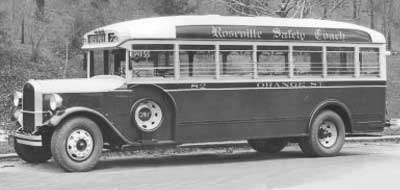
Pyle chose a luxuriously appointed
double-deck Fageol Safety
Coach for his travelling headquarters which was outfitted with a mobile
broadcast studio to keep the public abreast of progress of the
contestants. The
coach was outfitted with reclining blue mohair chairs that converted
into beds,
a lavatory and shower, a kitchen with a sink, stove and refrigerator,
and a
mobile office with a collapsible table, writing desk, phonograph and
radio set.
The rear sleeping compartment was fitted with two double Pullman-style
convertible seats that slept four. The open second-floor observation
platform
was fitted with a windscreen and transformable awning with seating for
six as
well and compartments that held the water and propane tank that fueled
the
on-board stove, refrigerator and water heater.
The March 1928 issue of Bus Age described
the reportedly
$25,000 coach, which was christened ‘America’ as a: “De Luxe Traveling
Coach”
with “complete transportation, sleeping, bathing, eating, and toilet
facilities
for fourteen people.” A second Twin Coach motor coach
accompanied
the first, upon which rode the numerous ‘race officials’ and
‘reporters’ that
accompanied the runners who spent each night in a travelling tent city
that
accompanied the side-show caravan.
The side show component of Pyle’s ‘Bunion
Derby’ failed to
turn a profit and the ‘Most Stupendous Athletic Accomplishment in All
History’
lost a reported $150,000.
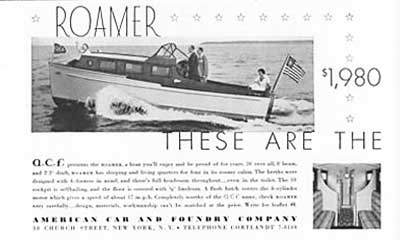
In
addition to rolling stock,
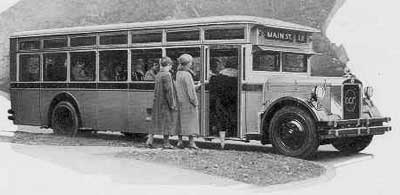
ACF's Jackson &
Sharp plant in Wilmington, Delaware produced boats for the navy, and
after the
war switched production to tugboats, schooners, yachts and
cruisers, some
of the latter being equipped with a pair of 150 h.p. Hall-Scott Invader
inboard
engines making 300 h.p. The firm’s standard ACF Cruiser-Runabout was
available
in 29’-38’ lengths while its yachts were produced in 38’, 46’ and 68’
lengths with
bespoke multi-deck units up to 115 tons available on special order. The
smaller
29’ cabin cruiser was the water-born equivalent of a Cadillac and
priced accordingly at $2,000 and up (not including the engine). The
firm's cusomt-built yachts were significantly more expensive and were
priced in the $20,000-$50,000 range depending on size and equipment.
Known ACF yacht
owners
include; E. I. DuPont; Ellwood R. Kirby; Edward F. Hainke; Stephen H.
Hunt;
F.V. Deslodge, Sr.; Catherine Adkinson; Robert M. Maguire and C. S.
Carroll. During
the late 20s and early thirties they had an ‘ACF New York Marine Salon’
located
at 217 W. 57th St., bet. 7th Ave. & Broadway.
September 26, 1931 New York Times:
“C.R. WOODIN, 86, RAIL PIONEER, DIES; Father
of American Car
and Foundry Head Was on Executive Board of Company. Well Known in
Industry -
Gained Wide Reputation in Early Life as President of Jackson &
Woodin Firm.
“A native of Cambra, Luzurne County, Pa., he
had been
associated during most of his early life with the Jackson & Woodin
Manufacturing Company, of which he was president from 1872 to 1894,
when he
resigned because of poor health.
“Although retiring from active management of
the Jackson
& Woodin Company, he retained his interest in it, and when it
became one of
the large plants of the American Car & Foundry Company, he became a
member
of the executive committee.
“He had been married for sixty-five years.
His widow, who
was Mary Louise Dickerman, and his son, William H. Woodin, are the only
survivors.”
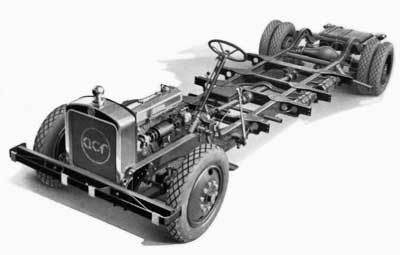
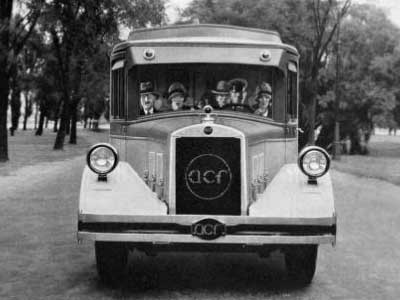
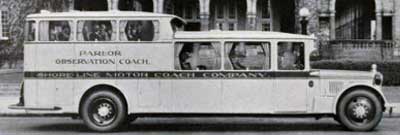
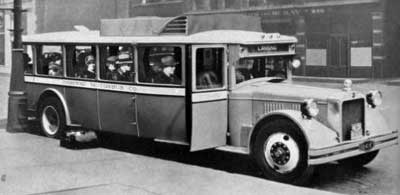
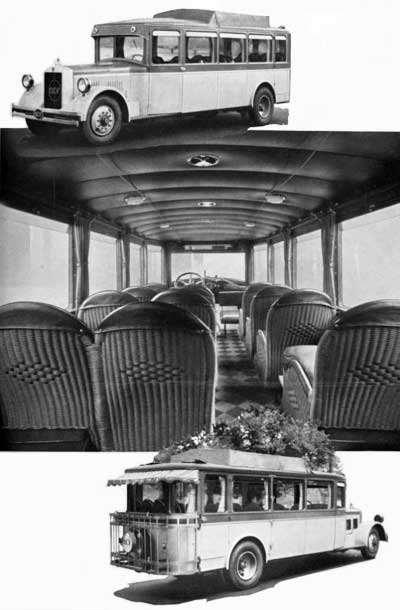
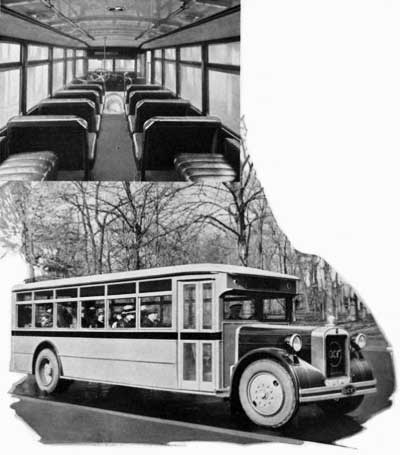
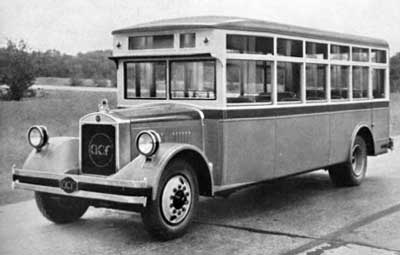
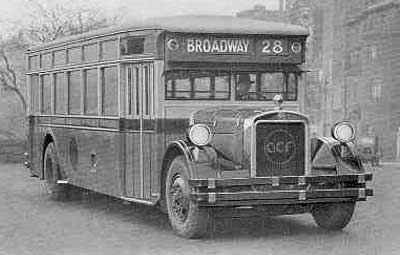
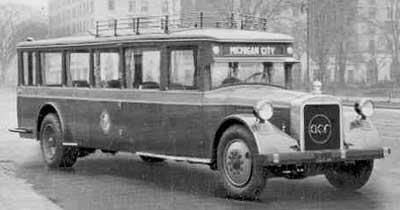
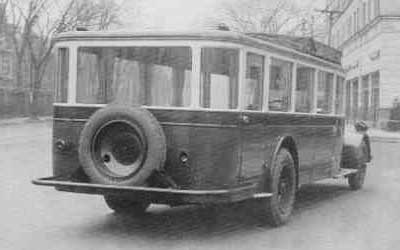
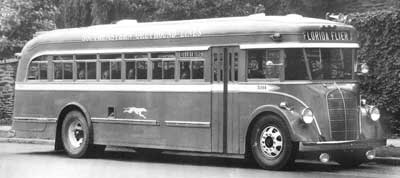
American Car & Foundry Motors was known
for their
well-built vehicles and they continued production of the proven
Hall-Scott
powered Fageol-based coaches into the early 1930s with catalog
coachwork
supplied by the Lang Body Company of Cleveland, Ohio.
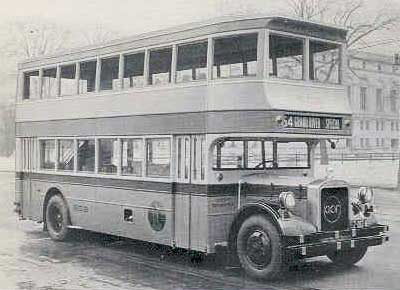
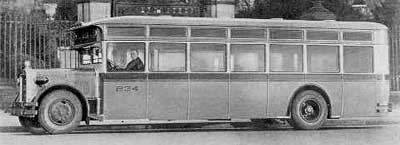
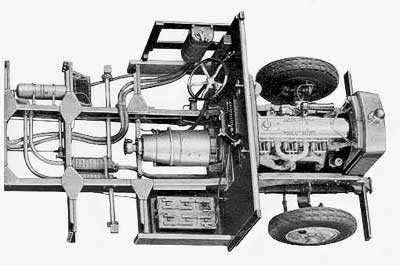
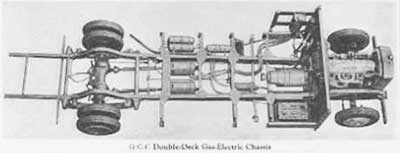
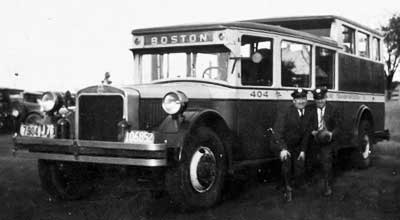
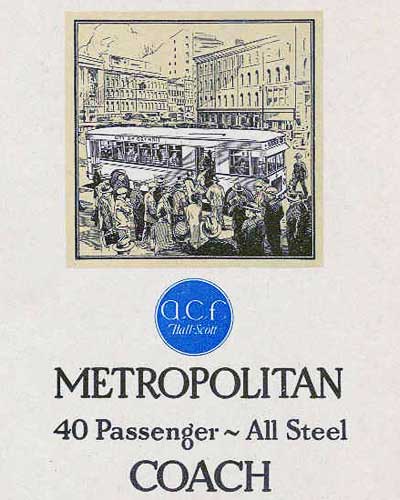
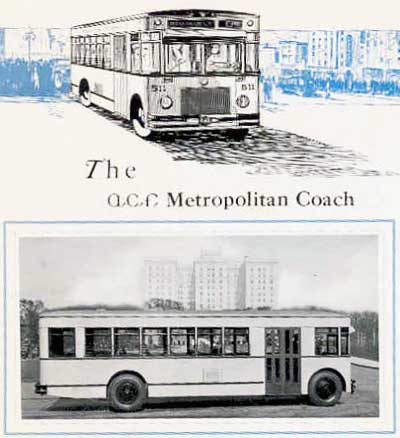
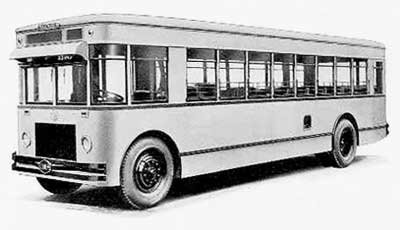
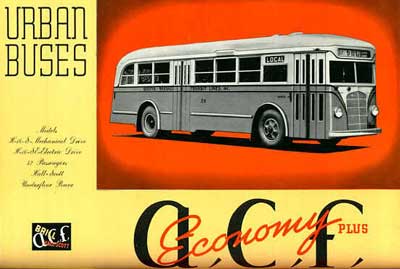
The firm’s first under-floor transit coach,
the
‘Metropolitan’ debuted in 1929 with a choice of traditional gasoline or
hybrid gas-electric
power which was joined by a smaller front-engined Hercules-engined
transit
coach in 1931.
Approximately 25 heavy-duty ACF trucks were
produced between
1931-1932 based on a modified Safety Coach framed and equipped with a
choice of
Hall-Scott 160- or 175- h.p. engines.
Slow sales caused the relocation of
bus-building activities from
Detroit to ACF’s Berwick, Penn. facility in late 1932. Production of
the
decade-old
Fageol-based coaches and trucks were discontinued as was the small
Hercules-engined
transit coach that debuted in 1931.
On
March 3, 1933 the New York Times announced that ACF president William
H. Woodin had been selected as Franklin D. Roosevelt's new Secretary of
the Treasury:
“WOODIN RESIGNS BUSINESS POSTS; Quits as
Head of American
Car and Foundry to Enter Roosevelt's Cabinet. C.J. HARDY SUCCEEDS HIM
Son of
New Secretary of Treasury Elected a Director -- Stancliffe Also Joins
Board.
“William H. Woodin, who is to be the new
Secretary of the
Treasury, resigned as president of the American Car and Foundry Company
yesterday and severed his official connections with the other
corporations with
which he has been associated for many years, the company announced.
“At yesterday’s meeting of the board of
directors of the
Federal Reserve Board of New York Mr. Woodin tendered his resignation
from the
board and it was accepted. As Secretary of the Treasury he will
automatically
become ex-officio member and chairman of the Federal Reserve Board.
“Charles J. Hardy, who has served for
twenty-five years as
general counsel, director and member of the executive committee of the
American
Car & Foundry Company and is senior member of the law firm of
Hardy,
Stancliffe & Hardy, was elected to succeed Mr. Woodin as president
of the
car and foundry company and its affiliates. Mr. Woodin’s resignation,
required
by law for him to become Secretary of the Treasury, was accepted with
regret by
his associates.
“Mr. Hardy, the new president, praised ‘Mr.
Woodin’s able
management’ and said that as a result of it the company ‘is in position
to cope
with the many problems and the undeniable difficulties today facing all
industrial concerns.’
“‘It will be my primary object,’ Mr. Hardy
continued, ‘to
continue his wise program, conservative yet progressive, coordinating
into the
closest and most efficient union the many units of an organization, to
the end
that the company may take full and early advantage of every opportunity
to
serve the transport systems of this country and so to further the
interests of
its stockholders.’
“Together with his father, Mr. C.R. Woodin
was one of the
founders in 1899 of the American Car and Foundry Company and he had
been its
president since 1916. During the War he turned the company into a vast
munitions plant, which supplied the government with mobile gun mounts,
heavy
gun forgings and rolling stock for the railroads.
“William C. Dickerman, president of the
American Locomotive
Company, was selected to succeed Mr. Woodin as member of the executive
committee of the American Car and Foundry Company, the American Car and
Foundry
Export Company and the American Car and Foundry Securities Corporation.
William
H. Woodin Jr., was elected a director of the American Car and Foundry
Company
and subsidiaries and Noah A. Stancliffe was elected director to replace
Oscar
B. Cintas, who was recently appointed Cuban Ambassador to the United
States.
“The chairmanship of the board of the
American Locomotive
Company, vacated by Mr. Woodin’s resignation, will not be filled, the
company
announced, and the position has been abolished. Mr. Hardy was elected a
director of the executive committee to fill the vacancies created by
Mr. Woodin’s
retirement.”
Woodin was featured on the cover of the Mar. 20,
1933
issue of Time Magazine and a short item was contained within entitled:
“THE CABINET: Off Bottom.
“When the Press trooped in to see what
manner of man this
was that President Roosevelt had called from the Presidency of American
Car
& Foundry to run the Treasury at a moment of greatest national
emergency,
they found small William Hartman Woodin, his eyes as blue as his shirt
and collar,
his cupid mouth pursed in an easy little smile, sitting informally on
the edge
of his desk, swinging his legs. Piped a pert newshawk: "Mr. Secretary,
you're in a pretty hot spot, aren't you?"
A lifelong Republican, Woodin became associated
with
Franklin D. Roosevelt while serving as a trustee for the Georgia Warm
Springs
Foundation, and the two became close friends thereafter, with Woodin
serving as
an advisor on the soon-to-be President’s 1932 Election campaign. His
tenure as
Secretary of the Treasury was cut short when a serious throat infection
prompted
a leave of absence in November of 1933 and for
much of his tenure, Under Secretary Dean Acheson served as
Acting
Secretary of the Treasury.
Although he spent the winter in
Arizona, Woodin's condition failed to improve and he resigned his
position as
Secretary of the Treasury effective January 1, 1934 and passed away
five months later on May 3, 1934.
American
Car & Foundry Company's board of directors elected Charles J.
Hardy, the senior member of the law firm of Hardy,
Stancliffe & Hardy as Woodin's replacement. For the previous 25
years Hardy had served as
general counsel, director and member of the executive committee of ACF.
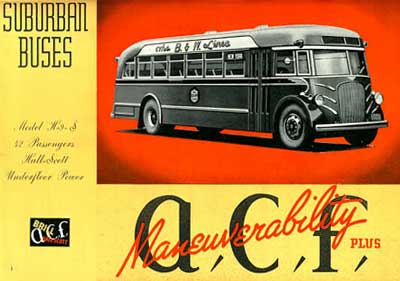
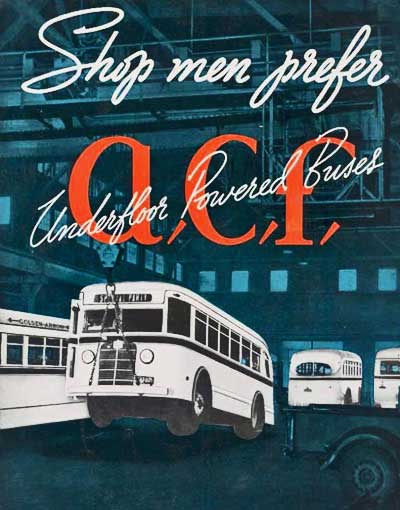
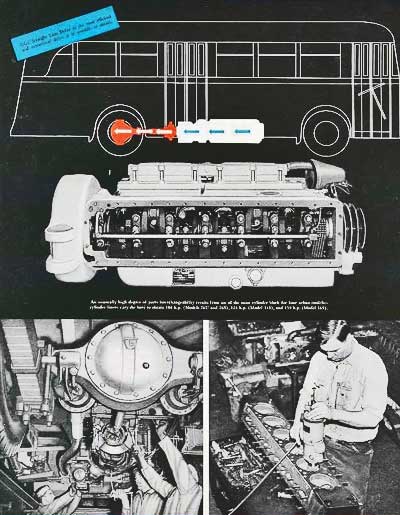
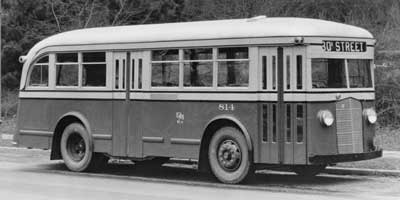
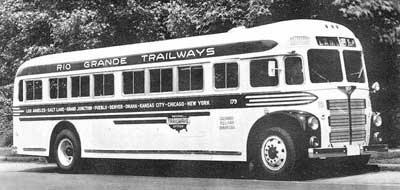
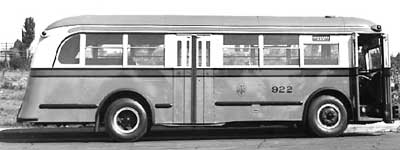
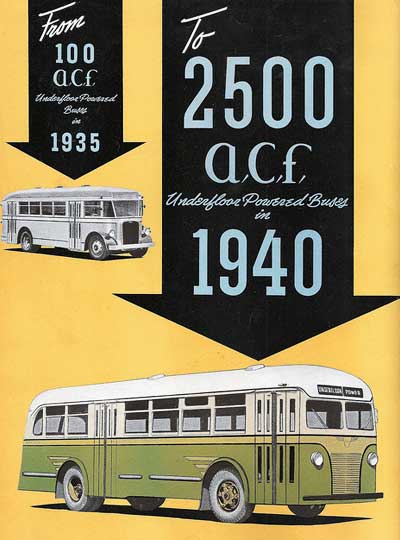
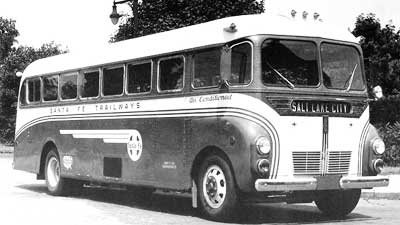
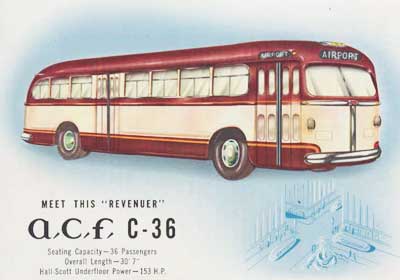
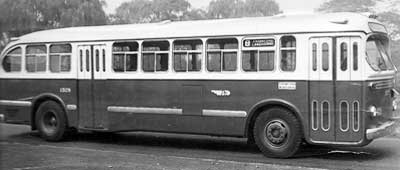
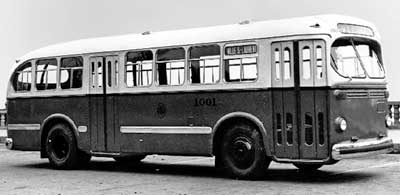
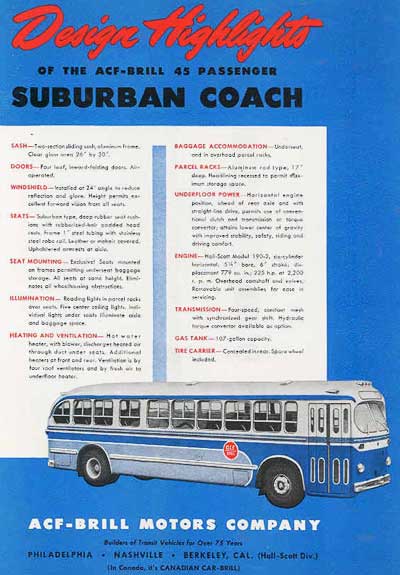
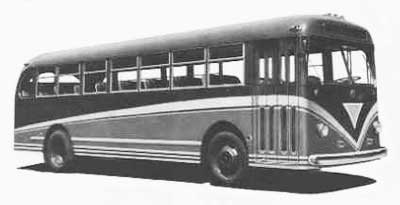
When ACF Motors bus production resumed in
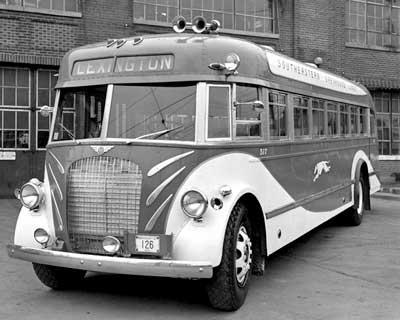
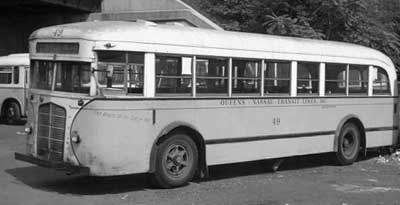
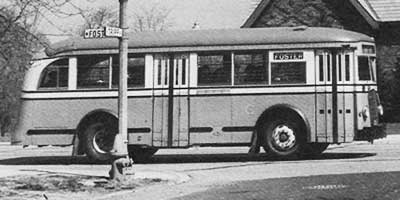
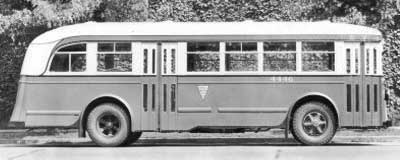
1933 a new line of conservatively styled
under-floor Hall-Scott powered transit coaches debuted that served as
the firm’s
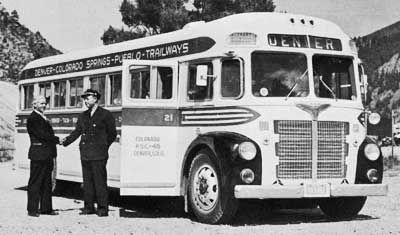
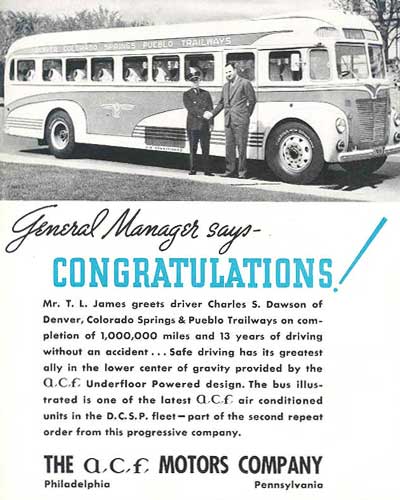
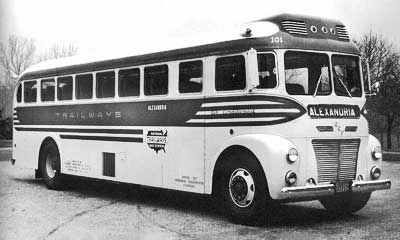
main lineup until a dramatically restyled-line was introduced in 1937.
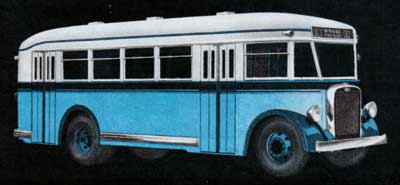
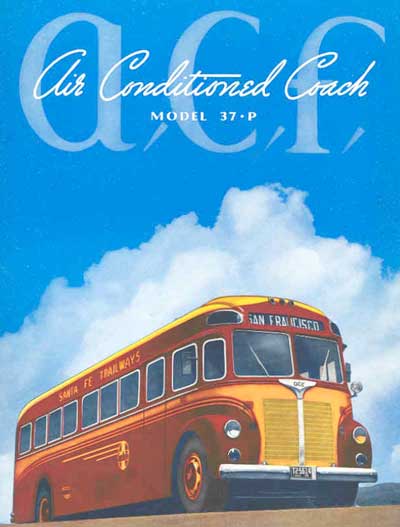
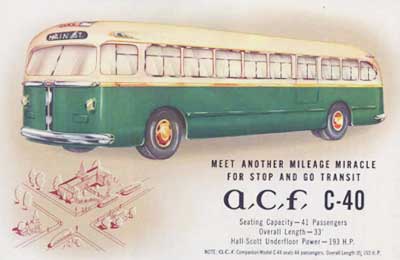
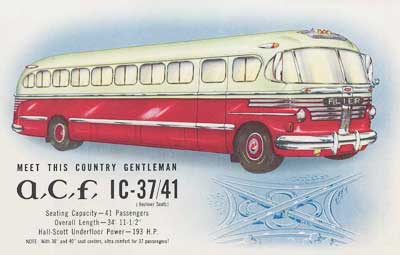
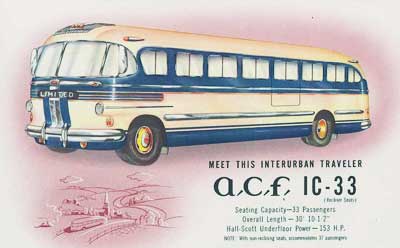
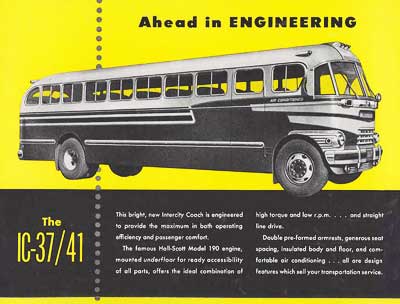
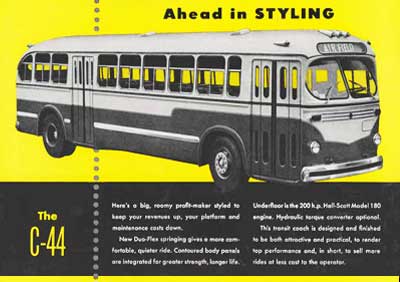
The new streamlined
transit coaches were available with seating for 26, 31, 36, 41, or 45
passengers
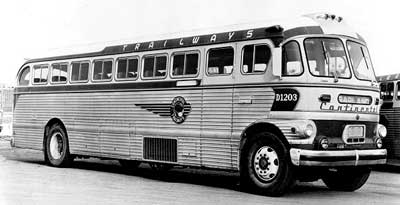
and an even more attractive line of intercity coaches were offered in
25, 29, or
37-passenger capacities. Production increased and the line remained
unchanged
into 1942 when the Berwick plant completely changed over to War
production.
During the War American Car and Foundry became
the nation’s largest
producer of armor
plate and its various subsidiaries produced tanks, trucks, aircraft
subassemblies, artillery shells, armor plate, hospital
cars and railroad cars for the US
Government and its Allies.
During the buildup ACF’s Berwick plant was
refitted
to manufacture the M-1 Stuart tank for the United States government. On
August 2,
1941, a celebration was held when the 1000th M-1 tank rolled off the
assembly
line and by war’s end had produced 15,000 M-1, M-3 and M-5 tanks.
Pacific Car
& Foundry constructed M55 self-powered Howitzers and 1,300 M26A1
6x6 trucks
– the tractor portion of the famous M25 heavy tank transporter -
recovery
vehicle
that was affectionately known as the ‘Dragon Wagon’.
Although for all intents and purposes
American Car &
Foundry Motors and Brill had been operating as a cohesive unit for well
over a
decade,
they were never consolidated although runmors began to appear in late
1940, the December 8, 1940 edition of the Oakland
Tribune
reporting:
“Amer. Car-Brill Merger Proposed
“NEW YORK, Dec. 7.—Stockholders of Brill
Corporation and American
Car & Foundry Motors Company have been called to a special meeting
January
8 to act on a merger plan recommended by directors. Charles J. Hardy,
president
of each company, announced today. Brill Corporation will be the
surviving
concern, according to the plan.
“The proposal contemplates that Brill
Corporation will
become an operating company with manufacturing activities centered in
Pennsylvania and, through its holding of Hall-Scott Motor Car Company
stock,
also a holding company.
“At present American Car & Foundry
Motors Company
controls Hall-Scott Motor and is in turn controlled by the Brill
Corporation.
American Car & Foundry Company owns about 65 per cent of the class
B voting
stock of the Brill Corporation.”
Charles J. Hardy resigned the presidency in April
of 1944 and Frederick A. Stevenson, a 40-year employee
of the firm, was
elected president. One of Stevenson's first decisions was to combine
the interests of ACF Motors and Brill, the merger being finalized that
July, the July 16, 1944
Oakland Tribune reporting:
“A.C.F.-Brill Offer Stock
“Philadelphia, July 15. – (AP) – The
A.C.F.-Brill Motors
Company, N.Y., registered today with the Securities and Exchange
Commission
280,138 shares of $2.50 par value common stock to be offered at $12.50
per
share to warrant holders prior to 1950 and at $15 between 1950 and
1955.
“Warrants are to be issued to holders of
‘B’
stock of the
Brill Corporation and to common stockholders of American Car and
Foundry Motors
Company.
“Merger Agreement
“The new company formed under a June 19
agreement between
American Car & Foundry Motors Company and the Brill Corporation,
owns no
physical properties but is the sole stockholder of its operating
companies –
the F.G. Brill Company, Philadelphia; the A.C.F. Motors Company;
Hall-Scott
Motor Car Company, Berkeley, Calif., and the Fageol Motors Company,
manufacturers of trolley coaches, steel metal pressings and engines.
“American Car and Foundry Company and a
subsidiary, American
Car and Foundry Investment Corporation, will own about 45 per cent of
the
common stock under the merger agreement, exclusive of the 280,138
shares
registered for purchase on the exercise of warrants. American car and
Foundry
Investment will also he issued warrants for 178,072 shares of common
stock
under the merger agreement. A total of 1,250,000 shares are authorized
to be
issued.
Officers of the Firm:
“Officers of the company are Charles J.
Hardy, New York,
chairman of the board; Ronald L. Monroe, Philadelphia, president;
Lester A.
Blackford, New York, vice-president, and K. L. Oerter, Philadelphia,
secretary
and treasurer.”
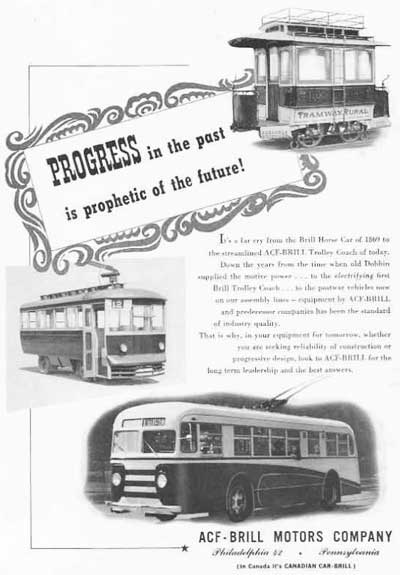
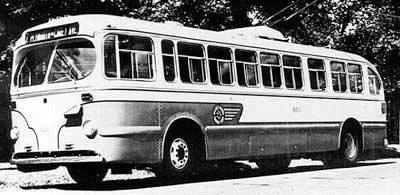
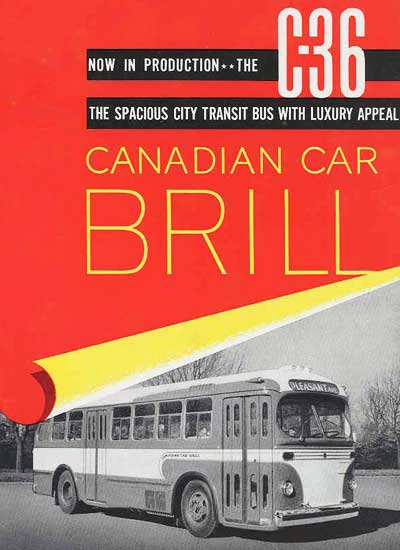
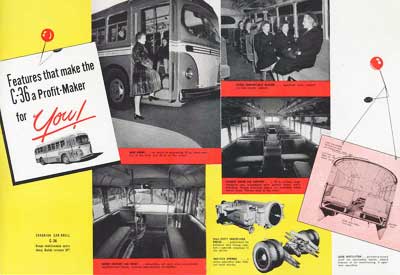
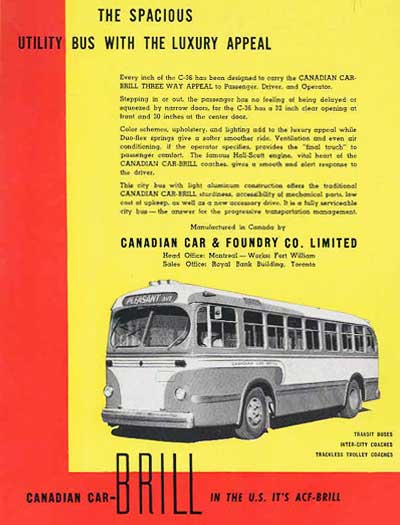
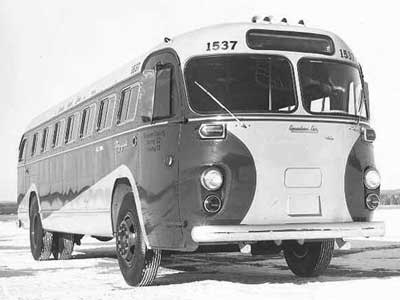
In 1944 Canadian Car and Foundry, a
similarly-named but
unrelated firm entered into a licensing agreement with ACF-Brill to
manufacture
and distribute buses and trolley coaches of ACF-Brill design in Canada
under
the Canadian
Car-Brill or CCF-Brill trade name. Between 1944 and 1954 Canadian Car
and
Foundry’s plant in Fort William, Ontario constructed 1,114 trolley
busesand
a couple of thousand buses under the agreement.
Although
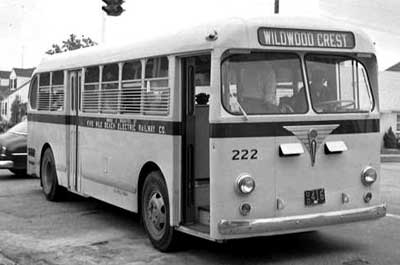
ACF's motor buses were highly regarded by it their users, they never
got
above fifth place in sales and at War's end, the newly-organized
ACF-Brill Motors Co. was put up for sale. Ripe with cash from
massive wartime contracts, Consolidated Vultee Aircraft Corp. purchased
all of American Car & Foundry's bus
building divisions from A.C.F. in early 1946, the February 1, 1946 of
the Altoona Mirror announcing:
“Consolidated Purchases Brill And Subsidiary
“NEW YORK, Feb. 1.—Consolidated Vultee
Aircraft corporation,
announced today it has purchased controlling interest in A.C.F.-Brill
Motors
company, Philadelphia, and its wholly-owned subsidiary, Hall-Scott
Motor
company, Berkeley, Calif., from the American Car and Foundry company
for about
$7,600,000 cash.
“Irving E. Babcock, chairman of
Consolidated, said the
purchase is part of a post-war diversification move by the company, one
of the
nation's largest producers of Aircraft.
“Consolidated will acquire from American
Car
445,139 of the
962,378 common shares outstanding of A.C.F.-Brill, and 160,464 warrants
of
280,044, outstanding. Each warrant carries the right to purchase one
common
share at $12.50 to Jan. 1, 1960, and $15 to Jan. 1, 1955.
“Babcock, who is expected to become
chairman
of Brill, has
been engaged in motor truck and bus production for more than
twenty-five years.
Until a year ago, he was president of Yellow Truck and Coach
Manufacturing
company and a vice president of General Motors corporation.
“Ronald R. Monroe, president of Brill, will
continue in that
capacity, Babcock said.
“Brill is currently building two models of
buses, one for
city – and the other for inter-city operation.
“The company's backlog of unfilled orders
is
said to be more
than $50,000,000. Plant facilities include 804,000 square feet of space
on 29
acres of ground in Philadelphia.
“Brill has a license agreement with
Canadian
Car and Foundry
company, whereby the latter produces Brill designs for the Canadian
market.
American Car and Foundry, in divesting itself of all interest in Brill,
will
not manufacture buses or trolley coaches for city operation, or buses,
for
inter-city operation, Babcock said.
“The Hall-Scott, company, at Berkeley,
Calif., produces bus,
marine and industrial engines. Babcock said surplus plant capacity of
the
aircraft company may be used to augment Brill's facilities.”
Consolidated Vultee was formed in 1943 by
the merger of Vultee Aircraft and Consolidated Aircraft companies.
Consolidated was best
known for its B-24 Liberator heavy bomber and PBY Catalina flying
boat. The
Vultee Aircraft Co. was a former AVCO subsidiary named after Gerard F.
Vultee that
constructed the V-72 Vengeance and P-66 Vanguard aircraft during the
early
stages of the Second World War.
The February 2, 1946 issue of the Oakland
provided details
of the acquisition which directly affected the operations of the
Hall-Scott
Motor Car Co. in nearby Berkeley, Calif.:
“Hall-Scott Motor Car Company out in
Berkeley which has
built truck and marine engines for a good any years was sold to
Consolidated
Vultee Aircraft Corporation the other day for $7,500,000. The purchase
price
includes the controlling interest in the A.C.F.-Brill Motors Company of
Philadelphia of which Hall-Scott is a subsidiary.
“Both the Berkeley and the Philadelphia
companies were owned
by the American Car and Foundry Company. A.C.F.-Brill is one of the
largest
United States manufacturers of motor busses, trolley coaches, and
specialized
engines.
“The purchase marks the first entrance by a
major aircraft
company into the field of automotive surface transportation.
Consolidated, as
so many of you guys know, built the now famous PBY ‘Cats’ which did
such yeoman
duty during the war. Consolidated-Vultee also built many other types of
heavy
aircraft for such duties as anti-sub patrol, training and
reconnaissance, and
Army and Navy bombardment craft. Somewhere in the group are the famous
B-24
‘Liberators’.
“It is expected that Vultee will begin
producing buses along
with other types of heavy equipment shortly.”
ACF's president, Frederick A. Stevenson, retired
in May of 1947 and Charles J. Hardy, Jr., former executive
vice-president of ACF,
was elected president. Hardy’s father, Charles J. Hardy Sr., remained
as
ACF board chairman.
The sale to Consolidate Vultee ended ACF-Brill's
involvement with American Car and Foundry and the motor coach
manufacturer now answered to the directors of Consolidated Vultee.
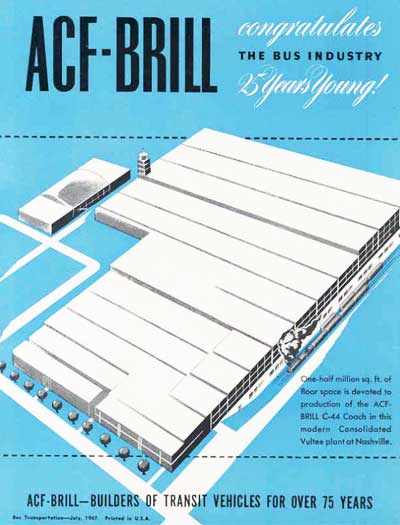
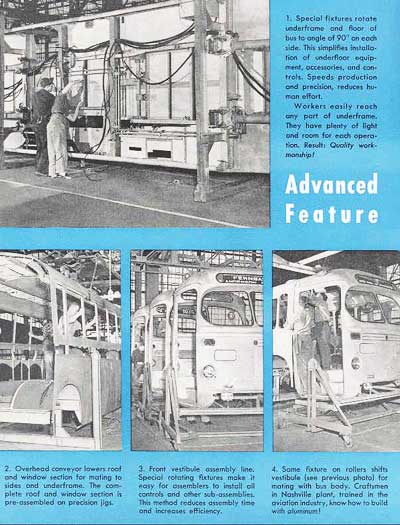
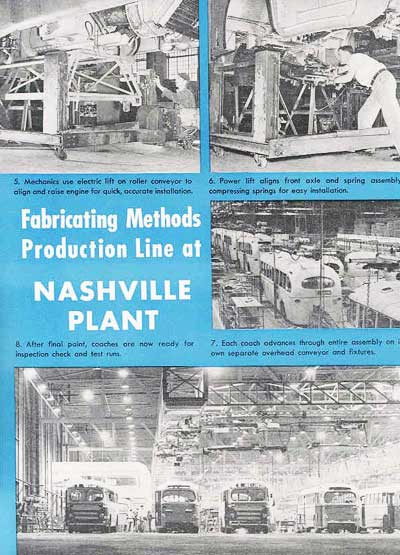
All former ACF motor coach assets were
transferred to Consolidated-Vultee's 4-year-old Nashville, Tennesee
facility and bus production commenced in late 1945.
At the end of the War General Motors
couldn’t keep up with
the demand for their highly-regarded diesel transit coaches to the
benefit of the
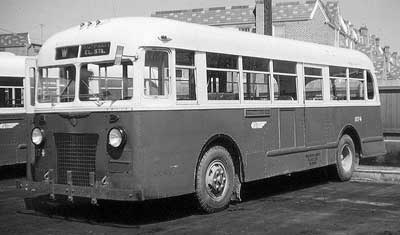
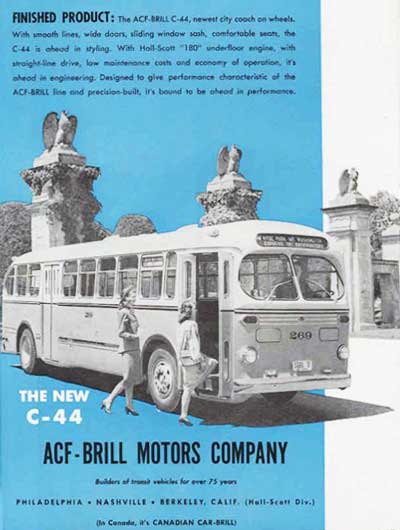
nation’s smaller bus manufacturers such as ACF-Brill. Large fleets of
gasoline–powered
ACF-Brill transit coaches were sold to a handful of East Coast
operators who
were desperate for product, one example being the Baltimore Transit Co.
who ordered
162 ACF-Brill gasoline coaches in 1947.
A small number of Willys-badged 15-17
passenger coaches were
constructed in the late 1940s using chassis supplied by
Willys-Overland, but
the underpowered coaches were not successful. For a short period of
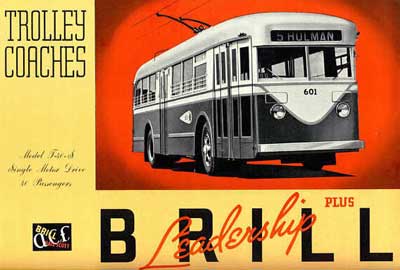
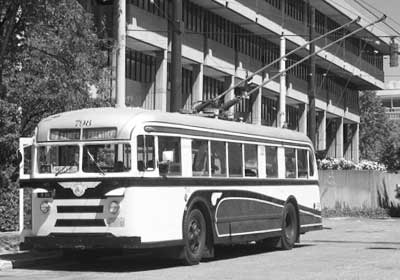
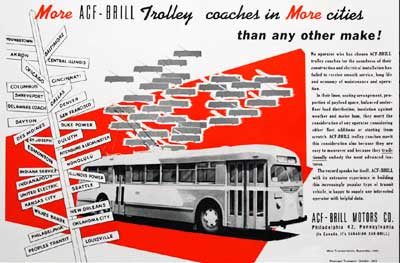
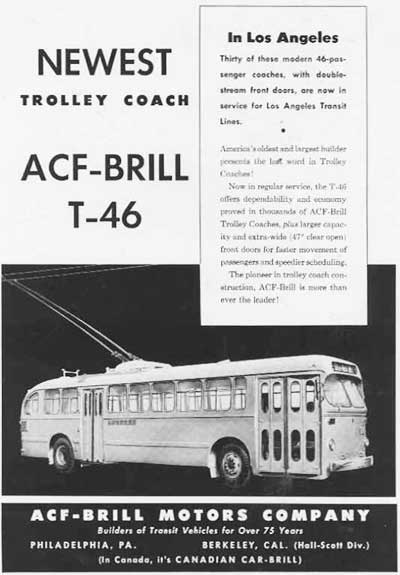
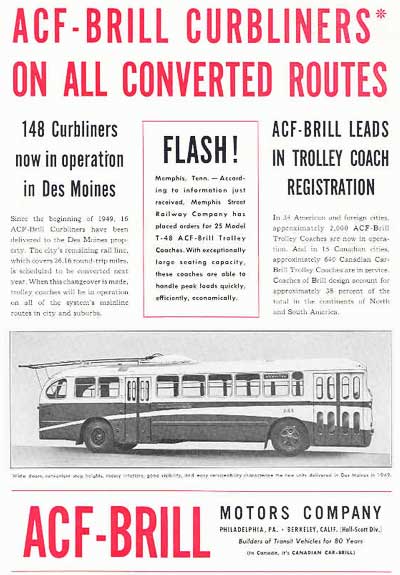
time ACF-Brill’s
trolley coaches proved popular with municipalities seeking to replace
worn-out
streetcars and a few large orders were placed by surface transit
operators in
Boston, Chicago, East St. Louis, Houston and other smaller cities.
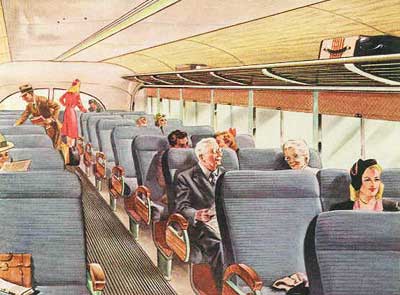
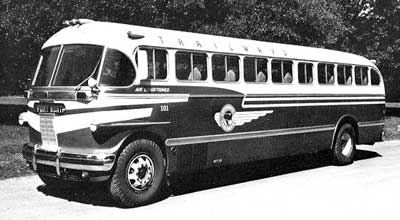
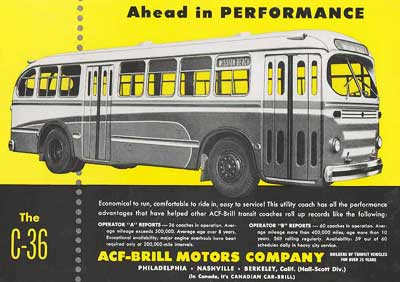
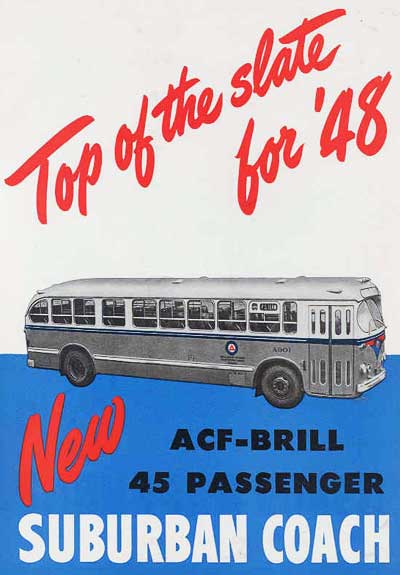
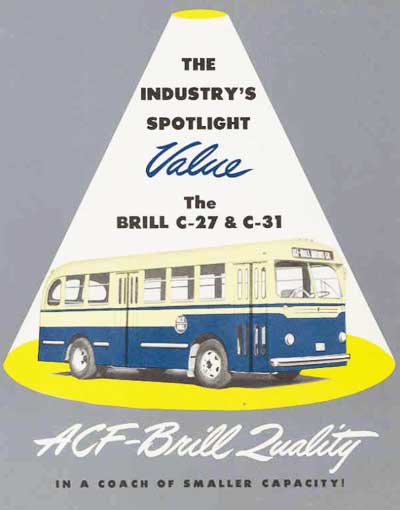
A few orders trickled in for ACF-Brill's line of
intercity coaches, which had enjoyed moderate success before the war,
but like their main competitor, Flxible, post war sales disappeared
once it became known that new Diesel-equipped GM Silversides were
available.
Once
their diesel transit coach operations
got up to speed, it
was nearly impossible to compete with General Motors and by 1952 orders
for new
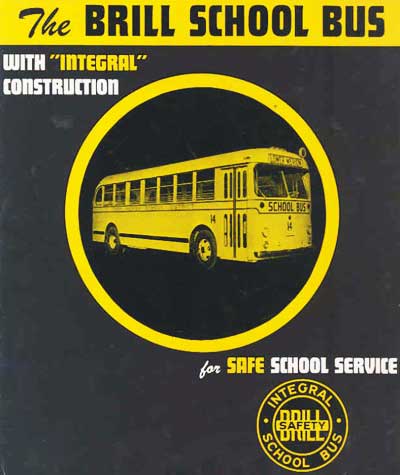
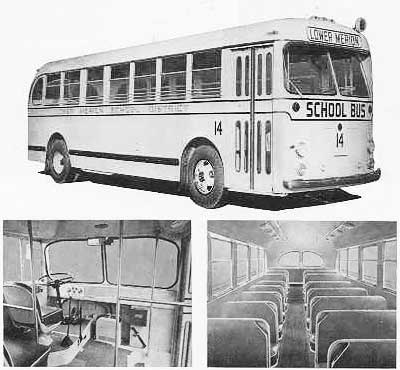
ACF-Brill transit coaches dried up completely. ACF-Brill tried to break
into
the school bus market with a line of Brill-badged purpose-built school
buses,
but sales were disappointing at best. Flxible managed to stay in
business into the late 1950s but Consolidated-Vultee's directors shut
down all
bus production in 1954. The firm's Nashville plant remained in
operation producing television cabinets and airplance components into
1959 when it was taken over by AVCO.
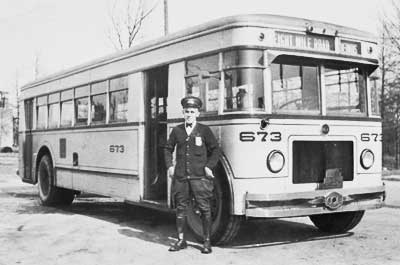
© 2013 Mark Theobald for coachbuilt.com
|